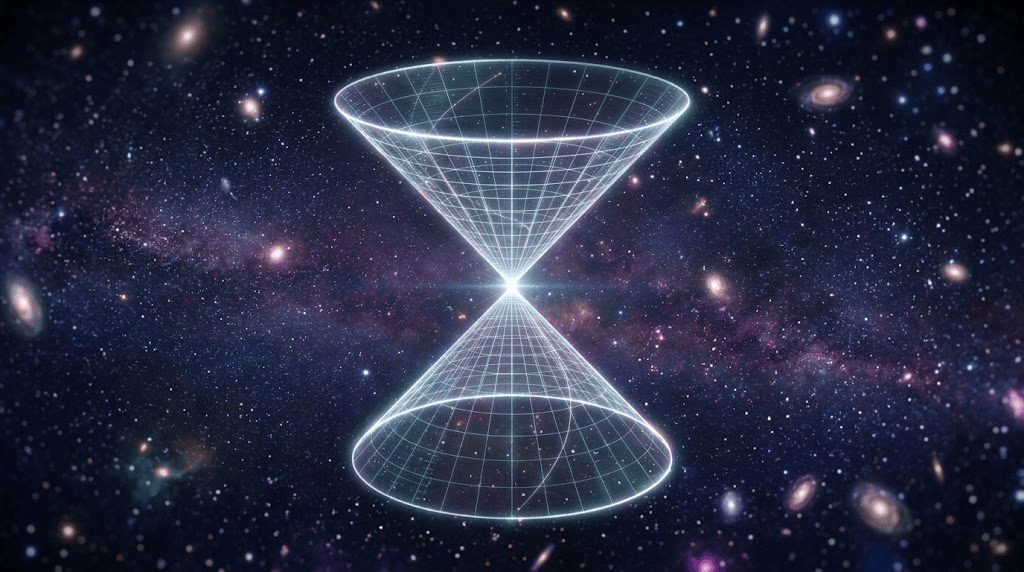
The End of the Universe and Everything

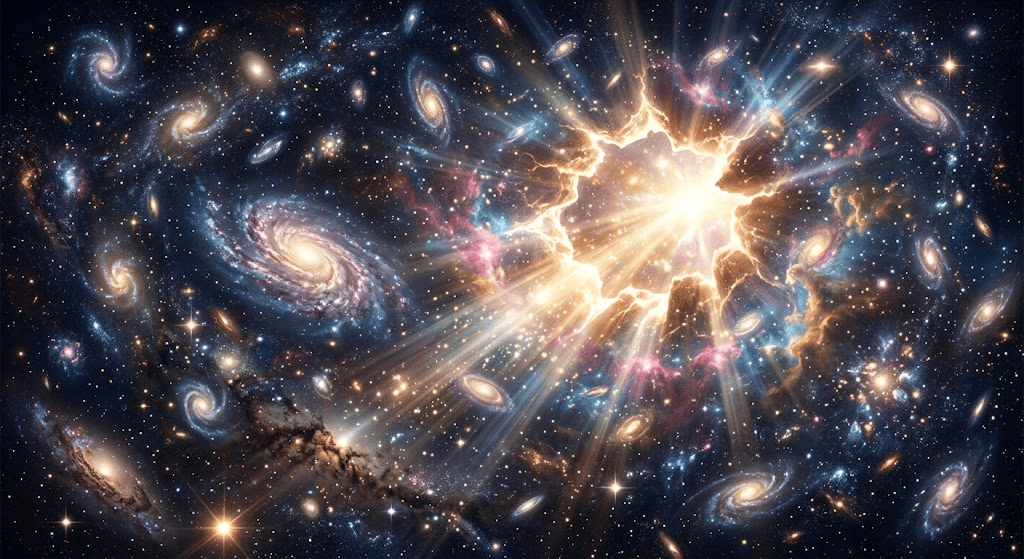
I subscribe to the journal, Theology and Science, published by Taylor & Francis. Most articles in each issue are fairly interesting. In the latest issue, I read, “A New Hope for Christian Eschatology in Cosmic Perspective: Beyond the Predictions of Standard Big Bang Cosmology” by Hyung-Joo Lee. The author has expertise in theology (PhD, Graduate Theological Union) and cosmology (PhD, Korea Advanced Institute of Science and Technology). His article (unfortunately, behind a paywall) provides theological ideas about how to think about God while living in a universe that appears, based on current science, to have an unsatisfactory end point.

Our universe arose from the Big Bang, although physics equations break down when we try to understand the time before 5.39 x 10^-44 seconds after the Big Bang started. Additionally, the cosmic background radiation shows that our universe is homogenous in every direction. We know that the universe has been expanding and apparently expanding faster, in every direction over the past 13.8 billion years. What eventually happens to the universe?

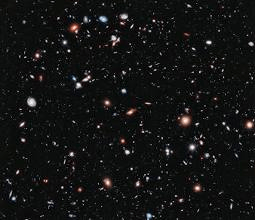
Cosmic background radiation (image from Wikipedia)

Well, the universe may keep on expanding forever and ever and ever and ever and ever. This is a “flat” or “open universe” with no curvature and with the consequence of all useful energy being used up. The universe will eventually reach a temperature of absolute zero. Nothing happens at that point. All is dead.

On the other hand, the universe may eventually collapse back on itself. I believe that this is the minority view of cosmologists. When it collapses back on itself, the universe is simply destroyed. This is a “closed universe” model. Similar to the “open” idea, all is destroyed. All is dead.

Image from the University of Oregon

Both ideas seem to go against Christian eschatology or what happens when all of this ends — from a Christian perspective. An interesting article is here. It is rather depressing to me to think that any possibility, no matter how remote, of my being remembered will be forever gone. The possibility of our species or our planet or even our galaxy being remembered being forever gone may be traumatic to consider.

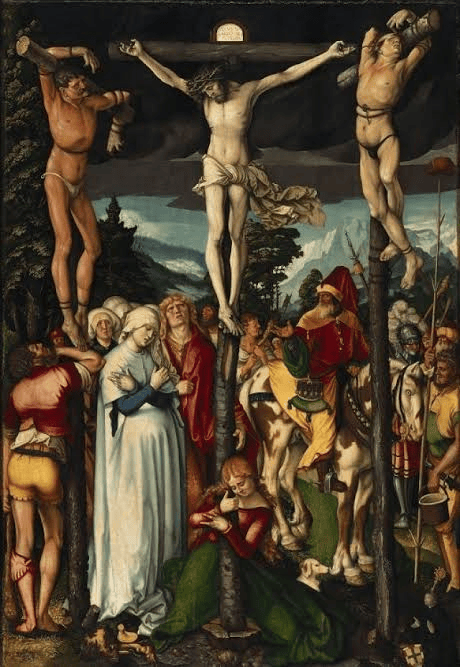
The Last Judgment

Lee challenges this assumption of all simply ending. Using the work of others, such as Robert Russell and Wolfhart Pannenberg, Lee discusses the idea that physical theories may be “descriptive” and not “prescriptive”. In other words, our physical theories in relativity and quantum mechanics are indeed brilliant but may be describing a reality while not yet reaching the actual reality of what is occurring. There is a long tradition here as described here and here.

Lee then proposes the following:

We know the universe is expanding faster and faster in all directions. Over time (really immense time), the quantum fields in such a gigantic space will still be present. I’m no physicist, but I would define a quantum field as points in all of space in which particles and forces arise simply as excitations of such fields. The electromagnetic field is such a field. The Higgs field is another field. There are others. These fields are possibly statistical (as far as we know currently). Thus, there is a chance, no matter how small, that something could arise in these fields over immense time and immense space.

A particle could arise with such fields over time in a large area of space. From a statistical standpoint, even something complex could arise from these fields. The Boltzmann brain is such a conjecture — not provable. Thus, perhaps even a new Big Bang could arise in such a setting. Heck, from a theological perspective, a “new heaven and a new earth” could arise (Revelation 21:1).

Boltzmann brain (image from Beyond Universe)

Lee looks at the theoretical cosmology idea of quintessence here. Quintessence is a theoretical idea that some type of field is associated with the universe expanding differently depending on the location. Such an idea is opposed to the current idea of the universe forever expanding per the Cosmological Constant.

Let’s think about such an idea in the realm of process theology or the more divine love-oriented open & relational theology. 1) If fields can vibrate to potentially produce anything (a conjecture), 2) if things (comparable metaphorically) to Boltzmann brains can occur in the setting of immense time and large space, and 3) if quintessence allows for the universe to not “die” by forever expanding or by collapsing, then there is the possibility of eternal creativity.

From a process theology / open & relational theology standpoint, this idea matches Christian eschatology. Those who work in process theology as well as open & relational theology use the idea of God desiring (not forcing) novelty or creativity as part of God’s nature (process theology) or as part of God’s nature of love (open & relational theology). Such ideas are basically a type of eschatology occurring over deep time and perhaps eternally. God is forever creative. God’s love desires, but does not force, creativity.

In my book, A Theology of the Microbiome, I express some of these ideas as follows:

“Finally, when one considers the idea of a “Boltzmann brain,” there
is the possibility that a new universe could form even as our current
universe continues onward with increasing entropy and less useful energy
over time. In the far future, thermal equilibrium is predicted to be
reached everywhere. Despite this event eventually occurring, there could
be a real, but incredibly small statistical chance, that particles would move
close enough to each other so that entropy would decrease momentarily,
and structure would form. The “Boltzmann brain” idea suggests that innumerable random particles in an immense universe with thermal equilibrium
over vast time could, simply by statistical chance, form a “brain”
for a few moments that would experience reality. The brain would then
dissipate into particles again as increased entropy once again took over.


Could a large fluctuation of such particles create a new universe in the
far future? It would be highly improbable but mathematically possible.
Dark matter changes, as well as other mechanisms, have been theorized
as potential causes for a new universe in such a setting. Also, the theory
of cyclic cosmology suggests that a new universe would occur regardless
in the extreme long-term future. All such ideas can aid one when thinking
about the unstoppable increase of entropy in the presence of eternal
creativity.”


Consider purchasing my book. : )

So…I like this article.

At the same time, I have some pushback.

1)Boltzmann brains may not be possible if there are no fluctuations in quantum fields (i.e., if quantum mechanics is essentially deterministic). A good reference is here. Determinism would rule out creativity both objectively and subjectively.

2)Here is my biggest problem. I think science and theology can help each other but cannot stand in for each other. I’m not a believer in non-overlapping magisteria per Gould even though Gould is one of my heroes. Science informs theology so that we understand aspects of God better in the setting of potential divinity in the world. I’m rather cataphatic here. Most of the world is religious, and good theology informs science in the setting of morality or ethics. For example, does God want us to have nuclear weapons? Does God want us to be anti-vaccine? Does God want us to ignore famine? Does God want us to ignore war? Does God want us to deny climate change? I think the answer is decidedly “NO.” Thus, Lee’s work adds on to the perspective of God’s continuing desire for creativity (process theology) via divine love (open & relational theology).

I do not think it is in human capacity to understand what happens when we die or when a “new heaven and new earth” arise. As a Christian, I can believe in the hypostatic union of Christ Jesus, but I cannot understand it fully. I never will. I hit a wall beyond which no comprehension is present. We can make metaphors, but we are limited by our human brains — both objectively and subjectively.

Lee’s article is very good and should be read.

Good theology recognizes brain limitations of our species — both objectively and subjectively.

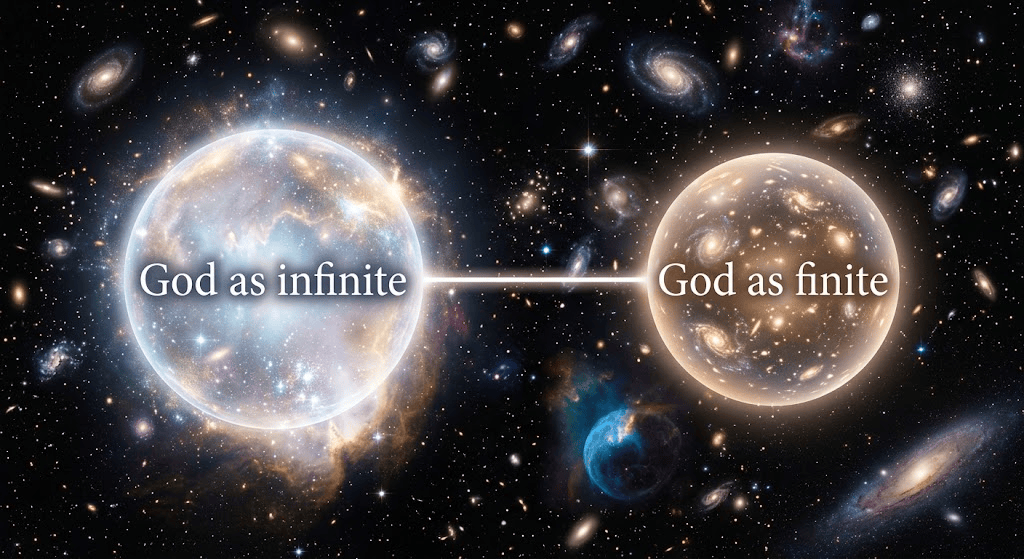
Image made by Gemini Advanced

More of a Comment Than a Question

It is kind of a truism in medical conferences (and all sorts of academic conferences) that some people pretend to ask a question after a presentation, when in reality, they just want to give a mini-talk themselves. Typically, such “mini-talks” are ways for people to act like they are important. “More of a comment than a question” is the equivalent of trying to take over a meeting. The statement has become kind of a humorous meme about scientific meeting Q&A periods after a presentation.

Unfortunately, I somewhat did a “comment more than a question” recently on Substack. Matthew Segall has a great Substack account. It is expansive and quite wonderful in the realm of explaining philosophy especially regarding the realm of metaphysics. I highly recommend following his account.

On April 27, Dr. Segall interviewed a person associated with the Discovery Institute. I don’t want to identify this person directly (you can watch the interview) as this individual falls into the camp of Intelligent Design which, in my opinion is a rather spurious belief system. I would rather criticize Intelligent Design (ID) than the individual.

Dr. Segall did nothing wrong. His interview was completely fine. He was much more patient than I could ever be. He was pointing out how different belief systems can converge and diverge. Dr. Segall is an expert in process philosophy which can align theologically with process theology (PT) as well as open & relational theology (ORT). I find myself in the camp of PT and ORT. PT / ORT are definitely religious in orientation and they are very pro-science. People like me may believe in God, but we also have no issues with randomness in evolution, Big Bang cosmology, the weirdness of quantum mechanics, accepting the spectrum of human sexuality, acknowledging the problem of evil, etc.. I’m not sure I believe in non-overlapping magisteria as I quite sure that science can inform one’s belief in God.

ID is very different. ID is basically a Young Earth Creationism (YEC) adjacent movement. ID may state that the universe is old and perhaps biological evolution happens, but it then runs off the rails as being science adjacent. ID often relies on the term “irreducible complexity” in which biological mechanisms or structures are so complex that there is no natural mechanism to explain how the complexity occurred. Additionally, once ID says that a mechanism/structure is “too complex” to be explained, then the obvious answer is “God did it. Don’t ask any more questions.” ID also seems to be very much into guided evolutionary processes from an anthropomorphic perpective. I’m not talking about ideas surrounding evolutionary pathways (such as convergent evolution) which may have underlying physical laws. Convergent evolution is definitely real, and it may have an underlying physical law basis not yet understood. What I am talking about is the awful continuing movement in the United States (and to some degree in other countries) to trying to replace science with specific types of religious thought which includes fundamentalism, YEC, and ID. When one tries to put such constrained religious systems into the realm of science by defining fundamentalism / Y.E.C./I.D as a type of “science”, one will start going down the road of the anti-vaccination movement and climate change denial.

Convergent Evolution, image from the Natural History Museum (London)

So…my comment is more than a question. After watching the interview between Dr. Segall and the person who represents the ID movement, I posted a long comment which I will break down below. Again, Dr. Segall did nothing wrong. He was exposing people to a belief system that they may not be aware of, and I am all about public exposure of belief systems and free speech. He was letting people form their own opinion. I think what he did was wise. I’m just writing this post to expand on my subsequent opinion which I posted on his Substack account.

A. “Good interview, Matt! Intelligent design (IMO) has not progressed since 1998. 1) No matter how hard we try, we cannot prove / disprove God. ID is a tiresome continuation of this argument.” I agree that Dr. Segall did an excellent interview. I did some background work, and it does appear that the ID movement likely started in 1998. I’m sure the book, Darwin’s Black Box, by Michael Behe influenced this movement. The book is well written (I read it when it first came out), but it has some fallacies especially when it comes to ideas surrounding irreducible complexity. In my opinion, humans need to move on from debating if God exists or does not exist. We have so many other problems going on in our world politically and environmentally. I’m a Christian and believe in God. However, I can’t prove that God exists. Atheists can’t prove God doesn’t exist. And the conundrum is perfectly fine. Ultimate meta-physical questions such as the existence of God / No God are metaphysical questions that are influenced by one’s upbringing and societal influences over time. ID is a continuation of this argument and makes the argument even sillier in the setting of pseudo-science.

B. “ID is not Popperian so its validity to, say, biology, chemistry, medicine, etc. makes it definitely not a scientific field. It can be a theological or philosophical construct, but it cannot be science.” Personally, I believe that there is a line that exists in the setting of falsifiability in science, but the line is dependent on the scientific field. Medicine (my field) is very, very hard because the human body is complex, and we need very objective research to identify a body mechanism or pathology, to prove that a lab test works, or to prove that a medication works. One can read the New England Journal of Medicine to see how complex such research can be. By trying to be as objective as possible, a medical study allows for falsifiability. The problem is that medicine is filled with quacks throughout the world who promote pseudo-science that borders magical thinking (chiropractors and homeopaths come to mind). Their work allows for no falsifiability and is essentially “magic.” Chemistry research is very strict in its protocols. Thus, outcomes in chemistry research can typically be falsified, if needed. Karl Popper has been very clear here about falsification in science.

Karl Popper

However, there are fields that are science yet not Popperian. Theoretical physics such as in the field of string theory and Everettian mechanics come to mind. Such fields are still science as they are exploring the edges of what humans know. Ideas in theoretical physics often cannot be falsified because the objective data would need be obtained with high energy experiments beyond current human capacity. I get that aspect. One thing that theoretical physics does not do is state that the answer to complex questions in the field of physics is God. Medical research does not state a patient is cured due to God, yet chiropractors often talk about “body energy” — whatever that is (likely magic). ID as well as YEC typically state evolution happens due to “God.” Sorry. God is a very important concept for humans. God is a very important theological concept. BUT God is not a scientific concept.

C. “The continuing appeal to ‘irreducible complexity’ by ID always runs into walls when we are discovering how the eye has evolved, how flagella have evolved, how DNA may have formed, how cytoskeletons may have formed, and on and on. ID seems to always ‘move the goalpost’ once we make scientific progress on a subject once deemed irreducibly complex by ID.” I’m the first person to state that I don’t think that our singular species on one little planet in a unremarkable solar system in an unremarkable galaxy will solve every scientific problem in the universe.

The “pale blue dot” of Earth seen from Saturn. Image from the BBC.

However, that fact doesn’t mean that we shouldn’t try to advance science. And we have made progress. We have a great understanding about eye evolution. We have a great understanding about flagella evolution. We are starting to understand how DNA came about. The evolution of the cytoskeleton is becoming more clear. Indeed, if one follows ID writings (which is a painful endeavor), ID simply moves on to another subject without ever acknowledging the science that has been done to go against their hypotheses. It is an unending cycle of willfully ignoring work that has been done by the scientific community. ID is very frustrating here.

D. “ID is a weird variant of positivism. Instead of saying that proof only exists when we experience a concept via the sensory process (i.e., measurement), ID states that proof [of God] only exists if we can’t measure a concept.” Positivism basically means that a thing is true if it can be objectively proven to be true, preferably by the scientific method. Any other potential topic such as God would not be true since the concept is not provable. Metaphysics is not compatible with positivism. A good review article is here.

Rudolf Carnap, a famous proponent of positivism

I like to think that positivism abounds in objective ideas but fails in subjective thought. It also may fail in some parts of science, such as theoretical physics (see above). ID is kind of a variant or even, dare I say, a reciprocal of positivism. Instead of stating that facts are true only if we can prove them through deduction or observation as in positivism, ID states that one specific “fact” (i.e., evidence of God) is true if we haven’t been able to observe / measure a concept. This ID fallacy easily can be seen in the concept of “irreducibly complex.” One simply cannot say “God is here” if one cannot find a solution to a physics/chemistry/biology problem. Time and research progress have not been considered! As I have shown above, prior ID ideas surrounding the evolution of the eye or the flagella have been shown to be demonstrably false.

E. “As you know, I’m a religious person. I have a hard time believing that ID is helping people believe in God.” Some atheists (not all of course) may read this post and be shocked to learn that I am a Christian. But I am. I have been a Christian for a long time, and I find that working in the field of science has increased my belief in God. What do I mean? Working in science has allowed me to see amazing progress, especially in the medical sciences. Seeing patients now recover from once deadly diseases allows me to have awe about the human body as well to be impressed as to how humans have advanced scientific knowledge. This “awe” makes me think that God being the strut in a matrix of complexity and progress makes sense. Readers of my blog know that I think there is the presence of a Creator although such a Creator is not involved in forcing human progress (God may simply lure). Quantum physics, biological evolution, the cosmic background radiation are all examples of my personal experience of “awe.”

Cosmic background radiation. Image from Wikipedia.

However, in the interview with Dr. Segall, the representative for the Discovery Institute states that the public is finding their work helpful. Now, such a statement is interesting and may not be accurate. Data have demonstrated that churches that are antagonistic to science are causing young people to leave church. In a manner similar to “Release the tapes!” (see the 1972 Watergate break-in), places like the Discovery Institute and the Creation Museum never seem to release their data as well as how such data was collected when they make such claims. In other words, “release the data!” I strongly believe that places like the Creation Museum, the Ark Encounter, and the Discovery Institute more than likely do the exact opposite of what they are claiming. A good video which supports my thoughts is here. Just release the data and how the data were collected.

Science done well improves the human condition. Theology done well also improves the human condition. Our species and the planet always does well when science and theology inform each other.

And please read Matthew Segall’s Substack account. It truly is informative and excellent.

My AI image of “More than a comment, than a question.” Image made by Gemini Advanced.

The Missing Third Circle

This past weekend I was a speaker / moderator / advice-giver at the 2nd year fellows’ conference for the North American Society For Pediatric Gastroenterology, Hepatology & Nutrition (NASPGHAN). NASPGHAN is the international association of all pediatric gastroenterologists from Mexico, the United States, and Canada. As background, a “fellow” is a trainee who subspecializes after residency. In the case of pediatric gastroenterology, a fellow spends 3 years in training (after a 3-year pediatric residency) before they can sit for their pediatric gastroenterology board exam and become an official pediatric gastroenterologist.

This year, I taught at the 2nd year fellows’ conference in Inverness, Colorado. I have taught at the first, second, or third year conferences something like 10-12 times in my academic career. It is always rewarding. This year, my talk was titled, “Balancing Work and Life?”. I have given this talk many times before. Basically, the lecture is about working as a pediatric GI fellow (which is a VERY hard job) while trying to balance life outside of work.

Me…speaking at the fellows’ conference this year

I added one slide to this year’s presentation. In the slide, I added the figure below which I made on Google Gemini.

Academic medicine works best when there are 3 equal parts contained within it. The three parts are: 1) Clinical work (taking care of patients), 2) Clinical education (teaching medical students, residents, fellows, and even other faculty), and 3) Clinical and basic science research.

Think about what would happen if one of those interacting parts went missing. Medicine would suffer. In fact, medicine is currently at risk of significant deterioration (at least in the U.S.) when we think about how medical education has slowly been degraded over time. Medicine also is at risk of deterioration when we think about the massive reductions in NIH funding. Of course, clinical work declines when science in general has become less trusted in the United States with the horrible rise of the anti-vaccine movement as well as other problems.

Graph from the Los Angeles Times

Thus, the 3 wheels of academic medicine (clinical, education, research) work best when working together like a well-run clock.

A three-wheel clock

Let us extend this idea to another realm? What about theology and specifically, what about the interaction of science and religion? Does a well-run clock metaphor work here? Absolutely. The problem currently is how viable this interaction exists when considering how science and religion currently engage with each other. There is no “war between science and religion.” This so-called war is quite silly as humans have always been objective (sensory based regarding the environment, science, engineering) as well as subjective (metaphysics, art, literature).

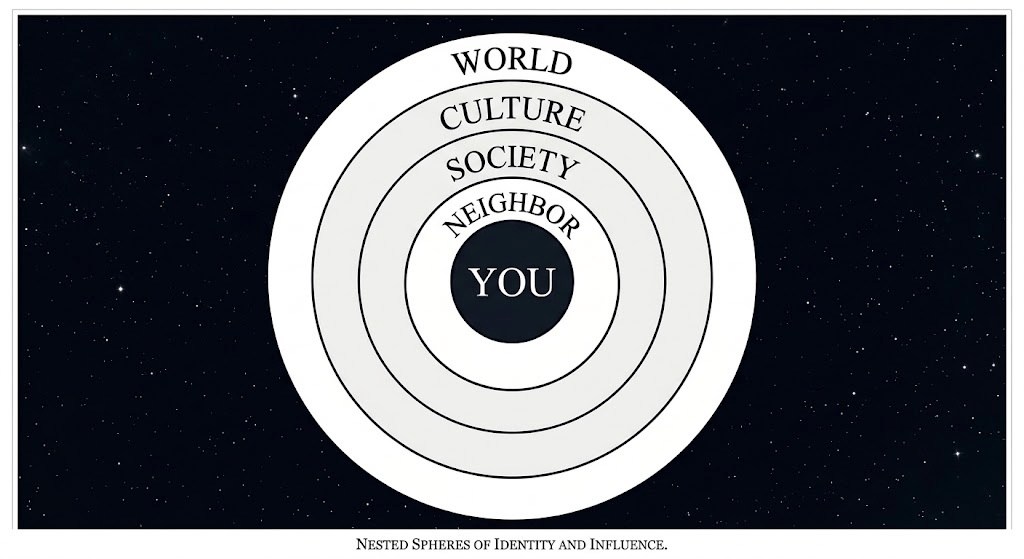
So…I have made this Gemini image for this post.

We need some kind of interaction between the real and ideal…between the objective and subjective…between science and religion. The problem with doing this interaction well is similar to the problem of doing academic medicine well. If one of the circles is not emphasized, the whole prospect of increased human understanding, cooperation, and love can be damaged. I put a “?” in one circle as I think one of the essential interactions of this model is currently missing in the world. Such resultant crippling effects can be seen in how terribly we treat each other when we try to make life difficult for people of different religious backgrounds, ethnicities, human sexualities, etc. Such crippling effects also can be seen when humans use religion to deny the importance of scientific concepts such as global warming, biological evolution, and miracle of vaccines. Finally, such crippling concepts can be seen in the setting of war.

Atomic bomb at Hiroshima, Japan. Image from University of Pennsylvania.

Religious institutions that do not provide at least a minimal but accurate science education risk having their religious leaders or laity believing an inaccurate fact-based belief system as opposed to dealing with of the real problems of the world.

Scientific institutions that do not provide some education about the subjective belief of our species risk sounding pompous and uninformed regarding how most humans (not all, of course) want some type of divinity in their lives. This aspect also leads to an inaccurate belief system which blocks progress when dealing with the real problems of the world.

We need a good interaction here. Of course, some religious institutions are great at understanding science, and some scientific institutions are great at understanding that people are often religious.

What we need is better translational work between religion and science. Theology often can be helpful here, but theology is not helpful if the theology is poor. I believe that in the current political climate of our country as well as in many parts of the world, translating between these two spheres of thought is more needed than ever. There are people who work in this intersection of belief systems. I try to do work at this intersection — sometimes well, sometimes not well. These 2 belief systems are not diametrically opposed. They can be synthesized into ways which improve the human condition, the condition of other species, and the condition of our planet in many ways. Such synthesis can include:

  1. Advancement of science
  2. Improved funding of science / funding of science education.
  3. Improved education of non-scientists about the importance of science
  4. Improved education of accurate science
  5. Increased religious engagement with science to potentially improve the ethics of science
  6. Increased religious engagement with science to properly educate religious groups in the setting of a church, mosque, temple, or synagogue.

The album, “Hemispheres” by Rush. Even though the album was produced in 1978, the A side of the album still is very relevant today. Also, I am a huge Rush fan.

Perhaps this critical connection between science and religion, when done well, may be one of the most important things that our species should be doing currently. I don’t know. However, the pathways leading to potential disease prevention, poverty prevention, war prevention, and prevention of pollution or global warming all seem to stream mightily from this interaction.

Theology Journal Club!

Graduates from the Open & Relational Theology program at Northwind Theological Seminary do an on-line journal club every few weeks. This past week we read “Evolution: Like any other Science it is Predictable” written by Simon Conway Morris and published in Philosophical Transactions B. Luckily, this article is open access. Here is the link.

Dr. Morris is a widely known paleobiologist who has done groundbreaking work on the Burgess Shale which is a rock formation in the Canadian Rockies. The Burgess Shale is a geological area that provides immense information about the Cambrian Explosion which is when life on Earth likely began to diversify very rapidly.

Cambrian Explosion — Image from Nature

Morris has written many articles and books. One of his interests is trying to determine if biological evolution has specific laws — similar to physical laws. Two aspects are to be considered here: 1) Do species become more complex over time? and 2) what does convergent evolution tell us about the potential of nature to repeat itself? His ideas suggest the potential for biological “laws” and thus perhaps concise mathematical statements about patterns in evolution and in life. There have been some attempts at making laws in biology such as Bergmann’s Rule.

Example of Bergmann’s Rule — Wikipedia

You can read Morris’ RSTB article for yourself since it is open access. However, I found certain aspects fascinating.

A. Morris is a better writer than I am. Here is a main part of his thesis: “The basis of this view relies on the phenomenon of evolutionary convergence. This concept is, of course, not only entirely familiar to evolutionary biologists, but also provides
some of the strongest arguments in favour of adaptational explanations. However, much less appreciated is the ubiquity of this convergence, with examples spanning the entire biological hierarchy from molecules to social systems and cognitive processes.”

This statement is interesting. Basically, he thinks evolutionary convergence extends from biology but perhaps to social systems which could be part of group selection. Theologically, one could state his idea lends itself to God being deterministic.

However, consider the concept of Open & Relational Theology (ORT). When considering ORT, one is exposed to the idea that the future is open to God. God also is relational to all of nature. This relation is one of creativity, and this creativity encompasses all of its many forms, including the potential of evolutionary convergence. In my book, A Theology of the Microbiome, I discussed the theological concept of “lim Δ;” i.e., “a limit [lim] to change [Δ].” I state, “As an example, limits to creativity are observed throughout nature. God has the attribute of desiring eternal creativity while existing in time and in an open future. As part of this desire, God prioritizes nature’s freedom even if nature itself puts limits on its creativity.”

I think ORT and lim Δ work well metaphysically with evolutionary convergence.

B. Morris states, “Thus, when we consider the origin of the birds, the story of Archaeopteryx and its theropod connection, not to mention the spectacular
evidence of subsequent bird evolution in the Cretaceous…” We recognize Archaeopteryx as a dinosaur with wings and feathers, but did you know that birds already existed in the Cretaceous before the tragedy of the K-Pg event? Yes, Archaeopteryx (a transition fossil) and animals that we would recognize today as birds co-existed. Here is a good article explaining this discovery. The air was a niche space to be filled and was already being filled with insects and ancient flying lizards like the pterosaurs. In other words, evolutionary convergence has a long history.

Archaeopteryx — image from Live Science

C. Another paleontologist that I respect greatly is Stephen Jay Gould. Gould did many amazing things in his lifetime, and similar to Morris, they both write like English professors when discussing science. Just brilliant. Gould believed that if one replayed the “tape of life”, different outcomes in life would occur. Personally, I think Gould’s idea makes perfect sense. However, there is some possibility that he is wrong.

Richard Lenski has a long and distinguished history of growing E. coli (the bacteria) over time and isolating subsequent colony generations from each other to follow evolutionary change. It is a long story, but basically he has found evidence that life, at least among bacteria, tends to repeat itself. He (and others) have found that when older E. coli generations are isolated and exposed to similar stressors (for example, exposure to citrate), the subsequent generations in general figure out a way to utilize citrate. They don’t die off. These isolated strains all proceed in a similar manner through their generations and through time. Good references to read are here and here. This evidence seems to point to the idea of convergent evolution. Bacteria are not charismatic megafauna, but the work of Lenski and others suggests the potential for evolutionary convergence and directionality occurring in larger forms of life. Perhaps God lures but does not force life to go in a certain direction?

E. coli — Image from the CDC

D. Morris states “Just as the present evidence indicates a monophyletic
origin for animal musculature, so too the nervous system is restricted to the eumetazoans. Once again, however, we can see significant precursors that point
to a deeper inevitability. Thus, it is not particularly surprising to find among the sponges, which evidently lack any nervous tissue, a series of proteins that (with
some notable absences) are otherwise central to the post-synaptic configuration in higher animals (Sakarya et al. 2007). These proteins have been identified in a
distinctive group of flask-shaped cells and the fact that they display molecular mechanisms that are also the hallmark of neurogenesis…”

If evolution does eventually lead to a neurological system, then is evolution directed towards eventual conscious awareness? I have no idea, but it is fascinating to consider. Such a suggestion would seem to be metaphysical in context. In the setting of the theological (and philosophical) idea of “panpsychism” or perhaps “panexperientialism“, then all small droplets of experience might combine and lead to things such as human consciousness. The evolution to human consciousness would take probably millions if not billions of years as life comes out of non-life materials and biological evolution proceeds. If God is in the mix here, then panexperientialism (which I prefer to panpsychism) would be the effect of all of nature having some type of experience with the material as well as with God. Since God is in / around / through all entities (panentheism), the idea of all creatures communing with God and every entity communing with God would make sense.

Perhaps the idea of directionality towards an eventual nervous system and even consciousness matches what has been explained by Information Integration Theory (IIT). I don’t know.

“Convergence”, Jackson Pollock

My conclusion: I believe in God, and I am a Christian. However, I don’t know if we can take the potential for evolutionary convergence or evolutionary directionality as evidence for God. I have no clue. I worry that humans are built to look for patterns — perhaps we see a pattern here in biology (expressed by Morris) that does not exist. For example, we think we see patterns in the art of Jackson Pollock when they really may not be there.

However, Morris’ ideas are fascinating from a scientific, philosophical, and theological perspective.

Image generated by Gemini Advanced

Altruism, Evolution, and Late Stage Capitalism

The New England Journal of Medicine had a recent article titled, “Physicians, Corporatization, and the Unmeasured Quality of Care.” written by Lawrence Casalino (Division of Health Policy and Economics in the Department of Population Health Sciences at Weill Cornell Medicine, New York). The article, unfortunately, is behind a paywall. Perhaps your local library has a free link.

I love this article for many reasons. The basic premise is that financial measurement of compassionate patient care should be considered in United States healthcare. If you can’t measure it, you can’t reimburse it accurately. This issue leads to the bigger problem of the ethics of “paying” for compassion in medicine.

Let me give you an example. Replacing a knee in an older person is a very complex and important orthopedic procedure. After becoming proficient, this procedure for an orthopedic surgeon understandably becomes rote in how the procedure works. A typical knee replacement takes 90 minutes and reimburses an average of $30,000 with a cost range of $15,000 – $50,000.

Let me give you another example. A pediatrician in the clinic setting has a child come in with malnutrition and who also has experienced potential child abuse. This issue takes a LONG time…examination, labs, talking to the hospital about potential hospitalization, finding a dietician that works with the family’s insurance (or lack of), finding appropriate social services, and even calling the police department. Keep in mind that it is hard to find reimbursement costs for pediatric care because children aren’t covered by Medicare. However, this 90 minute – 120 minute visit which takes significant mental concentration will reimburse anywhere between $150 to $350.

Both the orthopedic surgeon and the pediatrician can be extremely caring people and probably are wonderful. However, should their reimbursement be the same? Should it stay so different? No one really knows. I have strong opinions here, but I could be quite wrong.

This is one of the points of the article. Mainly, can we actually pay for altruistic care?

A quote from the article: “In a classic article, Nobel Prize–winning economist Kenneth Arrow argued that physician ‘behavior is supposed to be governed by a concern for the customer’s welfare which would not be expected of a salesman.'” By the way, here is the open access article originally written by Arrow.

Casalino also states, “My colleagues and I recently used a well-established type of economic experiment to measure altruism, assessing the extent to which people shared money available in the experiment with an unidentified person. We found that although only one third of physicians acted highly altruistically, the average physician acted more altruistically than members of the general population and much more altruistically than the average highly educated, high-income person. We also found evidence that patients of physicians categorized as altruistic had fewer potentially preventable emergency department visits and fewer potentially preventable hospital admissions than patients of other physicians.”

I was interested here and pulled up the study that Casalino and others performed. Thankfully, this article also is open access.

What do we make of all of this? Let me put down some thoughts.

  1. Physicians who are altruistic probably are safer. Of course, there are so many variables here. A very altruistic neurosurgeon still will have complications because she often takes care of the sickest patients in the hospital. This aspect is NOT her fault. The problem arises with inherent patient pathology.
  2. Current medical care in the United States does not pay for altruism. It pays for patient volume and pays for procedures. I am a pediatric gastroenterologist. This problem is quite true in my field. I am not saying necessarily that universal / nationalized health systems are better. These systems have their own issues with outcomes, patient wait times, and intractable problems with emergency services. However, universal healthcare is not terrible. As an example, patients with cystic fibrosis in Canada seem to live 10 years longer than patients with cystic fibrosis in the United States. Here is the open access link. Keep in mind that cystic fibrosis care is extremely expensive yet much cheaper in Canada compared to the U.S.
  3. If we emphasize patient volume and procedure volume in the United States, are we also emphasizing quality care? Not always. Are we emphasizing altruism? Definitely no.
  4. Late stage capitalism: I pretty much define this term as capitalism that has become so out of control (i.e., too expensive) that eventually the system needs to change. In fact, it is forced to change due to the downstream effects of income inequality, food insecurity, and other related issues. A good review of this terminology from Canada is here. A good review of how late stage capitalism has affected higher education is here. I have no issues with capitalism. I DO have an issue when it gets so out of control that people go bankrupt because of medical debt. I frequently see this tragedy in my medical practice.
  5. Is human altruism connected to making money? I don’t think so. Is human altruism connected to late stage capitalism? No. They are antithetical to each other.
  6. Altruism: I think there are two perspectives here. From a genetic perspective, altruism can be defined as caring for others at the expense of one’s survival and/or at the expense of one’s genetics in term of passing one’s genes to further generations. Altruism, as a result, can improve the survival of one’s relatives, one’s species, or one’s society at the expense of the individual. There also is a subjective component here. Humans often demonstrate altruism due to simply caring for or loving the other with no strings attached. It has even been argued that humans can prefer to practice altruism at the expense of our survival. I’m not sure this fact is true. I have no clue.
  7. However, it may be true if there is a metaphysical aspect here. Suppose we are altruistic because we think or we know God wants us to care for the other. This yearning is not about getting an “award” in the afterlife. This yearning is simply loving the “other” with no strings attached. Suppose we are altruistic because we think or we know that promoting love of the other (family, non-relatives, other types of life, our planet) promotes creativity and promotes love in nature. I think this statement is very true. It seems to be a big part of our religions. Matthew 25: 40 states, “Truly I tell you, whatever you did for one of the least of these brothers and sisters of mine, you did for me.” I’m a Christian, so this verse is important to me. In Islam, Quran 51: 19 states, “And in their wealth there was a rightful share ˹fulfilled˺ for the beggar and the poor.” In Buddhism, Itivuttaka 75 states, “Having rightly amassed wealth attained through initiative, he satisfies rightly with food and drink those fallen into the homeless state.” All of these verses are profound.
  8. Perhaps our tendency to follow our holy books throughout a significant portion of humanity’s history combined with the genetic aspects of altruism is an epigenetic phenomena.

But consider…just perhaps altruism is humanity’s drive to align with the Divine for love and creativity. For the love of other humans. For the love of all of nature.

Our current healthcare system (at least in the United States) is not built for the love of the other. Late-stage capitalism, no matter how it is defined, does not seem to align with the love of the other. We all have a choice to care for the other, individually or societally, even when market forces work against us.

Image from Our World in Data

Another image from Our World in Data

Image made by Gemini Advanced

Thoughts about St. Hildegard

I very much enjoy the journal, Theology and Science, published by Taylor & Francis. The latest issue has the following article: “St. Hildegard of Bingen’s Integral Ecology: Insights from Her Trinitarian Theology” written by Bruno Mello. Here is the link…behind a paywall (sorry). I subscribe to the journal, and it is not super expensive. I would recommend checking it out if you are able to financially.

St. Hildegard lived from around 1098 to 1179 ACE. She was a prolific Christian writer and mystic. I’ve always had an affection for the Christian mystics (and for some Islamic mystics as well). As a Christian myself, I appreciate the idea of loving God, believing in the deity of Christ, but not always going along with policies or doctrines of various church bodies even though I attend and am a member of a mainline Christian denomination. Here is an open access article on Christian mysticism.

St. Hildegard

In the article from Theology and Science, the author discusses St. Hildegard’s book, Causae et Curae, which is a medical treatise. In her writing, she uses the term, “Viriditas.” I like what Mello states in the article. He states that although viriditas means “greenness”, it also means, “greening power” of God. Mello beautifully writes, “Viriditas is the golden thread that runs through all of Hildegard’s theological writings…”

Veriditas can be inferred as the creative energy of God, and Mello states there are 4 ways to look at this term through St. Hildegard.

Literal sense: “Nature’s greenness” in all creation.  

Allegorical sense:  The soul of each human.  Humans grow as the soul experiences.

Moral sense:  Spirituality and holiness as seen through Christ.

Anagogical sense (i.e., spiritual or mystical):  Communion with God as the ultimate “greenness in celestial and divine life”.  The Trinity and the Eucharist are examples.

Have you ever removed yourself from the daily grind of traveling to work, sitting through boring meetings, doing the mundane tasks at work? Have you felt trapped by the absolute chaos that is social media?  Research suggests that getting into nature makes a huge difference in improving one’s mental health.  Going to the beach, hiking in the woods, going into the mountains — all of these places have the benefit of clearing one’s mind while creating peace. In a way, these are mystical experiences and perhaps have the possibility of being spiritual mystical experiences for those who lean towards religion.

For me, getting into nature is a way of communing with the Divine.

I took this picture of pine trees while skiing in the mountains in Feburary.

Humans are odd.  You would think religious people would be more accepting of the world’s bounty and beauty (“greenness”) from a mystical approach.  However, that is not necessarily the case as it depends on the religious movement (including drilling down into separate Christian denominations) as well the politics of the moment.  That aspect is sad.

I have a daughter who lives very close to Manhattan, New York.  When I visit her and walk through Central Park, I still can get this relaxed feeling even with other people walking or running close by.

Central Park, image from National Geographic

The idea of the Trinity in Christianity is old and not necessarily based on the books of the New Testament. Early Christian thought leaders, such as Tertullian came up with the concept. It is a beautiful idea, and I find it strange, satisfying, and yes, mystical.

Besides being a theological idea of Christianity, I think it also can be used as a metaphor. What do I mean by this? I have two thoughts.

One: Father-Son-Holy Ghost are all in a divine perichoresis or a divine dance of love with each other throughout eternity. They experience each other. They love each other. Readers of my blog will know that I write frequently about “panexperientialism” which is a common term used in process theology as well as in open & relational theology. It means that all have experience…from the smallest bits of matter to the entire universe. God, through God experiencing time and surrounding all of nature (“panentheism”), experiences all of what we experience. And I mean all — from quarks making particles to humans experiencing daily life to galaxies moving about with gravity. This is God in creation. This is God loving creation. This is viriditas.

Divine Perichoresis

Two: As metaphor but not as a theological concept, how would we think about viriditas here as we experience the world around us? I imagine a metaphor of the Trinity…the individual person (although one also can substitute an individual entity) interacting with all of nature (the universe) as well as interacting with God. If done well, this could be a perception or expression of the Divine Dance. We experience the universe and see its beauty. We love and appreciate God. The universe with all of its beauty and terror recognizes us while reflecting the eternal fire of lure of creativity from God. God loves us and God loves all of nature / the universe.

St. Hildegard was on to something special here even 1000 years later.

Image made by Gemini Advanced

Subjectivity in Southern Utah

I apologize for the delayed post. I recently finished a week of hospital call (always a busy time) followed by a short vacation with no computer access.

My vacation was a three-night camping trip at Goblin Valley State Park near Hanksville, Utah. The lovely thing about Utah is that some of the state parks are as beautiful as the national parks here but far less crowded.

Goblin Valley has two main sections: 1) the hoodoo formations in 3 different yet connecting canyons and 2) the slot canyon area consisting of two separate canyons that connect.

The hoodoo section is a bit more famous. It consists of “hoodoos” which are geological structures consisting of soft rock like sandstone under a harder caprock. Typically, they are only a few feet tall. Millions of years of erosions make these eerie structures that appear alien-like in appearance. Hence, the name “Goblin Valley” is apropos. I guess one could look at these rock structures and assume they look like goblins. There are thousands upon thousands of these hoodoos throughout the park.

Hoodoos, Goblin Valley State Park

The hoodoo section of Goblin Valley has three canyons. Most people just explore Canyon 1 (see the picture below). My spouse and I searched out the other two canyons (2 and 3) which became much more spectacular since no one was there (it was hot and some climbing was required). The quietness of the other two canyons matched the amazing views.

Canyon 1

The next day, we explored the slot canyons of Bell Canyon and Little Wild Horse Canyon. These two canyons connect in an 8-mile loop. It was hot (90 plus degrees Fahrenheit), and we had to pack water and food to make the loop. Most people don’t do the entire loop as the slot canyons require some climbing. The canyons were exquisite.

Slot canyon view. You can see how difficult it would be to climb over the terrain. We managed to do it.

What really impressed me was the immensity of the slot canyons. They would get quite wide in some regions and then get narrow at perhaps 2-3 feet across at other regions. One could see how people have died in the narrow sections when flash floods hit the area. Flash floods are not uncommon here. You should always check the weather before hiking in slot canyons.

I have told people that my hike in the slot canyons felt like walking through a Georgia O’Keeffe painting. The colors were outstanding. My spouse and I found this area of alternating black and red where water had come out of the stone likely for thousands of years (below).

It was just beautiful. The color distribution was so evenly divided that it looked like a light spectrum although it obviously was not.

I found another section near the ground of a slot canyon with blazing red, orange, and brown colors (below). It trailed on for about 80 to 100 feet. It sure seemed to excel in what O’Keeffe was trying to achieve in her paintings.

I like to write about theology. I’m not sure what my camping experience says about God, but let me try.

Perhaps God lures for beauty in this world, even in the desert. Such beauty exists even in the setting of extinction (Goblin Valley was probably a muddy area near the Western Interior Seaway during the Jurassic period around 170 to 145 million years ago).

Image from Nature

This seaway was filled with life. As tectonic activity and erosion continued, the sea dried out producing today’s desert ecology and resultant hoodoos / slot canyons. It is hard to look at this area and to understand the past presence of abundant dinosaurs and food chains present in the distant past.

Over the millions of years of land elevation, loss of water, wind, and erosion, this area continues to be beautiful. We, as humans, are provided a gift of this beauty.

What does this say about the human condition in that we find areas like Goblin Valley beautiful? What does it say, perhaps, about God?

From a human perspective, we have both objective and subjective thoughts. Objectivity contains the rational. Perhaps you could put the subjects of mathematics and science as contained in human objective thought. Science has improved the world in so many ways. I’m a big fan of it. Heck, we would know pretty much nothing about the ancient history of Goblin Valley State Park without scientific knowledge.

However, humans also are subjective animals. This part of our brain contains the arts, literature, theater, and our emotional feelings about beauty found in nature. Why are we subjective when it comes to looking at nature? Some people think that we get profound emotions in the setting of nature as an evolutionary way for us to relax. Humans have leftover evolutionary responses to stress. Instead of looking for predators and for food sources, we are dealing with stress at work and with the stress living in urban environments. Getting out into a beautiful natural setting helps us reset from the fatigue of chronic attention and resultant stress. This idea is called “Attention Restoration Theory.”

Some people think that our human reaction to beauty in nature may be transcendental in nature. Yes, it is a natural, chemical reaction to love beauty, but there still may be a transcendental aspect to this feeling. This connection could be to the Divine. Perhaps science will help here. Perhaps emotional connection will help here. Perhaps our combined objective AND subjective mental aspects will help here. In other words, the beauty we see over millions of years of geological change and evolutionary pathways may be a way for us to see God IN nature without the chains of human-centered “woo” of pseudo-science or the non-science aspects of wooden, literal readings of our holy scriptures.

What does this mean about God? I feel strongly that the Imago Dei is divine love perceived by humans both objectively and subjectively. Perhaps a good reference article is here.

Readers of my blog know that I believe strongly that God lures for creativity at all levels of nature. God lures of “the good.” The good, in my opinion, is to have nature proceed with beauty and with spontaneity through time even in the setting of death and destruction. Creativity continues. Love continues. Natural laws may lead to the Second Law of Thermodynamics with all of its benefits and destruction. Natural laws lead to death. Yet, God is always there…breathing potential into our universe and into each of us. This is not a forced potential yet is a lure or a call for something new.

An ancient dried up ocean that was once filled with life is still beautiful millions of years later as a state park with amazing colors, majestic geology, and even life today. Insects, lizards, and birds are there today. And we humans are blessed to have the capability to visit.

Mosasaur from the Western Interior Seaway (U.S. National Park Service)

Morality: Epigenetics and Culture (and Theology)

I’m slowly writing a new book as I have referenced in some of my prior posts. My current thought is that the book will consist of five chapters, and I am about done with the 4th chapter. I don’t want to talk about this book too much as I still have to write the 5th chapter and then I need to do a deep review of the first 4 chapters for accuracy and for deciding if more length is needed. It is quite a bit of work while doing a full-time job in a completely different field.

I have been reading about the aspects of human ethics and morality as part of the work for the 4th chapter. As a religious person, I do have some metaphysical assumptions here. However, the science behind human morality is quite fascinating. It is admittedly an incomplete science, but it is fascinating.

Image from https://anoddworkofgrace.blogspot.com/2016/09/but-love-your-enemies-do-good-and.html

One interesting article that I came across is titled, “The Psychology of Morality: A Review and Analysis of Empirical Studies Published From 1940 Through 2017” written by Ellemers, et al., and was published in Personality and Social Psychology Review in 2019. Basically, this paper is a meta-analysis of morality studies over several decades. Is there universal morality structures throughout worldwide cultures? The answer is “yes if one realizes the research is not great.” In other words, the authors clearly point out the many problems of comparing studies, including how thinking about morality actually affects or doesn’t affect behavior, the vast differences in such research studies, and the disconnect between theoretical research and experimental research when it comes to human morality. These conclusions make sense.

Another interesting article that I came across was titled, “Cultural Group Selection and Human Cooperation: A Conceptual and Empirical Review” published by Daniel Smith in Evolutionary Human Sciences in 2020.

Honey bees

This article is a bit different. This article looks at the validity of “cultural group selection.” If we consider “kin selection” as related individuals putting their reproductive capacity at risk in order to promote the well being of related individuals and “group selection” as unrelated individuals putting their reproductive capacity at risk to promote the well being of the species as a whole, then “cultural group selection” might be considered a type of group selection that promotes a specific culture. Extensions of cultural group selection could include 1) the selection of subjective thought to promote culture (i.e., the arts) and 2) legal systems.

By the way, honey bees are an example of kin selection; tamarins are an example of group selection.

Emperor Tamarin

The problems (as the authors point out) with culture group selection are the following:

-Different definitions of cultural group selection so there is no unified definition.

-Different definitions of altruism which complicates placing evolutionary theory into cultural group selection.

-No mechanism defined for cultural group selection,

-Group behavior changes do not always adapt existing cultural norms.

-Ecology / the environment has a big effect on cultural group selection.

-Cultural group selection does not necessarily correlate with genetic fitness.

-Individuals may benefit more from certain aspects of cultural group selection as opposed to genetic fitness. In other words, cultural group selection may (at times) be just as important and perhaps more important than genetic features.*

*Let’s concentrate on this last idea. First of all, this idea suggests some type of environmental epigenetic features in which the environment itself influences genetic outcomes. The environment in this setting could be one’s religious / non-religious perspectives, how one was raised, where one goes for community activity, etc. A good reference is here. Just to be clear, I have met very moral religious and non-religious people. I also have met very immoral religious and non-religious people. I am not being selective here.

Let’s further suppose what this idea means from a love standpoint. I’m talking about agape-type love or a universal love of the other.

Should we have a universal love for the other? Personally, I think it would help our planet quite a bit to care for each other and for the planet although we seem to perpetually be a violent species. However, at times, I see this agape coming through in history.

I think about various groups hiding Jews from the Nazis during World War II.

I think about the beauty and love demonstrated in hospice care.

I think about people helping slaves in the United States cross into the northern states during the U.S. Civil War.

An example would be Harriet Tubman.

I think about ideas surrounding an expansive view of Muwatanah in Islamic society.

I think about John 15:13, “Greater love has no one than this: to lay down one’s life for one’s friends.” I think “friends” is quite an expansive term here.

I am going to make a metaphysical statement here. I propose that the act of caring for the “other” (for which “other” is an expansive view) is more helpful for our human species than being individualistic, materialistic, or capitalistic.

Further, I am going to make another metaphysical statement. I propose there is something inherently “good” in the setting of nature or the universe when we care for the other.

I personally think this call for the good is God. I think it is God who is in, through, around, and outside of nature as I have described in the past — defined theologically as panentheism.

Notice that I used the term “call.” God isn’t forcing here. I think God calls for nature and perhaps, just perhaps, potentially and especially for us on Earth.

God, I think, call for us at every moment of time to be loving, to be good. God calls for nature to be creative, to be novel. At every moment in time, nature, the universe, you, and me can choose the good / the creative. It is nature’s choice (and thus our choice) to choose the good or not. This choice is freely made. God lures but does not force.

I think nature / the universe is contained in God (panentheism), so a biological aspect of moral choices as in genetics or epigenetics makes sense. God calls for us to consider the choice of morality through our biology and through our world.

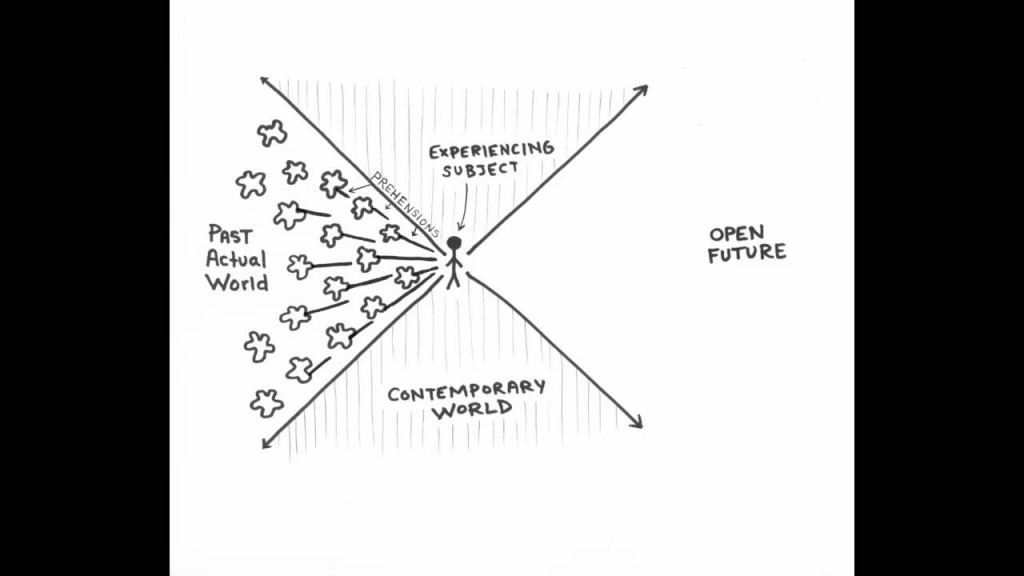
Here is my idea from my post encapsulated as an image. An event emanating from an entity happens in time. God interacts at one point in that event to call or to lure for creativity. The entity in time of the event has the decision to be creative (“+”) or not (“-“).

A Sedated “Experience”

As one gets older, the second law of thermodynamics seems to kick in a bit more with me, and the body starts the process of slowly breaking down.

Unfortunately, I recently scheduled tons of medical visits over a 5-day period. I was not paying attention to the fact that I had bunched these appointments all together. Such appointments consisted of annual visit with my PCP, my every-2-year colonoscopy, and my annual artificial cardiac valve testing. I may work in healthcare, but I hate being a patient even though I am pretty “type A” following up on my personal health needs.

I get my care at the University of Utah.

As I once again underwent my colonoscopy, I was sedated with propofol. I have had a few diagnostic colonoscopies at this point. I also have had very deep sedation with paralyzing agents given to me twice due to open heart surgery.

I like to think about what I am experiencing while I am slowly being sedated. I think about how my body’s nerves are changing based on medication. I try to think about how long I can continue with conscious thought. I have had so many procedures at this point that sedation doesn’t really bother me psychologically as it does to some people. I have friends who are terrified about sedation.

My scheduled colonoscopic examinations always consist of propofol, which by the way, is the same sedation that I use on my own patients as I am a pediatric gastroenterologist. Propofol is an interesting drug. You go into deep sedation very quickly. It is typically given as an infusion. Once the infusion is stopped, it is amazing how quickly one wakes up with no real sedation effects. Propofol works by causing large amounts of chloride to enter postsynaptic neurons. This extra chloride basically “short circuits” the neurons of the central nervous system leading to deep brain sedation. The drug is eliminated quickly through the liver, kidneys and lungs. The multiple paths of propofol’s elimination is why people wake up quickly once the drug is stopped. Honestly, it is an amazing drug.

Propofol

I have had several colonoscopic examinations, one transesophageal echocardiogram (an echocardiogram performed through the esophagus), and two open heart surgeries in which I was exposed to heart-lung bypass. I have always experienced unconsciousness during these procedures.

Weirdly, when I wake up, I do feel that time has passed even though I don’t specifically remember time passing while under sedation. Also, I don’t remember anything during the procedure.

These personal experiences of being potentially close to death (especially with open heart surgery) make me think of the idea of near death experiences (NDEs). Such events have been reported occurring between 6% to 40% of patients who experience cardiac arrest. There is some commonality among those who undergo NDEs…feelings of peace, being surrounded by light, and being outside the human body.

When I underwent open heart surgery for valve replacement in 2012, I did undergo somewhat of a temporary cardiac arrest. It is impossible to replace a heart valve in a beating heart, so potassium is added to the heart to make it stop. My surgery was several hours long. My heart was stopped during some of that time period. Absolutely no NDE happened. I was just unconscious.

My first thought here is that I believe NDEs cannot be studied by the hard sciences. Yes, they can be studied psychologically, historically, and sociologically as part of of human experience or societal experience. I just don’t see how any type of instrument can be used to see if NDEs actually occur. NDEs are not subject to study by mass spectroscopy, Western blot, microscopy, or atomic collider. I think NDEs are filled with subjectivity with little objective illumination. Subjectivity, just like consciousness, often is hard to explain materially.

My second thought is that the older I get and the more I learn, the more I wonder if spiritual dualism can even be a thing. Are we both body and soul? Do body and soul separate at death? Does the soul (or psyche), per Plato, have an eternal existence that was present before and definitely after its associated material body dies? As conceived in much of Western contemporary Christianity, do our souls separate from our body which then are condemned to Hell or blessed in Heaven eternally?

Heaven and Hell, by Octave Tassaert

As we learn about so many aspects of the universe, I wonder if these ideas are even close to possible. As we learn more about the world, does it change our theology? Our philosophy? Our metaphysics? Our thought on what the afterlife means?

The universe appears to be expanding faster and faster. Time is relative and not continuous throughout the universe. Time, in fact, may be structural in the setting of general relativity. A particle and wave co-exist in quantum mechanics. Quantum entanglement exists. Random genetic mutations existing in massive quantities leads to morphological changes in creatures producing innumerable species on our planet. Life began somehow from unalive sources.

Cosmic microwave background

On the human level, we are living longer and longer. Once deadly diseases are now curable, while at the same time, new diseases are becoming common due to our living longer. We are more urban. We live with electricity. We have many ways of destroying all of human civilization, not just a local village or small kingdom.

For me, the fact that the universe becomes more mysterious despite learning more about it, makes me think we do not have any grasp of what a potential afterlife entails. There may be some objective reality regarding the afterlife that our little human brains will never understand.

In the end, all of our scientific endeavors will still often lead to blind alleys (epistemic limitation) or to alleys that we cannot find (idealism). For me, the fact that a nuclear war or intense global warming could destroy all remnants of H. sapiens, makes me sure that the world is not black and white. The world is not bimodal Heaven or Hell. The effect of our species on the world is simply “gray” in that reality is too complex and too interconnected for us to say, “This person is definitely going to Hell” or “That person is definitely going to Heaven.” We all, to some degree, deserve both credit and blame for what happens locally, geopolitically, and planetarily.

William James in The Varieties of Religious Experience writes the following:

“The difference in natural ‘fact’ which most of us would assign as the first
difference which the existence of a God ought to make would, I imagine,
be personal immortality. Religion, in fact, for the great majority of our own race means immortality, and nothing else. God is the producer of
immortality; and whoever has doubts of immortality is written down as
an atheist without farther trial. I have said nothing in my lectures about
immortality or the belief therein, for to me it seems a secondary point. If
our ideals are only cared for in ‘eternity,’ I do not see why we might not
be willing to resign their care to other hands than ours. Yet I sympathize
with the urgent impulse to be present ourselves, and in the conflict of
impulses, both of them so vague yet both of them noble, I know not how
to decide. It seems to me that it is eminently a case for facts to testify.
Facts, I think, are yet lacking to prove ‘spirit-return’…”

I read his words here as to mean that religious people (such as me) prioritize the existence of God first while everything else becomes secondary to that belief. In other words, if God is the priority or immediate belief, then the afterlife, ideas of Heaven and Hell, and the ideas of the immense number of human religions are simply secondary. As such, these secondary ideas are filled with our subjective beliefs. We cannot prove the miracles of Jesus although we may believe in them. We cannot prove the divine inspirations of Muhammad although we may believe in them. We cannot believe in the eternalities of the Buddha although we may believe in them.

Our individual thesis about the existence or non-existence of God is based on both objective knowledge looking at the world around us which is of equal importance to our subjective feelings, emotions, and beliefs about the existence or non-existence of God. Everything after that (such as ideas of the afterlife) seems to be mainly based on more subjective ideas manifested by all the religions of the world.

How do I think of the afterlife? Well, I think there is an afterlife. Granted, my belief here is more subjective than objective. I do have two thoughts.

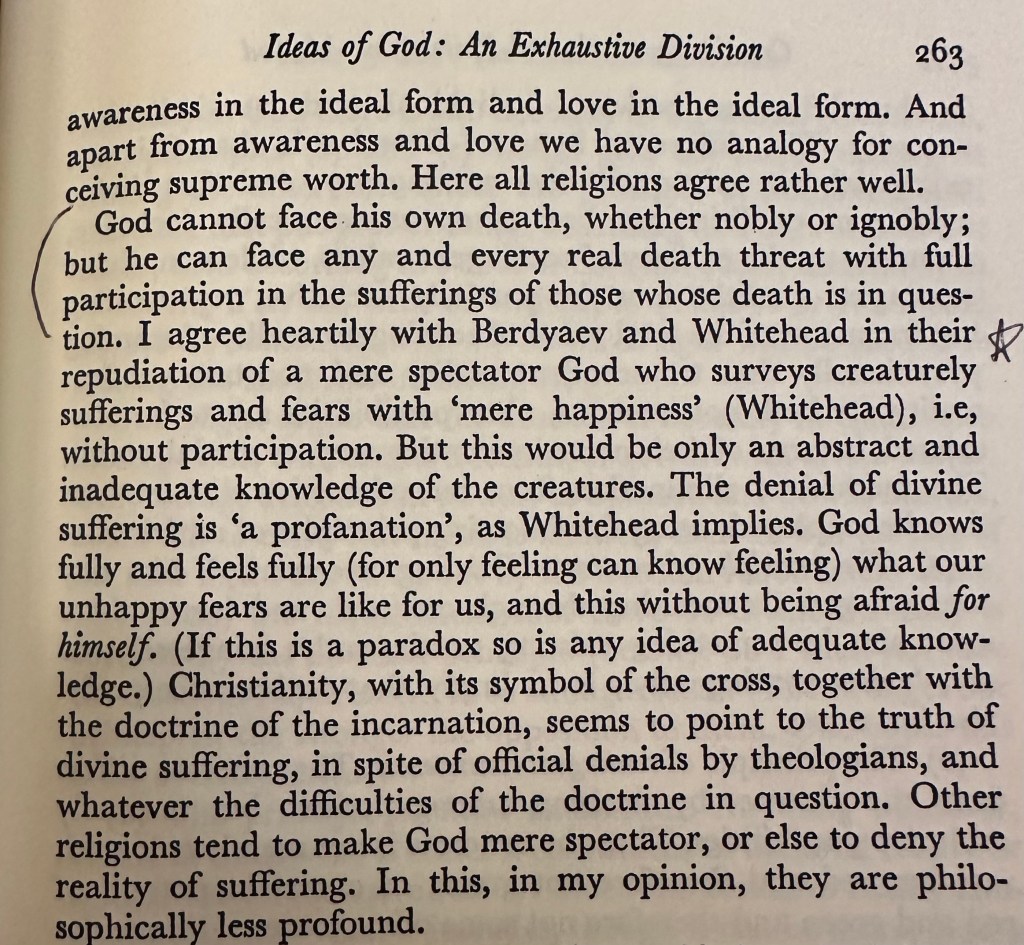
  1. I like Whitehead’s description of God in Process and Reality. Towards the end of the book, he writes that all actualities, all moments in time, all events are, in many ways, kept by God eternally. Thus, “The image — and it is but an image — the image under which this operative growth of God’s nature is best conceived, is that of a tender care that nothing is lost.” All is remembered in God. This “Divine Remembering” could be construed as an eternal afterlife with God always remembering me. I exist in God’s remembrance as does everyone and everything. I consider God’s eternality here as life-giving throughout all of time. I live and create even now in this eternal memory.
  2. My second idea is much more simple. I am kind of an idealist when it comes to the afterlife. I think “we see only a reflection as in a mirror; then we shall see face to face” (1 Corinthians 13:12). I believe in the afterlife, but in a manner similar to how I feel about the universe. I think there is ground here that we will never understand.

Image generated by Gemini Advanced