Theology Ends Up Matching the Science, Part 2

It’s been a busy and emotional week, so I am going to write a short post. I had to fly across the country for a relative’s funeral. I then have had an old friend of mine visit from Texas, and I have wanted to entertain him WHILE I have worked this week.

Anyway… I wanted to expand on the ideas from my last post.

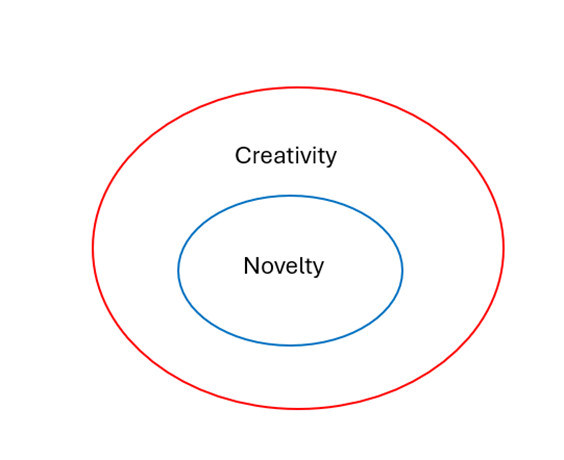
Where does our idea of God come from? No one knows. It could be the ultimate human meme. It could be epigenetics influencing the genetics of some human neurotransmitter. It could be just a consequence of all human cultures over time throughout the planet. However and from a theological perspective, the human idea and perhaps perception of God may be due to panentheism. Panentheism is the concept that ALL is in God — every atom, every human, every galaxy, our universe. Thus, it is the nature of reality to have God present everywhere and in every moment in time. As I have stated in previous posts, this consideration of God is not defined as a deterministic, omniscient God but rather a God of creativity and luring. God would lure for creativity or novelty over time, and creativity over time would be an expression of God’s love.

Now, when I say that theology matches the science, then I mean that theology matches knowledge acquisition. Science in Latin is “scientia” which simply means “knowledge.” My proposal is that every time that our species has discovered new knowledge (objective) or made a modifying statement about knowledge (subjective), this process can reflect God’s immanence in our world.

For example, early Homo species would appreciate new life every spring. The acquired knowledge of time, regeneration, and life would then be reflected onto ideas about God’s reality. From a panentheism standpoint, these ideas would template onto some concept about God.

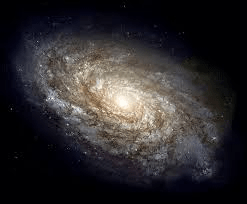
image from Smithsonian

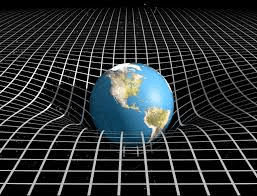
Isaac Newton described gravity. Ideas surrounding nature as potentially mathematical was investigated by others, but Newton was a giant here. From a panentheism standpoint, mathematics and nature would describe something about God. Mathematics and its reflection on nature become even more metaphysically beckoning when the science of physics is advanced to consider quantum mechanics or general relativity.

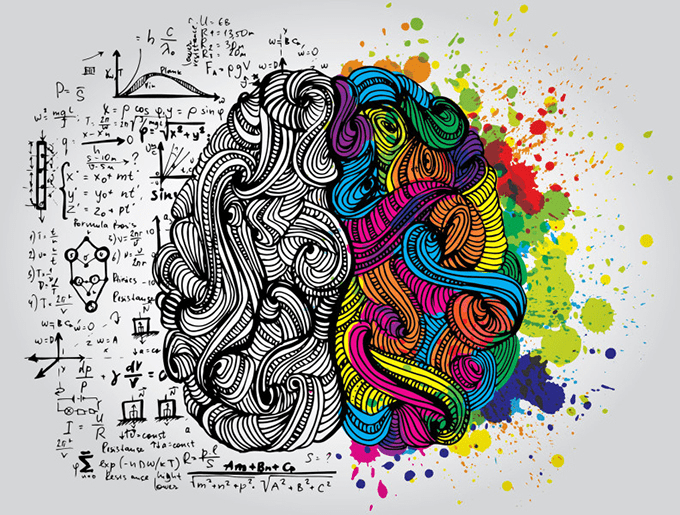
image from Live Science

Consider the Surrealism Art Movement. Surrealism, in many ways, was a consequence of the tragedy of World War I. War is brutal and typically pointless. Surrealism can emphasize meaningless but also can emphasize beauty emerging out of chaos. If God lures for the good or for love, then beauty can arise out of human foolishness.

image from Abrakadoodle

Thus, any objective or subjective fact or event learned can give us an idea about God. This is a theological statement and not a scientific statement, and better theology in the setting of a world that seems to want scientific progress makes for improved interactions between humans. Objective truth influences subjectivity interpretation. Subjective interpretation influences. God can be understood by the unveiling of new facts and their interpretations.

Our species has the ability to understand more and more of eternal divinity throughout nature and through time. It is beautiful to consider.

As a final example, consider the ideas surrounding the Forman Thesis (how Weimar culture and society influenced early interpretations of quantum mechanics). An on-line PDF of this important paper is here.

image created by Meta AI

Theology Ends Up Matching the Science

I have been working my way through Michael Abril’s Evolutionary Theology which is a great book. I’m “working my way through” only in the sense that I often have a limited free reading time outside of work.

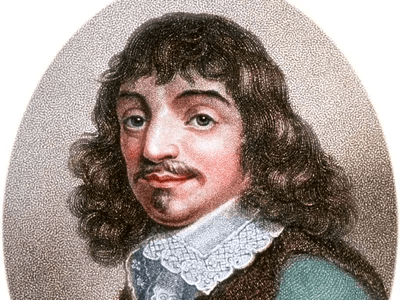
In his book, he talks a bit about Pierre Louis Moreau de Maupertuis (1698-1759) who was a very influential scientist. His most famous work was on the “principle of least action” which is important when considering potential and kinetic energy.

image from Smithsonian

As part of his work, he began to experiment with early ideas of inheritance. It is fascinating as to how close he was to discovering the science behind genetics as well as how much he got wrong. He just didn’t have the technology.

The most important thing to consider in this post is that he did believe in strict determinism from a heritability standpoint. He posited that there existed “psychobiological determinism” in which each person’s body and mental characteristics were completely determined by inheritance with no chance of outside possibilities. de Maupertuis was, in fact, very influenced by the work on Newton which presents a determinist version of physics.

In other words, work by Newton and others caused a pulse of impression affecting other aspects of life and culture — inheritance ideas or even religion. The rise of Deism could be an example here as determinism did influence 18th century religion. The scourge of slavery was influenced by racist, deterministic metaphysical ideas.

Today, Newton’s principles of mathematics from a deterministic perspective are extremely important and make sense whether building a house or launching a rocket.

However, determinism is not clear. Think about ideas surrounding epigenetics. Think about ideas surrounding wave-particle duality in quantum physics. Both of these ideas suggest 1) limits to determinism / no determinism and 2) the importance of chance or randomness. From a process theology perspective, this is “creativity.” Freewill becomes a reality. Love of other makes sense.

Religion will catch up to the scientific ideas of today. It will take time as the metaphysics of science can be blocked at the church leadership level (due to terrible metaphysics or just superstition) while, at the same time, not being understood by church laity.

Freewill in the setting of a loving God who wants creativity today: Are we starting to see this in theology? Yes. Consider ideas surrounding process theology and open & relational theology. They are based on new ideas surrounding both faith and science. Both concepts have been discussed in prior post, and I think both have the potential to keep many of the world’s religion’s inspired to consider new aspects of the Divine, previously unknown.

image generated by Meta AI

I Spoke at Church this Sunday

Luckily, I was not asked to give a sermon! However, Pastor Irene asked me earlier in the week to say some words about what my church (Wasatch Presbyterian Church, PC-USA, Salt Lake City) means to my family. By the way, as my recent book points out (hint, hint, if you want to buy a copy): “…I hold my belief in the importance of denominations very, very loosely.”

In other words, I don’t care if a church is Protestant mainline, Catholic, Orthodox, Pentecostal, whatever! As long as the congregation in the church 1) supports science to improve the quality of existence of our species and for the planet and 2) supports people regardless of race, income, religion, sexual orientation, and all the other beautiful aspects of human complexity, then I’m fine with it.

This may sound strange, but I hate talking at church. As part of my academic job, I have given hundreds of lectures ranging from small group talks with less than 10 people to American Academy of Pediatric talks with almost a thousand people in the audience. Such talks about clinical medicine never bother me. I find it very strange that I get nervous when I get up to speak at any church. I’ve had some issues with anti-science churches in the past that I have attended which probably has given me a bit of anxiety in the church setting. Wasatch Presbyterian is not perfect (and no church is), but it is pro-science and pro-humanity.

Anyway, I start my talk at around 22 min, 22 sec and end at around 25 min, 7 sec if you want to listen to it. Here is the link.

picture of where I attend church

Science, Truth, and Religion

I listened to a fascinating podcast this weekend in which Professor Harry Collins from Cardiff University was interviewed about truth in science. I highly recommend the listen.

Simply put, science primary goal is to look for the causes of things (observation). The causes may be broad (epidemiology); the causes may be minute (biochemistry of ATP); the causes may be erudite with no specific benefit to society but still important (gravitational waves). All are causes, and all may be equally important if this search for causes is the primary goal of science. I think this is true.

Collins goes on to suggest that this search for causes is a search for truth. Now, it may be hard to find this truth. Examples of discoveries such as gravitational waves, the Higgs boson, and the presence of dark energy exist. They are expensive to find and can take decades to discover. However, their discovery must be based in truth.

In my field (medicine), we can’t say that infection is caused by humour imbalance.

(Image from the johnmooremuseum.org)

That statement would, at a minimum, be uninformed and, at most. would be a lie. Infection is caused by bacteria, viruses, fungi, protists, etc. and we have treatments! Science cannot proceed unless it starts with a quest for truth. Faking results to get a promotion or tenure is tantamount to destroying scientific discovery. Retraction Watch has documented such problems for many years.

Now on to religion… I believe strongly that religion does well when it recognizes what science does and then incorporates it into metaphysical beliefs. Metaphysical beliefs have a subjective element (for example, how we think about God) combined with objective results (for example, looking at the world around us).

If a church denies the presence of evolution as a biological fact, then that church is basing its belief system not on truth but on a lie. However, one can look at convergent evolution and find metaphysical or religious theories that are quite valid theologically and perhaps philosophically.

(Image from Nature)

However, denying science in religion is denying truth while approving a falsehood. Lying goes against most theological doctrines. Pretty simple.

How many more topics can exist in the space of religion? I would include addressing global warming, prevention of totalitarianism, insisting on the importance of vaccinations to prevent death during a worldwide pandemic, and understanding and improving social determinants of health.

This area is where fundamentalism and inerrancy so often fail. These theological categories go against observational truth. The eternal search for a “just so” story based strictly on religious texts while ignoring what is going on in the actual world leads away from truth and leads away from helping humanity, other species, and our planet.

I have made a diagram below. A scientific “truth” or “fact” is observed. Good science (i.e., not pseudo-science) makes sure this finding is actually true. Science should not lie, and the history of science if filled with much more truth than falsehood. Religious systems (and people who are religious) then put this objective truth through a religious filter. The objective truth should not be ignored but should have subjective meaning put in place by relgion that emphasizes the good which I would define as improving humanity and our planet (for example, Matthew 22:37-40). More truth is discovered in science, and the cycle continues throughout human existence.

A good way to think about this issue is to read Andy Crouch’s essay, “What I Wish My Pastor Knew About The Life of a Scientist.” I think he summarizes these ideas much better than I ever will.

image generated by Meta AI

AI Study Probably Didn’t Disprove Determinism. Maybe.

I use AI at work mainly for writing test questions for medical students, residents, etc. I also use it to write letters to insurance companies when medications for patients get denied. It is a great data scrubber if I need a short description of a medical condition. My AI of choice is typically Google’s Gemini.

I am not an AI doomer. AI is great. It also is pretty dumb about many things. Journal references are often (and STILL) incorrect. It can write some code but not always complex stuff. I’m not as of yet worried about it taking over my job or being a Terminator.

I listened to a great podcast about AI this morning. The guest on the show talked about a peer-reviewed journal article showing where AI is really at in regards to predictive capability. This article is open access.

In summary, data from the Fragile Families and Child Wellbeing Study was utilized to determine life outcomes in children coming from homes with significant financial / social stress. This study is based on data from 750 journal articles. A total of 12,952 variables collected from these articles were used. 12,952! Whoa!

Somehow the authors managed to invite 160 teams to come up with machine-learning algorithms for predicting outcomes using these variables. Again, 750 peer-reviewed journal articles; 12,952 independent variables; 160 machine-learning algorithms!

The results per the study authors: “Once the Fragile Families Challenge was complete, we scored all 160 submissions using the holdout data. We discovered that even the best predictions were not very accurate…In other words, even though the Fragile Families data included thousands of variables collected to help scientists understand the lives of these families, participants were not able to make accurate predictions for the holdout cases. Further, the best submissions, which often used complex machine-learning methods and had access to thousands of predictor variables, were only somewhat better than the results from a simple benchmark model that used linear regression (continuous outcomes) or logistic regression (binary outcomes)…

AI prediction in this study did not work well. It perhaps was a bit better in predicting outcomes compared to standard statistical testing. However, it was terrible at global outcomes of the individuals studied.

What does this mean? I think of two ideas to expand upon.

  1. AI currently is not the behemoth that we are worried about. It is not a “paperclip maximizer.” I do wonder if the AI talk these days is producing an economic sector bubble. Of course, I am not an economist.
  2. However, I like to think that this study puts determinism in a bit of a spot. Determinism v. free will is a bit of a Sisyphus issue. We debate, debate, debate, and the debate never ends. I would argue that if massive data modeling is not significantly globally predictive as in the Salganik, et al. study above, then perhaps we humans (and other organisms) can choose our outcomes within genetic, epigenetic, chemical, and physical limits.

Theologically speaking, if one accepts the ideas surrounding open & relational theology (ORT), then God wants all entities to have freedom of experience and of choice. I realize an electron has very limited choices; humans have a panoply of choices. This freedom leads to creativity — whether a production of an electron cloud or the producing of the Mona Lisa.

Electron cloud images from https://wordpress.com/post/johnfpohlmd.blog/357

“Mona Lisa” by Leonardo da Vinci

This study in PNAS is in the scientific category of computer engineering / AI development. We can think about the metaphysical implications of this study as well.

image created by Open AI

Realism at the Basement of Reality?

I’m definitely not a theoretical physicist. I’m also not a philosopher. I do have a doctorate in theology in addition to my medical degree. So, it makes sense for me to comment on something for which I have no real handle on…quantum mechanics. I do understand some of its concepts, and I know enough basic calculus to understand simple aspects of this important part of physics.

I have been fascinated for a long time regarding interpretations of quantum mechanics. I am not a determinist (although perhaps the atoms in my brain are spinning in a deterministic manner since the Big Bang to make me think I am not a determinist).

I find the Copenhagen Interpretation of quantum mechanics satisfying in a subjective sense when not just considering the mathematical aspects of it. I know Albert Einstein was not a fan of this interpretation. He was mechanical all the way down. He was clear that God “does not play dice“. However, if there is no way to separate a particle from a wave throughout the universe unless observed — whatever “observed” means — then I think reality, at its most fundamental level, has some degree of randomness.

If reality has some degree of randomness, I can make two theological claims:

  1. God is not deterministic. Thus, God does not force determinism on the universe.
  2. If God is love and God wants creativity / novelty which is the output of God’s love, then God can lure for the “the good” which I would define as more creativity. This lure is the still, small voice and not a demanding, authoritative command.

I want to make the statement that this randomness at the quantum level is actually realism and not idealism. This would work with a theological idea of God who wants all levels of creation to have some control over outcomes without God’s involvement (although God can “lure”). A great journal article on the concept of a divine lure is here.

Per Realism and Anti-Realism (Brock and Mares, Taylor and Francis Publishing):

…scientific theories themselves sometimes explicitly use the concepts of and quantify over the objects of particular mathematical theories. For example, the following passage is taken from a popular textbook in quantum mechanics:

Postulate 4.1 For every dynamical system there exists a wave function that is a continuous, integratable, single-valued function of the parameters of the system and of time, and from which all possible predictions of the physical properties of the system can be obtained. This is the first postulate of quantum mechanics. It postulates the existence of a certain sort of function – a Schrödinger wave function – for each physical system (an electron, an atom, etc.). This function has certain features, such as being continuous and integratable, that are defined in a particular mathematical theory: calculus.

Hence, wave-particle duality fits well into a continuous system in which outcomes can be statistically determined although it is helpful if the system being measured has boundedness. Infinities are impossible with integration. This mathematical stopping point regarding infinities suggests a limit to creativity. This limit (or limits) persists despite creativity (randomness potential) at the base of all reality.

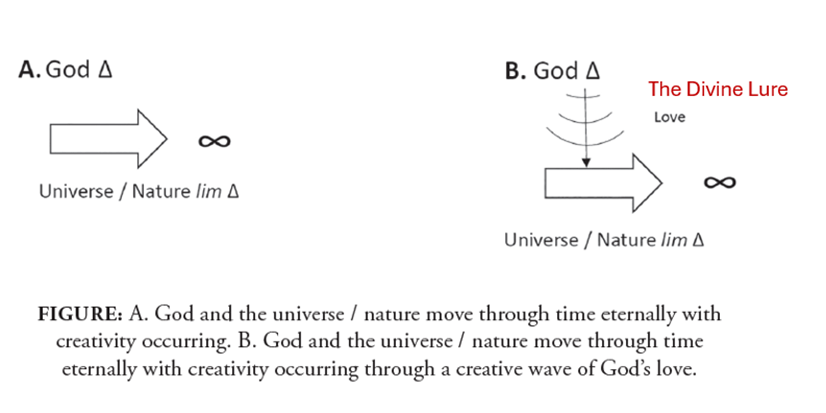
The limit is lim Δ (a theological term which I invented) discussed in prior posts and in my recently published book. In lim Δ, all levels of nature can freely impose limits despite God wanting continuing creativity. Limits put in place by nature are part of God’s love which desires freedom of creativity in all of nature. If nature freely puts in place a natural limit, so be it.

An understanding of science can help change our theological models about God’s interactions in the world in helpful ways. Science advances; theology must adapt to advancements in science to help in our understanding of God, humanity, and humanity’s place in the universe.

By the way, Neils Bohr’s response to Einstein’s comment: “”Stop telling God what to do.” ; )

image made by Meta AI

The Light Cone and Process Philosophy / Process Theology

In my opinion, the light cone is one of the best ways to understand aspects of one of the 3 tenets of process philosophy and process theology — prehension. The other two aspects are panentheism and panexperientialism.

Simply put, prehension is the moment right before an event occurs. Process philosophy (and thus, process theology) is based on change. The basement of all reality is change, not matter. This change involved the eminence of time.

As a moment of time experience is just about to occur, many possibilities or actualities are available, but most will not occur as the next experience in time undergoes a concrescence into a real occasion. Time, if eternal, keeps the process of actualities / possibilities –> concretion –> actualities / possibilities eternal through time…quite beautiful to think about actually.

The light cone contains a point in space and time. Events in the past of the light cone contain all possibilities where the light may have come from. All events in the future contain all possibilities where light may be going. When one considers the immensity of photons in our universe, you can see how complex and beautiful events can become. Those areas outside of the light cone would not be associated with light as this area would require causation greater than the speed of light (unless quantum entanglement is real throughout the universe). Areas inside the light cone would have potential association as these events would be slower than the speed of light.

Here is a great diagram (below) associated with a great explanation here.

In the world of process philosophy and its offspring, process theology, one can see how this reality works in metaphysical ideas of change. There is a potentiality of many, many events at every point in time. One event emerges. As that specific event heads to another event in time, a potentiality of possibility re-emerges. In some ways, it reminds me of a fractal although a fractal figure is deterministic, and ideas surrounding process philosophy / process theology are decidedly not so.

image from Wikipedia

If God consists of love, and God’s love consists of free will for possibility at all levels of reality, then there is the potential of creativity at all times and all places in our universe eternally. I like this idea although I think more work is needed in the realm of theodicy and death. I have some ideas here — working on them. Theology, done well, is very hard.

By the way:

  1. This is a GREAT blog on prehension, the light cone, and the ideas of Alfred North Whitehead who is the OG regarding this whole chain of ideas… Here.
  2. The Internet Encyclopedia of Philosophy has a great entry on the process philosophy, but it is fascinating how the post’s author describes Whitehead and his work on prehensions and concretions: “In Whitehead’s system, only actual entities can have causal efficacy. Thus, a divine actual entity was posited. Though Whitehead’s philosophy has inspired an entire tradition of process theology, the doctrine of God at this point (especially in Science and the Modern World) is very thin, theologically speaking. Whitehead was initially a reluctant theist. God appears as a metaphysical necessity—the evaluator and purveyor of universals—and little more.
  3. To the point above: I’m gonna disagree. If one reads Whitehead’s magnum opus, Process and Reality, one sees that he may not have been such a reluctant theist. Consider these statements: “The primordial appetitions which jointly constitute God’s purpose are seeking intensity, and not preservation. Because they are primordial, there is nothing to preserve. He, in his primordial nature, is unmoved by love for this particular, or that particular; for in this foundational process of creativity, there are no preconstituted particulars. In the foundations of his being, God is indifferent alike to preservation and to novelty. He cares not whether an immediate occasion be old or new, so far as concerns derivation from its ancestry. His aim for it is depth of satisfaction as an intermediate step towards the fulfilment of his own being. His tenderness is directed towards each actual occasion, as it arises.” (p. 105) ORThus the actuality of God must also be understood as a multiplicity of actual components in process of creation. This is God in his function of the kingdom of heaven.” (p. 350)

Whitehead may have been some sort of theist. Probably not a Christian (although that really doesn’t matter) but probably, to some degree, a theist.

image created by Meta AI

Interesting Article on Interdisciplinary Study

So, I’m heading out at the end of the week. I don’t know how much computer access that I will have so I thought I would post something interesting early this week.

This article came out in the Journal of the Association for Information Science and Technology. The title of the article is “How do life sciences cite social sciences? Characterizing the volume and trajectory of citations”. Here is the article (abstract).

Here is one of the author’s summary of the article on the London School of Economics website. The summary is excellent. The study group looked at how often social sciences are cited in biology / life sciences journals. Two interesting things that I noticed:

  1. Most social science articles were cited in psychology journals. That makes sense. Social structures and brain activity go together.
  2. Most social science articles were cited only in the Introduction and Discussion sections of life sciences journal articles. Yuck. In other words, social science articles may simply be “filler” for expanding an Introduction or Discussion. You wanna get the right word count for a submitted manuscript!!!

I was somewhat depressed about these findings. I have been worried for some time the inter-disciplinary studies are not a priority in world universities and in current attempts at understanding new knowledge. I am probably yelling out into the void about my concerns.

“Calling Across the River” by Daniel Ridgway Knight

In my experience, theology could fill this hole if theology is done well. Unfortunately, it is most often not done well. Theology is not a science and is more of a liberal arts-type pathway of knowledge. Using theology to promote important science could be a tool to teach laypersons. Good theology can and must stress such ideas as the acceptance of evolution, acceptance of Big Bang cosmology (and the immense time scales involved), the importance of vaccination in the setting of pandemics, and the importance of preventing climate change. Obviously, theology should emphasize the love of others….and I mean ALL others.

Many religious people and denominations / religious groups do try to emphasize these issues, but they typically are drowned out in the sheer absurdity of news reporting and social media that pervade our brains.

Here’s to hoping.

Oh, I did write a God and Nature post about this issue once.

image created by Open AI

Thinking About Mathematics

In light of my recent book being published, I have once again thought about mathematics. Honestly, I started thinking about it again on Friday afternoon at the end of the work week. I discuss the human endeavor of mathematics quite a bit in the book. Please note that I am not a mathematician. I just did a semester of calculus in college. I am fairly good at understanding statistical science as a part of my job. Although I am not a mathematician, I have deep respect for those who pursue the field as their career.

Recently, I came across two interesting comments about mathematics.

The blog (“Not Even Wrong” — good blog BTW) pointed to an arXiv article which reproduced a letter written by Richard Feynman in which his work on the path integral was discussed. The letter is complex. I understood some of it at times; I understood none of it most of the time. But the ending of the letter was interesting. Per Feynman: “I will work on your 2nd quantization, when I get time. I really believe it is correct – but is another example of the terrifying power of math. to make us say things which we don’t understand but are true.”

I also came across this lecture from Eugene Wigner as part of a lecture on math and science at NYU published in 1960. The 1959 lecture is titled, “The Unreasonable Effectiveness of Mathematics in the Natural Sciences.” Towards the end of his lecture, he has this beautiful quote: “The miracle of the appropriateness of the language of mathematics for the formulation of the laws of physics is a wonderful gift which we neither understand nor deserve.”

So here we come to a conundrum as has been discussed by people more educated in the metaphysics of mathematics than I will ever be. See here and here.

Is mathematics the basis of all reality similar to the philosophy of Platonic forms? Such an idea has become a type of religion in the past as seen in the setting of Pythagoreanism. The metaphysical beauty of mathematics in and of itself has been described as mathology.

On the other hand, is mathematics just a human central nervous system construct? This concept would describe mathematics as intuitive theory or a psychological construct.

As a religious person who finds both process theology and open & relational theology helpful, I wonder if a way to consider mathematics is to combine both concepts: mathology + intuitive theory. Mathology could be construed as objective metaphysical reality. Intuition has subjective components such as considering beauty.

Mathology strikes me as Platonism; intuitive theory strikes me as accidental evolutionary formation. When combined, I see:

Aspects of process theology in which God desires novelty or creativity and…

Aspects of open & relational theology in which God desires such creatvity through divine love of all entities. This love is expressed as freedom of nature to create without intervention.

If I accept the ideas contained in Naturalismppp (see previous posts), then I can consider that:

a. The existence of present events is based on the pulse of creative energy from past events providing potentially infinite possibilities for all future events.

b. All of nature is in God. God is in time. God experiences all events in nature / the universe in real time.

c. Every entity has experience. Perhaps this experience is consciousness…perhaps not.

Naturalismppp is not woo. There is a long tradition of such theological writings.

So, perhaps the world has limitations in creation set forth by the rules of mathematics, and the world is based on such mathematics (mathology). There may be an infinity of such mathematical possiblities in such a propsal unless there are limits. I have previously written that such limits can be theologically defined as “lim Δ” or limits (lim) in place for any change (Δ). At the same time, we are all part of this mathematics since mathematics is simply a part of the nature of all entities — how ants walk, how bees make hives; how animals migrate; how stars form; how I am writing this essay right now. It is part of our substance or of our bodies

In other words, if one is to assume that God is all in all and in real time experiencing the entirety of gluons to galaxies, then mathematics is both subjective and objective as the essence of reality. It is equation based but also beautiful. It is proof solving but also mysterious. It is a metaphor for how God and every entity experience the world — the subjective and objective combined in an eternal dance.

image produced by Meta AI

Science is “Stupid”? It is not what you think.

The editorial below has been making the rounds on the grand, ol’ internet. It was published in the Journal of Cell Science, and since everyone seems to be reposting it, I am imagine it must be open acess. The editorial is below:

Dr. Schwartz makes several good points.

AND here are my thoughts (combined with the editorial):

  1. The best research is done when looking for things that we (i.e., all of humanity) are very stupid about. By “stupid”, I mean things that we still have minimal to no understanding about. Such unknowns things can be found both in the sciences and liberal arts.
  2. Schwartz makes the point that we need to make students “productively stupid.” In other words, we need to make students know that they (and we as their teachers or professors) have many blind spots in reality. It is modern U.S. higher education practice for PhDs to be required to a research project which turns into a dissertation and possibly publication. Are we moving these students into and through programs for which there is generally no public interest or funding capability? Are we just pushing them through just for them to get the degree so they get “done.” Such a process floods the job market with a bunch of other folks who had to get “something out there” for their research? Is their research, in the end, frivolous? This assembly line is a most tragic turn which can lead to mental health issues. Even in my little world of academic pediatric gastroenterology, the ABP requirement for a research requirement to finish training combined with long-term lower salary compared to peers in other specialists has lead to dire consequences. This research requirement leads to often poorly done research that is minimally understood by the training fellow. Additionally, despite promises of training institutions to help trainees have a successful post-training career, the ability of these trainees to obtain NIH, NSF, or NEA funding after their training basically…well…sucks.
  3. We need to teach statistics. We need to teach HOW to read a journal article. These skills among scientists, physicians, and in many aspects of the liberal arts are just absolutely horrible. I added this aspect. This is my soap box in many faculty meetings.
  4. In the end, we need to search for “truth” (objective and subjective) in the realm of our collective stupidity about what our species knows while having existed for only a short time on a tiny, insignficant planet in an immense galaxy surrounded by billions of other galaxies in a perhaps infinite universe. Scientists (including academic physicians) should be trained to discover new truth and not regurgitant. The system is not working.

I recently obtained my DThM degree. It was quite a bit of hard work but worth it as it made me consider my science training. Honestly, I think finding new truth in our world of stupidity (i.e., the unknown) is more difficult in the liberal arts as data sets in science can be looked at many ways to publish many articles that don’t necessarily promote knowledge while simultaneously helping obtain new grants and tenure. It is very sad.

Wolfgang Pannenberg (one of my favorite writers as well as theologians) has written that “Theologians may envisage such a general concept of science in a different way from other philosophers of science, but these very differences must rest on an assumption of the unity of truth…” He wrote this passage as well as other wonderful words in Theology and the Philosophy of Science which I highly recommend.

So, my point is that our knowledge will increase if we collectively must work on the hard projects — whether in science, medicine, statistics, history, literature, or theology. Otherwise, we are wasting paper that will end up in city dump and quickly forgotton.

image created by Meta AI