Beauty, Death, and God

I thought I would send out a quick post before I head out to Canada midweek to go salmon fishing in Canada. I will be fishing around Blackfish Sound which is seriously away from most of civilization.

I did this same trip with friends 2 years ago. Blackfish Sound is an incredibly beautiful place to fish. There are mountains, forests, and tons of wildlife. The animals there include grizzly bears, bald eagles, sea lions, orcas, porpoises, humpback whales, and of course tons of fish.

A picture of some of the wildlife from my last trip

The weather around Blackfish Sound this time of year is cool during the day and cold at night. The weather, geography, water, and biological diversity is, in many ways, the definition of beauty.

However, there is death here too. Animals must eat. Grizzly bears eat the salmon and other mammals. Eagles eat the fish and rodents. Humpback whales eat the herring and the krill. Orcas, porpoises, and sea lions eat the fish. The orcas eat the sea lions as well as young porpoises.

I kill and eat there too. The late summer is the time of the salmon runs in which the salmon migrate from the Pacific Ocean and into the rivers of Canada from which they originally hatched. After they spawn in those same rivers from which they came forth, they die. This biological process is called “semelparity.” I am clueless as to how they know where they should return to die.

When we catch the salmon, we hit them on the head with a bat to kill them instantly. I’ll be honest. I know they are fish, but I can feel a bit cruel about hitting them. In Utah, I do “catch and release” when I do fly fishing. However, the Pacific salmon are gong to die anyway. The guides tell me that when the salmon all reach the end of their journey, they die and rot in mass quantities. Perhaps I am saving my personal catches a quick end as opposed to ending up as part of a mass death.

Large number of dead Sockeye Salmon after spawning

It is hard to create a synthesis from the thesis of beauty of nature associated with the antithesis of death of organisms.

I also see this dichotomy of beauty and death at my workplace in the hospital. As a physician, and in particular as a physician for children, I see beauty in the potential of young people as they grow up while also seeing the disaster that occurs following the death of a child.

On a personal note, I have seen death in action — whether with patients or with family members. Death is an odd event. I feel immense sadness when a relative of mine dies or when I have a pet die. Why do I not feel this same sadness for the millions of creatures who die in Blackfish Sound as part of natural biological cycles? Why do I not feel it for the individual krill eaten by the whales? I don’t think it is possible for the human brain to capture the emotion of constant mass biological death. Our brain seems to block such emotions out so that we can move on in life.

I have no answer to why beauty and suffering co-exist. Perhaps beauty in nature is subjective quality while death is an objective fact. I believe that subjectivity and objectivity co-existing at all times and at all places is a metaphysical possibility. Perhaps the concepts of beauty and death can be switched to allow beauty in nature to be an objective fact while death is a subjective quality for which we don’t understand it underlying meaning.

I am a theist, so I think God exists in the setting of such disparate ideas. Readers of my posts know that I believe God is participatory but not forceful. God desires novelty and creativity, but God does not force us to co-participate in novelty / creativity.

Photo from my last fishing trip

As I stated in my last post, the death of an organism leads to available energy resources for other creatures to use in order to grow. The various fats, protein, and carbohydrates of the dead creature are instantly available to the spectrum of creatures ranging from simple bacteria to large carnivores.

I have two thoughts here.

First theological consideration: Perhaps God lures for creativity in such as way that nature uses the mechanism of death to bring forth new life. Animals, plants, fungi, bacteria, etc. use the various elements of a dead creature for growing and building their own lives — for being creative. In such a setting, God would lure for creativity, yet God would freely allow nature to choose any possible way to be creative. Nature could “choose” to use death (encompassed in greater process of entropy) as a way to be more creative over time. God lures for the creative; nature makes its own rules as to how to be creative.

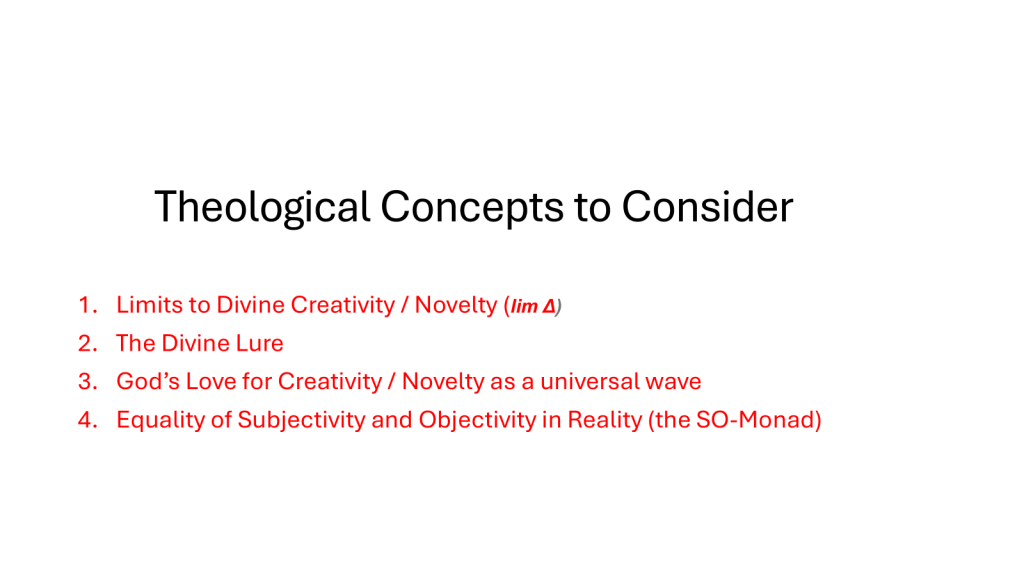
I have come up with a theological term here which I call “lim Δ” which is a limit “lim” to change “Δ“. I use this term in my book, “A Theology of the Microbiome.”

Second theological consideration: Perhaps God lured nature early on in Earth’s history of life just enough to increase subjective beauty while decreasing the objective reality of death. Consider the Ediacaran Period (600 – 538 million years ago) in which the first animals (perhaps proto-animals?) appeared. There is evidence of the Ediacaran Period in the fossil record. These animals were softbodied and mainly sessile. These animals were likely filter feeders. Only a few of these creatures were able to move. Although they may have consumed bacteria as filter feeders or as bacterial mat feeders, obvious carnivorous activity is not found. Good references are here and here.

Illustration of the Ediacaran Period (from Earth Archives)

This system irreversibly changed in the setting of the Cambrian Period (541 – 485 million years ago) which followed. As animals evolved and were able to move, predation became much more possible.
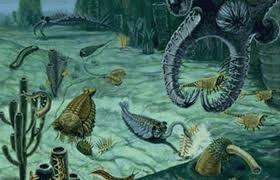
Illustration of the Cambrian Period (from Understanding Evolution)

Thus, nature could have had a greater alignment with God’s lure of more beauty and perhaps less death early on in our planet’s biological history such as during the Ediacaran Period. God lured for creativity in the Cambrian Period and still lures today, but perhaps nature has freely put more limits on what creativity entails so that death is the driving force of creativity.

The Ediacaran Period could metaphorically be considered a type of Garden of Eden with no predation although death still occurred. After all, entropy eventually consumes all life. Nature on our planet freely took on creativity in a different direction than God’s lure for novelty. As a result creativity persists, beauty is present, but mass death is a type of process or answer to create new life.
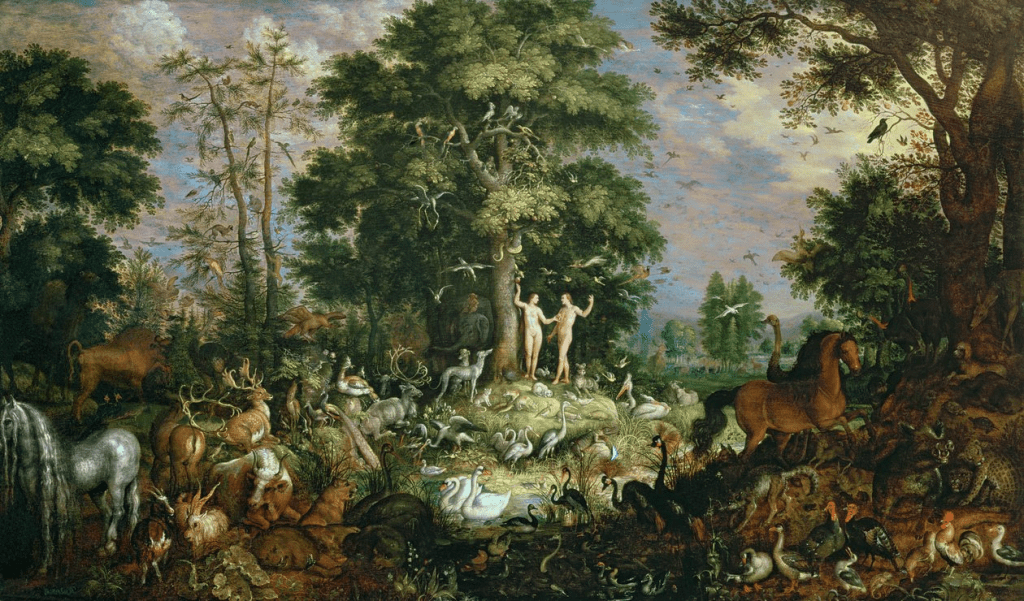
“Garden of Eden” by Roelandt Jacobsz

My ideas obviously are embryonic in thought. I should try to flesh them out more. I probably will be thinking about such ideas while sitting on a boat in Blackfish Sound and looking at the beauty of the natural world.

image created by Gemini Advanced

Panexperientialism: Objective and Subjective

In my last post, I discussed the metaphysical possibilities of panexperientialism existing between the gut microbiome, small intestine, and skeletal muscle in the perspective of maintaining a healthy microbiome. I think that all experience in general has two perspectives: objective and subjective.

In the setting of the microbiome, human immune factors such as IL-6 are involved in the interplay of the microbiome-small-intestine-skeletal muscle axis. This interaction is an objective fact. Can we see something subjective here? Does the microbiome or small intestine or skeletal muscle want to maintain health, homeostasis, or decrease in entropy? This “want” is highly subjective. I can’t really define it from a human consciousness perspective. In fact, I am not sure this subjective want is even materially or scientifically explainable. Perhaps the idea of reducing entropy to preserve creativity or novelty falls into the realms of process philosophy, process theology, and open & relational theology which I have written about quite a bit in the past. The lure for continuing creativity is prominent factor in these 3 types of philosophical / theological thought.

Objective and Subjective: Can these two words participate in some type of beautiful dance in the world around us?

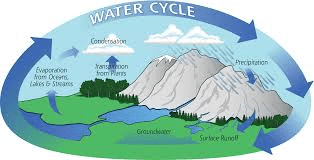
For example, when I think about the water cycle, I see a real objective reality as to how water and the planet interact in order to help biological systems exist. That is, all biological systems on our planet need water. The water cycle is essential for life.

image from NASA

The water cycle is a beautiful system, if you think about it. By “beautiful”, I mean that it is creative and complex yet based on a relatively simple process (evaporation –> condensation –> precipitation). The objective reality of the water cycle is very, very real. The subjective possiblity of seeing the water cycle as a “beautiful” effect (whether God-based or not) also exists. I think the water cycle is just an important and beautiful effect of our planet.

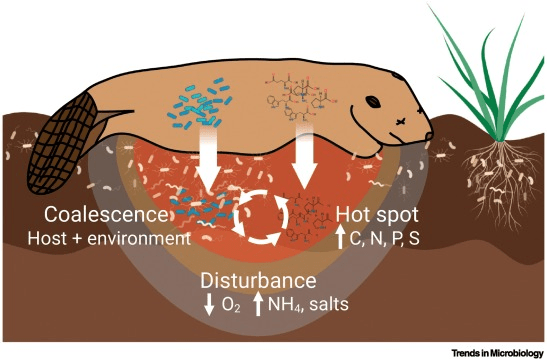
Death is another example. Death worries most of us, I think. It is incredibly sad to lose a relative or friend. Most of us worry about our mortality. However, there is goodness in death. Decomposition of biological entities enriches the soil to bring forth new life. In fact, decompostion of animals, plants, fungi, and bacteria enrich the soil biome to make it an effective trigger for the potential of new life. A link to an interesting article is here.

Death, decomposition, and recycling of biological materials is an objective, interesting concept. The idea that even death can bring about glorious new life could be subjectively beautiful. For example, I am a religious person (in my case, Christian). Although I have become a bit more accepting of death as I have become older, I find it subjectively amazing that the carbon in my body might be helpful to some other life form in the future. I may subjectively believe in some type of “afterlife” that I cannot explain, but I can reflect on the glory of material creativity continuing from my molecules after I die.

image from Trends in Microbiology

Here is something that I have recently considered in such a setting. My spouse and I have contributed to Compassion International for many years. It has been deemed a very good charity by charitywatch.org. We have sponsored young children from developing countries through their young childhood and until they (typically) have some type of higher education and a skill set to move out of poverty.

I get quite a bit out of this charity psychologically because I have exchanged many letters with these children through the years. I hear about their families. I hear about their grades. I sometimes even hear about their concerns which, honestly, can be unsettling considering these children often come from war torn parts of the world.

As I exchange letters with them, the children and I experience objectivity. The letters that we exchange are actual paper. The money that I send is an objective financial vehicle. The child eats and can go to school because of the money that I send. This donation makes the child healthier which is objective.

I think there is a subjective part here also. I don’t know everything about the child. The child knows some, but not everything, about me. I do believe thatwe are subjectively learning about each other. This subjective learning, I think, leads to compassion and a “philos” type love. I love this kiddo as a friend or perhaps as a fellow traveler in my same time frame in this great, ancient universe.

I would extend this subjective love for when I donate to Compassion International to possibly affect other individuals around me not associated with this charity. This subjective love also possibly affects the individuals around the children who we sponsor. How would I explain this interaction?

Here is my idea or perhaps my metaphysical model. I send my monthly payment that goes to this child and their family. It pays for food and school. I subjectively get a good feeling about donating to that child. I also subjectively feel love when I get a letter from the child. I believe strongly that this feeling of love then allows me to contribute even more love to the neighbors around me. The community around me. The society around me. It seems to be a multiplicative or even exponential effect although I cannot define it objectively. It is a subjective feeling.

Likewise, I often have wondered if the child who receives my family’s monthly donation as well as my personal letters feels likewise. The child has food to eat and is receiving an education. Do these effects cause the child to have enough nutrition and understanding about the world that they then can exhibit kindness to their neighbor, community, and society?

Objectively, there is evidence to suggest that monetary support of poor children (if used well) leads to better social structure and to potentially long-term better adult outcomes. Subjectively, whether mediated by neurotransmitters or by God or by both (I think both), participating in such charities can promote a love of neighbor that has the ability to make the world better.

Readers of my blog know that I ascribe to a belief in the divine in which God yearns or lures for greater objective and subjective creativity. God does not force, but God does love without exception. God is with us at all time points. We can co-participate with God’s ongoing creation by helping others even in small ways. Helping other humans, other creatures, the environment, and the planet is goodness. All of us only go around the sun a few times before our lives come to an end. Co-participation as love has long-term positive effects for the generations that will follow us.

image from Gemini Advanced

Exercise and the Microbiome: Panexperientialism?

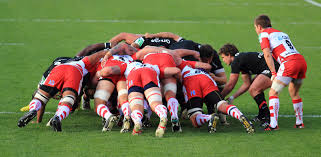
There is a great new #openaccess article in Gastroenterology that explains why exercise makes the microbiome healthy. It is titled, “Exercise, the Gut Microbiome and Gastrointestinal Diseases: Therapeutic Impact and Molecular Mechanisms” by Hawley, et al. Interestingly, prior research from 2013 has shown that professional rugby players have much more diverse and healthy microbiomes compared to control individuals.

We are now beginning to understand why exercise helps promote a healthy human microbiome. Per the review article above, skeletal muscles (when used in exercise) seem to promote the formation of Interleukin-6 (IL-6) which is involved in controlling inflammation throughout the human body. Simply put, human skeletal muscle seems to act like an endocrine organ, such as the thyroid or pancreas, during exercise as it releases IL-6 and other helpful molecules that control gut inflammation. A healthy amount of inflammation to prevent bad bacteria from interacting with the gut and to allow the intestinal barrier to not absorb pathogenic bacterial toxins then leads to a healthy gut microbiome. A healthy gut microbiome is very diverse in terms of its bacterial types.

Image from the Gastroenterology article

Maintaining a healthy microbiome not only may prevent some problematic gastrointestinal symptoms such as chronic constipation or abdominal pain (as seen in irritable bowel syndrome), but it may also be preventitive in reducing the risk of Crohn disease or colon cancer.

So skeletal muscle –> intestinal cells –> the gut microbiome… There seems to be a large amount of communication here. Is this an example of panexperientialism? From a philosophical and theological standpoint, panexperientialism means that all entities from the very smallest to the very largest have some degree of experience.

An electron experiences mass, spin, and charge. A singular human experiences birth, the spectrum of emotions and life events, and death. A galaxy experiences gravity, star birth, star death, black hole centers, and perhaps even dark matter and dark energy in a manner that we do not understand well.

All entities experience. The experience can go top down (the galaxy experiences our planet and the humans on it while each human experiences the effect of every atom or electron). The experience also goes bottom up (the effects of individual electrons or atoms affect the experience of the human and our planet which affect the experience of the Milky Way).

I am not necessarily a believer in panpsychism in which all individual small entities (quarks, electrons, atoms) have “drops of consciousness” which level up in complexity to humans. This idea seems scientifically difficult if not impossible to prove. I do think all entities have experience.

The other aspect of panexperientialism that must be considered is that all entities potentially experience each other. In other words, all entities experience, and all entities experience each other. This idea can be formulated philosophically and perhaps theologically when considering quantum entanglement. Quantum entanglement definitely has an objective reality. The potential subjective ideas behind the physics of quantum entanglement needs to be worked out.

In the setting of the journal article above, there does seem to be some panexperiential process occurring between two human organ systems (skeletal muscles and the lining of the human intestinal tract) in response to exercise. Skeletal muscle and the intestinal tract — two human organ systems that are quite isolated from each other except for the sharing of blood and its molecules. Skeletal muscles cannot directly absorb the food that we eat. Our gastrointestinal tract cannot contract and relax when we work out. Yet, these two very different organ systems interact with each other.

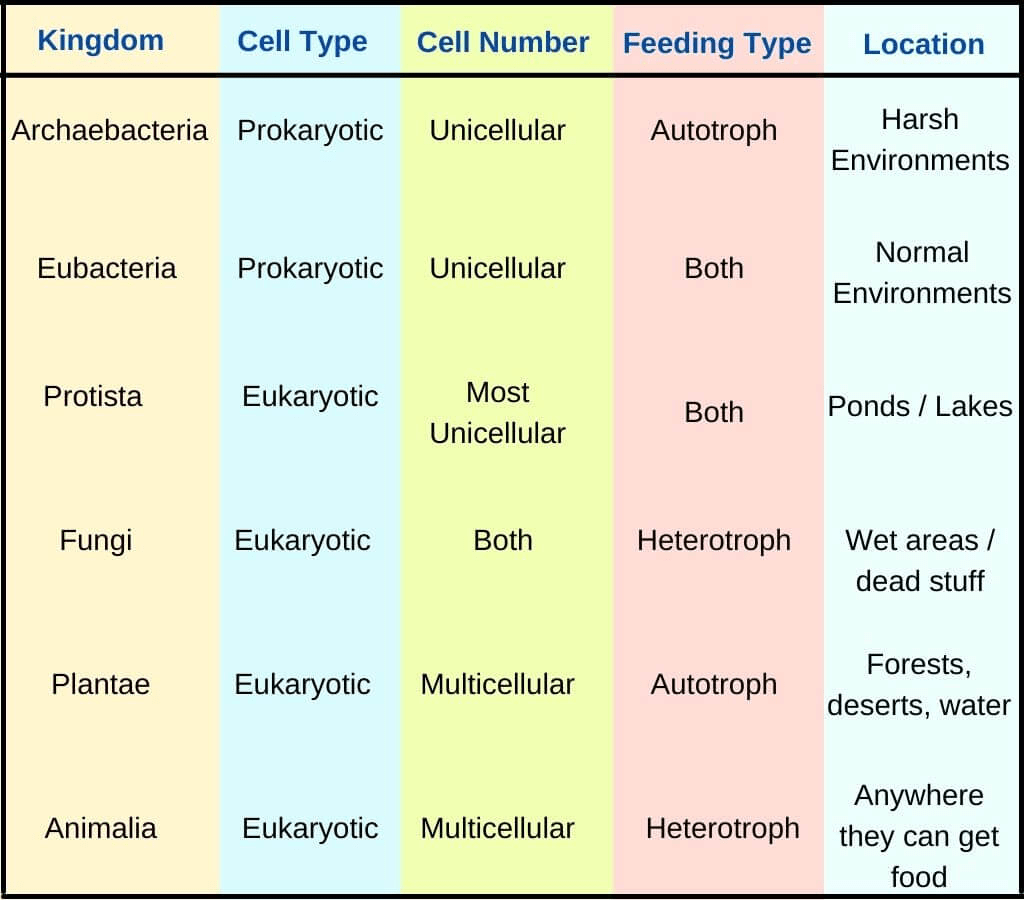
It becomes more fascinating when this same interaction involves not just these two human organ systems but also the microbiome consisting of bacteria, viruses, fungi, archaebacteria, and all sorts of other small things. There is a shared experience in human exercise between different kingdoms of life.

The six kingdoms of life from SmartClass4Kids

I think theology can learn from science when reading articles such as this. If God desires creativity, then God is love. From a human perspective, love and creativity are deeply intertwined. If God is the ultimate form of love and also the lover of creativity, then love and creativity are ultimate desires (and perhaps goals) of God through time.

Skeletal muscle, the gastrointestinal tract, and the microbiome seem to have the ability to be creative in order to make the individual human healthier. Perhaps this interaction subjectively demonstrates some type of universal striving for love that warrants more theological study.

image created by Gemini Advanced

Ancient Homo Species and God

Human brain structure formed in complexity over time, and I have wondered when the first of our genus (Homo) began to think about God(s) and potentially the afterlife.

There are some early potential intentional burial sites noted at Qafzeh Cave (Israel), Tabun Cave (Israel), and Tinshemet Cave (Israel) that were made by Homo neanderthalensis, Homo sapiens, or perhaps both interacting together or in close proximity between 100,000 – 115,000 years ago. By intentional burial sites, I mean ochre use or leaving tools in such graves could suggest that the dead individuals were interred by the community who perhaps had a hope for life after death.

prehistoric red ochre handprints

The correlation of these ancient Homo locations in the Levant which were in the general vicinity of where the Abrahamic religions mostly began is not lost on me. However, I do realize that correlation is not causation.

Tinshemet Cave

I have written in the past about evidence that there may be proto-religious structure in some monkey societies as described here and here. I have no clue what these monkeys are doing as I am not a chimpanzee just as I am not a bat. I don’t think it is possible for humans to understand even primitive spirituality (if it exists) in other species.

Then why did humans become religious? Why and when did we first start to consider the presence of God(s)? Banerjee and Bloom argue that theistic beliefs are strictly cultural which could certainly be true. A “blank slate” of the brain in regards to the metaphysics of God(s) would certainly argue that culture would be the sole influence in a belief of God. If we were born with no real subjective thoughts and without real world objective experience (hunger, pain) from our limited experience in the uterus, then any idea of God would be subjective and culturally based.

However, there has been pushback to this idea as the brain may have basic templates in place for which to add on objective and subjective experience. Could a template exist in an advanced brain structure that allows for metaphysical thought?

Blank slate / tabla rasa

When it comes to the brain, I often wonder if I am follower of mysterianism. That is, I wonder if the brain is too complicated for us to ever figure out. I do believe we should try to figure out how the brain works in relation to consciousness, but the process seems extremely complicated (especially since it is difficult to define consciousness and subjectivity).

So…I am going to look at the genus, Homo, and the development of a belief in God(s) from a natural theology perspective. I have written about this idea before based on the writing of David Ray Griffin. Griffin succinctly defined God in the world without the need for supernaturalism as NATURALISMppp. The three “p”s consist of prehension (the importance of time in creativity / novelty), panentheism (ALL are in God), and panexperientialism (all have experience).

How did Homo start to consider God(s) through Naturalismppp? Was there an increase in a certain number of neurons that caused Homo to start considering Divinity in the world around them? Did axons or dendrites in nerve cells reach a communicative ability in the brain milieau around them to allow subjective ideas about God(s)? Did voltage-gated sodium, potassium, or calcium channels in neurons become efficient enough to allow Homo to consider ideas well past basic human needs?

image from the Queensland Bain Institute

I do not know. I do have a strictly metaphysical, theological hypothesis. It is not scientific in any way, but it could be considered an extension of Naturalismppp.

What if we propose that God yearns or lures for increased creativity in real time eternally? What if at every level of reality, God lures for the good (i.e., creativity) while every level of reality can freely consent to or ignore the lure? What if one of God’s lures is for a species (or genus) to come about which can commune with Deity naturally though senses, through the environment, through the central nervous system, through brain function? What if all species have some type of understanding here that humans will never understand? I don’t know, but the proposal should be expanded theologically.

This proposal would encompass the elements of Naturalismppp in the setting of both process theology and open & relational theology. Evolution (and not necessarily guided evolution) would require prehension or the effects of time and resultant change. It would require the universe to be in God so that God is in, around, and through every entity in the setting of panentheism. It would require that all entities experience, a la panexperientialism.

The term “emergence” is used as a term in science when describing phase transitions, molecular properties separate from a molecule’s constituency of atoms, or development of neural networks.

I wonder if there was an ancient “spiritual emergence” that evolved as the various Homo species evolved and brain structure grew.

human evolution from Britannica

Perhaps there was that final neuron which grew in place or a calcium channel that became more efficient that caused one of us or a group of us to look at the stars and wonder if there was THAT which created the world around them. The group of these individuals who buried their dead with bright colors as well as with items to use in the afterlife suggests both a neurologic change from an evolutionary perspective in addition to cultural pressure.

Thus, belief in God(s) could simply be part of the human experience. This belief in God(s) may wax and wane, but I propose that it will never completely go away — similar to our long-standing ability to covet, to commit warfare, to care for the unrelated person or other species, and to love.

Lascaux cave art

Would a Static Universe Change Your Perception of God?

After publishing my last book (“A Theology of the Microbiome“, SacraSage Press), I have been working on a new idea for publication that will take me a really long time. The long time duration is because I have a full time job as a physician. In fact, I am an academic physician, so administrative time is often spent working on lectures, doing editorial work for a journal, writing new articles in my medical field, writing letters of recommendation, etc. All of these things are on top of patient care which is the main part of my job. The practice of medicine is my job, and I expect nothing less. Meanwhile, my DThM degree really has spurred my thoughts surrounding how theism and the study of science could interact better. So…I work on my new book intermittently at times. The time used for writing can seem ephemeral.

image from Popular Mechanics

Time: Time seems to flow. Unlike water, we cannot grasp it as a substance yet we exist in it. Time appears to be a real thing. We are born, we live, and we die. Time moves on. Each human is eventually forgotten. Suns die. The universe continues to expand…in time

As someone who has studied quite a bit in the field of process theology (the cousin to the more well known “process philosophy“), I am of the belief that time is the essential component of reality. Time, not matter, seems to be the basis of reality. Time seems unidirectional (past to future). As someone who is fairly comfortable discussing process theology and its almost similar twin, open and relational theology, I think God experiences time. I believe opportunity arises (prehension) which then solidifies into an experience (concrescence) which then passes on as a temporary but acutal occasion. God is present in all occasions and in actual time seeing us as we learn and grow; as we deal with love and loss; as we deal with birth and death. God is present in real time at all levels of reality. God, in the setting of open & relational theology, loves all entities in their change through time. God desires (but does not force) change for creativity and for love.

Unless time is not real.

In my recent reading, I have been thinking about the hypothesis of the “static universe”, also known as “eternalism.” Eternalism from a universe perspective is not Everettianism (the “Many Worlds Interpretation” or MWI) as MWI is generally (not always) thought to involve time.

J. Ellis McTaggart (1866-1925) was a British philosopher and also an idealist. As an idealist, he felt that we were missing part of the greater reality we lived in. In particular, he questioned if time was even real (i.e., the universe was static). He has written: “It is, therefore, possible that the realities which we perceive as events in a time-series do really form a non-temporal series.”

an illustration of the block universe, from maths.org

If this idea sounds unsettling, just keep in mind that even Albert Einstein found similarity with McTaggart’s work. In special relativity, time may not be that important. Since light travels at “light speed” (299,792,458 meters per second) and nothing is faster than light, then all other entities would seem to not be moving much more slowly as seen in time dilation. Thus, if time is inconsistent for all observers, then there would be no universal “now.” If there is no universal “now”, then metaphysically, the universe could be considered to have all past, present, and future existing together. Spacetime becomes a block universe in many ways.

Such an idea of reality can make us uncomfortable simply because humans experience time or perhaps our brains make us think we are experiencing time.

I must say that I do not accept eternalism as I don’t experience it via my senses. I sense time. My hair is becoming more gray. My excercise tolerance has decreased. I could be completely wrong of course.

Where is God here?

This question is difficult from a theological perspective. If nothing changes eternally like some metaphorical giant crystal then God becomes, in my opinion, weird.

Perhaps then, eternalism would remove any need for God. If the universe if some type of immense static “thing” then God would not or could not intervene or hope for change. God would not care for or love this type of creation. Perhaps deism could accept this type of God if God created an amorphous unchanging mass as opposed to a structure that was made to run smoothly like a deterministic machine. One could argue the Calvinism could have its deterministic beliefs wrapped up in a universe where all is already determined with no need for time or change.

The other aspect to consider is in the setting of Platonic forms. In a block universe / eternalism would our universe be simply an Platonic form or the ultimate Platonic form? Would this form be the “changeless and abiding” as described in the Timaeus?

Here is where I posit the importance of subjectivity in nature. My proposition about subjectivity is metaphysical and theological. I think subjectivity abounds in nature through the possibility of natural randomness and in the experience of love. My theism is showing here. I do not think that God, as described by process theology or open & relational theology has a true determinant nature when it comes to our world. I cannot see how God whether directly involved (which I do not agree with) or not directly involved but luring for evermore creativity (which I do agree with) would love a static, unchanging universe.

It is hard to describe God’s love from a process theology / open & relational theology perspective. I will provide a human example. I have had the same lamp on my desk for several years. It just turns on and off. I don’t love it. I use it sometimes. If it quit working, I would throw it away and not really worry about it.

However, I love my wife. I love my children. I interact with them in time and watch then change over the years. I always am invested in them even when they do or do not do what I would perceive as a “better” choice. From a human perspective, my idea of a “better” choice can be wrong.

My theistic (NOT scientific) argument against eternalism is that a loving (i.e., creative) God would only be a metaphysical reality in a world that changed in time. Time is necessary for the ability to love, for the need of love, for the potential for propitiousness of creativity in reality in time.

Eternalism versus the real presence of time — This debate will continue to influence how we think about God. Such different ideas are helpful in making theology better.

image created by Gemini Advanced

Theology Book Club

The graduates from the seminary that I attended for my degree have a book club / journal club every 2 months or so. We do the book club online. The attendees have different backgrounds and experiences, and our getting together is a fun, intellectual time. We are meeting this week and will be discussing two articles about transgender people. I think this population group often is greatly misunderstood in the religious setting.

The first article is titled, “A systematic review of the relationship between religion and attitudes toward transgender and gender-variant people” (M. Campbell, et al.) and has been published in the International Journal of Transgenderism. It is an open access research project that has evaluated all studies performed to date that study the effect of religion in the setting of how people view the transgender population. This project used the Axis Appraisal Tool to assess study validity. The Axis Appraisal Tool has 20 questions that evaluate for study bias. A good link to the tool is here.

The study results were a bit depressing. Unfortunately, just identifying as being “religious” was an indicator of higher levels of transphobia. It was not just Christianity that was an issue here. Other religions (except for perhaps Judaism) had similar levels of transphobia. Being more “fundamentalist” in one’s belief system, believing in Biblical literalism, and attending church more frequently seemed to be associated with transphobia. Interestingly, there was mixed data on the degree of transphobia present in the LGBQ(not T) religious population.

I am a Christian, and I assume that I would be categorized as a “liberal Christian.” I have had some problems with the liberal Christian label for me as I am very pro-science. I guess supporting the philosophy and work of science makes me a “liberal” in the church setting. I attend church services almost every Sunday unless I am at work or on vacation. I attend an open and affirming church that has many LGBTQ+ people in it who I consider friends. Is loving the other regardless of background “liberal”? I really don’t get this connection.

Has Christianity as a whole become so off the rails that being considered a “Christian” also is associated with various -phobias? In the United States, at least, I think this correlation is quite true as many people who say they are Christians are probably just Christian nationalists. In other words, they associate their nationalist ideals (think Protestant, straight, male) with a weird warlike Jesus who in no way resembles the God-man on the cross. I think such people insist on being “culturally normative” in that anything that is not male-predominant, straight, and Protestant (and more likely, Evangelical Protestant) is simply the “other”, the unwanted.

Art by Melanie Jean Juneau

The “poor” in the New Testament is a corollary to the modern inequities in our world. This term is not just for financial inequality. It should be considered in the setting of the outsider, including our LGBTQ+ brothers and sisters. Jesus was pretty clear here. You aren’t really thinking like a Christian if you are judging others simply because they are not like you (see Luke 11: 39-42).

The other article that we will be reading is a review of the history of gender-affirming care, including the psychological / medical issues involved, types of treatment, and the potential positives and negatives of such care.

It is titled “On Gender, Gender Incongruence,and Gender-Affirming Care.” It has been published in Perspectives on Science and Christian Faith which is a journal for scientists (broadly defined) who are Christian. This article is also open access.

At first, I was worried that this article would go into very limited directions regarding transgender healthcare. However, I was wrong. The article is a very open-ended discussion. “Gender incongruence” is a complicated issue with probable genetic and epigenetic (hormonal, societal) causes that are so densely intertwined that we cannot yet get a good grasp on the biology involved. The biology of human sexuality is not a simple “on / off” button. Conversely, it appears to involve innumerable biological responses when considering each human. The transgender population does appear to have some innate biological fluidity when it comes to sexuality that is not sinful. It just is simple biology, and in fact, during human development, many people have sexual fluidity as they grow from an infant to an adult. I have known for a long time that the LGBTQ+ population seems to have a spectrum of sexuality that is inherent to their personhood. It is not a choice. It is part of the wonderful continuum of the human experience.

I really like this article’s review of the research outcomes regarding transgender care. Unfortunately, transgender care and the way we socially treat transgender people have become so politicized that most people are unable or unwilling to actually look at the research results. Some studies show good outcomes. Some studies show minimal improvement in outcomes. Humans need to be honest in what we discover here in order 1) to see if better research is needed (the answer is “yes”) and 2) to see if better treatment is needed (the answer is “most likely yes”).

Instead of screaming at each other over the presence of transgender people perhaps we should ask transgender people what they need in order to see if better national / international research consortiums can meet this gap in knowledge.

So…How do I feel here? I have transgender people in my church. I have transgender people in my neighborhood. I am a gastroenterologist, and I have transgender patients. Honestly, these are just people with all of the baggage that every one of us accumulates as part of the human experience.

Objectively, we should serve this population by making sure we are doing good science without political or religious interference. Subjectively, we should love our neighbor which includes our LGBTQ+ neighbor.

image generated by Gemini Advanced

Progressive Christianity and the Risk of Pseudoscience

This post may irritate some people, but I have felt impressed to get these words out.

Recently, I have heard several Youtube lectures / podcasts in the world of progressive Christianity that concern me greatly. I consider myself a progressive Christian. What does this mean? Here is my personal definition: I accept Jesus Christ as my savior; I accept that other world religions have good points about God that my faith stream does not have; I recognize myth in the Bible (and the importance of myth) as a way to promote human flourishing; I am against religious nationalism; and I accept that racism and anti-LGBTQ+ issues are often problematic in my society but should never be a problem in the church.

I have another aspect in my definition. Progressive Christians should accept science. Progressive Christians do not have to understand science fully, but they do need to comprehend the basics. Many of our Christian fundamentalist friends have weird unscientific belief systems such as young earth creationism (a 20th century phenomenon), disbelief in evolution, and harmful anti-vaccination views. Such belief systems can lead to ignorance and can increase the risk of dying from preventable disease. As an example, one can think about these current effects on U.S. public school education. One can think about the unneccessary deaths caused in the U.S. caused by anti-vaccine nonsense associated with religion.

Do you think pseudoscience is just a fundamentalist issue?

If your answer is “yes”, you would be very wrong.

Let’s go through various items that many progressive Christians believe in which are pseudoscience. These ideas are already prevalent in modern society, but my interactions with other progressive Christians has shown me that our group needs to get rid of some silly ideas.

Spiral Dynamics: In this system, there is a belief that humans (individual or societal) pass through evolving, advancing sociological stages. These stages are given colors to identify them. I know it sounds great, but it doesn’t work. The “science” behind spiral dynamics isn’t there (see the original research done on this theory by Clare Graves). It is generally NOT accepted by experts in human development. It risks significant cultural bias. If one thinks that an individual or a society has a higher color consistent with their increased sophistication (say, “yellow”), then considering someone or a society perceived to have a lower color or lesser cultural advancement (say “purple”) risks leading to all of the bigotry, -isms, and -phobias so prevalent already in our society. A good resource is here.

The Enneagram: In this system, there are so-called nine personality types that are fundamental to our species. The rumor persists that the Enneagram system is ancient and primordial. No. The system was invented by George Gurdjieff (1866-1877). Gurdjieff invented a hieroglyph of a circle divided into 9 parts; hence, the introduction of the nine personality types. This hieroglyph is said to be very ancient, but I think the sources to back this idea up are spurious at best. The Enneagram is basically the Myers-Briggs test which, in itself, is extremely problematic. For example, I tell you how great you are one day, and you will have one personality type. I step on your toe and break it on the same day that you lock your keys in the car, and you will have another personality type. I promise.

The quantum pandemic: “Quantum” means “discrete unit” such as a proton, neutron, electron, or photon. It does not mean magic. It does not mean communicating with God. It is a helpful term in the science of particle physics and in the philosophy of physics. It could be useful when considering God as not being deterministic from a theological perspective in the setting of quantum mechnics. We need to quit using this word (“quantum”) incorrectly.

The vagus nerve and the microbiome: In my recent book, I discused the association between the brain, vagus nerve (cranial nerve X), and the intestinal microbiome. It is a theological book, and it is not a science book. I do provide some explanation about the research behind the microbiome (Chapters 2 & 3). However, my ideas behind the microbiome and the brain are theological and philosophical. Yes, there does seem to be some interplay between the microbiome and the human brain via the vagus nerve in some animal models and in some human correlation studies, but MUCH MORE research is needed. I cannot emphasize that fact enough. More research is needed. So…The vagus nerve is not a “mood ring.” You don’t need to cram tons of probiotics into your GI tract to fix various maladies that often have easier solutions. In order to understand how much scientists still don’t understand about the microbiome, I offer you this open-access article from the top tier journal, Gastroenterology. This article is excellent. Our understanding of the relationship between the microbiome and the brain is still very limited.

Humans cannot exchange “energy” with each other. We cannot exchange “healing energy” with each other. When resting (i.e., sleeping, meditating, being still, etc.), the human body has a net electrical charge of zero. I would accept that we can exchange holy feelings of love and kindness with the stranger as some type of theological, subjective wave. However, we are not passing different voltages between each other. “Shocking”, I know.

Theology is weird. I get it. At times, I am very steeped in it. Good theology is based on history, science, languages, philosophy, prayer, and the love of the other. It is not based on mood rings, horoscopes, or monthly energy sessions with healers.

Progressive Christians should not fall into the same trap as have many fundamentalist Christian believers.

Progressive Christians can, have, and will probably continue moving in this dangerous current leading to pseudoscience. We really need to get our own progressive room in order before we criticize more conservative religious groups.

image created by Gemini Advanced
Quick Post for Week & Panexperientialism for Heart Transplant?

Short post today.

I am heading out to the Grand Targhee Resort in Alta, Wyoming tomorrow for a several-day conference on open & relational theology (ORTCON25). This is an annual event for those people interested in open & relational theology as well as process theology. This resort lies within the Grand Tetons.
This year, I will be speaking about my book, A Theology of the Microbiome, has been published for a while now. I have been asked to give a talk about the main points of this book. By the way, if you purchase the book, all proceeds go to the Center for Open and Relational Theology (a worthy cause). Hint, hint.

Obviously, I can’t put the whole talk into my post today, but my concluding slide from the talk is below. From a metaphysical perspective, I am finding the concept of lim Δ more and more interesting. If we accept a God who desires but does not force change / novelty in all levels of reality, then nature can freely put limits on change. It is easy to see lim Δ everywhere — evolution, cosmology, human behavior, and on and on.

My final slide (above)

Otherwise, I think for this week’s post, I will put in a link for a fascinating article titled, “Personality changes following heart transplantation: The role of cellular memory” published in the journal, Medical Hypotheses. Unfortunately, this article is mostly behind a paywall. The basic point of this read is that some patients who undergo successful heart transplantation can begin to have small personality changes over time. The question (okay, this is difficult to believe) is that the transplant recipient might be getting some of the behavior from the donor through the heart transplant. Just so you know, the evidence here is pretty weak.

The authors of this study provide some ideas about why this effect is occurring. There could be some genetic issues occurring from the donor affecting the recipient’s neurological system. We already know that donor cells cause problems with the body of the recipient in certain cases, such as graft-versus-host disease.

Illustration of graft-versus-host disease, from Nature

I provide medical care for patients for liver transplantation. I have never seen such an effect. If I am honest, I think such personality changes described in the article are likely due to improved cardiac circulation, medication side effects (lots of drugs are involved), and prolonged hospitalizations.

However, from a process philosophy / process theology perspective, could this potentially be an example of panexperientialism? By “panexperientialism”, I mean that ALL entities have experience. Some people will extend this idea to “panpsychism” in which all entities have consciousness. I am not in the panpsychism camp, but I think panexperientialism has potential.

So…Is this heart transplant story an example of panexperientialism? It has metaphysical implications, but I am not sure it has biological implications.

More to come…

By the way, I recently finished a book chapter for an upcoming book titled, “Renewing Faith.” I was asked to be a contributing author. The book won’t be out for a while, but I tried to use my chapter to emphasize the importance of science when considering theology. In my chapter, I stress, as I always do, the importance of vaccination to prevent horrible diseases. Vaccination to prevent disease spread is a real-world, concrete example of Mark 12: 30-31.

An artist’s perspective of panexperientialism (based on a blog post that I wrote).

Bell’s Theorem and Panexperientialism

I’m not a theoretical physicist, but I do like to think about the implications of the ideas behind quantum mechanics and general relativity. The math is super complicated. Some of the mathematics I can figure out over time, but often I get very lost and need easy-to-read resources to help me out.

Image from University of Oregon

Recently, I really wanted to understand Bell’s Theorem in the world of physics simply because it has really weird physical as well as metaphysical implications. It shouldn’t be a super complicated theory to comprehend, but I have had problems understanding it.

I found a great resource about Bell’s Theorem from Dr. David Harrison at the University of Toronto which I have liked here. His explanation is wonderful, and he goes into all sorts of about metaphysics and logic. A very good read.

Here is my limited understanding of Bell’s theorem. Basically, it seems to prove that information exchange between entangled particles is faster than the speed of light (called “non-local”) and doesn’t seem to have any particular secondary mechanism (called “hidden variables”) to explain the information exchange. By “entangled”, I mean that involved particles are all in the same quantum system in superposition. Information exchange in this setting can be described as follows: if an entangled particle is measured as “spin up”, the other entangled particle will be measured “spin down”. This spin up – spin down correlation demonstrates immediate information exchange and is faster than the speed of light!

Illustration of quantum entanglement — not a real image

We can think about this idea in the setting of a pretend story of two coins. I wrote about this over the weekend (which eventually will be part of my next book).

 “One can propose that two coins are entangled.  One coin is mailed in a sealed envelope to Alice in New York City, New York; one coin is mailed in a sealed envelope to Bob  in Los Angeles, California.  When Alice opens the envelope, she immediately flips the coin and reports the first coin side she sees (‘heads’ or ‘tails’).  If these coins are truly entangled, then Bob will immediately see the other coin side when he opens his envelope and flips his coin.  This effect will occur even if Alice and Bob are on different sides of the Milky Way galaxy; thus, the information transfer of entanglement is faster than the speed of light…From a metaphysical perspective, the idea that all entities are interlinked as a part of the natural world is intriguing.  There appears to be no mechanism or hidden variable to explain this effect.  Entanglement just ‘is.’ Alice or Bob are not observers.  They are part of the whole entangled system, possibly defined as ‘participators.'”

It should be noted that there is good experimental data to back this idea up. See here and here. The experimental data comes from entangled photons and polarizers. The photos are the “coins” while the polarizers are basically the “envelopes / coin flips.”

So. Weird.

Okay, so let’s try to link the objective scientific evidence with subjective metaphysical thought. In this setting, the metaphysical thought involves a bit of theology.

In the world of process theology / open & relational theology which has been my area of study, panexperientialism is a known concept. Panexperientialism is really a philosophical idea for which theology has tagged on to it. Simply put, everything experiences — from the smallest entity to the largest. A particle experiences spin, mass, and charge. A galaxy experiences rotation, gravity and the effects of dark matter. These concepts are not (necessarily) consciousness / quasi-consciousness as could be seen in the ideas surrounding panpsychism. Panpsychism is an interesting philosophical / theological idea, but I think panexperientialism makes more potentially objective sense to me if we think all entities “experience.”

So in a world of entanglement, not only would all entities have the ability to share information immediately (at least at the particle level), but they would then experience each other. The objective world of entanglement would then bridge to the subjective idea of panexperientialism. This objective-subjective bridge would then lead to the following theological ideas:

  1. If everything is entangled and panexperiential, then God would experience all.
  2. The entangled, panexperiential nature of reality involving God would mean that we exist with a God that is panentheistic. Panentheism suggests that all is in God. Our universe is in God. All singular entities in the universe are in God. God is in, through, and always with all entities, including us, in real time and through eternity.
  3. From a religious perspective, if God experiences all, then God has the capacity to love all creation. This love would be God’s primary attribute.

I am not saying that these theological ideas are provable. Indeed, they are not. However, I feel strongly that we can look at the world around us in order to think about metaphysics — theologically based or not. It is part of the human tradition to look at nature and to wonder if there is more than we will ever know. Ideas surrounding Bell’s Theorem and panexperientialism would suggest that we are part of something very special.

Here is a way of considering panentheism using the human microbiome as a model. I made this diagram for God and Nature Magazine in the past.

“God of the Gaps” Equals “Aliens Did It”, Part 2

I have been thinking about my post from last week and wondered if it might be fun to expand on my thoughts.

Do “aliens” exist? If we have an infinitely sized universe with a limited number of molecular structure possibilities, then the answer is “yes.”

If we have a very, very big universe (current estimate of the diameter of the observable universe is 93 billion light years across) with a limited number of molecular structure possibilities, then the answer is “probably but still could be no.”

If we are talking about space aliens landing on our planet, then “absolutely not.” The stories of sightings / encounters often seem silly or full of potential error. Plus, the number of “alien crashes” on our planet makes it seem that these visitors need to overhaul their Federal Aviation Administration. You mean then travel across our galaxy but then crash in the last few miles? Check their blood alcohol level please.

So, aliens: Maybe in other solar systems and other galaxies. Locally: No.

In the same way, the idea of “God of the gaps” makes no sense locally on our planet. My last post went over why this idea has failed in its interpretation of bacterial flagella or the human eye. I don’t think “God of the gaps” will ever make sense when we have simple human observation combined with curiosity to search further in all realms of science. “God of the gaps” is not science. Perhaps it is a type of theology or poorly-worded philosophy. In the United States, “God of the gaps” seems to mainly align with fundamentalist Christian ideas.

What about situations that are a larger part of our reality such as the formation of our universe / our galaxy / our sun, evolution, natural / moral evil (theodicy), our birth, and our death?

Image from the Webb telescope

From my last post, I proposed in a way to perceive ultimate causes of reality as a type of mathematic subjective thought experiment. I admit it is haphazard and needs refinement which I am working on.

Per my last post:

“A difficult area of evolution to explain, determining what exists behind the cosmic microwave background, the weather, and the singular events or joy or sorrow in life could be explained via the ‘God of the gaps’ as simply ‘God did it.’ Using these examples above, simply saying that one explanation is that God just did it (with no further questioning) implies that ‘God’ as a cause is just as equal to a natural phenomenon of which there are hundreds or thousands of potential causes. Even ‘no God’ could be considered an equally valid cause as ‘God did it.’ I would be consistent and insist on observational or experimental data instead of just saying ‘no God’ or ‘God did it.’ Regardless, the denominator gets quite large; the numerator of God as the sole cause becomes very, very small. ‘Intelligent design’ is not science, and ‘God of the gaps’ is terrible theology.”

I then provided this subjective equation:

However, if I think about the bigger issues, the denominator simply becomes the number “2” when thinking about ultimate metaphysical questions. Let me explain. What is the ultimate cause of all reality? Answer: It is God or it is not God. What is the cause of the universe whether we live in a singular universe or are a pocket universe in a multiverse? It is God or it is not God. What is the ultimate cause of evolution? It is God or it is not God. What is the ultimate reason for theodicy? It is God or it is not God. I have coined this term as the “No-God God” or the “NGG.”

The NGG question will never be answered scientifically as there is always a level of human subjectivity and experience involved in the answer. The NGG question can never be conclusively answered via philosophy or theology as science will always bring forth new data as long as our species exists.

The NGG never allows science, philosophy, or theology to ultimately lean either way in a final answer. The NGG can irritate the fundamentalist religious person or the outspoken atheist. The fact that the NGG could get under their skin seems to prove the point that certain metaphysical ideas are infinite in possibility.

Here is my metaphor: Imagine a sphere with an infinite volume and, hence, an infinite circumference and infinite radius. “Science” or “objectivity” can study the area of the sphere but cannot discover all of the area and will discover none of the radius. “Theology“, “Philosophy“, “the Arts“, or “subjectivity” can study the radius of the sphere but cannot discover the entire radius and will discover none of the area. Perhaps objectivity and subjectivity, working together through time, can help humans explore a bit more of ultimate reality compared to just using one way of thinking.

When we divide by “2” in this setting, we can subjectively think of “God” or “No God” as a more likely cause. Our subjective metaphysical thoughts here are based on objectivity for which science provides a first-rate way to gain objective knowledge. The tangle and change occurring with these ideas could suggest types of “weighted means” as seen in statistics. See here and here for information. We can stick to our guns about a belief in God or No God throughout our lifetime or our ideas about God or No God can change over time. Changing ideas about the ultimate cause of reality is a very important part of the human species.

I am currently working on a project to discuss potential considerations of the NGG. In other words, are there parts of reality intermixed with the human experience in which God existing or God not existing still comes together as a “source” of all existence? Is the NGG able to be determined subjectively and objectively as valid hypotheses? Some ideas could include:

  1. Dark energy
  2. An infinite multiverse
  3. The second law of thermodynamics
  4. Cyclic cosmology
  5. Evolution at all levels of reality (molecular assembly number, biological evolution, star formation, memes / societies / religion)
  6. Nothing (no God — simply nothing): See ideas of Lawrence Krauss.
  7. Platonic forms (defined broadly)
  8. Pantheism (God is the universe itself). See the autodidactic universe by Smolin.
  9. Determinism is its purest form (Everettian quantum mechanics, the Many Worlds Interpretation, a deterministic God, Deism)
  10. Free will or freedom of creativity in its purest form (libertarianism, perhaps the Copenhagen interpretation)
  11. A little bit of both determinism and free will (compatibilism or limits to divine will imposed by nature — lim Δ). My recent book has quite a bit of information about lim Δ in biological systems, mainly in the setting of the human microbiome.

The list can go on for a while. I think the NGG idea has a rich vein of potential exploration. The final product in book form of the NGG will take a long time for me to write, especially since I am a full-time working academic physician who was lucky enough to get a theology degree. I can see the final product, but I am constrained by the ultimate reality of time, health, and age.

image generated by Gemini Advanced