The Saddest Book

I recently finished reading “The Great Emergence” by Phyllis Tickle. It was published in 2008 and is well known in some circles of progressive Christianity.

Tickle passed away in 2015, and I wonder what she would have thought about the eventual fate of the Emergent Movement (EM) in Christianity. The EM has been poorly defined, but basically it encompassed moving the church in a direction so that more people would feel comfortable in a church setting, modern science would be embraced, modern culture would be understood more positively, and postmodernism would be understood as having positive aspects to thinking.

As background, my family (wife, kids, me) ended up in the latter part of this movement. We had attended both mainline and evangelical churches that definitely taught the Gospel (often superficially) but had significant problems when it came to modern science. Examples of my frustration in these settings included a church sending offerings to support the Creation Museum in Kentucky, church camps telling my kids that evolution was not true and that dinosaurs still existed (they did not mean birds — which are dinosaurs), Sunday school groups stating that LGBTQ+ people were not Christian, and literalist interpretations of the Book of Revelation. These ideas were difficult for my wife and for me as we have science backgrounds, and we didn’t want our kids exposed to these terrible ideas.

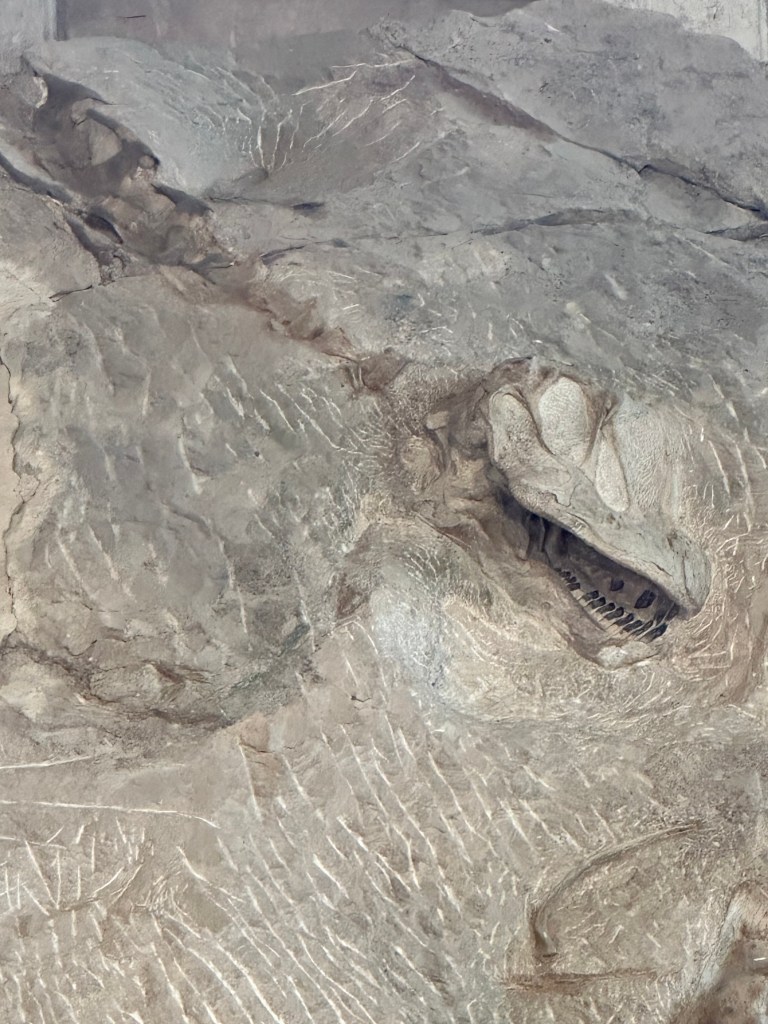
“Land of the Lost” was a T.V. show, not reality.

Around this time, my spouse and I had read “Blue Like Jazz” by Donald Miller which put us in the search for a non-traditional, up-to-date, non-literalist church movement. In many ways, Miller introduced the United States to the EM. As a metaphor and perhaps a portend of what would happen with EM, Miller eventually left Christian writing to pursure a career in business marketing.

We found an EM start-up church in Salt Lake City which had been planted by a large EM church in another state. We attended. We really liked it.

Why did we like this presentation of EM at the local level? Well, all questions were allowed although later this aspect was shut down by the movement. Art installations were a huge part of the church service. I love the arts, so I was enjoying this part of church. This church had “small groups” which are basically a home version of Sunday school. I thought there were many positive things about our specific small group. I remember one of the people bringing in an article written by Sam Harris. Wonderful. Really. I mean it. How best to think about one’s faith if one isn’t challenged by the thoughts of an atheist? The thing that I really liked about our EM church was that LGBTQ+ people were accepted into the congregation, and some of these wonderful people had church callings.

Here is where the story gets sad… Like every church movement, there always seems to be an eventual conservative placement of guard rails. Mainline protestant denominations, the Catholic church, the Orthodox church, and Evangelicals all fall into this trap. Someone speaks about considering a new idea (typically it involves social issues such as women’s rights or LGBTQ+ rights), and the conservative backlash becomes a permanent boundary. Denominations split. The loudest “guardrail” people tend to become churh leaders, and in our situation, they go on to plant super conservative Evangelical churches after they have destroyed the local ideals of the EM church. People with more open ideas about theology are asked to leave or, more disturbingly, are purposefully made uncomfortable so that they HAVE to leave. Tickle, I think, made a mistake here when she stated:

“However unattractive they [conservatives who end up in the EM] may seem to be to other of their fellow Christians and however unattractive nonreacting Christians may seem to be to them, the small outer percentage [conservatives who end up in the EM] is the Great Emergence’s ballast; and its function is as necessary and central to the success of this upheaval as is any other part of it.”

I have no problem with conservatives in the church. I did have a problem with their meddling in the experimentation of the EM. The purpose of the EM was not to be pulled back into conservative Evangelicalism. The issues here are way too complex for my blog.

However, I will say that EM was an experiment. It wasn’t a scientific experiment with a “methods” section or a “control group.” It was a theological experiment that emphasized the fine arts, an open church community, and a wonderful ability to take on any theological question. If you want to know more about how this whole church movement fell apart, I would recommend the “Emerged” podcast which goes over the history.

The Emergent Movement was NOT a science experiment.

In our local church setting, the members who were LGBTQ+ were told they basically “could be gay but could not act on their feelings.” Pseudo-science kicked with this conservative shift with some people being openly anti-vax and generally anti-science. I had one person tell me directly that if LGBTQ+ people were also members of a church, then it really wasn’t a church. This drastic shift in church character occurred over a relatively short period of time. This drastic shift did not just include our local church as it began to encompass the entirety of the EM movement. It was a tragic result.

My family left this church. We joined a liberal mainline denomination. We generally have been happy with this change although I think our kids have been psychologically scarred by the events of the EM’s demise. I attend church on very a regular basis, but I now am generally distrustful of organized religion even though I consider myself very much a Christian.

Tickle predicted that when the EM reached “maturity” (whatever that means), 60% of North American Christians would have some type of emergent aspect in their religious practice. This prediction was nice but was, unfortunately, very wrong. Politics have eroded into U.S. religion. The employment of more open-minded clergy in many denominations is often tenuous and at the mercy of the biggest donors in a church congregation.

Towards the end of the book, Tickle pointed to the importance of allowing 1) mysticism and 2) paradox in the church setting as the fire of mysticism and desiring questions would allow the EM to succeed. I don’t see these aspects in the remains of the movement today.

Meister Eckhart, a Christian mystic

I think the EM is just one of innumerable attempts to open up our religious faith to others. I also think that with rare exceptions, these attempts typically fail.

See my picture below. Large groupings of Christianity may persist over long periods of no change (as seen in the solid line). Ideas such as the EM may cause a short period of change or consideration (as seen in the dashed line), but such changes are temporary and the solid line of no change continues through time. The solid line consists of the influence of wealth, property, and the powerful on Christianity’s history.

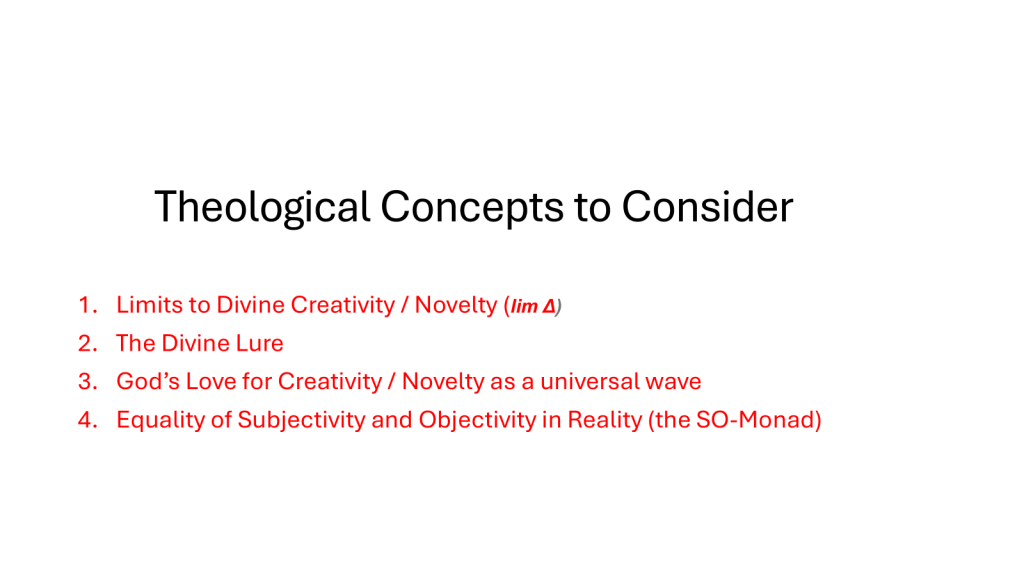
I’m pretty sure that Jesus would reject the modern Christian church that is based on wealth, property, and the powerful. As someone who falls into the camp of process theism / open & relational theology, I think that God lures all of us (the individual to the entire church) for the good, the novel, and the creative. Humans are tribal and have a hard time accepting such a lure. We fail to see what God wants us to explore’ what God wants us to consider; and what / who God wants us to love.

The EM was a lure that was presented to us yet we ignored it. Lord help us see God’s lures in the future.

P.S. Although this post is for Christians, I very much feel that such movements are often subverted in all of the world’s religions. Sadly, it is a universal aspect of our species.

Image created by Gemini Advanced

When Not Knowing Becomes Caring

I consider myself Christian, but in light of my country (USA) currently having its politics eroding into religion, I think a better term for me might be “Jesus follower.” I am not sure here. I am a member of the Presbyterian-USA demonimation. I joined this specific denomination because I support their policy of LGBTQ+ inclusion, and I want all minorities (racial, ethnic, cultural, gender, and religious) to be welcomed into greater society. PC-USA currently seems to align with this position. I also joined this denomination so that I would be eligible to sit on local church committees. I want to make sure that we keep Jesus as the focus while being kind to others in our community.

But let me be clear, I consider myself a Jesus follower well before considering myself a member of PC-USA.

Why am I bringing this aspect up? Well, I believe in God. There is tragedy, chaos, and the unstoppable trajectory of entropy throughout nature. I am aware that many people look at the world and do not believe in God when they see evil, sadness, and entropy. That is an extremely valid belief system that I often can agree with.

I will be honest. For some reason, I see a beautiful world. Personally, I think it is due to my exposure and work in the field of science. I work in medicine which is kind of science / science adjacent. I get frustrated with humans, but I am a lover of nature. I was the little kid that used a cheap microscope to look at bacteria in dirty water. I am a huge fan of mountains and love their geology created by tectonics and glacier formation. I find pictures of galaxies amazing.

When I look at nature, I feel I am in the presence of God perhaps expressed so well by Paul or by Augustine. Although I feel God is in the world, I have no proof and never will have proof. My atheist friends (who I love dearly) believe that there is no God. Again, there is no proof to their belief system. Both of our sides hit a roadblock.

Atheists are helpful here and often are not listened to by religious audiences. God is not provable. Sorry. That is just how it will be. Conversely, a lack of God is not provable.

“Doubting Thomas” by He Qi

The unknowing. It can be a dark night of the soul. This unknowing should, in my opinion, lead to all of us not really caring about proving God’s existence or non-existence. It should make us think about why we still care for each other, for other species, and for our planet. When contended with over time, this unknowing can lead to a deeper understanding of oneself and one’s relationship with other humans and the world at large. A believer in God often believes that caring for the “other” is a prime responsiblity of humans reacting to the divine. A non-believer in God also expects that caring for the “other” is of utmost importance as we all have a limited period of time on the planet. Both ideas of caring for the poor, the sick, the very young, and the very old are beautiful. They seem to be related.

For example, you see a car wreck occur and pull over to see if anyone needs assistance. Our state liquor stores in Utahwill round up to the nearest dollar to help the homeless if you ask them to make this donation. The rounding up process seems (from what I have observed) to occur with all types people — religious and non-religion alike. Humans from all religious, societal, or cultural backgrounds do charity work. Many humans volunteer at homeless shelters, animal shelters, food banks, and at schools with high-risk children.

Why is this?

I think there is something else going on here. When a human does something that is worthwhile to the greater community but not to themselves / their family directly, why is such an act performed? Is this altruism controlled human evolutionary pressure? Is this a byproduct of group selection? Is this a culturally learned trait? Does being kind or altruistic make one more likely to reproduce?

However, could kindness to the “other” be a direct consequence or a by-product of something much bigger than our species? At least on our singular planet, other animals are altruistic. Evolution, gene selection, epigenetic factors of the environment or culture… Could all of these factors point to the fact that the world is yearning to be beautiful. The second law of thermodynamics never stops advancing. We all die, and all potential energy will be used up in the far distant future. However, is goodness or kindness or whatever metaphysical concept that one can come up with trying to break into creation? Is this a “still small voice” that is tragically but beautifully present in every drop of time?

The Grand Canyon, Arizona

This goodness or kindness doesn’t necessarily require a God. Thus, are such behaviors part of the universe, perhaps related to panexperientialism? Is this potential for goodness seen on Earth also potentially present throughout the universe as some type of subjective field?

Is this goodness a byproduct of quintessence (a cosmology idea) with its associated potential energy? Is this goodness a result of the universe (with our without God) learning and providing opportunities for creation or novelty? Is this God providing love at all levels of reality / at all moments of time?

Thomas J. Oord states this well in his book, Defining Love : A Philosophical, Scientific, and Theological Engagement (Brazos Press). He describes God’s love as “full-orbed.” Agape, eros, philia and all of the other ways that love has been describe throughout human history also is in God. God is completely relational to the world — from quarks to quasars and with humans in between.

The Andromeda galaxy and our Moon in the night sky (EarthSky)

So, regardless of our metaphysical beliefs, we seem to be obligated to care. We are not forced to care for others, but I think that God / the universe / combination / who knows (?) wants caring to be one of the points of the universe — divinely inspired or not.

When we don’t know about the cause of reality, we should begin to think that this unknowing should lead to our care for the other.

Image produced by Gemini Advanced

The Eternal Dying of Gray

I have several very good friends that I have accumulated throughout my medical training. We have kept up a lively group text for many years. Our topics range from family updates, stupid jokes, and very serious topics (including religious topics). Recently, we had a text exchange about human sexuality. I have two LGBTQ+ children for whom I love very much and for whom I am rather protective. Some of my friends are very “black and white” about human sexuality. They aren’t bad people as they care for many patients who are LGBTQ+ in their medical practice without judgement. Some of these friends, however, are very black and white when it comes to being LGBTQ+ and morality. For example, they may state that being gay is wrong but that we should still love LGBTQ+ people if we are Christian.

As you might imagine, such statements from some of my friends drive me a bit crazy. However, these friends are very decent people. They come from various religious backgrounds. Some are not religious. Some of them do medical charity work. Some of them do charity work outside of medicine. Often, they do not understand the spectrum of human sexuality that has existed for thousands and thousands of years.

As I have become older, I have become convinced that it is part of the curse of our species to be strictly black and white when it comes to thinking. There are potential evolutionary benefits to such binary thinking. The “curse” is the failure to overcome the evolutionary pressure to think in the black and white.

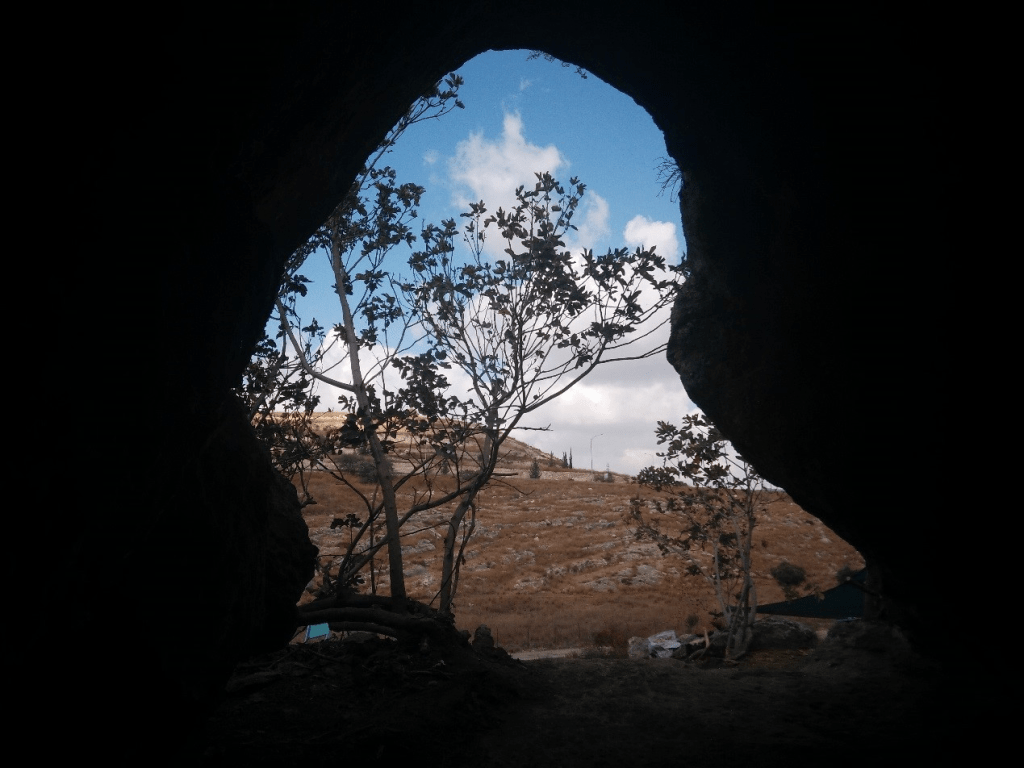
If you are a Paleolithic person who is sitting in a cave and who hears a growling noise outside, you then have a black and white choice. You can stay in the cave and be protected. OR you can go outside the cave and potentially be eaten. Your genes to pass on to future generations instead become a meal.

I am going to suppose that there were very few ancient Homo individuals who thought, “This sound is interesting, I am just going to take a look. It might be better for me and for my clan to know what is out there.” In other words, individuals who think in terms of gray might have had a rough time surviving early on in our species existence.

We no longer live in caves. We no longer worry about being eaten by lions. Our genetic predisposition for us (well, probably for most of us) is to think in black and white still persists in a modern world filled with tons of gray.

For example, human jaws have both canines/incisors and molars. Our teeth provide evolutionary evidence that there was pressure for us to become omnivores. Yet, some people choose to be vegetarians. Other people tend to like diets high in meat and fat. Both diets can be associated with long-term health risks. So, here we are with an unusual dentition that does not point in one specific way in regards to how we should absolutely eat. We may choose to eat a certain way. We may choose to consider aspects of animal cruelty when we choose what we eat at a restaurant. Also, what if plants have sensation (very unclear) and we eat them? The answer is so gray, but we mostly choose to be black or white.

Dental Clinics of North America (2007)

Most people seem to be either pro-life or pro-choice. We can say that abortion is never an option despite conditions such as anencephaly or other genetic conditions associated with fetal demise. We can make a 22-week premature infant remain alive in a newborn ICU with the associated incredibly high health care costs and long-term potential neurologic disease. We can demand that everyone should be pro-life during infancy yet provide minimal federal funding (at least in the United States) when a young child needs food, including free lunch programs at school. The answer is so gray, but we mostly choose to be black or white.

Many of us in the United States state we are Christian. However, we seem to not follow the lesson of the Good Samaritan when it comes loving the poor, the migrant, the intellectually disabled, or the people who are LGBTQ+. We Americans often state that we now live in a Christian country with an annual military budget of over 800 billion dollars (13% of the federal budget) which is possibly larger than the next combined nine largest military budgets elsewhere in the world. In contrast, our country spends about 7 billion dollars annually for the national Special Supplemental Nutrition Program for Women, Infants, and Children (WIC). We spend more money on the military than we spend on nutrition for at-risk children. I do not understand why so many of my fellow citizens insist that we are a “Christian” nation. Again, the answer is so gray, but we mostly choose to be black or white.

Perhaps our human understanding of reality is constantly based in the gray through time. However, this gray is eternally destroyed over and over again through into black and white binary thinking. Perhaps, and further still, we will always destroy the gray through time for as long as we exist as a species.

Our human experience here extends into other ideas such as the difficulty in combining general relativity with quantum mechanics; the difficulty in understanding if some aspects of evolution are directional ; the difficulty in reconciling free will versus determinism in the human condition; in considering God versus no God.

I think our species could benefit from considering the gray in all walks of life — material or metaphysical. We may need to break away from our evolutionary history when it comes to loving our neighbor. If not, then when?

Odds and Ends:

  1. The podcast, Homebrewed Christianity, has a recent episode titled “Why Religion Went Obsolete.” In some ways, it touches on some of the above issues.
  2. I am listening to the audiobook titled “After Jesus, Before Christianity.” It is a great book. The section on the fluidity of sexuality among early Christians that was later squashed seems to emphasize how H. sapiens as a species continue to destroy gray ideas.

image produced by Gemini Advanced

Difficult Conversations

I recently read this great article in the Journal of Pediatrics titled, “Ethical Challenges in Pediatric Medical Complexity: A Survey of Parents” by Shapiro, et al. Unfortunately, the article is behind a paywall. If you work at a hospital / university or if you have access to a library, you may be able to read it.

The authors performed a survey of 218 parents of children who had been diagnosed with severe or chronic health conditions. The survey went over ethical challenges that these parents go through in the healthcare setting with their children.

The top 3 areas of concern expressed by parents were:

  1. Not always understanding the communication about life-sustaining therapies.
  2. Costs associated with illness (financial stability after a devastating illness is rampant in this country)
  3. Disagreement with medical staff regarding care plans

Physicians can do better here. Healthcare teams can do better here. Hospital administrators and healthcare systems can do much, much better here. Where can we find broken communication occurring?

  1. Not always understanding communication about life-sustaining therapies: This happens when healthcare teams talk above the ability of a family to understand what types of therapies are occurring. Healthcare teams often talk above the level of patient / family understanding. Families aren’t dumb. They just don’t understand complex medical physiology and jargon. I would not be happy if an attorney wrote my family’s will and used sophisticated language that I could not understand. I would not understand Major League Baseball if I did not have a background in understanding its rules (with the help of someone explaining the rules when I was younger).
  2. Costs associated with illness (financial stability after a devastating illness is rampant in this country): This is a tragedy in U.S. healthcare. I don’t have much to add here except to say that families should not go bankrupt in the setting of a medical emergency.
  3. Disagreement with medical staff regarding care plans: I have seen such disagreements many times. Honestly, most of these disagreements (not all) resolve with just spending time talking through the issues. Sometimes families don’t understand why their child is starting a medication. Sometimes families don’t understand why a new medical procedure is needed for their child. Sometimes healthcare teams aren’t listening to parents when their child is chronically ill and really doesn’t need extra things done. This is especially the case with further procedures will not extend life and / or improve the quality of life.

The authors state the following: “For the challenges that sit more typically in the bioethics space (eg, end-of-life and life sustaining therapy decisions, conflict among families and teams, etc.) we must move beyond thinking about the acute period to recognize the residual ethical distress for years.”

I agree. One’s health or the health of a loved one is a significant part of an individual’s life. This time component increases during difficult times of illness or disease.

Love. Difficult times. Stress. There is overlap here when one considers both the medicla setting and the church setting (and of course in the setting of a mosque, temple, synagoge, etc.). Anxiety in the church setting has been studied in many situations, including here and here.

In the United States, it is fairly clear that the current political situation combined with the negative effects of social media and an increased distrust in science have aggravated the anxiety of many religious people.

For example, fealty to a political party in a church setting can emphasized by the congregation over the worship of God. Social media algorithms separate us from those who have different but perhaps rational opinions. Anti-science sentiments preached by both church leaders and non-religious leaders tear away from our understanding of the real — of the objective truth.

In a manner similar to the healthcare setting, societal pressure in relation to religion often does not communicate well, can require extensive financial stress, and can lead to disagreement about how “religious” a person must be. Media (mainstream and alternative) just show the extremes of religious and non-religious behavior. Many religions have leaders who seem to obsess about money in the setting of their promoting terrible ideas such as the “prosperity Gospel.” Not accepting any science in a religious or non-religious setting promotes ignorance, hurts other humans, and simply ignores reality.

If we believe in God, then we pretty much have to believe God is aware of objective reality. Jesus experienced and believed in objective reality, and I am a Jesus follower (for example, Mark 7: 18-20).

Thus, if one has questions about God or has unique ideas about God, I’m not exactly sure why we have to stick to wooden or fundamentalist interpretations of Scripture. If one has a new take on Christ’s Atonement or the Resurrection, I am not sure why there would be anger. That person is simply exploring or perhaps studying church history. Of course, any change in Christian doctrine (which is my religious background) that harms people mentally, physically, or financially would be a problem and not valid.

However, if one wants to explore theological or philosophical ideas surrounding God, it should not be a problem in our society and in our religious settings. Our species have been discussing ideas surrounding the divine for over 5000 years. My fundamentalist friends will be sad to know that such explorations will continue as long as our species continues to exist.

Instructions of Shuruppak

Philip Goff has recently written about this issue quite well.

Another interesting source to consider is this recent IAI debate concerning the speed of light. I didn’t find the debate that inspiring, but within the first minute of the debate, the cosmologist (João Magueijo) was very clear that science is not “sacred.” It is “…not religion, it is science.” True, but subjectivity has changed just as much as objectivity in the setting of human reality. Art, theater, music, the interpretation of history, literature — all have changed. Thus, theology also has changed.

If you think religion, and specifically Christianity, has not changed over the centuries, you would be quite wrong.

So, when talking to others about the tragedies of the human condition (illness, depression, death) or talking to others about God, we should follow the issues expressed in the Journal of Pediatrics article. We should communicate clearly and kindly, not expect money to improve our relationship with God (even if your religious leader told you otherwise), and listen well to others.

image created by Gemini Advanced

GI Science, GI Training, and Process

I’m about to start an inpatient call week at the hospital. Such weeks are always busy, so I likely won’t be able to write for the next 7-8 days.

When one thinks about process philosophy, it is best to think of reality as change itself. In other words, I may not concentrate on considering matter as a priority in reality as much as I may consider an emphasis on time or change. This perspective is hard to unsee once it is realized.

Alfred North Whitehead states this clearly in Process and Reality: “The world is thus faced by the paradox that, at least in its higher actualities, it craves for novelty and yet is haunted by terror at the loss of the past, with its familiarities and its loved ones. It seeks escape from time in its character of ‘perpetually perishing.'”

Thus, having spent part of last week training pediatric gastroenterology fellows from all over the United States, Mexico, and Canada (medical subspecialty trainees are called “fellows“), I came across two ideas showing the apparent eternal process of change. These two ideas are real-world in nature but do have metaphorical implications.

Gastroenterology is the major peer-reviewed journal in my field. Last month’s issue had a review titled “Evolutionary Medicine for Chronic Inflammatory Diseases of the Gut: More Than a Clinical Fantasy?” which is open access. Simply put, bacteria in the setting of gut inflammation (Crohn disease or ulcerative colitis) undergo evolutionary changes at the gene level that make them more virulent. This genetic change occurs within just a few generations of bacteria which encompasses only a quick period of time (hours, days). The genetic changes lead to phenotypic / structural changes of the bacteria, such as the ability to have enhanced motility. Understanding evolutionary change on a short time scale such as in the setting of the bacteria of the microbiome can allow for better therapies which control gut inflammation sooner rather than later. These findings demonstrate change. These findings emphasize time. If bacteria can evolve within quick generations, imagine the change that can occur over millions or billions of years.

image from “Computed tomographic analysis of the dental system of three Jurassic ceratopsians and implications for the evolution of tooth replacement pattern and diet in early-diverging ceratopsians”, eLife.

Change at the genetic level. Change at the organelle level. Change at the organ level. Change at the species level. All involve time. This change is beautiful but can be terrifying.

On a mega-fauna / societal level, I found my time last week with pediatric GI training fellows somewhat of a continuing metaphor of change in gastroenterology and in the overall field of medicine. Pediatric subspecialists are undergoing significant stress currently, especially in the U.S. Most pediatric gastroenterologists work in university hospitals or academic medical centers. Funding for academic medicine to do research is becoming less and less available. Medical education for physicians is potentially losing touch with the fundamentals of physiology and pathology. Grade inflation for medical students is still problematic.

NIH data of funding of PhDs versus MDs over time

After medical school, burnout continues to be an issue for U.S. physicians. Burnout is associated with anxiety, depression, job change, substance abuse, and medical errors. Burnout is also associated with suicide which is a significant problem with physicians. My field, pediatrics, is suffering from a lack of people wanting to enter the field, likely due to education debt and the relatively low salaries of pediatricians compared to most medical specialties. My subspecialty (pediatric gastroenterology) requires many more years of extra training but suffers from lower salaries long term despite taking care of more complex children.

Again, all of this data points to change. This change fundamentally involves time. It is terrifying, but I think there is potential for beauty.

While I was teaching the pediatric gastroenterology fellows last week, I was awed by these young people who had goals to fix these issues at the community, academic, and political level. The sick child comes first in all settings. However, addressing the need to care of children at the national and international level will take ingenuity from parents and pediatricians working together. It will involve emphasizing child health in our country. It will involve improving public health and public knowledge about childhood diseases. It will involve improving basic understaning of science at the public level.

I was most impressed that these pediatric GI fellows from across North America wanted me (as well as other faculty) to talk about burnout prevention and resilience. My specific talk was titled “Balancing Work and Life?” It seemed to go well.

me…talking

This change (similar to evolutionary changes in the microbiome) is undergoing evolutionary pressure from the societal level. Young trainees see the underlying issues affecting child health. My generation became caught in the beginning of these changes and got lost. This generation(s) behind me are seeing the end results and want to fix the problems!

The “inflammation” (whether in the gut / microbiome or in pediatric health / society) will lead to change. It may end up worse. It may end up better. The changes may be effectively neutral. However, there will be change. My experience of teaching young pediatric GI fellows last week is that we have a chance for good.

By the way, my talk did discuss TWO THINGS that prevent burnout in academic medicine: These two things have been described in the literature.

  1. Teaching at any level: Faculty, fellow, resident, medical student, college student, high school, church / mosque / temple / synagogue, community group — they all prevent burnout in academic medicine.
  2. Learning something OUTSIDE of medicine: Here is where my theology training has been really wonderful. Thinking and writing about theology helps prevent my potential for burnout

image created by Gemini Advanced
If Not The Multiverse?

In the short time that I have had my DThM degree (Doctorate of Theology and Ministry), I have realized that writing about theology can be quite hard. You must know the theology, but you also must have some background in philosophy. Since I am interested in the intersection of science & faith, then I must be as accurate as possible when discussing science. I try to do my best here.

Thus, I came across this interesting article, “Opposing the Multiverse” (G. Ellis), which is a 2008 article published in Astronomy and Geophysics. Unfortunately, the article is behind a paywall, so perhaps you can read it through a local library or university.

Ellis is a mathematician at the University of Cape Town, and his essay criticizes the science behind the idea of the multiverse. Although he is a mathematician, he criticizes the multiverse from a scientific perspective as it is simply an untestable idea. In the multiverse, other universes would be beyond an observational boundary. How could inductive reasoning occur?

image from Smithsonian Magazine

As an example, if galaxies in our own universe are beyond visualization but still are present, then perhaps even more complex entities (other universes?) fit exactly the same criteria — beyond visualization but still present. As case in point, as our telescopes get better, we our finding more and more galaxies farther and farther away. “Beyond visualization but still present” would be defined as indirect evidence. Of note, JADES-GS-z14-0  is the farthest galaxy that we can see with its light reaching us after 13.4 billion years.

Per Ellis, “If each link in a chain of evidence is well understood and tenable, then indirect evidence such as this carries nearly as much weight as direct evidence.
But not all the links in the chain are tenable.”

If cosmic inflation is true (for which there seems to be much evidence) and if the inflation was anisotropic, then perhaps the non-uniformity of cosmic inflation caused a multiverse. Fascinating idea — if true.

cosmic microwave background

How does this relate to theology? I have absolutely no problem with ideas surrounding the multiverse, Everettian quantum mechanics, and string theory. I think such ideas advance human knowledge, are necessary, and require funding. However, I think that many of these ideas border on (and perhaps are) metaphysics. If you have read my blog, you know I think metaphysics is important.

My point is that I think metaphysics can work well in a day-to-day, perhaps utilitarian perspective when it has one foot in the imaginable and one foot in reality.

We should consider this idea in theology. We should have one foot in the metaphysical aspects of God and one foot in reality. Biological evolution is indeed true (with the complexity of environment change and other epigenetic phenomena present and involved in time). This is one foot in science. The other foot, if one considers theology, is placed in the ideas surrounding process theology. Specifically, God is present in real time, is experiencing change, and perhaps is desiring change. These two feet then consist of good metaphysics.

On a more personal level, if altruism is biologically true, and God has told us to love our neighbor (Matthew 22:39), then we have one foot in biology and one foot in the theology of love. This is good metaphysics.

Such an idea is not Cartesian dualism. Such an idea is not the God of Aristotle. This idea of God is both pleomorphic and actual, both primitive and present, both science and poetry if both are based in goodness. Metaphysics involving God then involves change and the priority of time.

Perhaps metaphysical ideas of the “two feet” can be used to help religious people who don’t have a scientific background begin to understand how science has the ability to get a further awareness of God.

image created by Gemini Advanced

Ecstatic Naturalism and Time

Graduates of my seminary (Northwind Theological Seminary) have been doing an on line book club for a while. It has had a few incarnations during its existence, and as we start revving it up again, we are reading journal articles instead of books.

This past week we reviewed “Is a Process Form of Ecstatic Naturalism Possible? A Reading of Donald Crosby.” It is a 2016 article in the American Journal of Theology and Philosophy. Here is the link. Unfortunately, it it behind a paywall so I hope you are able to get access to it. The author is Demian Wheeler who is a theologian at United Theological Seminary of the Twin Cities. His article is about the writings of Donald Crosby who is both a theologian and philosopher at Colorado State University. I am aware of Dr. Crosby as I have read some of his writings. Also, one of my kiddos goes to CSU, and they have talked to me about Dr. Crosby.

My friend, Michael Brennan, is in my book club, and he has already written about this article. His writing is quite good. I would recommend reading his Substack.

The entirety of Wheeler’s article discusses ideas surrounding “ecstatic naturalism.” This term basically means a “wonder of nature without the requirement of the supernatural.” I consider myself someone steeped in the writings of process theology and open & relational theology (both ideas are very similar). Wheeler discusses the potential critical weaknesses surrounding process philosophy / process theology. Specifically, some critics state that there is no identifiable way for those who follow process ideas to accept wonder or awe without some need for an associated deity. For example, process thought is founded on the ideas of panentheism (all of nature is in God). This term is different from pantheism although there is some overlap. Simply put, pantheism states that the universe / nature is God. Panentheism states that the universe / nature is in God.

I would like to talk about one critique of process thought…the influence of time.

Per the article: “Crosby’s nature is, in a word, indeterminate, dynamic, and thoroughly processive. The future remains (to some degree) open, and ‘the tenacious gnawings of time ensure that all things come to an end.”

Does time end or does it continue eternally? Is time a voracious beast that eventually consumes all creativity or novelty? Based on the second law of thermodynamics, one would readily agree that time definitely seems to end all things. In an eternally expanding universe, all particles would lose their potential energy and would finally distribute evenly throughout all space. There would be essentially no creativity — divine or otherwise.

image from NASA

I have several thoughts here. As science evolves, and we learn more about nature then perhaps we may learn more about such laws. I am pretty doubtful that we will overturn the certainly of the second low of thermodynamics but who knows… Regardless, in the deep future and in the setting of infinite time and infinite space, there is the mathematical possibility for a quantum fluctuation (or a random change of energy at one point in space) to form structures. A metaphor for such a structure is a “Boltzmann brain” in which a background of innumerable particles in infinite space / time could briefly form extremely complex structures — even a brain. A good review article about Boltzmann brains is here. A good counterargument against Boltzmann brains is here.

Another idea arises from conformal cyclic cosmology in which the universe expands, collapses, then expands again eternally in time. This idea would go against the terror of time as creativity would simply occur in the new universes.

Finally, the ideas surrounding a multiverse would suggest eternal creativity in infinite time and infinite space. There could be an infinity of universes out there with different laws of physics and different life spans. Creativity would end in our universe but would simply carry on in others.

So, the ideas of Boltzmann brains, conformal cyclic cosmology, and the multiverse would suggest no end to creativity — divine or not — and regardless of time. Eternal creativity in itself would be a definition of something — whether God or an eternal primal law. It would be up to each human to decide on the need to worship this creativity or not.

By the way, it should be pointed out that the second law of thermodynamics has been shown to exist time and time again experimentally and by simple observation. Boltzmann brains, conformal cyclic cosmology, and the multiverse are, at this time, not provable (and I don’t think will ever be provable by our species).

I would choose to put God as the ground for natural creativity and for my ecstatic naturalism. Indeed, the weakness of my position is the influence of my cultural background, my interests, and familial influences. There is a way out of this weakness in the philosophical realm. In the setting of process philosophy, all prior events in time influence the present. I do believe that I could have and still can walk away from my belief in deity at any time point, but my past influences have run deep.

image from https://blog.uvm.edu/aivakhiv/2020/04/11/process-relational-ecologies-querying-some-terms/

In the setting of the inevitable progression of time and entropy, I have a hard time visualizing the heat death of the universe. I cannot think in such time scales in which even black holes could evaporate (greater than 10^100 years from now!). Perhaps all that is becomes dark and cold, and all information, including all human experience) eventually consists of random particles rarely interacting with each other.

black hole

On the other hand, theories such as Boltzmann brains, conformal cyclic cosmology, and the multiverse suggest that physicists are looking for objective ways to consider the continuation of creativity as time moves forward. At this time, such ideas are not provable.

The theological suggestion of the universe and all its creativity being contained in God (panentheism) also is not provable but matches with the scientific ideas discussed above. Here is a theological model (panentheism) with a subjective theory surrounding creativity. Boltzmann brains, conformal cyclic cosmology, and idea of the multiverse are objective theories (through mathematics, astronomy, and theoretical physics) with objective ideas surrounding creativity.

Here is where subjectivity and objectivity touch.

It seems to me that the eternal progression of time allows for creativity or novelty well beyond the human brain’s ability to fully conceptualize or imagine.

This continuous creativity means something. It may be an essence of God. It may be God. It may be an underlying priority of nature that does not require God but still is present in all of space and all of time. Creativity, whether divine or not, should make our species have awe or wonderment at the infinity of it all. Ecstatic naturalism can be associated with a belief in God just as much as it can be associated with no belief in God. It all evens out.

Dialectically, we need science, philosophy, and theology to consider what CREATIVITY means.

Odds and Ends:

  1. Match Day in the U.S. just ended. On “match day”, all graduating medical students find out where they are going for residency. Unfortunately, primary care is suffering here as students want to enter specialties with higher incomes (also, they have tons of debt).
  2. My friend Tim Miller also has a great Substack account. Here is a smart person. I highly recommend you follow him.
  3. The “Not Even Wrong” blog notes an interesting ArXiv article on consensus of physicists on the big ideas in their field.

image generated by Gemini

The Ultimate Flaw in Intelligent Design

I recently read the article, “On Questioning the Design of Evolution” by E. V. R. Kojonen in the latest issue of Theology and Science. Unfortunately, it is not an open access article, but perhaps you can find it somewhere for your reading. In many ways, the article is excellent.

The article discusses the weaknesses of the arguments promoting “Intelligent Design” (ID) which claims to be science but which is just theology. In my opinion, ID consists in a space where creationists can say “and God is here” when looking at biological structures, especially in the setting of evolution. ID points to such issues as “irreducible complexity”, possible evolutionary directionality, and direct design by God which they state proves God is present in nature. This idea of “prove” is fraught with so many issues. First of all, ID is not provable. From a Popperian perspective, it also is not disprovable. One cannot come up with a scientific, objective model to prove or to disprove ID. If a hypothesis isn’t provable or disprovable, it falls into the realm of subjective thought which includes the fine arts, some liberal arts, and theology.

Theology can be an objective study. How many people believe in a religious system, the growth or decline of a religious group, the amount of property owned by a religious group — these are objective areas of study. However, the majority of theology is subjective. Being subjective is certainly fine as long as the subjectivity is not harmful. Having theology convince others to harm minority groups is bad theology. Having subjective theology be anti-science is bad theology.

Here is where ID is problematic. I actually think it is harmful simply for the reasons that many of its proponents believe it should be 1) considered to be a part of science or 2) considered it to BE a scientific field. Just dreadful.

ID IS NOT SCIENCE. IT IS THEOLOGY.

Let’s take the evolution of the eye. ID proponents in general would state that the evolution of the eye directly has required God. They would especially state this idea in the setting of organisms with no eyes changing over time to organisms with eyes. The ID argument typically has been that the eye is too complex (irreducibly complex) for an eye to evolve over millions or years. The presence of an eye would be an example of “and God is here.”

Trilobite

It is as if they believe that no genetic or paleontology evidence exists for primitive eye development. This idea is patently false as seen here, here, here, and many other scientific sources. I also don’t know how ID propents describe “and God is here” in the setting of species losing eye structure over time.

Blind cave fish

Here is what ID would propose:

A biological structure exists at Time 0. It is complex. The only other way to get to a changed structure at Time 1 is through the direct interaction of God.

Fine. However, this idea is strictly theological and not scientific. I would argue that this idea is bad theology. If God interferes here, then why does God not interfere to help good things and to prevent bad things in nature?

In the setting of process theology, this idea is improved.

In ideas surrounding process theology, God is in the change of the REAL world in REAL time. Some process theologians state that God desires novelty and is in the flow of change. Some process theologians state that God lures for the best outcome although nature can ignore any divine lure. In many ways, this latter idea is modeled by Open and Relational Theology.

Nature can be studied scientifically, and theology should not insert itself saying “and God is here.” Here is a helpful reference. Unlike ID, process theology and open & relational theology do not insert God’s self directly affecting nature. Instead, God is in, around, and through nature and in time itself to observe change (including evolutionary change) while desiring and celebrating change. Of course, evolutionary change in the setting of process theology still could be directional which may have some scientific basis when one considers the ideas of Simon Conway Morris.

Good theology incorporates science. It should not attempt to BE science.

Our world is not static. Our theology should not be static either.

Image generated by Gemini

Vaccines are Good and Evolution is Still True: A Religious Perspective

In light of the recent measles outbreak in this country, I once again am so glad that vaccines exist. I am a pediatrician, specifically a pediatric gastroenterologist, and I deal with many terrible illnesses, including many preventable illnesses. Vaccines are a medical miracle. Not much more can be said.

I do get occassional comments on my blog. By the way, my blog here is also on Medium and Substack. I recently received the typical “feedback” that vaccines are poison and that I am not Christian. Interestingly, from the inverse perspective, I do get some atheists who complain that my posts demonstrate that I believe in a “sky god.” These comments are not helpful. I just block and ignore. Perhaps they come from junior high kids trying to get me mad. Perhaps they come from someone with profound anxiety or some other type of mental illness. Perhaps they come from someone who is uninformed. I have no clue.

What can I say? I am a born-again Christian. I have been baptized twice because denominations often believe other church baptisms are “wrong” — I swear we Christians are our own worst enemies. I believe in original sin but more from an evolutionary perspective. I believe evolutionary pressure has made us a very violent species, and our individual goal should be to avoid that anger and violence. I believe in Jesus and the Resurrection. I do believe that God is exponentially smarter than us, so I think God understands salvation far better than I ever will. In other words, I’m not into conversion, and I think modern understandings of Christian conversion can be wrought with American nationalism. I stand by Luke 23: 39-43.

People who are against vaccinations are not inherently evil people. I have to repeat this statment to myself often because I really, really, really, really want to judge them. They are the product of poor science education in school. By the way, we are all responsible, as Americans, for causing poor science education in both pubic and private schools. They are the product of ill-informed religious leaders (not just Christian) demanding that they align with non-scientific ideas regarding material matters — no different than telling them to believe in Bigfoot, UFOs, or the Loch Ness Monster. The history of this movement is over 200 years old and is essentially unchanged in its arguments. A lack of change is always worrisome.

There is more here to consider. I think fear of vaccines, fear of monsters, and fear of the “other” is simply an evolutionary leftover in our genes and, subsequently, in our brains.

Think about fish and reptiles. They have relatively primitive brains compared to mammals. If they are about to be attacked or eaten, they will have brain circuitry that pushes for them to escape at all costs. Such escaping involves an increased heart rate, increased blood pressure, heightened senses, and increased muscle activity. Mammals appear to have a greater capacity to learn from the experiences of others. If a gazelle sees a member of the herd attacked by a lion, the gazelle will always be on the look out for a lion on the serengeti. The gazelle will be in a state of increased alertness similar to anxiety. A good review article is HERE.

Of course, then we come to humans. When we lived in small hunter-gatherer communities, any outside sound or sight would cause of to be wary, to stay in the group, and to not leave. Those that went to explore the sound or sight risked being eaten and their genetic material destroyed.

People complain so much about the current situation of the world. It is human tradition, apparently, to think that we live in the worst part of human history. We should have concerns — climate change, fascism, and nuclear war come to mind. However, we are living longer. We are healthier. We have more food. We are getting more educated. That old human brain of ours has not kept up with the fact that we are not getting eaten by cheetahs, bears, lions, or tigers. Our old anxieties of being eaten are being replaced by worries that typically do not exist — as seen in the anxiety surrounding many conspiracy theories. As long as we have that unseen “other” potentially existing outside “our cave”, we can take comfort that we are avoiding some will-o’-the-wisp fantasy that comprises nothing but simple outbursts of our ancient anxiety. Even the ancient Greeks and Romans saw these effects and described them.

Religion has done good things and bad things in the history of the world. From a “good” perspective, reilgion forms community. When does well, it supports those in need in the community. When done exceptionally well, it supports those in need outside of the community. One of the best ways to consider such aspects is to think about the founders of various faith streams. When I consider the Gospels, I think Christ is quite clear about how we should treat each other.

Matthew 5: 43-46: “You have heard that it was said, ‘Love your neighbor and hate your enemy.’  But I tell you, love your enemies and pray for those who persecute you, that you may be children of your Father in heaven. He causes his sun to rise on the evil and the good, and sends rain on the righteous and the unrighteous.  If you love those who love you, what reward will you get? Are not even the tax collectors doing that?”

In other words, love others — no exceptions.

Matthew 22: 36-40: “Jesus replied: ‘Love the Lord your God with all your heart and with all your soul and with all your mind.’ This is the first and greatest commandment. And the second is like it: ‘Love your neighbor as yourself.’ All the Law and the Prophets hang on these two commandments.”

In other words, if you love God, you must love your neighbor. This connection of love between God / neighbor is more powerful than the strong force in physics.

Matthew 25: 37-40: “Then the righteous will answer him, ‘Lord, when did we see you hungry and feed you, or thirsty and give you something to drink?  When did we see you a stranger and invite you in, or needing clothes and clothe you?  When did we see you sick or in prison and go to visit you?’ The King will reply, ‘Truly I tell you, whatever you did for one of the least of these brothers and sisters of mine, you did for me.’”

In other words, if you are anti-science in areas where lack of science leads to death (i.e., messing up public health), then you are really doing life wrong.

Luke 5: 31-32: “Jesus answered them, ‘It is not the healthy who need a doctor, but the sick. I have not come to call the righteous, but sinners to repentance.'”

In other words, if you are anti-science, you need to think about what you are doing to others now and in the long term.

When I say, “anti-science”, I am not saying I am against peer review, grant review, meta analyses, or debating scientific findings objectively. Ethics should absolutely be involved in scientific discovery. I AM saying that I am against pseudo-science. Proponents of pseudo-science hurt others, often unintentionally.

God is in time and in nature at all moments. God calls on us to love others, especially those in need. We have complete freedom to respond to this call. Our evolutionary history is filled with innumerable events in which our species and the environment around us have given choices as to how we should proceed — violently or non-violently. As humans developed cultures and societies, we developed epigenetic pressure to love or to conquer, to help or to destroy, to advance or to retreat in knowledge.

God gives us the freedom to live in fear or to learn about nature and to love others. So many conspiracy theories are based on old cultural-religious narratives. God desires us to move beyond old falsehood. We should not be burning witches. We should not be persecuring minorities in times of economic stress. We should not be calling each other anti-Christ over provable scientific theories.

What we should be doing is to accept God’s lure for the good in order to improve humanity’s lot in the world. God gives us an infinite chances in real time to make our species better and our world better. What we can improve culturally through good use of science and technology will improve our epigenetics. What epigenetics can do to improve genetics in the setting of having our species continue to exist has the potential to make our species more loving and caring, especially for the other.

image produced by Gemini Advanced

Burying our Dead and Recognizing God

Human burial has been occurring for millennia. For example, the Qafzeh Cave in Israel contains buried Homo sapiens remains that are 100,000 years old. This time period fits into the Paleolithic period. The buried remains appear to show signs of love, care, and compassion as antlers, shells, and red ochre were placed with the bodies. One wonders if this practice was an appeal to the afterlife.

Qafzeh Cave

Remains of Homo neanderthalensis (our extinct relative) have been found in Shanidar Cave in Iraq. These remains of the bodies buried there are approximately 70,000 years old. Flower grains have been found with the bodies suggesting that flowers were placed with the deceased. Again, such findings suggest caring burial practices and thoughts about the afterlife.
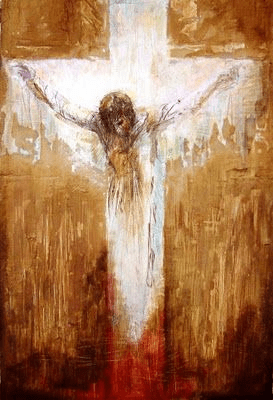
Shanidar Cave

It is incredibly difficult to determine why these burial practices occurred. It is impossible to know what these two different species of Homo were considering at the time of burial. Was there sadness? Was there an expectation of life after death? Was there some early concept of God here?

Interestingly, modern male chimpanzees have been seen doing possible ritual stone throwing to build cairn-like structures.

Ritualized chimpanzee stone throwing producing simple cairns (above), from Nature

What are these primates doing? This behavior seems learned and possibly passed on from generation to generation. I see nothing to suggest there is an evolutionary advantage of building these structures in regards to passing reproductive capacity although more work is needed here. Is this a semblance of primitive and perhaps ancient religious practice?

It is quite clear that brain size increases and becomes more complex when one compares the brains of chimpanzees and humans. This change suggests that there has been evolutionary pressure to produce large brains in primates over time.

Human versus Chimpanzee brain comparison, from NeuroImage

Auguste Comte (1798-1857) proposed that all human social structures pass through 3 stages.

Now, Comte’s ideas are almost 200 years old, and ideas in sociology and in theology have changed as our species has learned more science and produced more literature. However, his work still is interesting. He believed that all societies pass through a theological / fictitious stage (fetishism moving to eventual monotheism) then through a metaphysical / abstract stage, and finally through to a positive / scientific stage.

When one considers different Homo species doing sophisticated burial practices up to 100,000 years ago, it makes me think that religion or theology will always be an inherent part of our species. Is it a genetic component. No. But it is an epigenetic component wound up in human emotion, culture, and society.

Let’s consider a bit of mathematics. If the Industrial revolution started in the 1760s, then we have had “modernity” for 265 years (1760 – 2025). Let’s make 265 years the numerator. If we make 100,000 years the denominator, then humanity has been modern or scientific for only 0.256% of the time since sophisticated burials have occurred with H. sapiens. “Modernity” is a poorly defined concept in some ways. H. sapiens have always made tools. Is that activity modern? Perhaps in a manner similar to always having produced tools, we also have had simultaneous thoughts about concepts of God. The physical and metaphysical — hand in hand.

Process theology suggests that change is the basis of all reality. God can lure for change (passive) but cannot make direct, active change. In the setting of process theology, God perhaps has lured for evolutionary change so that nature (and specifically, human biology) has the chance or the ability to expand brain size. Perhaps, this lure allows creatures to consider their place in the universe or to consider what all of this is all about. Chimpanzees building cairns; H. neanderthalensis burying their dead with flowers; H. sapiens burying our relatives (even today) with mementos. Biological entities may be grasping for something greater and something mysterious.

Instead of “We Have Never Been Modern“, perhaps “We Have Always Wondered.”

Odds and Ends:

  1. I recently was on the (Re)Thinking Faith podcast with Josh Patterson. It was a fun, approximately 90-minute interview about my new book(“A Theology of the Microbiome”). Here is the linnk: https://podcasts.apple.com/us/podcast/a-theology-of-the-microbiome-with-john-f-pohl/id1438696524?i=1000697848247
  2. Great article about the potential risk of increased death (suicide) with psychedelic use. So many people think this drug class is a “cure all” for all sorts of mental illness. This article proves my point that we need good research before recommending medication or supplements.

image generated by Gemini Advanced