I am a member of the American Scientific Affiliation (ASA), and I highly recommend joining the ASA if you are able. The ASA tries to work objectively at the intersection of science and faith, and it has two journals. Their academic peer-reviewed journal is called Perspectives on Science and Christian Faith (PSCF). They also have a very good open access journal called God and Nature.
The most recent issues of PSCF has a great article titled “Cannabis and Christianity:
Scientific, Social, and Theological Reflections on THC and Christian Faith” written by Yong Fang Zhu and Kyra White at Redeemer University. Typically, PSCF articles become open access at one year post publication, so look for this article when it comes out.
As cannabinoid use has increased in the United States, so has the understanding of its risks. There has been a long history of cannabinoid research in the setting of nausea prevention and appetite stimulation in patients with specific conditions such as cancer. Here, cannabinoids seem to be wonderful adjunct medications. We also now are learning about associated side effects such as cannabinoid hyperemesis syndrome and cannabinoid-associated anxiety. One of the main reasons that we are learning about side effects is that more and more people are using cannabinoids both medically and recreationally.
Cannabinoids work in the human brain through the endocannabinoid system, which, interestingly, has involvement in central nervous system development. Cannabinoids interact with the two cannabinoid receptors in the brain (CB1R and CB2R). Both receptors are G-protein receptors, which are important in translating signals from outside the cell into biochemical pathways inside the cell.
CB1R is present throughout the body, but the euphoric feeling seen with many users of cannabinoids is centered around CB1R in the brain.
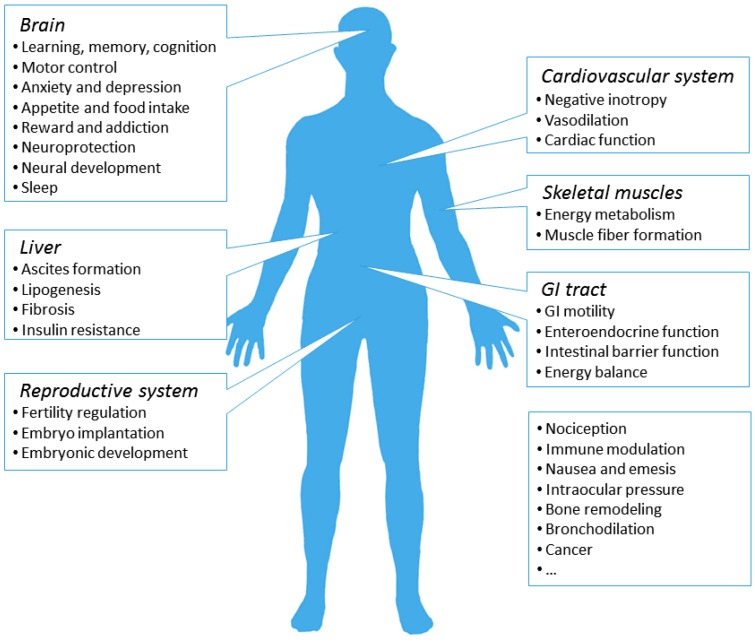
Image from Cannabinoid Receptors and the Endocannabinoid System: Signaling and Function in the Central Nervous System, Int J Mol Sci. 2018 Mar 13;19(3):833. doi: 10.3390/ijms19030833. It is a great review article.
Most of the euphoric effects of exogenous cannabinoids (like marijuana) are due to CB1R pathways. However, if CB1R is flooded with exogenous cannabinoid products, there is an increased risk of anxiety, paranoia, or psychosis. This risk is especially high in individuals with altered CB1R mutations due to mutations of the CNR1 gene (the gene for CB1R) .
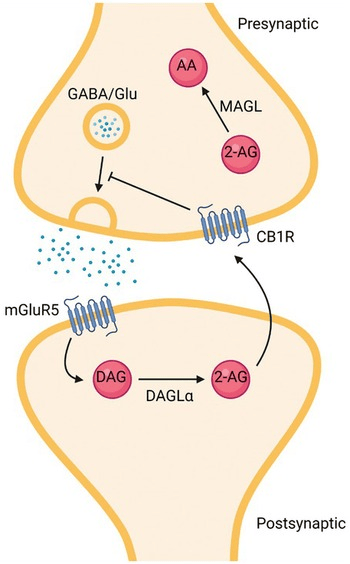
Image of the CB1R receptor and exposure to exogenous cannabinoids, from Marijuana and Madness, Cambridge University Press.
I have no significant issues with marijuana used as a recreational substance. In that regard, it is similar to alcohol. It can create euphoria or loss of inhibition in social settings. However, it can be abused, and some people are more susceptible to its effects (just like alcohol) due to genetic variation in a population. Good articles are here and here.
One of the more troubling issues with cannabinoid use in the United States is the high percentage of teenagers who use such products. Current cannabinoids have quite a bit more THC (tetrahydrocannabinol) compared to, say, the 1980s. THC is the psychoactive component of cannabinoids. Since CB1R is important in adolescent brain development, one could see how excessive THC could lead to altered brain development in this age group.
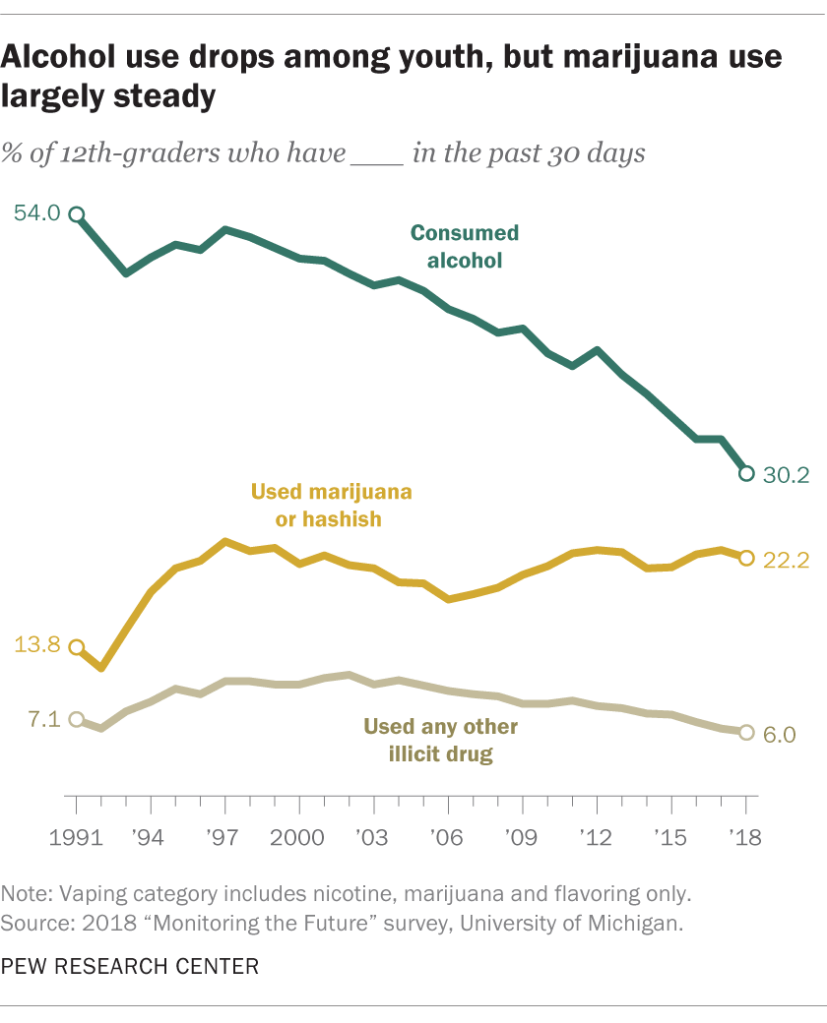
Pew Research Data: Note that alcohol use among U.S. teens is down, while marijuana use is increasing.
In my pediatric gastroenterology practice, I see the effects of cannabinoid toxicity several times weekly. Excessive weight loss (not gain), malnutrition, chronic vomiting, anxiety, and paranoia — all are common side effects in the teenagers that use cannabinoids.
The article in PSCF then goes into cannabinoid regulation, especially in the setting of medical versus recreational use. I very much believe that medical marijuana is effective in certain situations, but what is considered “medical” for marijuana varies widely among states. Also, the research into medical marijuana is not always very good.
I would like to concentrate on the religious aspects of marijuana use, especially in the United States.
I have absolutely no issue with mind-altering / hallucinogenic drugs traditionally being used in cultures. An example would include peyote use in Native American culture. A similar aspect can be seen with alcohol use in some African religious traditions. I have Native American friends who have explained to me how hallucinogenic drugs are used in the religious experience of their nation. I have experienced alcohol use when I did medical work in rural Ghana. We were caring for a tribe. They gave alcohol to the gods to give thanks for what we did. I shared a drink with them. It did not strike me as odd. Their tradition went back many generations.
What about Christianity? The use of wine in the Christian act of communion is based on an ancient history involving the year-round availability of wine, its ubiquity among all social classes in the ancient world, and its lack of need of refrigeration.

My issue here is that there seems to be a recent push by some individuals in my faith stream (Christian) to recommend mind-altering substances into the religious experience. If there is a need for individuals to use alcohol, cannabinoids, ketamine, or psilocybin to get a better understanding of God through the Christian faith, then so be it. I just don’t think there is a need to recommend or to universalize such ideas to the Christian faith as a whole. Yes, such practices may be quite helpful, but the research here is just awful. I mean, really awful. An example of such poor research is here. A good series about this issue is here.
Does a hefty agonist response on the serotonin receptor in the setting of psilocybin really make one see God? Does the resultant ego disintergration (as described by people like Philip Goff) from psilocybin equal an experience of the divine, or is it just an altered state? I think we are dealing with an altered state that we associate with God — for better (panexperientialism) or for worse (just neurotransmitters acting weird).
Does ketamine bring you close to God? Uhhh, no. It is a very effective pain drug for children. Do people realize that a risk of hallucinations is greater in adults? Do people realize that ketamine can cause death in unregulated circumstances (see Matthew Perry)? I have used this medication in the pediatric emergency department in the past in the setting of sedation to control fractures. I have never recommended it as a way to see God or dead relatives or dead famous people from the past. Ketamine can be deadly. It needs much better regulation.
Finally, what happened to good old-fashioned meditation as a way to get closer to the divine? I’m terrible at meditating, but I have done it many times. As a religious experience, I would say that meditation was not super helpful for me. I have found it helpful when dealing with stressful situations.
There are two issues we need to consider here in the setting of “Western culture” (whatever that truly is):
A. Marijuana / ketamine / psilocybin / etc. may indeed be helpful adjuncts in Western Christianity when considering that which is beyond human perception. But are we just trying to shortcut our way to experiencing God? And by shortcutting, are we really experiencing God or just changes in neurotransmitter status? I have no clue, but I would compare using hallucinogenic medications in Western forms of Christianity to having an AI write your term paper. Native American culture and African culture seem to be very much ahead of us here.

B. I have friends who use psilocybin and ketamine to treat their depression, anxiety, and PTSD without healthcare supervision. I think they sometimes use such chemicals for a religious experience. These friends are highly educated, but they have NO idea what they are doing when it comes to dosing, using medical trials, and understanding of potential side effects. Typically, they are taking these chemicals by themselves in their homes or with friends without medical backup.
Let’s wait for better medical research here (and “yes”, such research is occurring). Once we have the scientific backing, we then can look at theological considerations.