I have subscribed to the New England Journal of Medicine (NEJM) for over 30 years. It’s a great read, and it probably will be one of the few medical journals that I continue to subscribe to after I retire.
This week’s issue had an editorial titled, “What I See Before Anyone Speaks.” The author of this article, Robert Shpiner, is a Professor of Pulmonology and Critical Care at UCLA. The article discusses the loss of physician trust in this country (the United States, where I live). I can speak quite a bit about this issue as I am a physician myself (an academic pediatric gastroenterologist). In the setting of the editorial, the author talks about simple ways to prevent bleeding into the brain.
One such preventative way is to give infants Vitamin K right after birth to prevent hemorrhagic disease of the newborn. Vitamin K typically is present at low levels when infants are born. Giving a Vitamin K injection shortly after birth prevents excessive bleeding (“hemorrhage”). Hemorrhage into the brain of a newborn typically is devastating.
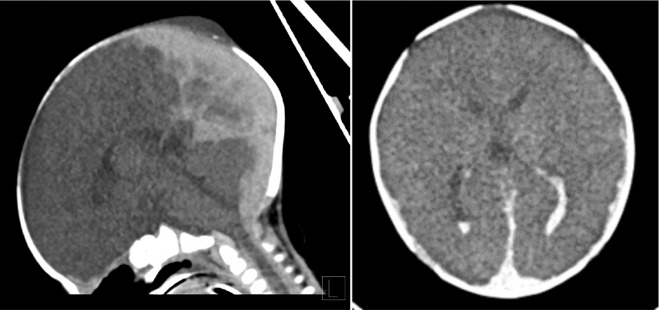
CT scan showing a large brain bleed in an infant who did not receive Vitamin K after birth (parental refusal). Image from here.
Unfortunately, as a physician, I have seen such devastating consequences several times in my life. Even more unfortunately, more and more parents are refusing to give their newborn infants Vitamin K. It is believed that up to 1 in 20 parents in the United States may be refusing this potentially life-saving intervention for their baby. The refusal to give infants Vitamin K is connected to the rise of the anti-vaccination movement in this country. The downstream effect of the current anti-vaccination movement in the United States will most certainly become more and more tragic over time. For example, the horrendous effect of measles coming back in our country should not be understated.
I came across this specific paragraph in the NEJM article:
“I am watching that bridge erode. Not from the inside — not from the accumulated failures of medicine, though those are real and must not be minimized — but from the outside, by a continual undermining of the credibility on which clinical relationships depend. And yet the forces driving that erosion will not be standing in the room when a parent refuses the injection that would have prevented her infant from bleeding into his brain.”
Medicine indeed makes mistakes…no different than any other human endeavor to improve the welfare of our species. Medicine, when done well (quality improvement studies, well-performed clinical scientific research, updates in medical education, etc.), tries to make fewer mistakes over time. I’m in academic medicine, so I see such efforts daily. Are there real problems in medicine as seen in the world of pharma influence or in the real issue of research misconduct? Yes. However, medicine, like every scientific field, tries to eliminate these issues.

What are the erosions from the outside? Some examples include:
-Politics
-Social media
-Degradation of public education nationwide
-Pseudo-science leadership in the U.S. Department of Health & Human Services
A sole human typically cannot make a positive change for an entire society. I cannot change the politics of our country. I only can provide a singular vote in an election. I can’t change social media algorithms. I cannot convince my country to fund public education effectively and to make it a better product for our nation’s children. I can’t fix RFK, Jr. pseudoscience although I can certainly pray for him to commit himself to real science. There are many things about the world that I cannot change.
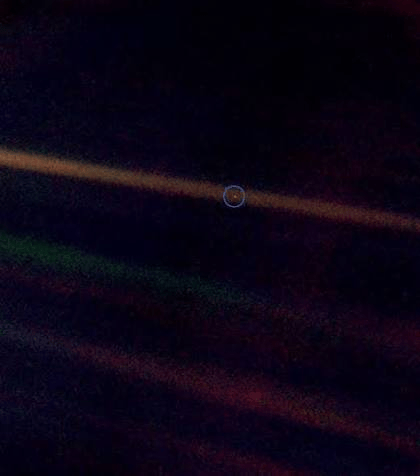
The “Pale Blue Dot” (Earth). Image from Universe Today.
I would like to offer one aspect that we, as individuals, can change when it comes to the erosion of confidence in science, and in particular, medicine. We, as individuals, can speak up in religious settings. Again, I can’t expect one person’s comment to necessarily change a large religious system, but we can effect change locally.
For example, there appears to be a direct correlation between religiosity (based on a verified scoring system) and anti-science beliefs, including a distrust of vaccinations.
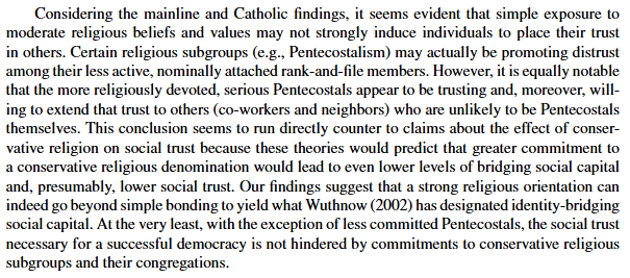
Another example using data from the National Election Study has demonstrated that specific Christian denominations (for example, Pentecostalism) showed less trust in the outside world of their churches. However, trust in the outside world improved if members of such religious groups went to church more frequently. This paragraph in the discussion section of the article sums up the findings nicely:
What does all of this mean? I have some strong beliefs here.
-A person can speak up in church (or in any religious body — temple, synagogue, mosque, etc) when pseudoscience is brought forward as some type of truth. Speaking up in this setting can be painful. Believe me, I have experienced it. By speaking up, you may be forced to leave your local religious group. On the other hand, you may have influenced members of the congregation in meaningful ways. For example, a congregational member may then vaccinate their child after hearing you speak the truth. I have experienced this aspect as well.
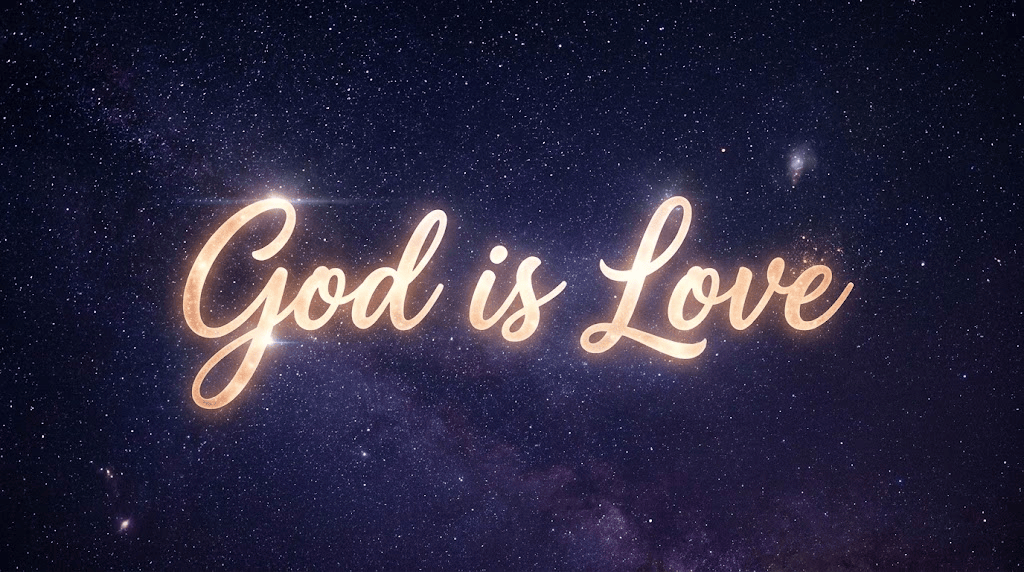
-I personally do not think there is anything wrong with being very religious. I have all sorts of faults, but I guess I am pretty religious. I go to church weekly. I have a DThM degree. I spend much of my time writing and reading about theology. I have an active prayer life. I want to be an example to others who may be just as religious as me, but have pseudoscientific beliefs. I have had people with anti-vaccination beliefs ask me how I can be so religious and still be fine with vaccinations. Besides providing information as to why vaccines are good and important (I have much information here), I can talk about my faith walk and how to incorporate my love of God and love of neighbor into the field of science. If God is love, then science done well is an example of God’s love.
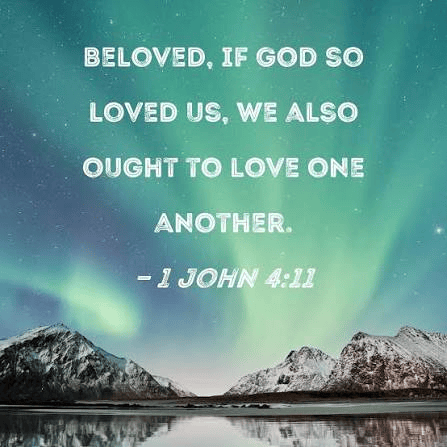
Image from Bible Hub
-As an individual parishioner, one should recommend that experts in various fields of science speak in church settings such as in Sunday School. The BioLogos article titled, “What I Wish My Pastor Knew About The Life of a Scientist” from BioLogos is an excellent resource here.

BioLogos (an important resource). Consider donating to them (I do), biologos.org.
-If it is true that people who attend church more frequently are more open to the “outside world” which is somewhat of a global definition, then these people can be our allies in good science communication. It makes sense to me that some people (NOT ALL) who say they are religious but don’t attend church on a regular basis may be more anti-science in their outlook. Such individuals likely don’t trust any type of societal structure. However, if the religious weekly attendee of a church has the openness in their heart and mind to love others, then this love also may be expressing the importance of using medical science to love the least of those on our planet.
-One last thing… For one who reads this post and thinks I am placing blame on more conservative-minded people, that idea would be incorrect. Science skepticism is both a liberal and conservative issue. Lately, I have been enjoying the book, Toward a Postmodern Ethic of Radical Freedom by Darrell Wesley. I highly recommend this informative book. In the book, he discusses how the philosopher, Cornel West, has written about the potential of breaking down any type of reality, objective facts included. There is a strong postmodernist strand here. I am very much in favor of debating some ideas regarding objectivity. Perhaps we can be statistically very close to a true idea or a true result. Perhaps objectivity from a human perspective cannot absolutely be 100% true.
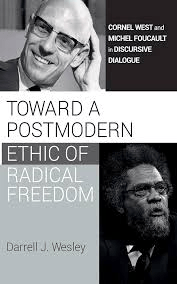
However, once you state that a person’s sensations about the world are not objectively true, you run the risk of stating that science is not objectively true. Wesley points out that “For West, this approach [science] falls short because the most important sentences within scientific discourse contain terms that cannot be observed (e.g., dispositional terms, metrical terms, and theoretical terms).” I think West is mixing up the limits of human language with accurate scientific results. Perhaps he is making a category error.
Someone once said, “What is truth?” As a religious person, I would say caring for the other by using the results of well-performed science while ignoring pseudoscience is a great gift. God’s love certainly encompasses the entirety of the field of science.