Some of the graduates of Northwind Theological Seminary get together online every few weeks to discuss a published article. All of the graduates have done their work under Dr. Thomas J. Oord in his Center for Open & Relational Theology.
Our journal club met this past week and discussed the following article: “Weak Thought and Religion in Gianni Vattimo: Implications and Repercussions” written by Abdullah Başaran who is an Associate Professor at Hitit University in Turkey. The article is open access if you wish to read it.
Before I start, I need to emphasize what I know about Gianni Vattimo. He was a philosopher who worked in the realm of postmodernism. He also was a politician. He dabbled a bit in theology. He had some controversial political views, especially later in his life. He was, like all of us, a “cracked vessel” (a term I learned from listening to Cornel West).
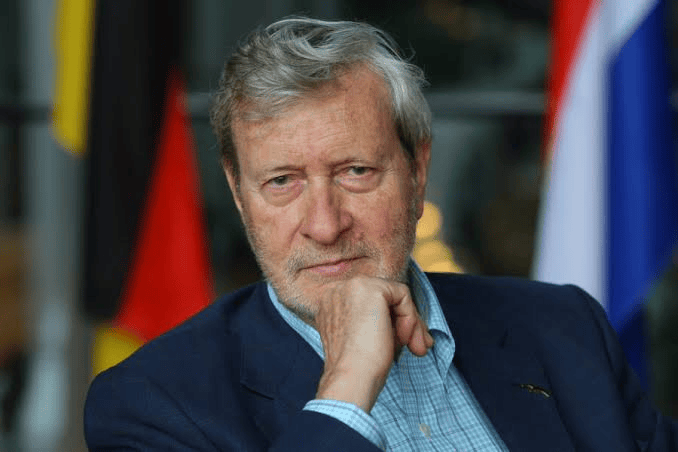
Gianni Vattimo
I think the first problem here is to define “postmodernism.” I am sure there are good, academic definitions of this 20th-century philosophical movement. However, like all cultural terms, the spectrum of beliefs included in such a term as postmodernism is indeed vast.
I would define postmodernism as this: “It is acceptable to question everything.” Since one can argue that our species obtains knowledge over time through objective and subjective means, I further hypothesize that postmodernism has subjectivity running throughout objective, sensory findings. Forever asking “why” when looking at objective facts can advance science. However, asking “why” while expecting only one personal, subjective answer can be problematic — racism, sexism, science denialism, the anti-vaccine movement, homophobia, etc.

Postmodern Art
I am afraid that postmodernism when done well must stay on a pretty straight track. Subjective questioning of objective observations probably needs some limits in order to advance human knowledge. The philosopher of science Paul Feyerabend stated “anything goes” when he discussed the advancement of science, but he was really emphasizing the psychological aspect of the scientist and that of the scientific community causing science to change and to potentially grow. Thomas Kuhn would likely agree with this idea.
BUT, can postmodernism be helpful theologically?
Here is Vattimo’s argument. He advanced the idea of “weak thought” arising out of postmodernism. In weak thought, no idea has any priority over any other idea. Pure theistic thought has no more value than pure atheistic thought and vice versa. As society advances in a world of weak thought, philosophy becomes pointless. Philosophy is just another idea system. Also, as society advances in a world of weak thought, religion has a chance to become a dominant feature of the world again.
He found Nietzsche’s “death of God” as a death of the God of the philosophers but not as a death of the impact of Christian thought on society though the subsequent respect of all opinions.
Keep in mind that I have some problems with Vattimo’s hypothesis here even though it is somewhat fascinating.
Weak thought works, per Vattimo, because it is based on two consequential Christian ideas: 1) kenosis (self-emptying) and 2) caritas (charity). Being open and charitable to all ideas in the mental marketplace removes philosophy as an important human endeavor since specific philosophical systems typically are emphasized over others. Instead, a Christianity-type mental marketplace makes all ideas potentially valid.
Again, I have some problems here which I will discuss at the end.
I think then that Vattimo believes that atheism will likely be a minimal player on the world stage as atheism is just one belief system while the spectrum of all other agnostic or religious systems are vast.
Think of his idea as a fraction. Vattimo’s view of atheism (to me) seems to be singular only with just an emphasis on “no God.” Atheism, the numerator, is simply “1.” The entirety of all religious thought per my Google Gemini search demonstrates up to 10,000 religious traditions worldwide. These traditions are the denominator.
Thus,
Atheism ÷ large religious systems = ?
is metaphorically similar to
1 ÷ 10,000 = 0.0001
0.0001 is a small number and inconsequential
I find this idea very problematic. First of all, atheism as a term is difficult to nail down. Its meaning has changed over thousands of years. Some people considered Socrates an atheist. Some people considered the Apostle Paul an atheist. I think Vattimo is limiting his ideas of atheism to 20th century Western atheist thought. I write this statement as a Christian who thinks that many U.S. atheists often get an undeserved bad reputation.
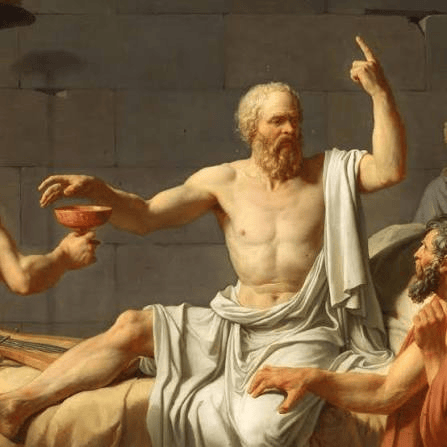
Socrates
I want to give Vattimo credit about one aspect here in the setting of weak thought. He separates Christianity-influenced weak thought from Christendom. What do I mean? Again, the ideas that all ideas are valid can be a parallel to the ideas that all humans are equal in importance. Help the other. Give to the other in need. Kenosis. Caritas. All are equal.
However, he finds Christendom very problematic as do I. I may be a Christian, but emphasizing Christianity in government overruns any ideas of weak thought. What type of Christianity would run a government? What if such a type of Christianity (say, Christian nationalism) runs completely against what I believe as a Christian?
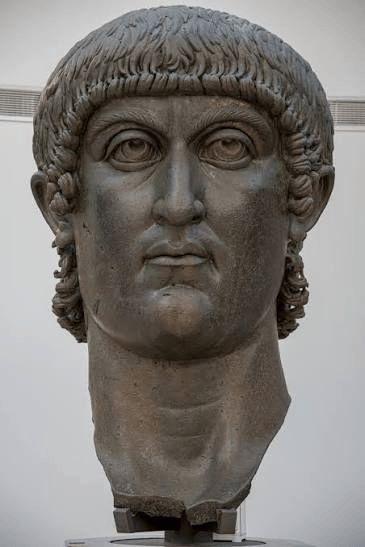
Constantine the Great
Vattimo also worried that Christendom would lead to the recurrence of Biblical literalism raising its rather ugly head thoughout world history. Extreme versions of Biblical literalism have been a plague in my faith tradition. I believe Vattimo is correct here.

The above scene NEVER HAPPENED!
Ok, I want to end with three issues that I have with Vattimo’s ideas:
- Vattimo tended to view Christianity from a Catholic perspective. He was born in that tradition, and it influenced him his entire life. It influenced him even when he went through an atheistic period of life. I have no problems with Catholicism and have friends and family who are Catholic. His ideas tend to not make contact with other forms of Christianity as well as other large and important non-Christian religion traditions.
- When I have read some of Vattimo’s writings, I think he is rooted quite strongly in the Western philosophical tradition even though he poo-poohs philosophy. He has no contact with Hinduism, Buddhism, or Eastern views on atheism. He is limited here. Also, weak thought is philosophy. Sorry.
- Finally, as much as Vattimo emphasized the postmodern tradition, he lived his life and said things, at times, that were NOT postmodern. Perhaps humans cannot be a fully realized postmodern species. Personally, I do not think humans can be fully postmodern due to the complexity of our cultures, our brain structure, and the crushing influence of time. I will leave it up to the reader to find where Vattimo broke with his postmodern beliefs. Some of his ideas are just flat wrong, and I find some of his ideas potentially racist and ignorant.
However, it is good to learn about new ideas from most of humanity…Vattimo included.

Image generated by Gemini Advanced

