The June 2026 issue of Perspectives on Science and Christian Faith (the academic journal of the American Scientific Affiliation) published a great article titled “Staying in Conversation: Review of Research on the Science Views of Evangelicals and Effective Ways to Respond.” It was written by Deborah Haarsma who was the president of BioLogos from 2013-2024. Dr. Haarsma is an astronomer and an extremely good writer. By the way, please consider joining and / or supporting the American Scientific Affiliation and BioLogos. Both organizations work very hard trying to get rid of the ridiculous idea of the “war between science and religion.” There is no war. Like any potential war in the history of humankind, most people do not want conflict. Typically, only sociopaths want war and the “fundamentalists” on both sides of the so-called war between science and religion desire destruction of the other side — even if it destroys their side. Such conflict is not helpful.
Dr. Haarsma’s article is very long. It is behind PSCF‘s paywall, but the paywall typically goes away 3-6 months after an article is published. So, you can read the article for free relatively soon. I highly recommend you read it.

Scopes Monkey Trial (1925): More of a town marketing event for Dayton, Tennessee
Although the PSCF article is lengthy, it is truly amazing. Although the article concentrates on dealing with the anti-science attitude of Evangelicals, I think it can be extended to other religious groups. By the way, I very much realize that not all Evangelicals are anti-science. Unfortunately, those that are anti-science make up a significant voting block in the U.S. which risks all sorts of problems when it comes to combatting global warming or making sure children get vaccinated.
Dr. Haarsma’s notes the recent data suggesting 36% of white, religious people in the United States now delay or avoid getting their children vaccinated. This percentage is very scary when you read about the consequences of whooping cough, diphtheria, measles, etc. prior to the invention of vaccination.

Image of diphtheria blocking the airway in a child (image from Dateline Health Africa). Preventable with vaccination.
She then goes on to the history of the anti-science movement in the United States and how this issue recently has been amplified to dangerous proportions recently. Honestly, I think social media acclerates the problem of pseudo-science. Pseudo-science is quite large in the field of health and medicine.

Whooping cough (image from Wikipedia). Preventable with vaccination.
The last part of Dr. Haarsma’s article discusses ways to address this problem. I am not going to go into great detail about her solutions. They are all good. They also are numerous, and I am doing a simple blog post.
Let me consider a few ideas, however.
Dr. Haarsma talks about “Kingdom conversations” which in Christian terminology means loving one’s neighbor no matter their political affiliation, nationality, race, religion, or sexuality (see Matthew 22:37-40). Honestly, I have always felt that if we followed this statement from Jesus and just took care of each other as opposed to harming each other for very stupid reasons, we would have all sorts of monetary revenue on our planet to cure diseases, remove poverty, build amazing computers, explore the solar system, and on and on. I sometimes think that the genetics / epigenetics of humans appear to be suggest that we will always be violent to each other, but one can only hope.
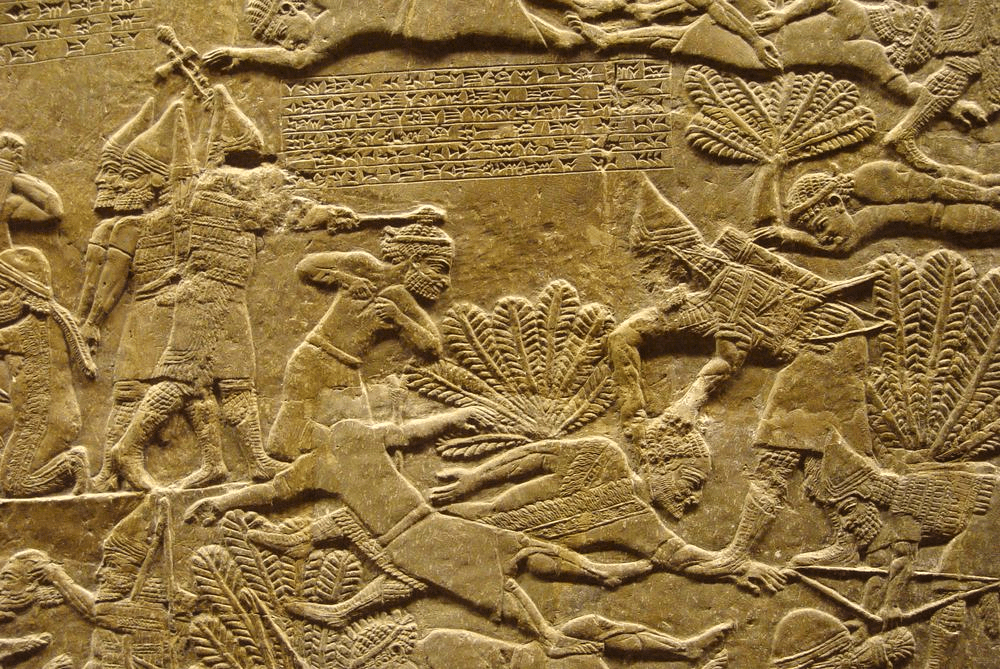
Assyrian war relief (British Museum)
Earning trust: This is a big one for me. Yelling at a person who has anti-vaccination beliefs never works. As Dr. Haarsma points out, just telling personal stories helps here quite a bit.
I have had personal experience here. When I talk to families that are vaccine hesitant, I just tell personal stories. I don’t necessaarily tell them stories about children who die from vaccine-preventable illnesses. I talk about my own children who have been vaccinated and who have done very well in life — college, careers, normal contributing lives to society, etc. I try to relate to such parents as I have been a parent of young children too. When you are a parent to young children, you can be a bit anxious about everything. I certainly was.
When I talk to close friends and family about these issues, the conversation often leads to a conversation about my religious faith. Specifically, many of my close friends and family are just as religious as I am, but they do not have my medical training. As a result, I have the opportunity to be very clear about medical science in a loving way. I can state that I am a Christian just as much as they are, and I believe vaccinating children is a gift from God.

Co-create
If I believe God and humans co-create with the capacity for the result to be good, then vaccinations and all of their life saving potential are certainly a miracle. Remember that Jesus could not perform many miracles in his hometown (Nazareth) due to the inhabitants’ lack of faith. Having faith in God is not just hoping God will step in. It requires understanding that God desires us to be creative with God. By being creative, we can be good and kind to our fellow humans and the rest of the planet. By being creative in science, we can make the world a better place in a setting equal to being creative in the arts. We can reduce suffering.
Vaccinating children to prevent their death is creativity and love via science. This is objective creativity. Objective creativity can go hand-in-hand with subjective creativity. For example, Brahms’ 1st symphony demonstrated that great music could be made after Beethoven. This is creativity and love via the fine arts. Objective and subjective creativity can complement each other to make the world even better.

Blaise Pascal
One last thing. This part is from me. I have a huge issue with American politics. I think our current political structure accelerates the problems above. You may remember this quote by Blaise Pascal: “There is a God-shaped vacuum in the heart of each man which cannot be satisfied by any created thing but only by God the Creator, made know through Jesus Christ.”
I don’t know if agree with Pascal here, but I do think humans have a metaphorical “hole” in their heart that needs to be filled. Personally, I think it would be best if this hole was filled with love of the other, and it doesn’t matter if this love is religion-based or not. I think most humans, sadly, want this hole to be filled by power and especially immediate power over the “other.” Here is where American politics come in. Over time, we appear to have become very disturbed as a country when it comes to the spew coming forth from the two political parties. Loss of friends, loss of family — all over divisiveness caused by the two parties. This divisiveness is worsened when these two parties use pseudo-science or misinformation to carry their messages. Currently, I think one party is more problematic than the other although both parties have been crazy in the history of our country. Just think about the U.S. Civil War.

My point is that the anti-science movement which destroys creativity and the chance for people to thrive has come from both sides of the political spectrum over the course of time.
It has come from the right side of the political spectrum.
It has come from the left side of the political spectrum.
Being anti-science is equivalent to being anti-creative. Through the years, I have seen children get very sick and even die from vaccine-preventable diseases. As someone who is a physician but also is a theologian in the camp of process theology / open & relational theology, I feel strongly that being anti-creative makes the world a much worse place.
I don’t know what we should put in the proverbial holes in our hearts but being anti-science, believing in pseudo-science, and putting your complete faith in political parties is not the answer. Religious and non-religious people of all stripes should agree here. All faith systems, regardless of their background, should work for the improvement of our species, other species, and the planet.
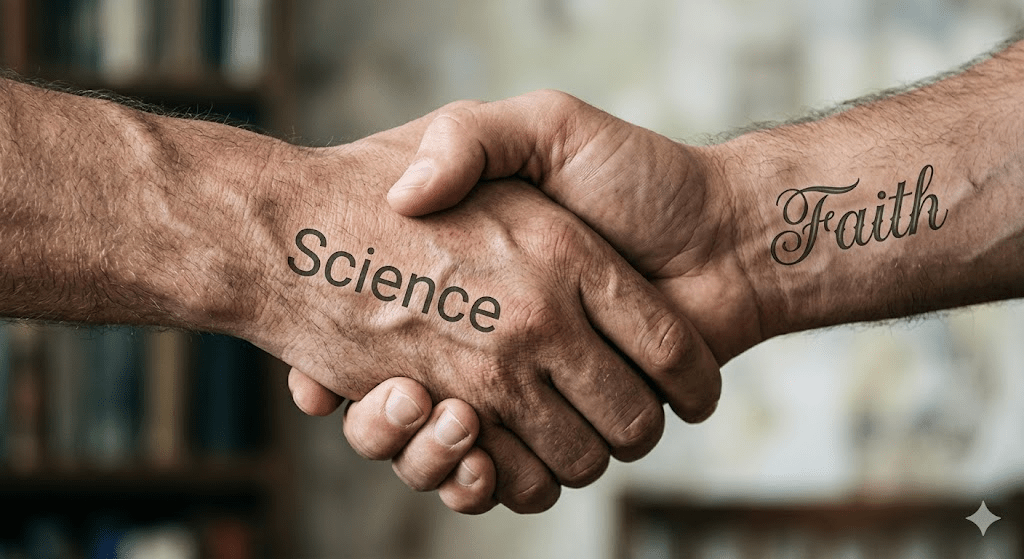
Image created by Gemini Advanced

