I have had a delay in posting as I have been on hospital call this week, and my free time to write for fun is always reduced during such periods. It then takes me a couple of days afterwards to recover, catch up on life, etc. So, I am back to posting!
I am a member of the American Scientific Affiliation which is a society working at the intersection of science and faith. It is a great organization and was founded in 1941. I highly recommend joining it if you are Christian working in a science or science-adjacent field. It was an early proponent of accepting biological evolution from a Christian perspective and had harsh critiques of so-called “flood geology.” Its professional journal is called Perspectives on Science and Christian Faith. It is a wonderful journal that I have subscribed to forever. PSCF is comprehensive and often is a great place to start for people interested in how science and religion can interact in good ways although keep in mind that the journal produces content from a Christian perspective. Other journals exist to help people in the other religious contexts.
My last book, A Theology of the Microbiome, was reviewed in PSCF‘s last issue. You can read the review online.
The review was pretty darn good, and I was happy about it. I have written book reviews for PSCF as well through the years, and I appreciate the freedom that the ASA allows with its authors of book reviews. In the review of my book, the author had one comment that initially bugged me, but then I became more chill about it over time.
He stated in the last paragraph:
“I recommend this book, especially chapter 3, for theologians and scientists who seek a greater understanding of recent advances in microbiome research, especially those who are interested in how microbes affect our health in both positive and negative ways. However, the theological perspective may be a hindrance to those not attuned to process theology. Although not espousing orthodox theology, it is a thought-provoking and interesting addition to one aspect of the current biology theology discussion.”
I’m going to ruminate a bit about “orthodox theology.” In particular, what actually is orthodox about any religion? I get the aspects of wanting to guard against heresies, but where is the line for heresies? Religious orthodoxy is not the same as physical laws. Fighting over consubstantiation versus transubstantiation is not the same as debating the merits of the Newtonian Law of Gravity versus General Relativity.
For example, I am a Christian. I am pretty “orthodox” about certain aspects of my faith — all of which are unprovable. I believe in the virgin birth, Jesus’s miracles, and a bodily resurrection of Jesus. I am also a Trinitarian which comes about as a codified theological idea a few centuries after Jesus’s life. Yep. I am orthodox here. At the same time, I believe in religious ideas (really, more faith ideas) that are absolutely not provable.
Do I think God is a Smurf? No. I guess that is a faith statement too. I think God or some type of divinity can create / co-create the universe. A blue cartoon character developed in the 1950s cannot create anything. Belief in God is a faith statement, but perhaps a faith statement with a great possibility of being true (i.e., God is more possible than a Smurf in creating / co-creating the universe).

The same idea goes with Bertrand Russell’s analogy of a teapot in an elliptical orbit going between Earth and Mars. The presence of such a teapot can’t necessarily be proven to be true / not true even with today’s telescopes. On the other hand, a teapot in such an orbit would make no sense. We have never sent a teapot into orbit, and it probably would be destroyed by space dust and debris even if we did send it into space. The faith statement of the teapot existing in space makes less sense (to me) than believing that God may have created / co-created the universe. By the way, the other problem with Russell’s argument is that he is describing an omnipotent God, which theologians of process theology and open & relational theology (like me) do not accept. That is a big caveat to consider when reading Russell’s well-written argument.
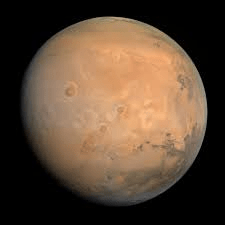
Mars, sans teapot
So, here are some questions.
Is Orthodox Christianity orthodox?
Is Catholicism orthodox?
Are the myriad of Protestant denominations orthodox?
Are the Creeds orthodox? I belong to a church that state the Creeds during worship service, but many Protestant churches do not do this.
What translation of the Bible is orthodox? Various Bibles have various books in them that are included or excluded.
I would assume believing that Jesus is the son of God is the base of all of Christianity, but then it perhaps gets tricky. For example, Trinitarianism (which I am a believer in) came about as an idea well after the life of Jesus. Is such an idea theological or philosophical?
I wonder if we should look at religion, at least in the Christian sense, as being orthodox in a pseudo-Popperian way. I made up this term. What do I mean by this?
Well, Karl Popper stated that a theory was scientific if it could be falsified. In other words, if one could come up with a way to show a theory was false, the theory was was scientific. Otherwise, the theory was pseudoscience or even a perfectly fine subjective idea. As an example one could potentially prove that General Relativity is a false idea. Such evidence has not happened although many physicists have proposed the General Relativity has a deeper level of understanding that we are missing.
Here is my pseudo-Popperian proposal that is VERY poorly defined at this point. A theology is not orthodox if it harms people in general. It might harm people individually, but if it risks harming people generally, then it is unorthodox.*
*I need to be careful here, but let me provide an explanation. Back to the Smurf analogy… If a child is scared of Smurfs by watching a Smurf move, that is sad. However, the idea of Smurfs in general do not worsen or harm the greater society. I hope my analogy makes sense.
For example, when Evangelicalism (not all of Evangelicalism) becomes associated with Christian nationalism, that part of Evangelicalism is not orthodox. I speak this idea as someone who was once an Evangelical. Christian nationalism is not Jesus-centered…just look at the Gospels. Christian nationalism puts the nation in front of Jesus as a rule. Christian nationalism is harmful and is not orthodox with the Christian faith.
As another example, when Christians of all leanings (liberal and conservative) become anti-science in their thinking, they are not orthodox by my definition. The anti-vaccination movement is a prime example here. Both “liberal” and “conservative” Christians have, at times, been anti-vaccine in their thinking and motivations. Harming children due to pseudo-science is not orthodox with the Christian faith.
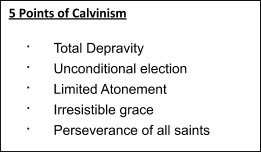
Image from Homewood Community Church. I have no idea what this church entails. I just found the image.
Personally, I think Calvinism, especially 5-point Calvinism, is an extreme issue when deciding if the religious idea is orthodox. Is “limited atonement” really a thing? This type of theology is how God works? Really? I would argue that ideas surrounding much of Calvinism just produce anxiety in people and is not orthodox with the Christian faith.

This book clarifies my concerns about Calvinism.
What about “atonement theory”? Is this theory orthodox? I think the answer is decidedly “no.” It is a simple and popular theory, but there are many, many other atonement theories. Atonement theory is a big belief in the United States. Since so many atonement theories exist, atonement theory is not the only orthodox option.
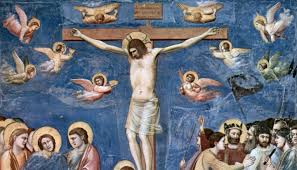
I am a singular person out of the proposed 117 billion individual H. sapiens who have lived on our planet. I am in no way reliable in deciding what is orthodox religion when it comes to Christianity. If you want me to define my religious base of faith, I would say Christianity makes sense to me when I believe 1) Jesus was God, 2) Jesus was resurrected (human body, spirit, interdimensional — who cares!), and 3) we, as humans, need to follow Matthew 7:12 (“So whatever you wish that others would do to you, do also to them, for this is the Law and the Prophets.”). This is what I believe. It is a faith statement. It is not a scientific law.
Process theology and open & relational theology with some of their foundational ideas of 1) God being creative and all loving; 2) all of the Greek ideas of the “omni” God being incorrect; 3) God learning and changing over time; 4) the imperative of time; and 5) God co-creating with humans (as well as all of nature) in a non-forcing call to lure us to do the good / the creative / the novel make very good sense. This explanation of God sounds extremely loving to me. I have no idea if such ideas are orthodox or unorthodox. And I really don’t care.
But I guess I am forever unorthodox.
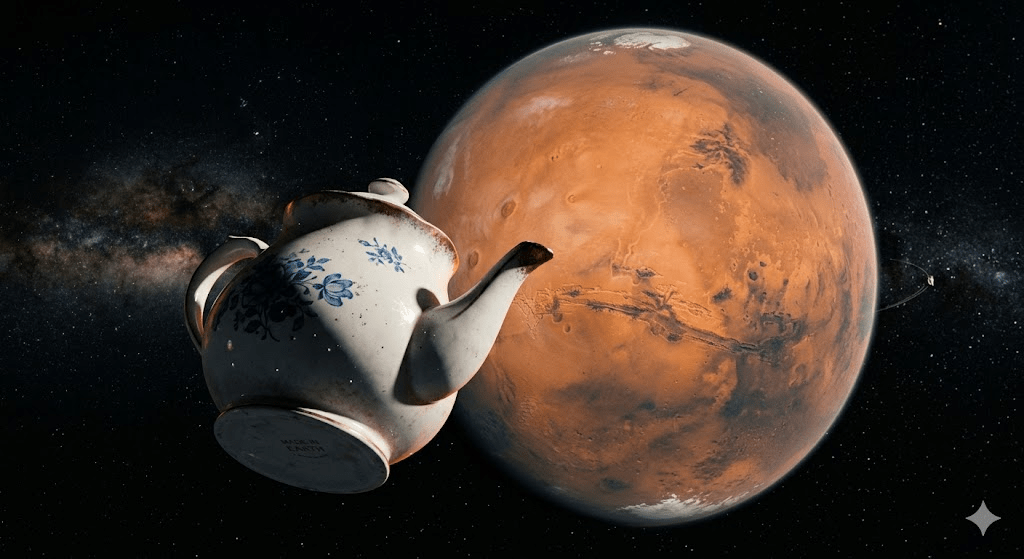
Image made from Gemini Advanced

