Just a quick note.
I had a blast talking on The Whole Church podcast! We discussed science, faith, and my book (“A Theology of the Microbiome”).
Let me know your thoughts!

Phi-The-Sci: Equilateral Musings
I like to discuss the subjective and objective and how they often come together. Also, random musings.
Just a quick note.
I had a blast talking on The Whole Church podcast! We discussed science, faith, and my book (“A Theology of the Microbiome”).
Let me know your thoughts!
*One can’t deduce No God either.
I enjoy reading Theology and Science which is a quarterly peer-reviewed journal with writings that evaluate the intersection of theology and science.
The most recent issue of TAS had an intriguing article titled “On the Methodology of Science and the Current Crisis of Religious Belief” by Andrew Ter Ern Loke at Hong Kong Baptist University. Dr. Loke has a distinguished career writing about logic and theology. As an example example, he has written much on the Kalam Cosmological Argument.
Dr. Loke’s abstract for this most recent article states the following:
“The current crisis of religious belief is plausibly correlated with widespread scientific education and a related agnostic way of thinking. I show how this crisis can in principle be addressed, by first asking what are the methodological requirements of the scientific constructive agnostic process (SCAP) itself. I demonstrate that these requirements include deductive reasoning and phenomenological experience, and they can in principle be used to formulate a cosmological argument for the existence of God.”

Let me first say that I don’t think that the decline in religiosity worldwide is specifically correlated with scientific education. I believe there are many other causes including the intermixing of cultures (which is a good thing), politics, social media, and the failure of large religious structures to reflect the religious ideals of their founders such as Jesus, Mohammed, and the Buddha.
Additionally, there are numerous professional societies working to improve the interaction of faith and science not just with scientists and religious leader but with the public as well. The American Scientific Affiliation, the Canadian Scientific and Christian Affiliation, BioLogos, the International Society for Science & Religion, the Center for Open & Relational Theology, and the Institute on Religion in an Age of Science are just a few of such organizations.
It is not even clear if religion is on a continuing decline in younger generations (although, I admit, the data are not clear).
Let me proceed as to how I look at the intersection of science and religion from a surface level perspective. In other words, can I learn about God from science?
Well, we can certainly learn about the world scientifically using induction. I think of induction as a way of studying the world by observing it. Astronomy and paleontology have inductive, sound techniques as fields of study.
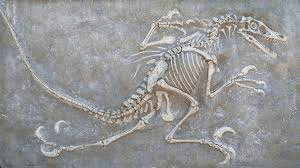
image from Frontiers
From a religious perspective, I can see something and decide if it reflects God’s nature or God’s personality (or not). I can look at a Hubble deep field image and perhaps have such a feeling.

image from NASA
I can look at complex cristae in mitochondria and perhaps have that same feeling.

image from BMC Biology
Of course, these are just my feelings. Perhaps my feelings constitute a draw towards the Holy Spirit. In the end, they are just feelings.
An atheist or someone from another religion might look at these images and have completely different feelings. In fact, I would hope that they would have different feelings. The spectrum of subjectivity in thought is the beauty of the human species.
Deduction is a bit different. From a logic perspective, one can consider deduction as a way to move from a general theory to a specific conclusion with the caveat that the initial premises are true. Here is a classic example of deductive logic:
Premise 1 (General): All men are mortal.
Premise 2 (Specific): Socrates is a man.
Conclusion (Specific): Therefore, Socrates is mortal.
A comprehensive review of deductive logic is here.
The following is Loke’s deductive logic argument proving that God exists. See what you think. His argument is rather long.
_______________
___________
I find this logic perplexing. Granted, Loke spent time working on this idea, but I worry about 3 aspects.
First, Loke states that it is “not the case that the series has an infinite regress” when discussing the creation of everything, presumably starting with the Big Bang. I don’t think we have any evidence that the Big Bang was the beginning of everything. We do have excellent proof that it is the beginning of our own universe. However, Loke’s proposal does not consider such ideas as the multiverse, Everettian mechanics (the many-worlds hypothesis), or cylic cosmology. These theoretical yet scientific theories (and perhaps philosophical theories) suggest an eternal aspect to the universe(s) / universe making. You don’t necessarily need God or even anything at all for our universe to have had a Big Bang (see L. Krauss’s book A Universe from Nothing). On the other hand, you can consider either God or no God making something out of nothing (Creatio ex nihilo). You can consider God or no God when considering any of the ideas of potential eternalism involving our universe (Creatio continua). Process theology and Open & Relational Theology exist quite well in a framework of eternalism.
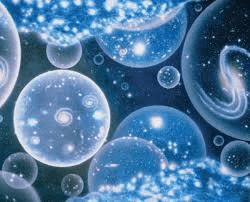
image from Nature
Second, Loke states that the “the First Cause has libertarian freedom.” I assume he means such wording in a free will versus determinism aspect If this First Cause is God. How do we know that God has absolute libertarian freedom? How do we know that God even desires absolute libertarian freedom? I have posted many times about process theology, open & relational theology, and my own theological concept of the lim Δ which indicates that God freely loves, yet God also may allow nature to place limits on what casually happens. Thus, God could indeed have libertarian freedom inherent to God, but nature seems to not have a similar type freedom based on what we see from the inductive and deductive sciences. The Second Law of Thermodynamics, Newtonian Laws (not quantum mechanics…so far), and the tendency for H. sapiens to be terrible with each other does not suggest libertarian freedom emanating from the Divine extends to nature.

Third (and later on in the article), Loke states the following:
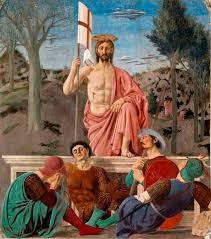
“The reason why we should believe that dead people usually stay dead should be obvious: even though often people get things wrong, make mistakes, exaggerate, and even lie, nevertheless it is improbable under certain conditions that multiple groups of people falsely testified that those dead people stayed dead. In other words, even though often people get things wrong, etc., there are nevertheless conditions under which it is improbable that they testified falsely.”
I am a Christian, and I do believe in the resurrection of Christ.
However, I see two issues with Loke’s argument here. Many people often see things that probably are not occurring. Consider the Fatima miracle. Perhaps it happened. I don’t know. I would think that a dancing sun would have caused graviational tidal changes that would have ripped our planet apart. Additionally, there has been good evidence showing that the social circumstances at the time may have influenced what people saw in regard to this specific miracle. Another example is to consider how witness statements in legal proceedings can be problematic.
Also, how would we know that numerous witnesses were telling the truth versus an exaggerated claim based on minimal historical evidence? Large groups of people can make things up when they are in great need.
I’m not sure what to say here. I guess my conclusions would be that 1) I don’t think science is destroying religious beliefs; 2) one can’t prove or disprove God using induction; 3) one can’t prove or disprove God using deduction when what we know about the universe is still likely primitive; and 4) it is impossible to determine what people were actually thinking when they saw Christ resurrected based on very limited sources (i.e. 1 Corinthians).
The presence of God. The absence of God. We can’t prove it either way. We can’t do experiments either way. It takes a faith statment either way which is another wonderful perpective of humanity.
By the way, here is a great video in which physicists discuss causality. It is helpful.
This week, I came across a Journal of the American Medical Association (JAMA) series about recipients of the Lasker-Koshland Special Achievement Award in Medical Science. My understanding is that this award in medicine often (not always) is a precursor to getting a Nobel Prize.
One of the recipients was Lucy Shapiro PhD. In the issue of JAMA, she wrote an essay about her research. I get JAMA delivered to me weekly, so I read the article in its entirety. Most but not all of this specific article can be found online without a subscription here.
Dr. Shapiro has done amazing work. A great review of her work (written by her) can be found via open access at a link in the Annual Review of Genetics. One of her most important works was published in Science in 2000. Her research showed that in a bacterial species (Caulobacter crescentus) often used as a model for binary fission (or cell replication), activation of genes occurred in a temporal manner similar to a “hardwired circuit.” In other words, these bacteria always had a large number of genes that always worked in the same way to get bacteria to divide. In the case of C. crescentus, the work of replication used 15% of its genome that always worked the same way with every replication event. Interestingly, a protein called CtrA (or “Cell-cycle transcription regulator A”) was uniquely involved in initiating the genetic cycle.

Image of C. crescentus (from Nature Reviews)
Thus, these same genes (about 500 in total) were used every time in cell replication. The same protein (CtrA) was used every time to activate these same genes.

Image from Molecular Cell
As someone who enjoys writing about process theology and open & relational theology, I can see some subjective narratives about existence here. I might be seeing some the life cycle of C. crescentus as a teleological metaphor of God’s participation in the world.

C. crescentus cell cycle (from Virginia Tech University)
What do I mean? I think there are two aspects to consider.
First, there is the element of time. Process philosophy and its theological cousins consisting of process theology and open & relational theology state that time is an essential part of existence. Per this on-line article written by John Cobb, “God’s efficacy in the world, requires that God be actual, like the actual occasions. But because God relates to all actual occasions through time, God cannot be momentary as they are. Instead, God is the one actual entity who is everlasting.” Elsewhere in the article, he writes, “Process thought points to the flow of experience through time. This can be identified as the psyche or soul, or even as the person.”
In order to accept any ideas surrounding process philosophy / process theology / open & relational theology, one has to accept the absolute importance of time. Time indicates change. Every entity is in time and has the ability to change. God is present in time and aware of this change.
Second, this change may have limits. In my book, A Theology of the Microbiome (SacraSage Press), I state that time and change are ubiquitous throughout nature. However, this change could have limits.
A thought experiment: Let us suppose theologically that God desires novelty or creativity or change throughout time at all levels of nature. Let us also suppose that God’s desire is based on a type of divine love consiting of God wanting change to occur freely at all levels of nature without God’s interference. God desires novelty, but God also desires nature to freely make changes. Nature may change at certain levels of existence at a point in time. Nature may not change at certain levels of existence at a point in time. The continual Divine desire for continuation of change occurs in real time.
In my book, I invent a term that I call “lim Δ” of a limit (lim) to change (Δ). I state the following:
“Importantly, God desiring freedom and creativity for all entities in nature is also associated with nature freely putting limits on potential creativity (lim Δ). All such creativity in nature and the universe can include God’s co-creative aspect while still being naturalistic in character.”
God desires nature to have the capacity to change which includes the freedom to not change.

An electron has mass, charge, and spin that essentially never changes. One could argue that lim Δ is quite strong in the setting of the electron.
In my discussion of Dr. Shapiro’s work above, the genes involved in the replication of Caulobacter crescentus essentially do not change. Also, CtrA always is the driving force of turning on the replicative genes. Of course, these genes will and have changed through time via evolutionary forces, but the change seems to be very slow. Again, one could argue that lim Δ is quite strong in the setting of binary fission in C. crescentus but not as strong as what occurs with the electron’s inherent properties.
When considering God’s desire for change / novelty / creativity, there are a few theolgical questions to ask.
Does lim Δ become less of an effect as entities get larger? I am not so sure. For example, a sun’s “life” cycle is very dependent on the type of sun which is based on the known laws of physics. Galactic rotation seems a pretty universal aspect of galaxies as well based on physical laws.
Does lim Δ exert less of an effect in the setting of biologic molecules or organisms compared to non-organic molecules?
Does lim Δ exert less of an effect in the setting of larger organisms or organisms with more advanced neurological systems? Does a human being has less lim Δ restriction compared to a bacterium or a mouse? Does the Pando tree clone in Utah (the largest living organism on Earth) have less or more lim Δ compared to a human being?

The Pando (image from the U.S. Forest Service)
If life exists elsewhere, does that life have less, more, or an equal amount of lim Δ compared to life on our planet? Does so-called “advanced life” have the same lim Δ as H. sapiens? A potentially good resource to consider such ideas has been published by Dr. Andrew Davis in the journal, Zygon.
Does lim Δ have some association with logic?
I have no current answers, but the work of Dr. Shapiro brings up some fascinating philsophical and theological ideas to consider. Honestly, I think such ideas extrapolated to free will, physical limitations of the universe, and God’s presence in creativity (or lack thereof…) should lead to much more thought and discussion.

Image made by Gemini Advanced
I’ve returned from a 9-day vacation in Europe and am back to blogging.
I have been slowing reading Magisteria: The Entangled History of Science and Religion by Nicholas Spencer. I say “slowly” because it is often hard for me to find time to read for pleasure. This book is surely a pleasure.
Currently, I am in the middle of Chapter 11 (“The Balance”) which begins to explore how the introduction of Darwinian evolution in the 19th century affected Christianity in both negative and positive ways. As readers of my blog may know, I think the whole idea of a war between religion and science is basically nonsense.
We can choose to make war here. We also can choose to use religion and science to support each other — no differently than how human subjectivity and human objectivity support each other.
In Spencer’s chapter, he points out to “Scientific threats became indistinguishable from political or religious ones” in places such as England in the 19th century. It is so odd that we have such problems persisting today. Biblical literalism, the desire (wrongly) to teach creationism in public schools, the anti-vaccine movement — all occur because many people want to put God in a well-defined box. The box of human wants and needs is finite; God is infinite. Dividing the infinity of God with the finitude of humans is objectively (as in mathematics) infinity. It is subjectively showing us that God cannot be contained. The uncontained God works in theological models as diverse as Aristotelianism or in process theology.

image produced by Gemini Advanced
Certainly, such ideas of Divinity should be explored and criticized both philosophically and theologically, but the well of exploration is infinite. Honestly, I think it is fun to explore the infinite whether one is considering the existence of God or no God.
The beginnings of ideas surrounding evolution brought up significant issues regarding the human experience. Is morality an evolutionary by-product? Why is there such much death and biological waste in the world (in contrast to what William Paley believed was nature’s grand design).
But wait… What if 1) God is in / around / throughout nature and what if 2) God desires creation to freely choose good / love / creativity / beauty?
Here is where the objective and subjective meet. Evolution (which includes genetics) is objectively obvious. We should try to determine what evolution subjectively encompasses whether we believe in God or not.
I am a religious person, and I see death fairly regularly as part of my career. I could certainly say that I don’t believe in God, and honestly, it is a valid argument when one sees suffering on our planet.
However, my perception of the objective (the actuality of evolution) combined with my subjectivity (my belief that God is present) leads to many ideas that I have discussed in prior blog posts. Three major concepts here could include:
First concept: God loves us. God loves all of us (quark to quail to quasar) so much that each entity in nature has the ability to create in real time. The quark keeps its charge and mass to maintain creativity. The quasar (really the massive black hole in a galaxy’s center) promotes the evolution of a galaxy to maintain creativity. Humans have this capacity as well. We can be creative in how we treat other humans as well as how we treat the rest of nature. Unfortunately, we also can be destructive. Destruction by our species is definitely not love in both a divine or human sense. Destruction is not creativity.
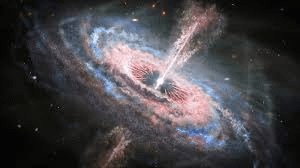
Quasar illustration (from NASA)
Second concept: God freely gives the entirety of nature the ability to “choose” for creativity or not. Thus, evolution and biological death can make subjective sense if one considers that nature has a “choice” (whatever that means metaphysically) to do otherwise.
Third concept: If God is infinite and we are not, then the sting of death is a consequence of living in a finite, time-dependent state. We cannot do otherwise as we are not infinite entities. We cannot contain God. I am a religious optimist, however. I think God containing infinite love and infinite creativity still provides potential for further creativity for every entity even after death. I don’t know what that creativity would entail. The infinitude of God fully containing love provides me with hope after death.
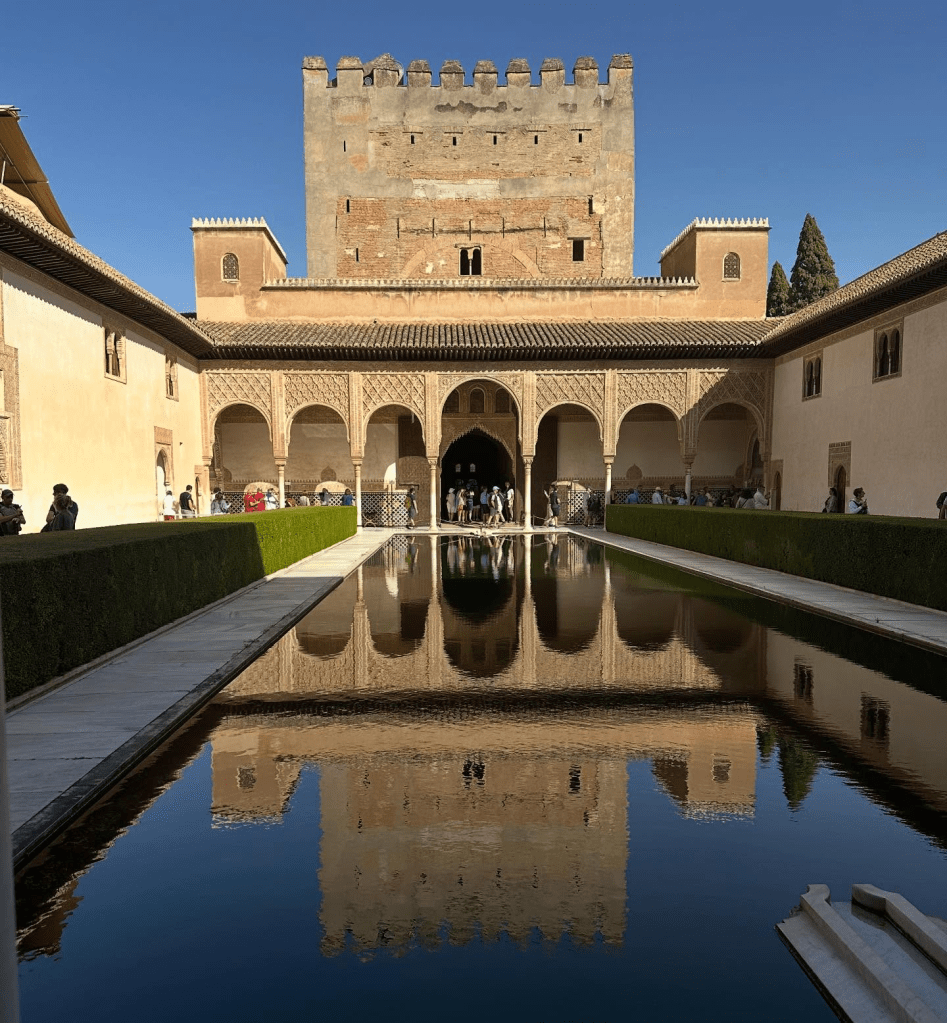
Image from the Alhambra from my recent trip to Europe (Granada, Spain)
I am going to be out of town for a couple of weeks, so it has been somewhat difficult to put a post together.
However, I did provide the sermon today for Wasatch Presbyterian Church. I am a member there. My sermon was titled “Faith and Love. Faith and Science.”
I have included the sermon below. Here is the link to the church service if an audio version is better for you. https://www.wpcslc.org/worship-from-wasatch?month=10-2025. Just choose “October 2025” worship services, and my sermon has been recorded for October 5, 2025.
I’ll get back to posting on a fairly regular basis when I am back in town.
____________________________________
Lectionary: Gospel of Luke 17:5-10 (The Gospel Reading for Today’s Sermon)
5The apostles said to the Lord, “Increase our faith!” 6The Lord replied, “If you had faith the size of a mustard seed, you could say to this mulberry tree, ‘Be uprooted and planted in the sea,’ and it would obey you.
7“Who among you would say to your slave who has just come in from plowing or tending sheep in the field, ‘Come here at once and take your place at the table’? 8Would you not rather say to him, ‘Prepare supper for me, put on your apron and serve me while I eat and drink; later you may eat and drink’? 9Do you thank the slave for doing what was commanded? 10So you also, when you have done all that you were ordered to do, say, ‘We are worthless slaves; we have done only what we ought to have done!'”
Me: This is the Word of God for the people of God
Everyone: Thanks be to God.
___________________________________________________________
Sermon: Faith and Science. Faith and Love
This is a difficult Gospel message to preach. Verses 5 and 6 in our bulletin seem to make sense both materially and spiritually. Verses 7 through 10 in our bulletin are confusing in many ways. Just so you know, Pastor Irene kindly offered to have me give a sermon on some part of the Gospels outside of the lectionary. I refused (hence we are reading the Gospel reading in the bulletin) which was probably not my smartest move. So, all complaints should go to her!
Let’s begin. Many have looked at Verses 7 through 10 to suggest that God owes us nothing. These verses have been interpreted (by some) to suggest that 1) we should not be prideful (I agree), 2) we should serve others without hesitation and without expectation of benefit (I also agree), and 3) God owes us nothing (hmmm…this is difficult). By saying, “God owes us nothing”, such wording can be interpreted that God is the great King for which we are mere peasants who are sowing the field and providing our harvest to the king with no expectation of any thanks. We give our material needs to this king while also awaiting for some type of benefit if things go awry. Unfortunately, this benefit is never secured. For example, if a local kingdom invades your farm, you HOPE that the king will be there to protect you from your enemies, your illnesses, your tragedies, and even your potential death. I don’t accept that interpretation of God, and I don’t think Jesus necessarily meant this common interpretation either.

Tintagel Castle, England
Brothers and sisters in Christ at Wasatch Presbyterian Church, let’s consider how to think about today’s Gospel in the setting of modernity, especially in the setting of modern science. Many of you know that I am an academic pediatric gastroenterologist working at the University of Utah. My primary location of practice is at Primary Children’s Hospital. By “academic”, I mean that my job involves 1) patient care at a high-tech children’s hospital, 2) teaching of medical students and residents, and 3) research.
Research – what does that mean? By “research”, I mean “medical research” and by “medical research”, I mean using “science.” And what is science? Science, in my opinion, requires just looking at the world to learn and to improve the human experience. One can do this by watching nature (paleontology, astronomy) or setting up experiments (biology, chemistry) or both (meteorology, medicine). Alfred North Whitehead (one of my favorite philosophers) in his book, “Process and Reality” has described science as follows: “Science has shown a curious mixture of rationalism and irrationalism. Its prevalent tone of thought has been ardently rationalistic within its own borders, and dogmatically irrational beyond those borders.”
Science can be rational. Think of the thousands of science journals produced monthly that produce research containing a huge amount of information. Biology, chemistry, physics, geology, mathematics, medicine (I could go on and on) all coming out with information about our species and about the world we exist in. This is rational – the best rationality humans can acquire.

Image from AAMC
But what is irrational and “beyond the borders” (per Whitehead)? This is where verses 5 and 6 come in. Look at those verses again in our bulletin. As a Christian, do we really believe a literal reading of this passage as saying, “Look! I have so much faith that I can make a mulberry tree leap out of the earth and go running into the sea!” But we don’t see that happening, do we? We don’t see trees running into the ocean. We don’t see mountains being thrown into the sea (as Jesus states in Matthew 21).
We do see clearly what King David reportedly states in Psalm 8:
When I consider your heavens,
the work of your fingers,
the moon and the stars,
which you have set in place,
what is mankind that you are mindful of them,
human beings that you care for them?
What is David “considering”? I think David is amazed that he is present in a world that is large, mysterious, and glorious. I think he also is pointing to the potential of today’s science. We are “considering” the world around us (which is science) and are understanding that God wants us to do good science (which is God is “mindful” of us and “cares” for us).
I realize many of you are not working in science-related fields, but I strongly believe that you can participate in the glory of God’s creation even here today.
David looked at the world and was amazed. He was observing all that was wonderful and still is wonderful. He is looking at the world in a manner similar to science. As an example, if you ever hear the word “induction” in science, for example, it means studying or learning or being amazed by the world just by looking around.
You can look at the world and be amazed at what God has given us. Since you should be amazed by what God has given us, it is good to 1) share your amazement and 2) share the tools of amazement.
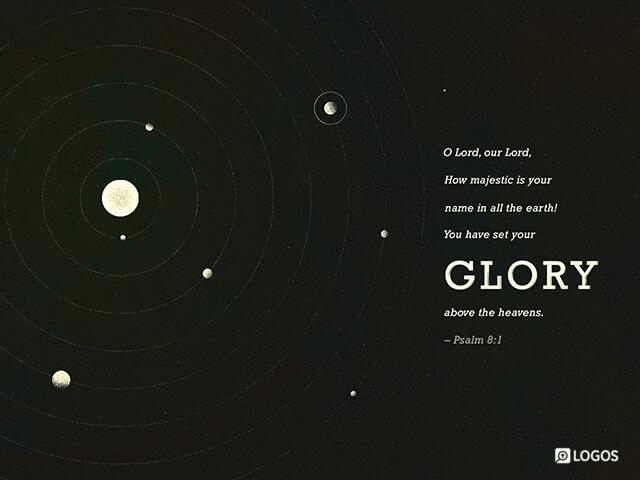
Image from Logos Biblia
As a physician caring for very ill children at Primary Children’s Hospital, I see real world consequences here.
For example, you see God’s glory in childhood vaccinations. Children are living longer than ever mainly due to vaccinations and clean water. You can vaccinate your child or educate people who do not understand vaccinations. As a result, you can see God’s glory and love while living on a wonderfully unique planet that is constantly rediscovered by science. You can help keep our little planet beautiful for now and for always by recycling, preserving water within reason (especially in Utah), and understanding the dangers of global warming or global pandemics. You can help educate people who do not understand the uniqueness of life on our planet.
In other words, as Christians, we should combat misinformation. This combat should be done gently and with love. We should be like the Good Samaritan here. We should bind the wounds of misinformation with love to prevent confusion in the setting of misinformation about science.
For example, measles kills 1-3 of every 1000 children who are infected and not vaccinated. Measles causes life-altering permanent neurologic disease in 1 in 1,000 children who are infected and not vaccinated (I have seen this). 25% of children who are malnourished and are infected with measles will die.
Just think of the miracle God has given us with science. God gave us brains. Brains gave us science. Science gave us the miracle of vaccinations for children. Vaccinations are truly a gift from God. And science, done well, is a gift from God or par in my opinion with the parting of the Red Sea or Jesus’s sharing of the loaves and fishes. And we know God loves children for as Christ said in Matthew, “Let the little children come to me, and do not hinder them, for the kingdom of heaven belongs to such as these.”

Now to the rest of the reading. Look at Verses 7-10 in our bulletin. They seem difficult, don’t they? I don’t necessarily like how Jesus is talking here which means that I was theologically perplexed at first reading. I spent some time looking at commentaries regarding these verses. Let’s talk about 4 interpretations.
First idea: Perhaps this reading is an example of the hypostatic union. That is a weird term, but basically “hypostatic union” means that Jesus is 100% God and 100% man which is a math equation that would very much irritate my 7th grade math teacher, Mr. Aiken, who was quite precise. I’m sorry Mr. Aiken. I am sure I am still driving you crazy 45 years later.
Here, just perhaps, Jesus is showing his human side just like when he became irritated and cursed the fig tree. If you look at the verses just before in Chapter 17 from our reading today, Jesus is being bugged by his disciples about how to increase their faith. He is perhaps simply irritated and would like them to think more deeply about God’s love.
Second idea: Perhaps these verses are an allusion to faith. Verse 10 states that the slaves say, “we are unworthy servants; we have only done our duty.” In other words, we can do only what we can do. This is perhaps a metaphor of God’s grace? The slaves have done everything they know how to do. They do not, cannot, have no clue how to…do more. But God doesn’t need to thank them. For “God to thank us” suggests that God wants the slaves (really, we humans) to do more and more and more and more forever and ever. We hear this theology in many places in our state. Honestly, we often hear such poor theology in our country. You and I cannot do enough to match the workings of God who made our universe and perhaps even made a multiverse. God loves us anyway. God forgives us regardless. God love us always. This is grace.
Third idea: In the parable, the slave still gets food and drink. It is hard to imagine this story being told by Jesus in the setting of the United States at the present time. When Jesus walked the Earth, imperial Rome was ever present in Judaea. There were no courts as in the United States today. There were no well-trained objective judges. There typically was no justice.
In the Palgrave Handbook of Global Slavery Throughout History by Damian Pargas and Juliane Schiel, Roman slavery was described as follows:
“This problem was omnipresent, for even if some of the enslaved persons…were at times able to escape their fetters and sometimes to benefit from the training or status imparted to them while enslaved, there was never a slave in the Roman Empire who did not experience slavery as a relationship of violent domination, natal alienation, and general dishonor.”
Hard stuff to hear. I think Jesus is chiding his disciples as to how they would act if they were slave owners themselves! Humans are always corrupted by power. The French philosopher, Michel Foucault comments in his book, The Order of Things, “The analysis of wealth is to political economy what general grammar is to philosophy and what natural history is to biology.”
In other words, wealth is the most important aspect of economics. Wealth is power. Power is what drives our human world. Jesus is telling his disciples something to the effect of “If you had power, you would abuse it. You are of this world.” And honestly, Jesus shows them how God’s power is used best by simply healing 10 men with leprosy (some of the lowest in society) in the following verses of this chapter.

Villa Romana del Casale mosaic, Sicily (University of Kent)
This is Christ’s power. Not buying big houses or fast cars to impress others. Not running for president with millions in donor money. Not messing around in conspiracy theories. Not killing others who disagree with you. Christ’s healing is available for all of us even when we feel the constant desire to obtain power. This is Christ’s grace. This is Christ’s love.
I would like to add a fourth idea here. I got my Doctorate of Theology and Ministry degree to expand my learning after Susan and I became empty nesters. I got this degree in order to not bug my wife all day. I also got this degree to help in a bigger mission already occurring with many others to get rid of the term “war between religion and science.” This term is not true.
My specific training was in the theological field of process theology and its more Christian oriented theology called “open and relational theology” which has 4 foundational ideas.

Image from the book, “Panentheism and Panpsychism“
In the setting of these verses from Luke, I would like to theorize that Jesus is challenging his followers by using the slavery term to expand on the word “ought.” Again, Jesus is using slavery as an idea in the setting of first-century Judaea. It is hard to relate to this type of society today.
But what if “ought” means aligning with God’s love? If we align with God’s love, we automatically create love or creativity or beauty in the setting of real time, in all reality, and in all reality in God. Can you imagine how wonderful our societies, our civilization, our planet, and all of nature would be if we tried so very hard to align with God’s love? It is our choice – given freely.
Fellow Christians at Wasatch Presbyterian Church, I ask you to look at your daily Chrisitian walk. Are you peddling in pseudoscience or extreme politics or hostility of the other (and I mean every “other”) which removes you from not aligning with God’s love and creativity as exemplified by Christ Jesus? By the way, my using the word “you” also implies “me, John Pohl.” Our goal to have Christ in our life is the love of truth, love of others, and love of God. Our goal to have Christ in our life is to bring forth ever more love and creativity as we walk on this planet.
We should yearn daily to place our faith in producing love and creativity as both individual Christians and as a church in Christ Jesus. Amen.
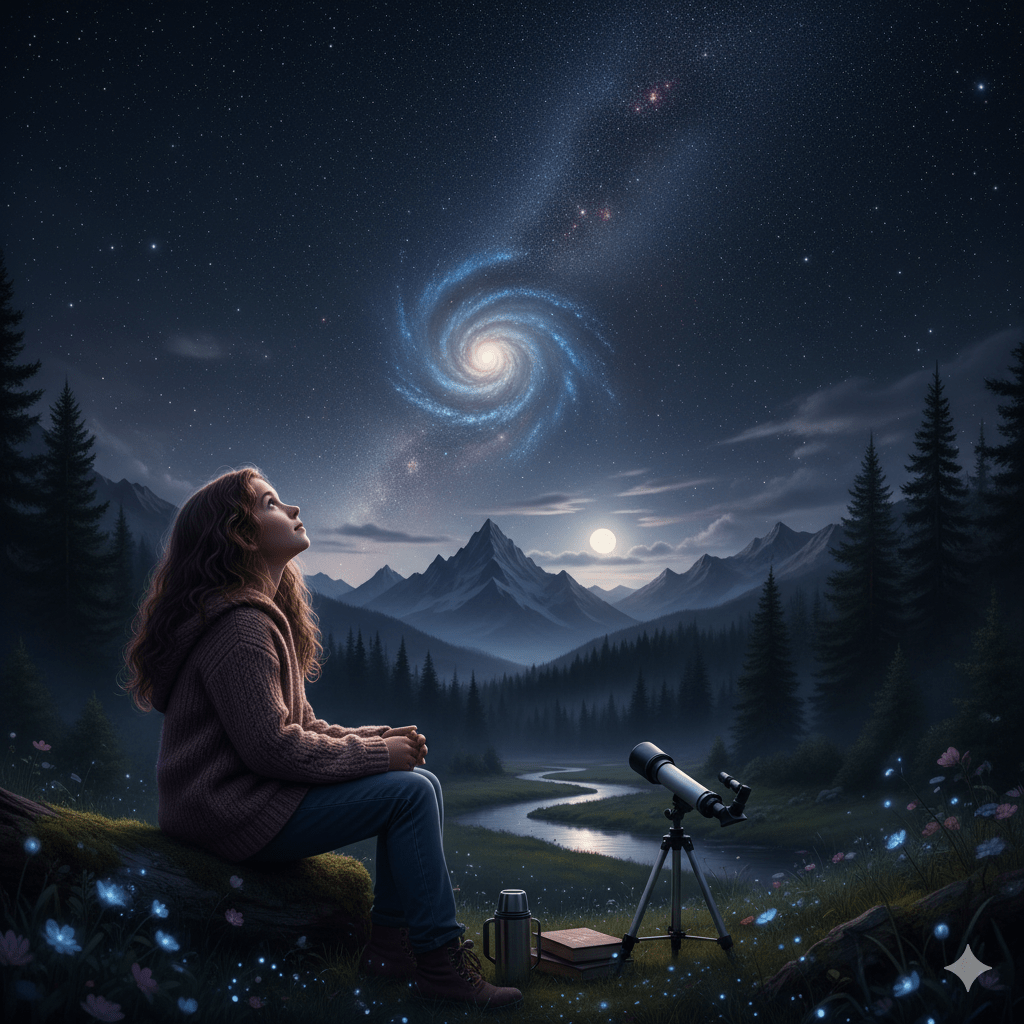
Image created by Gemini Advanced
Lately, I have been reading through the book, Magisteria, by Nicholas Spencer. It is quite long (467 pages with the index), but it is easy to read and loaded with excellent information. The book is about the history of the interaction between science and religion through human history. It literally covers almost every aspect of this entanglement — the good, the bad, the neutral. I highly recommend reading it.
I could say so many things about this book, but I am going to concentrate on a major theme in the first half of the book…”physico-theology.”
What does this term mean? Per Spencer, it means an extension or modification of “natural theology.” Natural theology, per the author means “…to understand and define the divine through observing, and reasoning about, nature.” Spencer points out that one does not have to be Christian to have participated in natural theology.
One can look at Plato’s Timaeus to see such an example:
“In the first place, then, as is evident to all, fire and earth and water and air are bodies. And every sort of body possesses solidity, and every solid must necessarily be contained in planes; and every plane rectilinear figure is composed of triangles; and all triangles are originally of two kinds, both of which are made up of one right and two acute angles; one of them has at either end of the base the half of a divided right angle, having equal sides, while in the other the right angle is divided into unequal parts, having unequal sides. These, then, proceeding by a combination of probability with demonstration, we assume to be the original elements of fire and the other bodies; but the principles which are prior to these God only knows, and he of men who is the friend of God. And next we have to determine what are the four most beautiful bodies which are unlike one another, and of which some are capable of resolution into one another; for having discovered thus much, we shall know the true origin of earth and fire and of the proportionate and intermediate elements.”
Plato’s extended quotation above shows elements of observation and reasoning. It is an example of “induction.” Is it science? Not really. It might be considered “proto-science” as science likely evolved from such thinking.

statue of Plato
Spencer then states that natural theology evolved into “physico-theology.” Physico-theology basically can be defined as 1) learning about the world in order to 2) glorify or worship God even more. He states that Galileo’s use of telescopes to see the stars and planets would be an example. Marcello Malpighi who worked on blood circulation and discovered capillaries would be another example. Antonie van Leeuwenhoek who used the microscope to discover microscopic life would be another example.
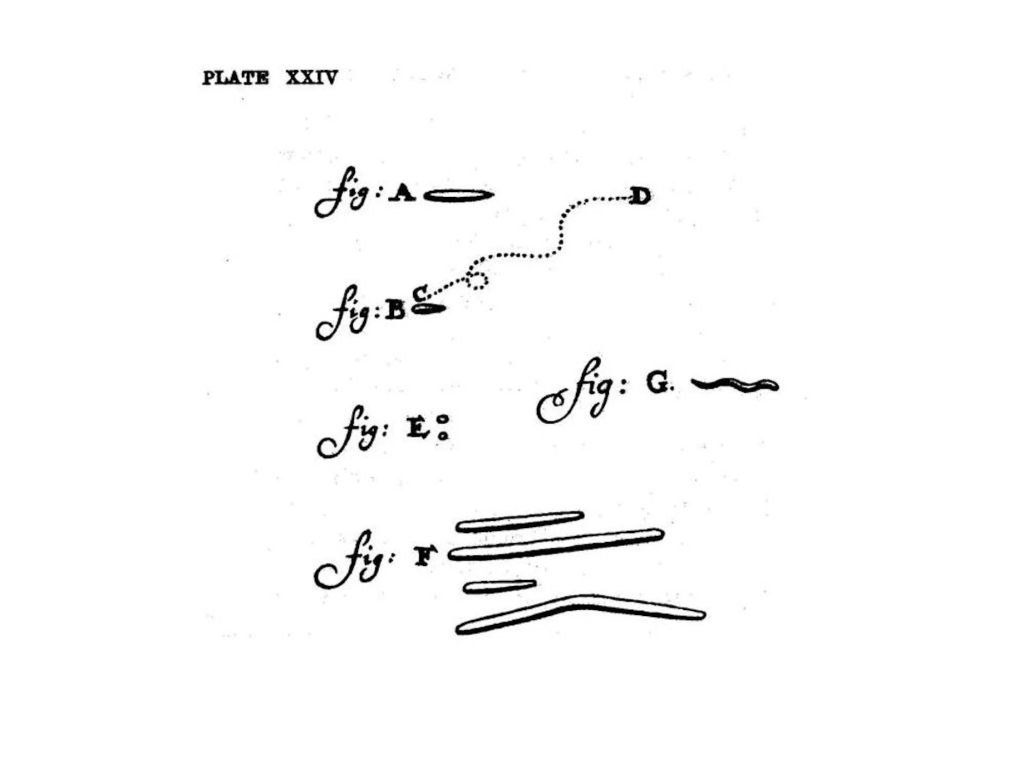
Antonie van Leeuwenhoek’s drawings of mouth bacteria (1684)
Spencer states, “And they did give glory to God, scientists and divines alike, volubly and frequently, in innumerable sermons and books published over the next century…“
His above statement is a wonderful outcome of physico-theology.
Wow. Such ideas sound so differently from how many aspects of religion (and not just Christianity) look at current science through a religious lens.
In my faith stream, it seems that some of the loudest voices who claim to be Christian are also anti-science. Such people often believe in problematic ideas such as young Earth creationism, anti-vaccine conspiracy theories, or refusal of medical care on fundamentalist religious grounds. There has always been an element of human society that has been scared of science or technological advancements, but I think social media is making scared feelings become conspiratorial beliefs that are getting embedded in modern society.
I feel quite sad when I see people pushing for specific religious texts to be taught in U.S. public schools or removing the teaching of evolution in public schools or expanding vaccine exemptions for unscientific (and in my mind, immoral) reasons. I say this as a Christian.
As an example, we have had recent measles outbreaks in Utah, where I live. I think that people forget that measles kills 1-3 of every 1000 children who are infected and not vaccinated. Measles causes life-altering permanent neurologic disease in 1 in 1,000 children who are infected and not vaccinated. The neurologic consequences can be horrific. 25% of children who are malnourished and are infected with measles will die.

Brain imaging of subacute sclerosing panencephalitis which is an awful consequence of measles infection.
It seems to me that refusal to accept the reality of the success of vaccinations through two centuries as well as other successes is science is anti-Christian if one believes the teachings of Jesus. As Jesus teaches in the Gospel of Mark: “‘Love the Lord your God with all your heart and with all your soul and with all your mind and with all your strength.’ The second is this: ‘Love your neighbor as yourself.’ There is no commandment greater than these.”
What to do?
I have no real solutions, but I will provide some potential pathways.
First, scientists, engineers, physicians, etc. need to do a better job of reaching out to the public about how science, done well, is associated with human benefit. By “done well”, I mean that science needs to be done ethically. Humans often fail at this endeavor (for example, the invention of nuclear weapons), but we always have the opportunity to fix the mistakes we make (the development of nuclear energy) or to push scientific fields such as physics into more helpful directions (the discovery of the standard model). We should continually try to keep science ethical as we try very much to do in medicine (see the Helsinki Declaration). If science experts don’t speak out, then non-science experts who could be conspiracy minded will take the experts’ place in the public forum. We are seeing this issue quite a bit in the United States currently.
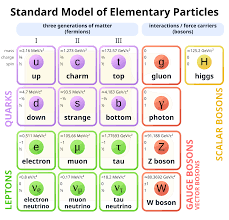
the Standard Model
Second, religious leaders and theologians need to do a better job about reaching out to the public about how science done ethically (and yes morally) will typically benefit the public. I want to emphasize the word “ethically” because our churches, temples, mosques, and synagogues should always emphasize ethics in the setting of our understanding of the Divine. The God that I worship is a God of love who desires for us to make good decisions to help other humans as well as the rest of our planet. There should be no anti-science conspiracy settings in our religious lives. One of the best articles that I have ever read about this issue is here.
Third and as I have discussed before in my blog, we need to appreciate the objectivity and subjectivity of the human experience. Both human objectivity and subjectivity influence each other. The influence can be terrible, but the influence (done well) can be magnificent. Bad science (fraud, plagiarism, faking results) is not good ethics. Bad ethics (making scientific “results” fit one’s personal conspiracy theory, ignoring valid scientific results) is not good science.
Good science with good ethics should be the goal. God, who loves us very much, wants us to achieve this goal. It is our choice to do better.

Image made by Gemini Advanced
It has been an interesting day as I have had two small events occur that I would like to share.
First, I received a book in the mail in which I was invited to be an author. The book is titled, Renewing Faith: Reigniting Faith and Ministry through Process and Open & Relational Theologies (S. Kling, ed., SacraSage Press). Here is the Amazon link: https://www.amazon.com/Renewing-Faith-Reigniting-Relational-Theologies/dp/1968136258. Here is what I posted on my various social media sites: “I was honored to be a chapter author in this new book that discusses ways to renew Christian faith without the baggage of today’s nonsense issues. Some of you may know that I am interested in teaching religious people that science done well is gift from God. Hopefully, this chapter and book will be helpful for many.”
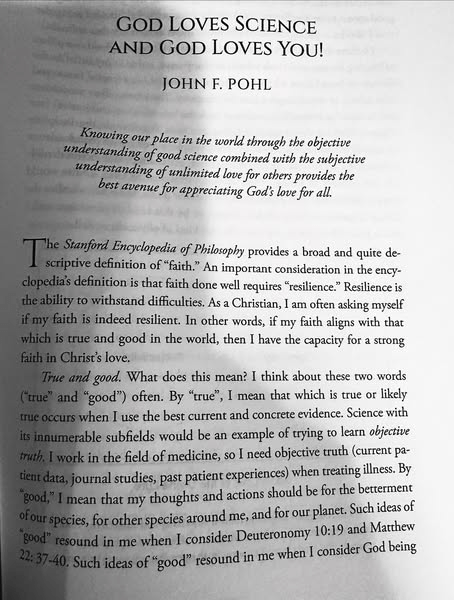
images from the book
Second, I heard a very good podcast today discussing freedom of speech from a left and right political perspective. The two speakers agreed very much that when humans from one philosophical or political mindset are in control, they typically try to suppress dissenting views. I think this issue is both a problem for the left and the right. Humans should strive to do better. The podcast link is here.

image created by Gemini advanced
I have to head out of town tomorrow to help out a family member, and my job has been as busy as our hospital rolled out a new electronic medical record. I wanted to post a few thoughts.
Without going into detail, I was at work last week when a famous person involved in politics was murdered while speaking at an event. I didn’t watch the event as I personally abhor politics and political parties. I do vote in elections, but I can’t stand the finger pointing and lies that are produced by both of the U.S. political parties.

Riots during the 1968 Democratic Convention
I do want to say this. I was about 10 minutes away (by car) from where the killing occurred. I was working in a hospital very close to the university where the tragedy happened. It was weird because so many of my co-workers had friends, children, spouses, etc. at the event where that famous person was killed. Work slowed in the hospital for a bit as employees were frantically on their phones trying to reach their relatives. Initial reports came out that many people were injured, and my co-workers were scared that their loved ones were injured or killed.
Here is what I think:
My first thought is that I find it sad that a person who was killed in such a gruesome manner had videos of his death shared all over the internet. One person that I was working with that day wanted to show me a very close-up video of the person being killed. I refused. Why would I want to watch it? Why are humans so obsessed with watching violence and death?
My second thought is that I believe strongly that it is ridiculous to kill someone over free speech. I didn’t personally know the person who was killed. Honestly, I had heard his name only a few times and had seen just a few videos of his talking. I pretty much disagreed with most of what this person said. However, left or right; fascist or communist; religious or atheist — the citizens of the United States should respect free speech. You don’t injure or kill someone who speaks differently than you or has different opinions than you. Free speech is a right in the United States. As a Christian, I believe that killing is wrong. Honestly, my personal experience with my atheist friends is that they also are very, very much against killing over differences in how humans think. Life is precious, and life should be preserved as best as humans can ethically try.

The First Amendment of the U.S. Constitution
Third, I have disliked politics in the United States for many years. As I have stated above, I always vote. I don’t belong to either political party. I never vote a “straight ticket” just for one party. I think the two political parties have become just as problematic as large industries which include “Big Ag” or “Big Pharma.” We pour incredible amounts of money into industries often without much benefit. In other words, we could still probably get good food or good pharmaceuticals without agreeing to pay excessive costs. The difference is that “Big Politics” doesn’t give you anything. Agriculture gives you food products. Pharmaceuticals gives you life-saving drugs. “Big Politics” in its current incarnation gives you nothing but anger and divisiveness. This anger and divisiveness is aggravated by social media. Much has been written about the difficulties of social media. I think H. sapiens is often a dangerous species, and our handling of social media is similar to giving a loaded automatic weapon to a chimpanzee. The chimpanzee doesn’t know what it is doing. Subsequently, the gun will likely go off and kill someone.
Finally, I had the following thought last week after the murder…
Humans are an extremely violent species just like our most closely related relative -chimpanzees. Humans and chimpanzees kill each other. They both do war on each other. They are often just violent for unclear reasons.
I guess Paul and Augustine would say that we are violent due to our sinful nature — due to The Fall. Honestly, with all that we now know about genetics and evolution, I think The Fall is an excellent allegory about humans being genetically and inherently violent.

“The Fall of Man” by Michelangelo
I think every human who has ever lived has had the capacity for horrible violence. As a Christian, I think Jesus Christ provides the exception and is an example that we should follow. And of course, humans killed him. However, I don’t think you necessarily have to be Christian to work on not being violent. I have good friends who are Jewish, Muslim, and Hindu who are not violent at all. I have good atheist friends who are not violent at all.

I guess what I am saying is that we all have to work against the human urge to hurt “the other.” By hurting or killing the other, we can take their resources or their living space or their potential mates in order to spread our DNA. It is as if we have to mentally work against the inherent biological urge to make our DNA (or perhaps our family’s DNA) more important than anyone else’s. This is my working theory in light of recent events in our country.
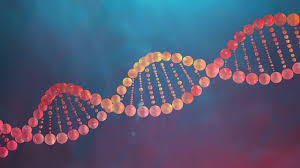
Religion (done well), secular Buddhism (and other types of cognitive behavioral therapy done well), and just not being a jerk are different ways to fight against the impulse to be awful to other people.
I think fighting this impulse against hurting others can be very, very hard. For whatever reason, it takes daily work for each of us to not ruin the lives of others.

image made from Gemini Advanced
This post may seem more philosophical than theological, but I find it interesting just the same.
If I consider how I emotionally react to a color, I can extend this type of emotional reaction to other individuals. I may react calmly when I see the color “blue.” In fact, I love blue and prefer my workspace to be blue, if possible. However, do other people feel the same way about blue? If “no”, are they seeing blue the same way that I do?
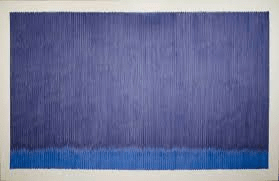
Painting by Gene Davis
In many ways, such thinking perhaps involves the idea of “qualia”. A good review of qualia is here as the philosophical idea can become quite complex. I like to think of qualia as a subjective representation of something we experience objectively.
For example, I love coffee. I love the taste. I love the smell. When I say “love”, I mean that I tend to want to drink it as soon as I smell it. I have some type of subjective desire associated with coffee. I went to a restaurant last night with my spouse. At the end of dinner, the server asked if I wanted coffee. Just hearing the word “coffee” made me have a subjective reaction or perhaps emotional response, which inclined me to say “yes.”
A famous thought experiment regarding the potential of qualia existing is the idea of “Mary’s Room.” I won’t go into the thought experiment in this post, but the original idea by Frank Jackson in 1986 has generated much discussion and many subsequent philosophical papers.
Recently, the Journal of Neuroscience may have cleared up the idea of qualia, at least in the setting of color. A recent article in this journal is titled, “Human V4 Activity Patterns Predict Behavioral Performance in Imagery of Object Color.” The article is open access and available to read freely.
In this study, 19 volunteers underwent functional MRI testing of the brain (fMRI looks at real-time changes of blood flow in organs) to evaluate brain activity in the setting of color. By the way, a good review of the article is in Nature.
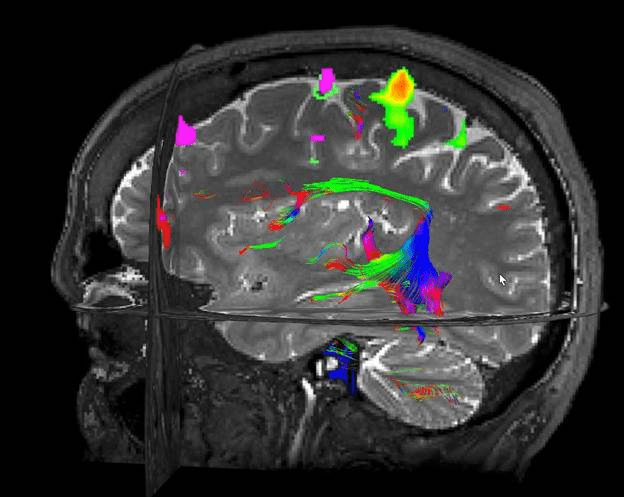
An image of fMRI from the University of Florida
In this study, male and female human subjects had fMRI readings of their brains performed while they looked at red, green, and yellow colors. Next, fMRI readings of their brains were repeated while they were asked to come up with mental images of these same colors.
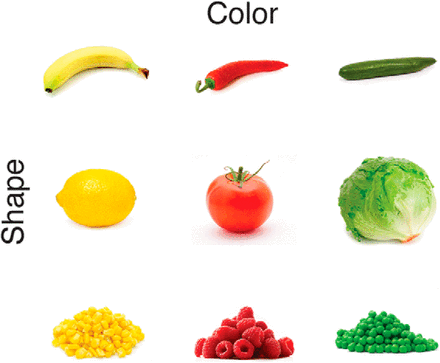
The image patterns use in the experiment
Here is the fascinating part… The study authors performed mapping of retinotopically matched visual areas in association with these colors. This mapping determines the part of the brain being signaled when a part of the retina is observing colors. They found that the specific area of the brain known as human visual area 4 (or hv4) had an extremely high correlation in brain activity as seen in fMRI when patients were shown colors or when they thought about colors. This hv4 area signalled the same whether study subjects 1) saw specific colors or 2) thought about the same specific colors.

Graph from the study showing high correlation of hv4 activity when observing and when thinking about colors.
The locus of hV4 correlates to the ventral surface of the occipital lobe of the brain. Here is an example of mapping of the human visual cortex to the brain:

Image from Cell (open access)
So, this important paper pretty much sums up a long-standing question. Do we all perceive colors the same way? I think the answer is “yes.” Absolutely yes.
When I look at red or green, my brain is neurologically and anatomically acting the same way as every other individual human. This fact seems to be objectively true.
I guess my only concern is how we then emotionally or psychologically react to colors. As a very small example, the black-colored license plate in my home state of Utah has become very popular. Why? Is it cool to look at ? Why is it so cool? Is there something about the color “black” that makes a human think it would look good on their automobile?

I still think there is still a remaining qualia aspect to color. Perhaps the connection of color to emotional reactions can simply be explained neurologically. I accept this idea very much. I think that there is also a philosophical concept that should be explored.
In the setting of process philosophy, nature is described as having a panexperiential aspect inherent to its existence. I’m not talking about emotional or psychological expressions at the atomic level. I am talking about experience in and of itself. An electron experiences charge, spin, and mass. Perhaps, as biological structures grow from the atomic to the molecular to the organelle to the organ to the whole organism, this accumulation in experience leads to consciousness. At the level of consciousness, emotional reactions can occur to stimuli such as color.
Perhaps qualia could be defined as “qualia +“. The “+” would be defined as organic neurologic changes as demonstrated in the study above. The “+” could be the accumulation of experience of all matter to produce a subjective reaction in a human. We objectively see red through the accumulation of experience of all entities in a human. We also subjectively see redthrough the accumulation of experience of all entities in a human. This is philosophy and not science. I am just speculating.
However, there is a theological link here. If we all see a specific color the same way objectively but have potential differences in how we experience color, then perhaps we have a spectrum of emotional or subjective beliefs in how we see God how we don’t see God. We have emotional or subjective ideas that combine with objective reality when we look through a telescope at our galaxy or when we experience the birth of a child.
God.
I think our perception of how we think about God (or the nonexistence of God) is reliant on real sensory objective data plus our subjective psychology. This combination of the subjective and the objective produces a plethora of beliefs about the definition of the Divine.
Objective + Subjective = how we define God = how we define no God.

Image of the Andromeda galaxy
Our theology journal club consists of people who have graduated from Northwind Theological Seminary under the tutelage of Thomas Oord Ph.D. We recently reviewed the article, “Spiritual Experience: Scientific, Philosophical and Theological Implications” by John C. Chatlos who is a psychiatrist at the Rutgers-Robert Wood Johnson Medical School. The article is open access and the link is here.
The article is published in Zygon which is the theological journal for the Institute on Religion in an Age of Science (IRAS). IRAS is a very good organization, and you should join it or support it if you are interested in religion addressed objectively while also considering the intersection of religion and science. I am a member of IRAS.
This article is quite long, and I will attempt to summarize it kind of quickly. Chatlos basically looks at how humans work in the setting of the “Framework of Spirituality” (FOS).
FOS is defined as follows: “FOS refers to a non-ordinary experience that occurs with a sense of awakening or unveiling of a wider truth or reality with a noetic or revelatory quality, associated with mystical-type experiences, including a sense of direct connection, communion or merging with some non-ordinary source.”
I think this definition is quite good, and Chatlos then goes into various potential causes affecting FOS. The list, in my opinion, is quite exhaustive. I will describe his theories of FOS and will comment on them.
This list is as follows:
Science and Medicine: FOS encompasses how many of us view the world. We live materially in the world but also have spiritual ideas. Thus, medicine has to be practiced scientifically while considering a patient’s faith background. One’s faith background may lead to a patient having specific moral ideas about illness and treatment options.
Fundamental Theoretical Foundations: Chatlos suggests that human brains have a “dual process of cognition.” The dual process includes a “fast” process that is emotional, not logical, and unconscious and a “slow” process that is logical and conscious. These two interacting pathways produce how each of us develop a FOS.
Psychology: Chatlos proposes that one of the deficits of modern psychology is that the field has medicalized psychological conditions to such a degree that it often forgets to include a person’s FOS when considering treatment options. I am a big believer in pursuing mental health therapy with board certified providers, but I think the author has a point here. Psychology, done well, should be scientifically sound. However, one should think about a patient’s spirituality when addressing anxiety, depression, etc.
Psychiatry: Chatlos has the same argument here as with psychology. He describes the “biopsychosocial model” of medicine (which includes psychiatry) as containing the domains of psychology, sociology, and biology of each patient. He then states “For years, there has been a noted lack of spirituality within this model.” I am not sure what he means here. Is “spirituality” a new domain that should be added? Wouldn’t one’s spiritual beliefs fall within the domains of sociology and psychology? Good psychiatry follows science, and psychiatry in recent decades has become very scientific when it comes to a person’s genetics and medication response.

Image from Harvard
Neuroscience: This aspect of the article is basically a good review of what part of the human brain is active during religious or spiritual experiences.
Anthropology and Evolution: I loved this section. First, is there some type of evolutionary advantage to religion? Per Chatlos, “…the theory proposes that at a bottleneck in time, the characteristics of spiritual experience were socioculturally developed for the survival of the pre-human, possibly hominid, tribe. This included an increased sense of connection and empathy with compassion for protecting and caring for each other, a vitality necessary for success in their short, survival-threatened twenty-year lives, and a sense of wholeness and integrity with peace and serenity. Each person had their own role as in a beehive, with constrained flexibility for conflict due to the vagaries of life and the need for survival. Finally, this created an extreme cooperative and communal sense of meaning and purpose. Experientially, a capacity for self-worth was developed neurologically with survival value, as a hominid with poor self-confidence would have little initiative, one with low self-esteem with depression would likely be left by the wayside by the tribe, and poor self-competence would make for fatal mistakes. As a group, choices with reason needed to prevail and compassion and protection for each other were crucial; very little needs to be said about the survival value of courage among leaders. Thus, self-worth and dignity became personally integrated with the identified social characteristics of spiritual experience—connection, vitality, wholeness, peace, and meaning and purpose. Spiritual experience was a by-product of what was needed for survival, it was not what made survival possible.” So, perhaps spirituality was a by-product associated with the survival of the genes of early humans. I also like to consider a non-scientific idea in which the growth of the human brain was part of God’s desire for co-creation with all of life to more fully continue love between God and Creation as well as Creation and God. This love , includes each of us. This idea is somewhat an “emergence” idea for spirituality in which God want to fully be integrated with all of nature through time. It’s woo, but I like it.

Ancient cave art from South Africa
Creative Forces and the Soul Function: Here, Chatlos states, “Science, including psychology, has avoided, if not denied, the reality of the soul and currently has no place for its study or understanding.” I think this statement is true, and I think avoiding a consideration of the soul in medicine is fine. In medicine, we are trying to improve or save a life. We are not trying to improve or save an afterlife. Thus, I really can’t make a good comment here. I do want to point out that many Christian ideas of the soul have a resonance back to ancient Greece, so the soul that many Christians identify with today is actually a combination of Christian theology and Greek philosophy. A good reference is here. By the way, you can see the Greek influence when you read Plato’s Phaedrus (“The soul in her totality has the care of inanimate being everywhere, and traverses the whole heaven in divers forms appearing—when perfect and fully winged she soars upward, and orders the whole world; whereas the imperfect soul, losing her wings and drooping in her flight at last settles on the solid ground—there, finding a home, she receives an earthly frame which appears to be self-moved, but is really moved by her power; and this composition of soul and body is called a living and mortal creature.”)
Universal Moral Direction and Values: In this section, there is a discussion as to if morality (and probably ethics) is universal in nature. I vacillate on this idea frequently in my thoughts. At least in H. sapiens, there seems to be the potential for a better human-wide morality or ethics occurring through time. I don’t know if this subjective directionality is a universal objective trait of nature. I love Chatlos’s quote here: “Opening of the spiritual core moves persons into a new awareness of non-dualistic thinking processes about experience. Experience within this spiritual core is not about judgment, good or bad, right or wrong, but rather accepting that ‘all is the way it has to be’ as a reality principle; therefore, ‘all is good’ because it is reality—and it can be better! “
Veil of Illusion and the Mystical Experience: This idea is the metaphysical barrier between what we humans perceive and what is the source of ultimate reality. This barrier can be explored scientifically (particle colliders and big telescopes) but can also be considered theologically. In my mind, the “barrier” is a type of idealism. I also think that our existence on a tiny planet in a non-descript galaxy obscures the ultimate reality of a perhaps infinite universe.

Image from the Webb space telescope
Transcendence versus Immanence: I don’t have much to say here. We can’t prove God. We also can’t prove a no God.
The “Causal Joint Problem”: In this section, Chatlos discusses ideas regarding the potential for communication with the Divine. Are we a “receiver” of God’s messages and meanings? Is God some type of “communicator”? I have no clue, and to be honest, I don’t think about this idea very often. One can believe in such ideas which is fine. I just think it is absolutely impossible to prove that we have some type of communication with God (even if I personally believe it is possible).
The Faith Process and Applied Spirituality: Does faith in God allow one to make a “meaningful commitment to the worth and dignity of all people, including oneself”? I think religion, done well, reaches this goal. Honestly, on a personal level, I try to attend churches that emphasize the “worth and dignity” of the other. No church does it well. No religion does it well. Many atheists, I think, also work for the worth and dignity of others. None of us do such work perfectly.
The Nature of the Soul: In many ways, this section was a recapitulation of the above.
So what do I think?
I think that our human experience is both objective and subjective. We objectively see human interaction, human experience, and change over time. This objectivity can be studied using science and science-adjacent fields. However, we also experience the world subjectively. This subjectivity is controlled by neurons, neurotransmitters, and perhaps (just perhaps) a spiritual element that cannot be defined. This undefined aspect of the human experience can be studied by the arts for which theology is often contained.
Refining our objective and subjective values both spiritually and otherwise should be a goal for each of us.

image made by Gemini Advanced

 Phi-The-Sci: Equilateral Musings