In my opinion, the light cone is one of the best ways to understand aspects of one of the 3 tenets of process philosophy and process theology — prehension. The other two aspects are panentheism and panexperientialism.
Simply put, prehension is the moment right before an event occurs. Process philosophy (and thus, process theology) is based on change. The basement of all reality is change, not matter. This change involved the eminence of time.
As a moment of time experience is just about to occur, many possibilities or actualities are available, but most will not occur as the next experience in time undergoes a concrescence into a real occasion. Time, if eternal, keeps the process of actualities / possibilities –> concretion –> actualities / possibilities eternal through time…quite beautiful to think about actually.
The light cone contains a point in space and time. Events in the past of the light cone contain all possibilities where the light may have come from. All events in the future contain all possibilities where light may be going. When one considers the immensity of photons in our universe, you can see how complex and beautiful events can become. Those areas outside of the light cone would not be associated with light as this area would require causation greater than the speed of light (unless quantum entanglement is real throughout the universe). Areas inside the light cone would have potential association as these events would be slower than the speed of light.
Here is a great diagram (below) associated with a great explanation here.

In the world of process philosophy and its offspring, process theology, one can see how this reality works in metaphysical ideas of change. There is a potentiality of many, many events at every point in time. One event emerges. As that specific event heads to another event in time, a potentiality of possibility re-emerges. In some ways, it reminds me of a fractal although a fractal figure is deterministic, and ideas surrounding process philosophy / process theology are decidedly not so.
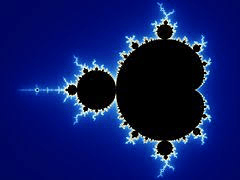
image from Wikipedia
If God consists of love, and God’s love consists of free will for possibility at all levels of reality, then there is the potential of creativity at all times and all places in our universe eternally. I like this idea although I think more work is needed in the realm of theodicy and death. I have some ideas here — working on them. Theology, done well, is very hard.
By the way:
- This is a GREAT blog on prehension, the light cone, and the ideas of Alfred North Whitehead who is the OG regarding this whole chain of ideas… Here.
- The Internet Encyclopedia of Philosophy has a great entry on the process philosophy, but it is fascinating how the post’s author describes Whitehead and his work on prehensions and concretions: “In Whitehead’s system, only actual entities can have causal efficacy. Thus, a divine actual entity was posited. Though Whitehead’s philosophy has inspired an entire tradition of process theology, the doctrine of God at this point (especially in Science and the Modern World) is very thin, theologically speaking. Whitehead was initially a reluctant theist. God appears as a metaphysical necessity—the evaluator and purveyor of universals—and little more.“
- To the point above: I’m gonna disagree. If one reads Whitehead’s magnum opus, Process and Reality, one sees that he may not have been such a reluctant theist. Consider these statements: “The primordial appetitions which jointly constitute God’s purpose are seeking intensity, and not preservation. Because they are primordial, there is nothing to preserve. He, in his primordial nature, is unmoved by love for this particular, or that particular; for in this foundational process of creativity, there are no preconstituted particulars. In the foundations of his being, God is indifferent alike to preservation and to novelty. He cares not whether an immediate occasion be old or new, so far as concerns derivation from its ancestry. His aim for it is depth of satisfaction as an intermediate step towards the fulfilment of his own being. His tenderness is directed towards each actual occasion, as it arises.” (p. 105) OR “Thus the actuality of God must also be understood as a multiplicity of actual components in process of creation. This is God in his function of the kingdom of heaven.” (p. 350)
Whitehead may have been some sort of theist. Probably not a Christian (although that really doesn’t matter) but probably, to some degree, a theist.

image created by Meta AI
 Phi-The-Sci: Equilateral Musings
wow!! 94I Spoke at Church this Sunday
LikeLike