A Review of My New Book is Out!

A friend of mine sent me a short article regarding how scientific research is having problems in the United States (if not worldwide). I need to write my opinions on that well-written article soon. As an academic physician, I see such problems frequently. This article will probably be discussed in my next post.

However, a new book review just came out (!!!) on my new book (A Theology of the Microbiome: An Intersection of Divinity and the Microbial Life Within Us) available on Amazon as well as through the book’s publisher (SacraSage).

Dr. Jay McDaniel who runs a great website / resource for process philosophy and process theology (Open Horizons) wrote this excellent review here.

Dr. McDaniel’s review of my book was very positive which was encouraging. Also, like every good reviewer, he pointed out some areas that could have been improved or expanded. A good book review should always acknowledge the positives and negatives of any book, if possible.

Regardless, his review of my book was kind, enthusiastic, and generally helpful for anyone who might have interest in my new book.

Please keep in mind that I am donating all proceeds from this book to the Center for Open & Relational Theology, so your purchase of the book makes this wonderful theological center accesible for more people.

My New Book Is Out!

After a few years of being an adult learner and while working full time, I was able to recently complete a DThM (Doctor of Theology and Ministry) degree at Northwind Theological Seminary. It was super exciting to get this degree which has been a long-standing goal of ine.

However, even more exciting was my ability to take my dissertation and convert it into a book. My book (“A Theology of the Microbiome: An Intersection of Divinity and the Microbial Life Within Us“) has just been released and it available on Amazon as well as through my publisher, SacraSage.

It has been an amazing ride! I have written small academic articles and book chapters through the years that mainly have been in the realm of medical science, but the process of writing a book on theology takes 1) time, 2) patience, and 3) patience. You noticed I put down “patience” twice…needed.

My disseration advisor, Thomas J. Oord, was super helpful in helping me turn this extensive project into a book. Also, my editor, Jonathan Foster, made the book a much better read.

Both of these individuals do wonderful work:

Tom’s work is here.

Jonathan’s work is here.

Why did I write the book? Well, a small seed for this book was planted in 2018 when I wrote a short essay for God and Nature Magazine. Also, I strongly believe that as we get older, every person should try to expand their learning into other fields. This type of learning / education is good for the brain.

The experience and learning associated with life’s circumstances can be helpful when getting new knowledge out to the population at large, especially for young people. I have worked in medical science for over 30 years, but I have had a side interest in theology for about the same period of time. I felt like it was time to lear more and to get information out to the community at large.

Both science and theology are unending fields of study. Science is considered objective; theology is considered subjective. However, there is often an overlap between the objective and subjective.

From a philosopical and theological standpoint, I discuss the idea of the “SO-Monad” in the book in which reality has both subjective and objective components — one greater than the other at times; both equal at times; both always there; both eternally present in time. If such an idea sounds interesting, perhaps you should buy a copy!

I am donating all of the proceeds from this book to the Center for Open and Relational Theology in order to advance a new way to study theology (although ideas such as open and relational theology have circulated for centuries), a new way to consider religion, and a new way to understand God.

image produced by Meta AI

Minor Meditating in Nature

My spouse and I spent this Labor Day weekend hiking around Great Basin National Park. This national park is huge and is often overlooked by tourists due to its lack of accesibility.

I am a terrible at meditating. I have been told that such an intervention is helpful. My wife is great at it. I, however, become super distracted and my mind wanders. Honestly, I think that a certain percentage of the population is not great at meditating. I further think that meditation does not help a subset of our species. Mediation as a “cure all” is kind of a dumb idea as has been documented here and here.

The exception for me is in the setting of nature. For some reason, a quiet day in the wild puts me immediately in the “meditation phase” and bypasses the “concentration phase” — again, I’m not really sure how scientifically rigorous such terms can be. I live in the Intermountain West of the U.S., so there is still the ability to get away from civilization relatively quickly.

Such an experience occurred at the Great Basin on Saturday. We were in a meadow where several small streams were leaving the mountain ranges and heading to terminal lakes. There was a bit of cloud cover. We are at an altitude of 9000 feet. The temperature was cool. Three hours into our hike, we came to a clearing. I stared at a small field there with the wind moving the leaves of the Aspen right behind me. Boom. Immediately I lost myself in this little bit of quiet nature.

As always, the picture does not do the actual area justice.

This event caused me to think about God. I believe God is around us / nature, in us / nature, in time with us / nature (panentheism). Consider 1 Kings 19 in the setitng of Elijah’s interaction with the divine. The story is mythic but also perceptive. The wind, the earthquake, the fire and then the still, small voice… Perhaps there is a corrolary to my experience in that field. It was a pleasant wind in the Great Basin that was formed by volcanic activity, earthquakes, and fire. The majesty of natural creation 25 million years ago lead to the quiet field that I was standing in on Saturday.

In such experiences in the wild, I always am struck by the of immensity of deep time, the imperceptable changes in geology over millions of years, and the flicker of the human life span. I wonder if God, although everywhere, retreats to such little fields to enjoy the creation of events. I imagine such peaceful areas exist throughout our cosmos.

I feel that God was with me at that moment in time and at that location in Nevada although God is always around all entities at all times. The experience of sight / hearing / smell in that little field combined with my neurotransmitter reacting to my senses appeared to make my awareness of God much more focused yet confused. God was there but what was God? It will never be known.

Loren Eiseley once wrote: “Down how many roads among the stars must man propel himself in search of the final secret? The journey is difficult, immense, at times impossible, yet that will not deter some of us from attempting it… We have joined the caravan, you might say, at a certain point; we will travel as far as we can, but we cannot in one lifetime see all that we would like to see or learn all that we hunger to know.

My time is limited on this little rock. I won’t see all of the possibilities of nature in my lifetime. I see the blackness of night and consider the infinity of space that I will never understand.

I can only experience what happens in my little bit of time and location in the universe’s reality. I do have the ability to let others in this bit of spacetime — and by others, I mean all entities — be themselves in their fullest form. This fullest form is equatable as creativity and love. Love neighbor. Love God. Ergo, love nature and appreciate all that I can see in such quiet, time-limited experiences.

I left the field and walked back down the mountain.

image by Meta AI

Statistics (Can We Add It to that Old-Time Religion?)

The Economist posted an article this week titled “The trial of Lucy Letby has shocked British statisticians“. Great read. My take on the article is not that statistics may have been poorly performed in the setting of a murder trial while also stating that statistics are poorly understood in general.

In the United States, science in general and statistics in specific are poorly understood — including by scientists and physicians! Yet, understanding of BASIC statistics would help everyone in their daily lives. Think about how understanding basic statistical significance would affect how Americans understand basic economic principles, gambling, health outcomes, banking and investment, and parsing out unbelievable political statement by both of our main political parties.

C.P. Snow (1905-1980) had the wonderful “The Two Cultures and the Scientific Revolution” (A Rede Lecture) published in 1959. What a read and I highly recommend it! At that time, he believed those in the liberal arts were going to be consumed by those in the sciences. I think his prediction came true as those in the liberal arts and fine arts now basically can only advance academically with peer-reviewed papers, grants, etc. That complaint is for another essay… Regardless, he states clearly:

But I believe the pole of total incomprehension of science radiates its influence on all the rest. That total incompre- hension gives, much more pervasively than we realise, living in it, an unscientific flavour to the whole traditional’ culture, and that unscientific flavour is often, much more than we admit, on the point of turning anti-scientific. The feelings of one pole become the anti-feelings of the other. If the scientists have the future in their bones, then the traditional culture responds by wishing the future did not exist. It is the traditional culture, to an extent remarkably little diminished by the emergence of the scientific one, which manages the western world.

I don’t like the term “western world” as I think the fight between how we think concretely and how we feel emotionally / how we do math and how we read literature / how we think objectively and how we think subjectively leads to anti-intellectualism and leads to further problems such as racism, denial of climate change, the anti-vax movement, etc.

How do such concepts fit into religion? At least in my strain of faith (Christianity), the understanding of basic science principles among many church members and leaders is bereft of simple, basic knowledge. There is so much to write about this issue, but I would recommend this wonderful essay by Andy Crouch in BioLogos and a small essay I wrote about this issue in God and Nature Magazine.

One theological point to move to here…. My book, “A Theology of the Microbiome” (SacraSage Press) is in full publication mode. I am hoping it is out soon, soon, soon. Endorsements are done. Final editing is done. The cover looks great. I do spend some time in the book talking about God being basically a statistical being since statistics appears to be a significant part of reality. Mind you, my writing is theological here as the concept of God is unprovable and the concept of no God is unprovable.

Thus, a statistical God (the “Uber-statistician”) could predict accurately but not exactly or deterministically all future events. This concept makes sense in the setting of Naturalismppp, including ideas contained in panentheism and prehension (see prior posts). In my upcoming book, I state:

God does not ‘know’ or ‘choose to know’ the location of every
quark, atom, molecule, and creature. Instead, God has just enough knowledge
through God’s self, which one would identify as ultimate statistical
knowledge (thus, the ‘Uber-Statistician’)…Since God has predictive power but no foreknowledge, determinism goes away…God’s lack of foreknowledge, as described by open and relational theology, would allow each individual entity to have freedom of outcomes. God may come close to all knowing, but God will never completely know outcomes. The Uber-Statistician is compatible with non-deterministic
creativity in nature even in its simplest elements as can be seen with statistics
being used to predict the distribution probability of a particle in the setting of wave-particle duality
.”

Indeed, lots of ideas here regarding free will, determinancy, limited free will, theodicy, etc. Want to learn more? Put an order in for my book. ; )

If I go back to The Economist article, how much more helpful would it be for clergy to get some training (and I mean even the absolute minimal training) about statistics in high school, college or seminary? I think it would change the ways many “doctrinal” ideas in Christian denominations would be considered. Am I flaunting controversy? No. I am being a realist, especially when dealing with the triumphs and tragedies of every human on our planet (not counting the triumphs and tragedies of every creature on Earth — and including our home, tiny planet).

BTW: Great resource on world statistics here from the University of Arizona.

Johnny Cash (one of my favorites) singing “Give me that old time religion” here (no mention of statistics, sadly).

image made my Meta AI

Academics: The Issues (Well, at Least in Medicine) *and Maybe Theology

A little about me (see my blog home page)… As soon as I entered medical school, I learned that medicine could have an academic track. I was a first-generation physician so the field was very opaque to me. In fact, I had NO IDEA what a fellow was. For the audience, a fellow is a subspecialist trainee position after residency. I loved the idea of combining teaching, clinical care, and research. I was and am still idealistic about the concepts of professors of medicine having the same impact of knowledge as professors of physics or literature or biology or theology.

Thus, let us assume that academic medicine is a “three legged stool” of 1) medical education, 2) clinical care, and 3) research.

Here is the tragedy of medical education over the years in my opinion. Two of the legs have been broken, and I fear the legs will never be repaired. Thus, academic medicine is very broken.

Medical Education: Due to the expense and time of medical training and especially considering that academic physicians could be spending that time seeing patients (i.e., billing), less and less valuable time is spent teaching medical students. I see this effect mostly at the level of medical student education, but it is beginning to affect post-graduate education at the resident and fellow level. I base this finding on my experience in 23 years of teaching. However, the rising cost of medical education, the loss of protected time to teach (this will destroy the medical education track of scholarly academic advancement), wellness issues, and the emphasis on clinical care over teaching stressed by academic medical systems are reducing the quality of medical education in the United States.

Medical Research: There is so much to say here. However and briefly, there is no doubt that individuals with terminal MD degrees are not pursuing research careers compared to those with terminal PhD degrees in the biological sciences. This graph says it all:

image from the NIH

Now, one may say that you would prefer your physician to just take care of your clinical issues. Fine. However, how would you feel knowing that most graduating medical students and residents have minimal training on statistics, on how to read a journal article correctly, on how consider a clinical research project to improve patient care long term? How would you feel knowing that your physician really has no clue how to do quality improvement which our medical societies like to emphasize but do not follow through with? This is a very real aspect at every medical school and academic health system. I would recommend the #openaccess section titled “Notes from the Association of Medical School Pediatric Department Chairs, Inc.” in every monthly issues of The Journal of Pediatrics to get a sense of this problem. There are lots and lots of good ideas mentioned in the journal, but funding mechanisms are typically unclear.

Clinical Care: Ah, yes, the golden goose. Funding to teach is typically zero. Getting a grant is hard, and indirect grant costs by institutions are high. Seeing patients will generate revenue — always. So, if one is an MD faculty at an academic medical center, it is common for such faculty to see patients at the expense of medical education or research. I get it. It is expensive to run a clinic or a hospital or a medical system. Many academic medical systems are branching out to higher income areas in cities to get more private insurance payers. The pipeline from seeing a patient to generating revenue for the academic health system is relatively easy and based soley on volume. Great articles about this issue are here and here.

By the way, the importance of tenure is big issue currently in the United States. In academic clinical medicine, tenure is simply disappearing and probably will never return. Academic clinicians are considered “career line” academics, and our employment is typically based on revenue production.

The 3-legged stool is broken.

A Solution? To help others (our patients) and to help other ideas (our community):

Academics in general have a long history of “siloing”. I think this issue is becoming extremely common in academic medicine. If we, as academic physicians, are not able to do research or to teach to any effective degree, I suggest we break down our clinical silo to reach another community.

Are you a good writer? Compose a poem or write an essay for a literature journal. Your aspects of medical science and humanism will be needed in the literature community.

Do you enjoy history? Write an essay about the history of medical device or medical test or disease diagnosis or well-known physician. Submit it to a history journal or historical society. You will have ideas that probably have not been considered which will make a difference.

The possibilities are pretty much endless.

In my particular situation, I have had a long interest in science-religion overlap (probably deserves a long post in itself). I decided to pursue a DThM degree at a seminary which took about 3 years. Thus, although I was pretty busy as a clinician at work, I could write or produce some theology that I thought would help religious people understand the importance of science. For example, I wanted such people to understand the importance of vaccinations, especially in the setting of COVID-19.

The seminary that I received my degree from is big about “church futuring” which is a term that basically means more and more lay people probably need theology education as (guess what) full time academic theology is running into some of the similar aspect of higher education as medicine. These parallels are not complete of course.

OK…that is my rant for today. I hope the links provided are helpful. Thank you for reading my blog.

image created by Meta AI

Reading Some Gould This Weekend…

Stephen Jay Gould is one of my heroes for many reasons. I love thinking about evolution (I’ve done some prior work looking at founder effects in humans), and Gould has some many interesting ideas in the field of evolutionary science. More importantly, I love his writing style. If I could emulate him in terms of clarity and his almost a poetic type style of story telling, I would be quite happy.

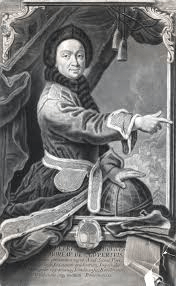
image from Clark University

I’ve read many of his books and tons of his essays through the years. Recently, I was thinking about his famous essay (co-written with Richard Lewontin) titled, “The Spandrels of San Marco and the Panglossian Paradigm: A Critique of the Adaptationist Programme.” I read it again this weekend. There are many, many things to say about this piece. Let’s limit our discussion to this essay section:

We wish to question a deeply engrained habit of thinking among students of evolution. We call it the adaptationist programme, or the Panglossian paradigm. It is rooted in a notion popularized by A.R. Wallace and A. Weismann, (but not, as we shall see, by Darwin) toward the end of the nineteenth century: the near omnipotence of natural selection in forging organic design and fashioning the best among possible worlds. This programme regards natural selection as so powerful and the constraints upon it so few that direct production of adaptation through its operation becomes the primary cause of nearly all organic form, function, and behavior.

As a metaphorical example, they discuss the spandrels of the San Marco (Venice, Italy). The dome of the cathedral needs spandrels in order to not collapse. The spandrels have painted designs on them. Here is their point: The spandrels do not exist to have beautiful art on them. They exist to support the dome. The art is a secondary product only — not initially appeciated and perhaps a random byproduct. No art needs to exist on the spandrels. The art is simply a byproduct not related to original form.

image from Springer

This issue of phenotypic variability in large structures also may extend to the microscopic level of epigenetics. Although chemical changes to DNA, such as methylation, may be adaptive, I think non-adaptive / randomness change in-and-of-itself may be occurring.

Where am I taking this post? The scientific debates of adaptionism and non-adaptionism in evolution are extremely fascinating. Can we take this discussion outside of science and apply to how we live subjectively?

As an example, one could consider the Gould / Lewontin essay and its non-adaptive evolution emphasis as a master example of randomness associated with bleakness in nature (subjectively, of course). If all or much is random, then what is the point of anything? Camus would agree here as all would be absurd.

However, I think the regular person walking around and doing what they do as part of their daily life would not think life is constantly absurd. It there an overall purpose to all of THIS — life, relationships, culture, society, our planet, our universe? Such questions are philosophical and theological but no less important than the scientific discussions that appear here.

As Marjorie Suchocki has expressed in her books (God Christ Church: A Practical Guide to Process Theology), we humans are always experiencing “perpetually perishing.” This idea is quite right. We are perdurants. We are indeed clumps of matter, but the most important aspect is the change in the matter. This change involves time which is a force in itself but which is still underneath the ultimate priority which is CHANGE. This change in-and-of-itself takes in consideration all of matter, space, and time.

In Process and Reality, Alfred North Whitehead has stated:

Every actual entity is what it is, and is with its definite status in the universe, determined by its internal relations to other actual entities. ‘Change’ is the description of the adventures of eternal objects in the evolving universe of actual things.

I love Whitehead so much, but it is important to consider his emphasis on Platonic objects (the ‘eternal objects’). One can consider changing (see what I did there) the idea of eternal objects to change itself as the ultimate eternal object / Platonic form. Thus, everything changes. There may be prehensive / panentheistic / panexperiential aspects to this change (Naturalismppp — see prior posts), but change is the base structure of nature.

From a religious perspective, God is in this change. God changes as God learns with us, experiences us, loses with us, loves with us, loves us. God’s love extends to all entities in nature. Change occurs, but God being an eternal entity experiencing all change also remembers us eternally as we change.

Finally, I have talked about the “divine lure” in prior posts. God wants change. God desires change. This change is voluntary at all levels of nature. God desires change so much that God is change from a metaphysical sense. This change allows one to consider all sorts of adaptive or non-adaptive evolutionary arguments. However, if God calls all of nature in that “still, small voice”, then nature can proceed unfettered in all sorts of directions with some type of voluntary goal of God that nature (including every human) has every right to be neutral upon, to go against, or to go alongside such a call. God loves everyone of us. God loves every entity in nature. God perhaps has a goal here (I think God has a goal — I may be wrong), but God will never force that goal.

Evolutionary science is wonderful. A religious person should not ignore this field of science, but to appreciate it, perhaps interpret it from a theological perspective, and to look for God’s quiet call for change.

image created by Meta AI
Creativity in Nature

Recently, I have been reading “A Purpose for Everything” by Charles Birch. He is a geneticist, and importantly (to me), he is a proponent of process philosophy / process theology.

I have been reading his book very slowly. Hey, I’m a pediatric gastroenterologist with a busy schedule! Anyway, P. 38 (Twenty-Third Publishing version) made an impression on me a few weeks ago and again tonight:

Determinism: This idea is hard to prove. Yes, Laplace’s Demon is a wonderful thought experiment, but at the subatomic level there still appears to be some type of randomness. If there is randomness, then there is potential. There is always potential — for a better or neutral or worse outcome.

Antony Eagle has written an interesting article in this arena. His work is philosophical, not theological. Here is part of it:

“Unpredictability occurs for many reasons independent ofindeterminism and is compatible with determinism. Thus, we can still have random sequences in deterministic situations, and as part of theoriesthat supervene on deterministic theories. The key to explaining why randomness and indeterminism seem closely linked is that the theories themselves should not be deterministic, even if they are acceptable accounts of ontically deterministic situations.”

A science experiment (let’s say, boiling water) will show the same temperature for when water molecules change from liquid to gas (obviously, depending on altitude and other such effects). This result is pretty much deterministic. The individual water molecules, on the other hand, are random in many ways.

How does this relate to theology, especially process theology? If I hypothesize that God has a “divine lure” for every entity – quark to galaxy – for potential or for creativity, then the randomness of nature at the subatomic level has this inherent potential for creativity. The electron forms a cloud around the nucleus. This cloud is stability demonstrating potential for atomic formation and for the ability to form molecules. If evolution has the potential to improve fitness in the setting of environmental change, then the randomness of evolution has the potential for creativity to allow a specie to survive.

Iron atom (Ars Technica, https://arstechnica.com/science/2023/05/this-is-the-first-x-ray-taken-of-a-single-atom/)

God’s lure is the tiny call for potential…for creativity. This call is not forced. Nature can ignore or hear the call. It is the choice of every entity at every level of creation.

We, as humans, should consider this call very much in the setting of taking care of other humans, other species, and our planet.

image created by Meta AI
Listening to Francis Collins

I was able to attend an on-line meeting of the American Scientific Affiliation this weekend. The ASA is a wonderful organization for Christians who work in the sciences. I have been a member for many years. Francis Collins was the guest speaker, and I think about 30+ people attended. On a personal note, I sent Dr. Collins an email a couple of months ago about an unrelated subject, and he sent me a kind response.

Francis Collins is a well-known scientist who was involved in discovering the human genome, being the previous head of the NIH, and being an author of several books.

His talk on Saturday was about the effects of the COVID-19 pandemic which was devastating to my country (U.S.) and to so many other countries.

He also talked about the scourge of misinformation that occurred during the pandemic especially in the setting of social media. This misinformation included personal attacks, often very vicious, on people such as Dr. Collins.

Although Dr. Collins expressed frustration and sadness about misinformation, he was very positive about how our country tries to cooperate with other countries in trying to prevent pandemics. He discussed about how difficult it is to make decisions in real time in the setting of a pandemic. I agree. It doesn’t take a huge amount of insight to realize the difficulty of making quick decisions in a country of 300 million citizens with a polarized political environment and in the setting of an often slow-moving federal response. I would argue that public health is incredibly important in this regard. The political nonsense coming from both of our U.S. political parties often wrecks public trust in the science of public health.

Such thoughts bring me to the newest editorial in the New England Journal of Medicine. The title is “Deja Vu All Over Again — Refusing to Learn the Lessons of COVID-19.” It is an open access article and free to read. I would recommend looking at it.

Our country’s inability to reconcile federal and state health coordination as well as some states passing laws preventing public health measures in emergency situations is quite dire. I wonder what will happen when the next pandemic occurs.

I will never understand why many of our federal and state political leaders ignore simple science, embrace conspiracy theories, and put their re-election ahead of the concerns of humanity. Theologically, one could argue that such national themes of on-line conspiracy theories and ignoring common sense public health runs into issues of “original sin”. Such sin is basically a genetic / epigenetic phenomenon involving millions of years of evolution leading to the importance of tribalism; to take away from others to supplement oneself; to hurt others even if it means potentially hurting oneself; to gain power at the expense of others.

I am a religious person. I find it so strange that many other people who claim to be religious are involved with conspiracy theories online, don’t understand simple science, and would rather be hateful as opposed to passing peace when pandemics occur. What to do? I have become a big believer in the individual acts of doing better. I fail here often but I try. In many ways, this falls into the idea of prehension from Naturalismppp (see prior posts). If I can make a change for the better in a small way during a short moment of time, perhaps this act moves forward in a way that influences the world positively. Some would say God is involved in such moments, defined as a divine lure to some degree.

Lots and lots of thoughts here but to summarize:

  1. It was interesting to hear Dr. Collins talk in a small group setting even if the talk was on-line.
  2. It was interesting to hear him talk about how misinformation really made the COVID-19 pandemic so much worse. Much of the misinformation came from social media.
  3. I personally think that public health is one of the most important parts of modern medicine. This field of medicine is often misunderstood and underfunded.
  4. When one observes how so many people (especially political leaders) responded poorly to the COVID-19 pandemic, it makes me wonder about the human condition. I think, from a theological and evolutionary viewpoint, that many in our species acted dangerously during this time to conserve some degree of power. This idea is tragic.
  5. What can we do? We can do what we can to improve the life of others in singular moments of time. I honestly believe that such actions are a baseline way to improve the lives of others while co-creating with God for the good and for continuing creation.

image created by Meta AI
Panexperientialism

Ahh, now to the most difficult of the three “p“s of Naturalismppp — panexperientialism. It is actually not that difficult, but it kind of runs into the realm of woo spirituality / New Age thinking if taken into silly realms.

Panexperientialism basically means that every entity has “experience”. Lots of thoughts here, but let us agree that every entity indeed experience nature. An electron experiences the formation of an electron cloud around an atom’s nucleus. DNA experiences cell division during mitosis. A bacterium experiences an interaction with a small intestinal enterocyte. Humans experience our world and our interactions with nature / culture.

Consider the famous quote by Bertrand Russell:

Thus we find that, although the relations of physical objects have all sorts of knowable properties, derived from their correspondence with the relations of sense-data, the physical objects themselves remain unknown in their intrinsic nature….

Here is the difficulty. Can this experience or this intrinsic nature of experience lead to a proto-conscious or lead up to formation of consciousness from a bottom-up structure. Similarly difficult is the question as to if there is consciousness everywhere. A great book to read on this subject is by Philip Goff. In other words, does panexperientialism lead to panpsychism (or consciousness abounding throughout the universe as very real property). Heated arguments go back and forth in the philosophy and theology literature

Here is my take:

  1. I do think entities have experience; however, I also think we need to define what simple, baseline “experience” consists of. This is the concern of Russell. What is this “intrinsic nature” of matter?
  2. I would hypothesize (philosophically) that very simple entities (quarks, electrons, atoms, molecules) have ever increasing experience. From a bottom up aspect, this experience leads to consciousness perhaps in a manner of Integrated Information Theory (or ITT).

Bacteria travel in response to environmental changes. Thus, perhaps the entirety of the microbiome in humans (and other animals) has some type of panexperiential / panpsychism response with the human in response to all sorts of environment cues to form a holobiont that has greater influence on emotions, culture, society, etc. The holobiont of would have some type of panexperiential or perhaps panpsychism response to the world. If God is in the world (see prior post on panentheism) and all of nature is in God, then God experiences all (which is comforting to me).

I don’t know if we can ever get good research in this area, but there is quite a bit of literature on diet changes and microbiome changes perhaps affecting mental health. We probably need to keep this area of inquiry in the realm of philosophy and theology for now while watching where the science leads.

I went kayaking on Deer Creek Reservoir yesterday. It was a quiet day. The lake really was similar to glass (it is usually very windy there with lots of waves). The sound of my oar, the singing birds, the lapping of water on my kayak, and the beautiful sky did not make we “one” with nature. However, it did make me appreciate how nature interacts with its various components and how the various components experience each other. This setting was my panexperiential metaphor or perhaps reality. If, as metaphor, it leads us to consider how we should treat our fellow human and our planet better, than this aspect of Naturalismppp needs more study and reflection.

Thank you for reading my blog.

Panentheism

In my continuation of explaining the 3 “p“s of natural theology, the second p of Naturalismppp is panentheism.

This term is often mistaken for “pantheism.” There is nothing wrong with a word like pantheism. It simply means God or gods are in every natural thing.

“Panentheism”, on the other hand, simply means all are in God. By “all”, I mean ALL….the universe(s), every living creature, every particle. Thus, via panentheism, all is contained in God and God experiences what everything experiences. This “everything experiences” is the concept of panexperientialism (the third “p“) which will be discussed later.

The God of panentheism is different from the Aristotelian God. Per Aristotle:

“For the most divine science is also most honourable; and this science alone
must be, in two ways, most divine. For the science which it would be most meet for God to have is a divine science, and so is any science that deals with divine objects; and this science alone has both these qualities; for (1) God is thought to be
among the causes of all things and to be a first principle, and (2) such a science either God alone can have, or God above all others.”

By the way, a great 1907 open access article about Aristotle’s God has been written that I highly recommend.

Let’s think about what Aristotle is saying here. God is the “Prime Mover” or the first cause / first principle. God is separate from the world (“God alone can have…”). Is God separate from creation? I would argue that creation IS IN GOD, i.e. panentheism. God is not some lofty ideal that is separate from us, looking down at us, judging us, or perhaps not understanding us as God would be the prime meaning of God and of existence. Perhaps, just perhaps, God is a mighty God that contains all of us. When we say, “I feel God beside me” or “I feel the Spirit within me”, then these are statements that parallel the idea of panentheism. Many religions express or contain such statements. I am Christian, and Christians often say such words not realizing that they are expressing panentheism.

Personally, I find having God in every moment with me, in me, and surrounding me somewhat peaceful. Perhaps, I am simply a mystic here, but God surrounding me and experiencing what I go through is much more reasonable (to me) compared to a separate “God above.”

One more thing……..

In my upcoming book, A Theology of the Microbiome (SacraSage Press), I talk about panentheism in the setting of the microbiome in much detail. It will be much more expansive than an earlier article about this idea that I wrote in God and Nature in 2020. The editors of God and Nature have kindly let me re-use a figure that I initially made to describe panexperientialism, but to be honest, it also conveys the idea of panentheism:

Nature, bacteria, the Earth, and humanity are all in God. It’s quite a lovely idea, IMO.

By the way, I’m heading off to do some kayaking with my spouse tomorrow. It is hot in the grand state of Utah, so we shall see how it goes. I will continue the Naturalismppp route to finish off the trifecta of “p“s. However, there is a small NEJM editorial that I may comment on this weekend.

Thank you for reading.

image generated by Meta AI