Two Things

It has been an interesting day as I have had two small events occur that I would like to share.

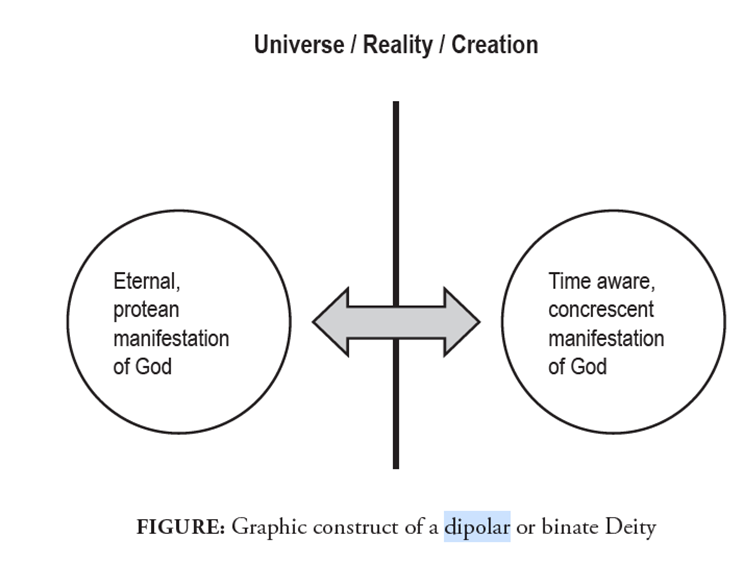
First, I received a book in the mail in which I was invited to be an author. The book is titled, Renewing Faith: Reigniting Faith and Ministry through Process and Open & Relational Theologies (S. Kling, ed., SacraSage Press). Here is the Amazon link: https://www.amazon.com/Renewing-Faith-Reigniting-Relational-Theologies/dp/1968136258. Here is what I posted on my various social media sites: “I was honored to be a chapter author in this new book that discusses ways to renew Christian faith without the baggage of today’s nonsense issues. Some of you may know that I am interested in teaching religious people that science done well is gift from God. Hopefully, this chapter and book will be helpful for many.”

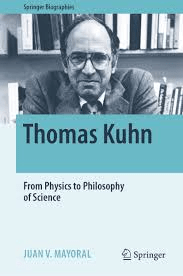
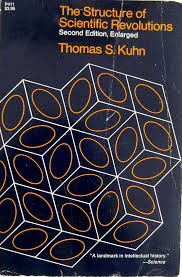
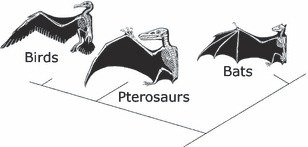
    images from the book

    Second, I heard a very good podcast today discussing freedom of speech from a left and right political perspective. The two speakers agreed very much that when humans from one philosophical or political mindset are in control, they typically try to suppress dissenting views. I think this issue is both a problem for the left and the right. Humans should strive to do better. The podcast link is here.

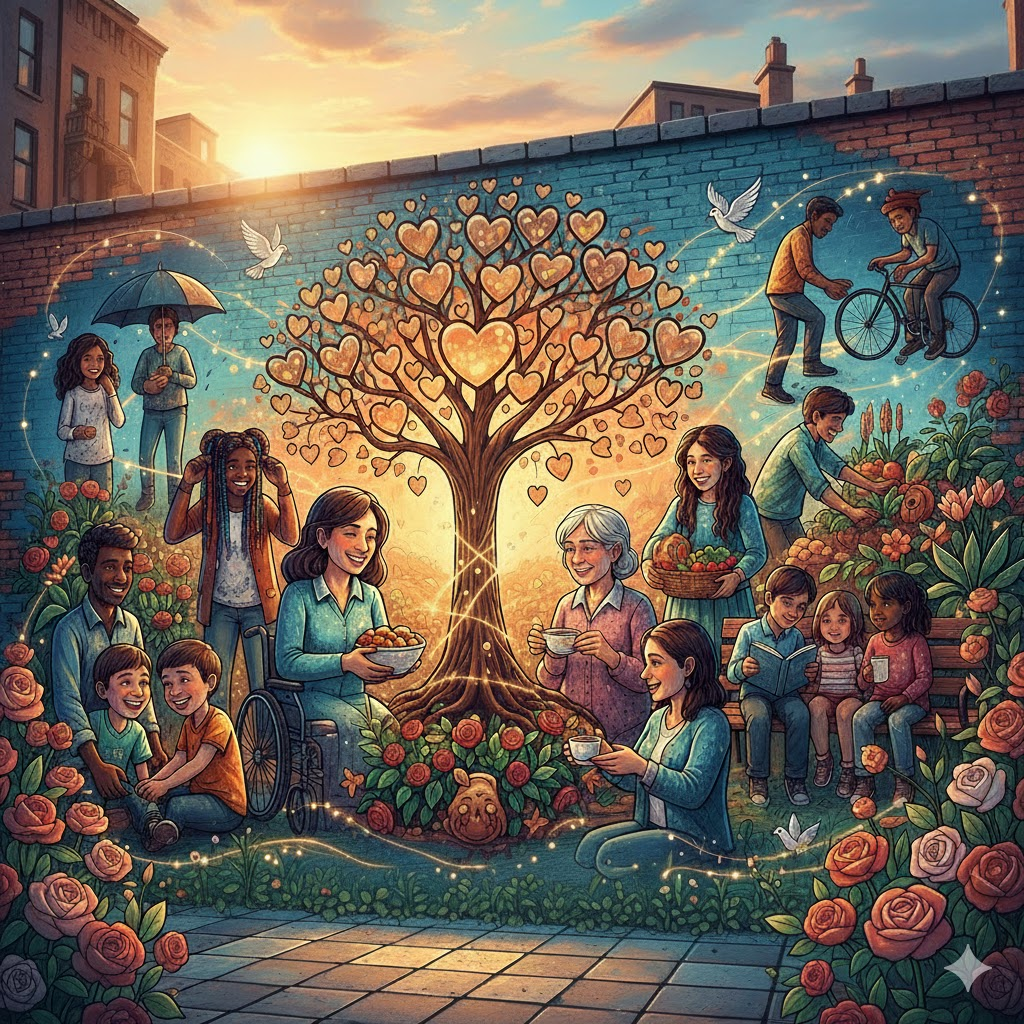
    image created by Gemini advanced

    A Short Lament About Our Species

    I have to head out of town tomorrow to help out a family member, and my job has been as busy as our hospital rolled out a new electronic medical record. I wanted to post a few thoughts.

    Without going into detail, I was at work last week when a famous person involved in politics was murdered while speaking at an event. I didn’t watch the event as I personally abhor politics and political parties. I do vote in elections, but I can’t stand the finger pointing and lies that are produced by both of the U.S. political parties.

    Riots during the 1968 Democratic Convention

    I do want to say this. I was about 10 minutes away (by car) from where the killing occurred. I was working in a hospital very close to the university where the tragedy happened. It was weird because so many of my co-workers had friends, children, spouses, etc. at the event where that famous person was killed. Work slowed in the hospital for a bit as employees were frantically on their phones trying to reach their relatives. Initial reports came out that many people were injured, and my co-workers were scared that their loved ones were injured or killed.

    Here is what I think:

    My first thought is that I find it sad that a person who was killed in such a gruesome manner had videos of his death shared all over the internet. One person that I was working with that day wanted to show me a very close-up video of the person being killed. I refused. Why would I want to watch it? Why are humans so obsessed with watching violence and death?

    My second thought is that I believe strongly that it is ridiculous to kill someone over free speech. I didn’t personally know the person who was killed. Honestly, I had heard his name only a few times and had seen just a few videos of his talking. I pretty much disagreed with most of what this person said. However, left or right; fascist or communist; religious or atheist — the citizens of the United States should respect free speech. You don’t injure or kill someone who speaks differently than you or has different opinions than you. Free speech is a right in the United States. As a Christian, I believe that killing is wrong. Honestly, my personal experience with my atheist friends is that they also are very, very much against killing over differences in how humans think. Life is precious, and life should be preserved as best as humans can ethically try.

    The First Amendment of the U.S. Constitution

    Third, I have disliked politics in the United States for many years. As I have stated above, I always vote. I don’t belong to either political party. I never vote a “straight ticket” just for one party. I think the two political parties have become just as problematic as large industries which include “Big Ag” or “Big Pharma.” We pour incredible amounts of money into industries often without much benefit. In other words, we could still probably get good food or good pharmaceuticals without agreeing to pay excessive costs. The difference is that “Big Politics” doesn’t give you anything. Agriculture gives you food products. Pharmaceuticals gives you life-saving drugs. “Big Politics” in its current incarnation gives you nothing but anger and divisiveness. This anger and divisiveness is aggravated by social media. Much has been written about the difficulties of social media. I think H. sapiens is often a dangerous species, and our handling of social media is similar to giving a loaded automatic weapon to a chimpanzee. The chimpanzee doesn’t know what it is doing. Subsequently, the gun will likely go off and kill someone.

    Finally, I had the following thought last week after the murder…

    Humans are an extremely violent species just like our most closely related relative -chimpanzees. Humans and chimpanzees kill each other. They both do war on each other. They are often just violent for unclear reasons.

    I guess Paul and Augustine would say that we are violent due to our sinful nature — due to The Fall. Honestly, with all that we now know about genetics and evolution, I think The Fall is an excellent allegory about humans being genetically and inherently violent.

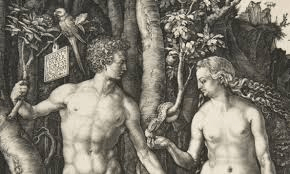
    “The Fall of Man” by Michelangelo

    I think every human who has ever lived has had the capacity for horrible violence. As a Christian, I think Jesus Christ provides the exception and is an example that we should follow. And of course, humans killed him. However, I don’t think you necessarily have to be Christian to work on not being violent. I have good friends who are Jewish, Muslim, and Hindu who are not violent at all. I have good atheist friends who are not violent at all.

    I guess what I am saying is that we all have to work against the human urge to hurt “the other.” By hurting or killing the other, we can take their resources or their living space or their potential mates in order to spread our DNA. It is as if we have to mentally work against the inherent biological urge to make our DNA (or perhaps our family’s DNA) more important than anyone else’s. This is my working theory in light of recent events in our country.

    Religion (done well), secular Buddhism (and other types of cognitive behavioral therapy done well), and just not being a jerk are different ways to fight against the impulse to be awful to other people.

    I think fighting this impulse against hurting others can be very, very hard. For whatever reason, it takes daily work for each of us to not ruin the lives of others.

    image made from Gemini Advanced

    What to do with Blue?

    This post may seem more philosophical than theological, but I find it interesting just the same.

    If I consider how I emotionally react to a color, I can extend this type of emotional reaction to other individuals. I may react calmly when I see the color “blue.” In fact, I love blue and prefer my workspace to be blue, if possible. However, do other people feel the same way about blue? If “no”, are they seeing blue the same way that I do?

    Painting by Gene Davis

    In many ways, such thinking perhaps involves the idea of “qualia”. A good review of qualia is here as the philosophical idea can become quite complex. I like to think of qualia as a subjective representation of something we experience objectively.

    For example, I love coffee. I love the taste. I love the smell. When I say “love”, I mean that I tend to want to drink it as soon as I smell it. I have some type of subjective desire associated with coffee. I went to a restaurant last night with my spouse. At the end of dinner, the server asked if I wanted coffee. Just hearing the word “coffee” made me have a subjective reaction or perhaps emotional response, which inclined me to say “yes.”

    A famous thought experiment regarding the potential of qualia existing is the idea of “Mary’s Room.” I won’t go into the thought experiment in this post, but the original idea by Frank Jackson in 1986 has generated much discussion and many subsequent philosophical papers.

    Recently, the Journal of Neuroscience may have cleared up the idea of qualia, at least in the setting of color. A recent article in this journal is titled, “Human V4 Activity Patterns Predict Behavioral Performance in Imagery of Object Color.” The article is open access and available to read freely.

    In this study, 19 volunteers underwent functional MRI testing of the brain (fMRI looks at real-time changes of blood flow in organs) to evaluate brain activity in the setting of color. By the way, a good review of the article is in Nature.

    An image of fMRI from the University of Florida

    In this study, male and female human subjects had fMRI readings of their brains performed while they looked at red, green, and yellow colors. Next, fMRI readings of their brains were repeated while they were asked to come up with mental images of these same colors.

    The image patterns use in the experiment

    Here is the fascinating part… The study authors performed mapping of retinotopically matched visual areas in association with these colors. This mapping determines the part of the brain being signaled when a part of the retina is observing colors. They found that the specific area of the brain known as human visual area 4 (or hv4) had an extremely high correlation in brain activity as seen in fMRI when patients were shown colors or when they thought about colors. This hv4 area signalled the same whether study subjects 1) saw specific colors or 2) thought about the same specific colors.

    Graph from the study showing high correlation of hv4 activity when observing and when thinking about colors.

    The locus of hV4 correlates to the ventral surface of the occipital lobe of the brain. Here is an example of mapping of the human visual cortex to the brain:

    Image from Cell (open access)

    So, this important paper pretty much sums up a long-standing question. Do we all perceive colors the same way? I think the answer is “yes.” Absolutely yes.

    When I look at red or green, my brain is neurologically and anatomically acting the same way as every other individual human. This fact seems to be objectively true.

    I guess my only concern is how we then emotionally or psychologically react to colors. As a very small example, the black-colored license plate in my home state of Utah has become very popular. Why? Is it cool to look at ? Why is it so cool? Is there something about the color “black” that makes a human think it would look good on their automobile?

    I still think there is still a remaining qualia aspect to color. Perhaps the connection of color to emotional reactions can simply be explained neurologically. I accept this idea very much. I think that there is also a philosophical concept that should be explored.

    In the setting of process philosophy, nature is described as having a panexperiential aspect inherent to its existence. I’m not talking about emotional or psychological expressions at the atomic level. I am talking about experience in and of itself. An electron experiences charge, spin, and mass. Perhaps, as biological structures grow from the atomic to the molecular to the organelle to the organ to the whole organism, this accumulation in experience leads to consciousness. At the level of consciousness, emotional reactions can occur to stimuli such as color.

    Perhaps qualia could be defined as “qualia +“. The “+” would be defined as organic neurologic changes as demonstrated in the study above. The “+” could be the accumulation of experience of all matter to produce a subjective reaction in a human. We objectively see red through the accumulation of experience of all entities in a human. We also subjectively see redthrough the accumulation of experience of all entities in a human. This is philosophy and not science. I am just speculating.

    However, there is a theological link here. If we all see a specific color the same way objectively but have potential differences in how we experience color, then perhaps we have a spectrum of emotional or subjective beliefs in how we see God how we don’t see God. We have emotional or subjective ideas that combine with objective reality when we look through a telescope at our galaxy or when we experience the birth of a child.

    God.

    I think our perception of how we think about God (or the nonexistence of God) is reliant on real sensory objective data plus our subjective psychology. This combination of the subjective and the objective produces a plethora of beliefs about the definition of the Divine.

    Objective + Subjective = how we define God = how we define no God.

    Image of the Andromeda galaxy

    Theology Journal Club!

    Our theology journal club consists of people who have graduated from Northwind Theological Seminary under the tutelage of Thomas Oord Ph.D. We recently reviewed the article, “Spiritual Experience: Scientific, Philosophical and Theological Implications” by John C. Chatlos who is a psychiatrist at the Rutgers-Robert Wood Johnson Medical School. The article is open access and the link is here.

    The article is published in Zygon which is the theological journal for the Institute on Religion in an Age of Science (IRAS). IRAS is a very good organization, and you should join it or support it if you are interested in religion addressed objectively while also considering the intersection of religion and science. I am a member of IRAS.

    This article is quite long, and I will attempt to summarize it kind of quickly. Chatlos basically looks at how humans work in the setting of the “Framework of Spirituality” (FOS).

    FOS is defined as follows: “FOS refers to a non-ordinary experience that occurs with a sense of awakening or unveiling of a wider truth or reality with a noetic or revelatory quality, associated with mystical-type experiences, including a sense of direct connection, communion or merging with some non-ordinary source.”

    I think this definition is quite good, and Chatlos then goes into various potential causes affecting FOS. The list, in my opinion, is quite exhaustive. I will describe his theories of FOS and will comment on them.

    This list is as follows:

    Science and Medicine: FOS encompasses how many of us view the world. We live materially in the world but also have spiritual ideas. Thus, medicine has to be practiced scientifically while considering a patient’s faith background. One’s faith background may lead to a patient having specific moral ideas about illness and treatment options.

    Fundamental Theoretical Foundations: Chatlos suggests that human brains have a “dual process of cognition.” The dual process includes a “fast” process that is emotional, not logical, and unconscious and a “slow” process that is logical and conscious. These two interacting pathways produce how each of us develop a FOS.

    Psychology: Chatlos proposes that one of the deficits of modern psychology is that the field has medicalized psychological conditions to such a degree that it often forgets to include a person’s FOS when considering treatment options. I am a big believer in pursuing mental health therapy with board certified providers, but I think the author has a point here. Psychology, done well, should be scientifically sound. However, one should think about a patient’s spirituality when addressing anxiety, depression, etc.

    Psychiatry: Chatlos has the same argument here as with psychology. He describes the “biopsychosocial model” of medicine (which includes psychiatry) as containing the domains of psychology, sociology, and biology of each patient. He then states “For years, there has been a noted lack of spirituality within this model.” I am not sure what he means here. Is “spirituality” a new domain that should be added? Wouldn’t one’s spiritual beliefs fall within the domains of sociology and psychology? Good psychiatry follows science, and psychiatry in recent decades has become very scientific when it comes to a person’s genetics and medication response.

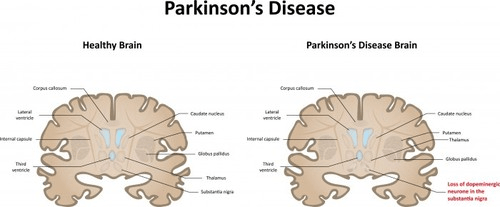
    Image from Harvard

    Neuroscience: This aspect of the article is basically a good review of what part of the human brain is active during religious or spiritual experiences.

    Anthropology and Evolution: I loved this section. First, is there some type of evolutionary advantage to religion? Per Chatlos, “…the theory proposes that at a bottleneck in time, the characteristics of spiritual experience were socioculturally developed for the survival of the pre-human, possibly hominid, tribe. This included an increased sense of connection and empathy with compassion for protecting and caring for each other, a vitality necessary for success in their short, survival-threatened twenty-year lives, and a sense of wholeness and integrity with peace and serenity. Each person had their own role as in a beehive, with constrained flexibility for conflict due to the vagaries of life and the need for survival. Finally, this created an extreme cooperative and communal sense of meaning and purpose. Experientially, a capacity for self-worth was developed neurologically with survival value, as a hominid with poor self-confidence would have little initiative, one with low self-esteem with depression would likely be left by the wayside by the tribe, and poor self-competence would make for fatal mistakes. As a group, choices with reason needed to prevail and compassion and protection for each other were crucial; very little needs to be said about the survival value of courage among leaders. Thus, self-worth and dignity became personally integrated with the identified social characteristics of spiritual experience—connection, vitality, wholeness, peace, and meaning and purpose. Spiritual experience was a by-product of what was needed for survival, it was not what made survival possible.” So, perhaps spirituality was a by-product associated with the survival of the genes of early humans. I also like to consider a non-scientific idea in which the growth of the human brain was part of God’s desire for co-creation with all of life to more fully continue love between God and Creation as well as Creation and God. This love , includes each of us. This idea is somewhat an “emergence” idea for spirituality in which God want to fully be integrated with all of nature through time. It’s woo, but I like it.

    Ancient cave art from South Africa

    Creative Forces and the Soul Function: Here, Chatlos states, “Science, including psychology, has avoided, if not denied, the reality of the soul and currently has no place for its study or understanding.” I think this statement is true, and I think avoiding a consideration of the soul in medicine is fine. In medicine, we are trying to improve or save a life. We are not trying to improve or save an afterlife. Thus, I really can’t make a good comment here. I do want to point out that many Christian ideas of the soul have a resonance back to ancient Greece, so the soul that many Christians identify with today is actually a combination of Christian theology and Greek philosophy. A good reference is here. By the way, you can see the Greek influence when you read Plato’s Phaedrus (“The soul in her totality has the care of inanimate being everywhere, and traverses the whole heaven in divers forms appearing—when perfect and fully winged she soars upward, and orders the whole world; whereas the imperfect soul, losing her wings and drooping in her flight at last settles on the solid ground—there, finding a home, she receives an earthly frame which appears to be self-moved, but is really moved by her power; and this composition of soul and body is called a living and mortal creature.”)

    Universal Moral Direction and Values: In this section, there is a discussion as to if morality (and probably ethics) is universal in nature. I vacillate on this idea frequently in my thoughts. At least in H. sapiens, there seems to be the potential for a better human-wide morality or ethics occurring through time. I don’t know if this subjective directionality is a universal objective trait of nature. I love Chatlos’s quote here: “Opening of the spiritual core moves persons into a new awareness of non-dualistic thinking processes about experience. Experience within this spiritual core is not about judgment, good or bad, right or wrong, but rather accepting that ‘all is the way it has to be’ as a reality principle; therefore, ‘all is good’ because it is reality—and it can be better! “

    Veil of Illusion and the Mystical Experience: This idea is the metaphysical barrier between what we humans perceive and what is the source of ultimate reality. This barrier can be explored scientifically (particle colliders and big telescopes) but can also be considered theologically. In my mind, the “barrier” is a type of idealism. I also think that our existence on a tiny planet in a non-descript galaxy obscures the ultimate reality of a perhaps infinite universe.

    Image from the Webb space telescope

    Transcendence versus Immanence: I don’t have much to say here. We can’t prove God. We also can’t prove a no God.

    The “Causal Joint Problem”: In this section, Chatlos discusses ideas regarding the potential for communication with the Divine. Are we a “receiver” of God’s messages and meanings? Is God some type of “communicator”? I have no clue, and to be honest, I don’t think about this idea very often. One can believe in such ideas which is fine. I just think it is absolutely impossible to prove that we have some type of communication with God (even if I personally believe it is possible).

    The Faith Process and Applied Spirituality: Does faith in God allow one to make a “meaningful commitment to the worth and dignity of all people, including oneself”? I think religion, done well, reaches this goal. Honestly, on a personal level, I try to attend churches that emphasize the “worth and dignity” of the other. No church does it well. No religion does it well. Many atheists, I think, also work for the worth and dignity of others. None of us do such work perfectly.

    The Nature of the Soul: In many ways, this section was a recapitulation of the above.

    So what do I think?

    I think that our human experience is both objective and subjective. We objectively see human interaction, human experience, and change over time. This objectivity can be studied using science and science-adjacent fields. However, we also experience the world subjectively. This subjectivity is controlled by neurons, neurotransmitters, and perhaps (just perhaps) a spiritual element that cannot be defined. This undefined aspect of the human experience can be studied by the arts for which theology is often contained.

    Refining our objective and subjective values both spiritually and otherwise should be a goal for each of us.

    image made by Gemini Advanced
    Dinosaur National Monument, Fossils, and God

    I apologize about the delay in posting. I went on a salmon fishing trip in northern British Columbia. I then returned back to Utah to spend 3 days with my spouse at Dinosaur National Monument on the Utah/Colorado border.

    Dinosaur National Monument is a beautiful place. It is a relatively small monument (about 320 square miles) with only 350,000 visitors coming through annually. The vast majority of tourists only go to the Utah side to see the famous quarry exhibit hall (the “wall of bones”). Most people just look at the quarry exhibit and leave. Susan and I visited the quarry exhibit but also spent time hiking on the Colorado side at an elevation of 7000 feet which had amazing views of the Green River.

    Dinosaur National Park is known for the Morrison Formation which dates to the late Jurassic period (about 140-150 million years ago). Part of that formation contains the quarry exhibit hall. The side of the mountain with the exhibit hall has been exposed here by paleontologists through the years to reveal over 1000 bones of Jurassic dinosaurs include Allosaurus, Apatosaurus, Camarasaurus, and Diplodocus.

    A good video of the site is here.

    The Morrison Formation and Dinosaur National Monument will continue to change over millions of years into the future. Erosion will happen. Mountains will form and tectonic activity will move the geological layers around. The Green and Yampa rivers will make the canyons deeper while perhaps drying out or making new rivers.

    We exist within this geological change in a blink of an eye. The Jurassic dinosaurs also lived within past geological time in a blink of an eye. As I hiked on a trail at 7000 feet above sea level on the Colorado side, I probably caused the canyon to lose just a few atoms of its layers. The dirt on my shoes and my shedded skin cells during the the hike possibly added just a nanometer of geological layering.

    Erosion. Tectonics. Water flowing. Dinosaurs walking. My walking. All such events are associated with change. Importantly, change in the setting of process theology as well as in open & relational theology is associated with creative potential.

    I believe that God desires or lures for novelty or for creativity in the setting of constant change. The canyons formed by the Green and Yampa rivers were changing and creative in the past. They are currently changing and creative now. They will be changing and creative in the future. There will still be change if the rivers quit flowing. There will still be change as the sun expands and eventually absorbs our planet. There is always change with the potential for creativity in the setting of God who loves such creativity but does not force.

    The wall of fossil bones at Dinosaur National Monument point to such creativity. In a way, the accumulation of these bones seem artistic. The dinosaurs lived. They also died and were buried in the soil to fossilize. That is an objective fact. Thousands of humans now come to see these fossilized bones every year because, in fact, the encasement of a period of time from the deep past is subjectively fascinating and perhaps beautiful. This encasement or random bones is definitely an example of potential.

    The quarry exhibit hall, Dinosaur National Monument (image from U.S. National Park Service)

    One of the areas of the hall demonstrates the protruding head and neck of a sauropod (I think Camarasaurus). It is beautiful in may ways. I took picture of it (below).

    The skull and vertebrae demonstrate potential of a past life. The various ligaments, muscles, nerves, and skin are now missing. The colors of this sauropod are long extinguised. All of these aspects were once there in a living organism. The presence of these various tissues provided potential for movement, eating, breathing, and reproduction. You can imagine skin and muscles around the bones, but the effect seems blurry around the edges. It is hard to see the dinosaur as it actually looked while alive.

    As another example, consider this mollusc shell that I found at 7000 feet elevation.

    The shell was about the size of my hand. It is hard to imagine its potential when it actually was alive within a well-formed shell, potentially filter feeding, and potentially performing external fertilization in the Jurassic waters.

    Although the mollusc is now a fossil, it once was alive, could produce more life, and could influence other life and the environment around it. In fact, since its remnants are contained in the continuing elevation of the land occuring through millions of years. the mollusc has continuing potential to be part of geological activity over immense time periods.

    It is hard (at least for me) to visualize such potential when looking at a cracked fossil. That potential of past life reminds of art.

    I do not think life is a Heironymus Bosch painting.

    The Garden of Earthly Delights by Bosch (made between 1490 and 1510)

    I don’t envision life as hell. Death is a natural part of life’s processes. Bosch’s painting is exact, well made, and clear. The anatomy and the behavior of past life on our planet is not always clearly defined. Fossils, trace fossils, and ancient animal tracts are blurred at the edges metaphorically as they obscure what was actually happening both 1) at the moment in time when the organism lived as well as 2) in the future potential that the organism contained before the fossil was made.

    I think life can be visualized more like a Claude Monet painting.

    Water Lilies by Monet (1919)

    The lilies are indistinct…are dim…yet are full of potential. The more you stare at the painting, the more you see what could be. The lillies have the capacity to change in the light of artistic impressionism. Our impression of the lilies changes through time.

    So, that is how I consider God in nature. I am someone who leans into theological naturalism. I think God exists, but God is in nature itself. God is in / through / around nature at all locations and in real time. This naturalist interpretation of God limits the possibility of the supernatural although I cannot rule out the supernatural if the universe is potentially infinite in size.

    I take it as a theological a priori reality that God is love. In this love, God wants creativity moving forever onward, if possible. God wants creativity, and nature just has to somehow freely “choose” to align with the Divine for the potential of further novelty, life, and beauty. God wants this creativity in real time while moving eternally onward.

    Just like Monet’s lilies, the fossils at Dinosaur National Monument point to the potential for change over time as well as to the potential of yet unknown future beauty extending from remnants of animal life in the past.

    Nature has the capacity to be a divine and infinite art gallery.

    By the way, I would like to end this post with a picture of a petroglyph made by someone from the Fremont peoples (300-1300 BCE). I found this petroglyph at Dinosaur National Monument. Similar to my description above, the petroglyph is vague in figure formation, yet beautiful and full of potential.

    Beauty, Death, and God

    I thought I would send out a quick post before I head out to Canada midweek to go salmon fishing in Canada. I will be fishing around Blackfish Sound which is seriously away from most of civilization.

    I did this same trip with friends 2 years ago. Blackfish Sound is an incredibly beautiful place to fish. There are mountains, forests, and tons of wildlife. The animals there include grizzly bears, bald eagles, sea lions, orcas, porpoises, humpback whales, and of course tons of fish.

    A picture of some of the wildlife from my last trip

    The weather around Blackfish Sound this time of year is cool during the day and cold at night. The weather, geography, water, and biological diversity is, in many ways, the definition of beauty.

    However, there is death here too. Animals must eat. Grizzly bears eat the salmon and other mammals. Eagles eat the fish and rodents. Humpback whales eat the herring and the krill. Orcas, porpoises, and sea lions eat the fish. The orcas eat the sea lions as well as young porpoises.

    I kill and eat there too. The late summer is the time of the salmon runs in which the salmon migrate from the Pacific Ocean and into the rivers of Canada from which they originally hatched. After they spawn in those same rivers from which they came forth, they die. This biological process is called “semelparity.” I am clueless as to how they know where they should return to die.

    When we catch the salmon, we hit them on the head with a bat to kill them instantly. I’ll be honest. I know they are fish, but I can feel a bit cruel about hitting them. In Utah, I do “catch and release” when I do fly fishing. However, the Pacific salmon are gong to die anyway. The guides tell me that when the salmon all reach the end of their journey, they die and rot in mass quantities. Perhaps I am saving my personal catches a quick end as opposed to ending up as part of a mass death.

    Large number of dead Sockeye Salmon after spawning

    It is hard to create a synthesis from the thesis of beauty of nature associated with the antithesis of death of organisms.

    I also see this dichotomy of beauty and death at my workplace in the hospital. As a physician, and in particular as a physician for children, I see beauty in the potential of young people as they grow up while also seeing the disaster that occurs following the death of a child.

    On a personal note, I have seen death in action — whether with patients or with family members. Death is an odd event. I feel immense sadness when a relative of mine dies or when I have a pet die. Why do I not feel this same sadness for the millions of creatures who die in Blackfish Sound as part of natural biological cycles? Why do I not feel it for the individual krill eaten by the whales? I don’t think it is possible for the human brain to capture the emotion of constant mass biological death. Our brain seems to block such emotions out so that we can move on in life.

    I have no answer to why beauty and suffering co-exist. Perhaps beauty in nature is subjective quality while death is an objective fact. I believe that subjectivity and objectivity co-existing at all times and at all places is a metaphysical possibility. Perhaps the concepts of beauty and death can be switched to allow beauty in nature to be an objective fact while death is a subjective quality for which we don’t understand it underlying meaning.

    I am a theist, so I think God exists in the setting of such disparate ideas. Readers of my posts know that I believe God is participatory but not forceful. God desires novelty and creativity, but God does not force us to co-participate in novelty / creativity.

    Photo from my last fishing trip

    As I stated in my last post, the death of an organism leads to available energy resources for other creatures to use in order to grow. The various fats, protein, and carbohydrates of the dead creature are instantly available to the spectrum of creatures ranging from simple bacteria to large carnivores.

    I have two thoughts here.

    First theological consideration: Perhaps God lures for creativity in such as way that nature uses the mechanism of death to bring forth new life. Animals, plants, fungi, bacteria, etc. use the various elements of a dead creature for growing and building their own lives — for being creative. In such a setting, God would lure for creativity, yet God would freely allow nature to choose any possible way to be creative. Nature could “choose” to use death (encompassed in greater process of entropy) as a way to be more creative over time. God lures for the creative; nature makes its own rules as to how to be creative.

    I have come up with a theological term here which I call “lim Δ” which is a limit “lim” to change “Δ“. I use this term in my book, “A Theology of the Microbiome.”

    Second theological consideration: Perhaps God lured nature early on in Earth’s history of life just enough to increase subjective beauty while decreasing the objective reality of death. Consider the Ediacaran Period (600 – 538 million years ago) in which the first animals (perhaps proto-animals?) appeared. There is evidence of the Ediacaran Period in the fossil record. These animals were softbodied and mainly sessile. These animals were likely filter feeders. Only a few of these creatures were able to move. Although they may have consumed bacteria as filter feeders or as bacterial mat feeders, obvious carnivorous activity is not found. Good references are here and here.

    Illustration of the Ediacaran Period (from Earth Archives)

    This system irreversibly changed in the setting of the Cambrian Period (541 – 485 million years ago) which followed. As animals evolved and were able to move, predation became much more possible.

    Illustration of the Cambrian Period (from Understanding Evolution)

    Thus, nature could have had a greater alignment with God’s lure of more beauty and perhaps less death early on in our planet’s biological history such as during the Ediacaran Period. God lured for creativity in the Cambrian Period and still lures today, but perhaps nature has freely put more limits on what creativity entails so that death is the driving force of creativity.

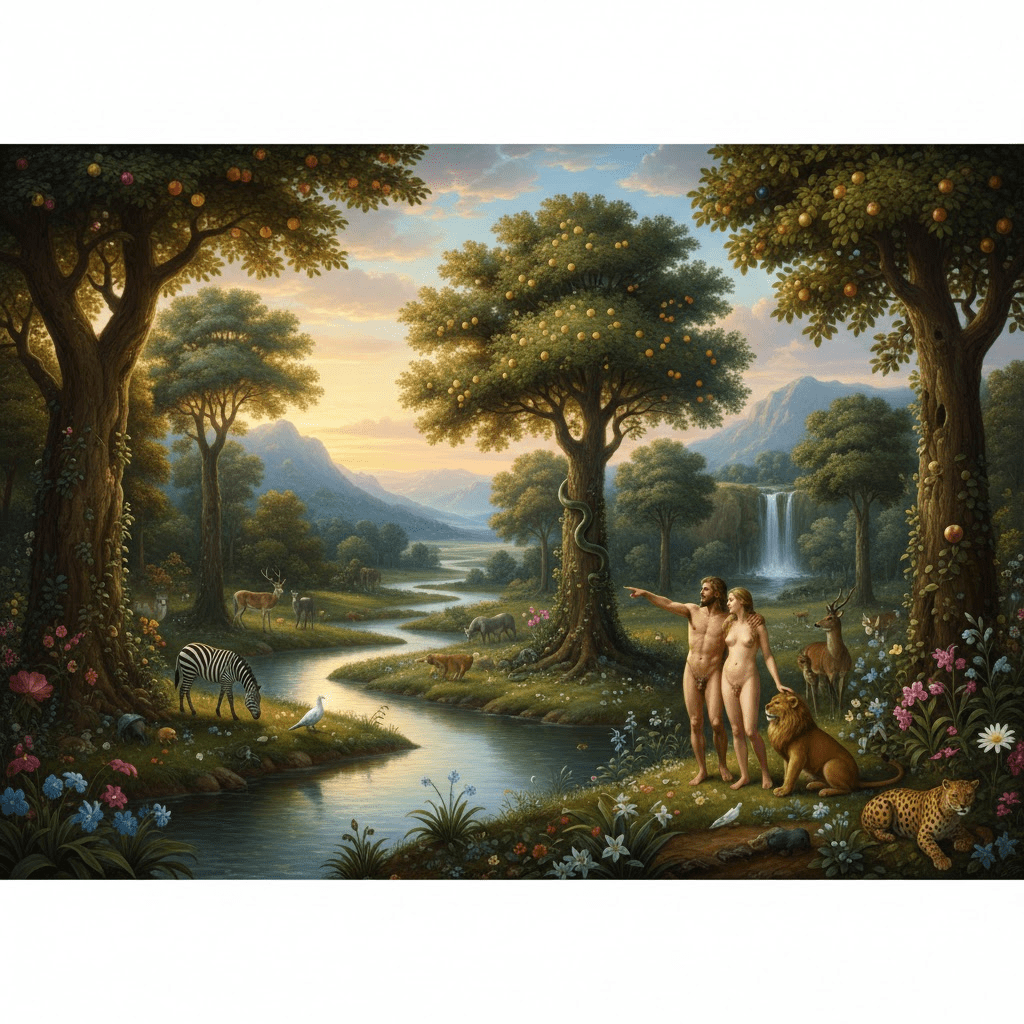
    The Ediacaran Period could metaphorically be considered a type of Garden of Eden with no predation although death still occurred. After all, entropy eventually consumes all life. Nature on our planet freely took on creativity in a different direction than God’s lure for novelty. As a result creativity persists, beauty is present, but mass death is a type of process or answer to create new life.

    “Garden of Eden” by Roelandt Jacobsz

    My ideas obviously are embryonic in thought. I should try to flesh them out more. I probably will be thinking about such ideas while sitting on a boat in Blackfish Sound and looking at the beauty of the natural world.

    image created by Gemini Advanced
    Panexperientialism: Objective and Subjective

    In my last post, I discussed the metaphysical possibilities of panexperientialism existing between the gut microbiome, small intestine, and skeletal muscle in the perspective of maintaining a healthy microbiome. I think that all experience in general has two perspectives: objective and subjective.

    In the setting of the microbiome, human immune factors such as IL-6 are involved in the interplay of the microbiome-small-intestine-skeletal muscle axis. This interaction is an objective fact. Can we see something subjective here? Does the microbiome or small intestine or skeletal muscle want to maintain health, homeostasis, or decrease in entropy? This “want” is highly subjective. I can’t really define it from a human consciousness perspective. In fact, I am not sure this subjective want is even materially or scientifically explainable. Perhaps the idea of reducing entropy to preserve creativity or novelty falls into the realms of process philosophy, process theology, and open & relational theology which I have written about quite a bit in the past. The lure for continuing creativity is prominent factor in these 3 types of philosophical / theological thought.

    Objective and Subjective: Can these two words participate in some type of beautiful dance in the world around us?

    For example, when I think about the water cycle, I see a real objective reality as to how water and the planet interact in order to help biological systems exist. That is, all biological systems on our planet need water. The water cycle is essential for life.

    image from NASA

    The water cycle is a beautiful system, if you think about it. By “beautiful”, I mean that it is creative and complex yet based on a relatively simple process (evaporation –> condensation –> precipitation). The objective reality of the water cycle is very, very real. The subjective possiblity of seeing the water cycle as a “beautiful” effect (whether God-based or not) also exists. I think the water cycle is just an important and beautiful effect of our planet.

    Death is another example. Death worries most of us, I think. It is incredibly sad to lose a relative or friend. Most of us worry about our mortality. However, there is goodness in death. Decomposition of biological entities enriches the soil to bring forth new life. In fact, decompostion of animals, plants, fungi, and bacteria enrich the soil biome to make it an effective trigger for the potential of new life. A link to an interesting article is here.

    Death, decomposition, and recycling of biological materials is an objective, interesting concept. The idea that even death can bring about glorious new life could be subjectively beautiful. For example, I am a religious person (in my case, Christian). Although I have become a bit more accepting of death as I have become older, I find it subjectively amazing that the carbon in my body might be helpful to some other life form in the future. I may subjectively believe in some type of “afterlife” that I cannot explain, but I can reflect on the glory of material creativity continuing from my molecules after I die.

    image from Trends in Microbiology

    Here is something that I have recently considered in such a setting. My spouse and I have contributed to Compassion International for many years. It has been deemed a very good charity by charitywatch.org. We have sponsored young children from developing countries through their young childhood and until they (typically) have some type of higher education and a skill set to move out of poverty.

    I get quite a bit out of this charity psychologically because I have exchanged many letters with these children through the years. I hear about their families. I hear about their grades. I sometimes even hear about their concerns which, honestly, can be unsettling considering these children often come from war torn parts of the world.

    As I exchange letters with them, the children and I experience objectivity. The letters that we exchange are actual paper. The money that I send is an objective financial vehicle. The child eats and can go to school because of the money that I send. This donation makes the child healthier which is objective.

    I think there is a subjective part here also. I don’t know everything about the child. The child knows some, but not everything, about me. I do believe thatwe are subjectively learning about each other. This subjective learning, I think, leads to compassion and a “philos” type love. I love this kiddo as a friend or perhaps as a fellow traveler in my same time frame in this great, ancient universe.

    I would extend this subjective love for when I donate to Compassion International to possibly affect other individuals around me not associated with this charity. This subjective love also possibly affects the individuals around the children who we sponsor. How would I explain this interaction?

    Here is my idea or perhaps my metaphysical model. I send my monthly payment that goes to this child and their family. It pays for food and school. I subjectively get a good feeling about donating to that child. I also subjectively feel love when I get a letter from the child. I believe strongly that this feeling of love then allows me to contribute even more love to the neighbors around me. The community around me. The society around me. It seems to be a multiplicative or even exponential effect although I cannot define it objectively. It is a subjective feeling.

    Likewise, I often have wondered if the child who receives my family’s monthly donation as well as my personal letters feels likewise. The child has food to eat and is receiving an education. Do these effects cause the child to have enough nutrition and understanding about the world that they then can exhibit kindness to their neighbor, community, and society?

    Objectively, there is evidence to suggest that monetary support of poor children (if used well) leads to better social structure and to potentially long-term better adult outcomes. Subjectively, whether mediated by neurotransmitters or by God or by both (I think both), participating in such charities can promote a love of neighbor that has the ability to make the world better.

    Readers of my blog know that I ascribe to a belief in the divine in which God yearns or lures for greater objective and subjective creativity. God does not force, but God does love without exception. God is with us at all time points. We can co-participate with God’s ongoing creation by helping others even in small ways. Helping other humans, other creatures, the environment, and the planet is goodness. All of us only go around the sun a few times before our lives come to an end. Co-participation as love has long-term positive effects for the generations that will follow us.

    image from Gemini Advanced

    Exercise and the Microbiome: Panexperientialism?

    There is a great new #openaccess article in Gastroenterology that explains why exercise makes the microbiome healthy. It is titled, “Exercise, the Gut Microbiome and Gastrointestinal Diseases: Therapeutic Impact and Molecular Mechanisms” by Hawley, et al. Interestingly, prior research from 2013 has shown that professional rugby players have much more diverse and healthy microbiomes compared to control individuals.

    We are now beginning to understand why exercise helps promote a healthy human microbiome. Per the review article above, skeletal muscles (when used in exercise) seem to promote the formation of Interleukin-6 (IL-6) which is involved in controlling inflammation throughout the human body. Simply put, human skeletal muscle seems to act like an endocrine organ, such as the thyroid or pancreas, during exercise as it releases IL-6 and other helpful molecules that control gut inflammation. A healthy amount of inflammation to prevent bad bacteria from interacting with the gut and to allow the intestinal barrier to not absorb pathogenic bacterial toxins then leads to a healthy gut microbiome. A healthy gut microbiome is very diverse in terms of its bacterial types.

    Image from the Gastroenterology article

    Maintaining a healthy microbiome not only may prevent some problematic gastrointestinal symptoms such as chronic constipation or abdominal pain (as seen in irritable bowel syndrome), but it may also be preventitive in reducing the risk of Crohn disease or colon cancer.

    So skeletal muscle –> intestinal cells –> the gut microbiome… There seems to be a large amount of communication here. Is this an example of panexperientialism? From a philosophical and theological standpoint, panexperientialism means that all entities from the very smallest to the very largest have some degree of experience.

    An electron experiences mass, spin, and charge. A singular human experiences birth, the spectrum of emotions and life events, and death. A galaxy experiences gravity, star birth, star death, black hole centers, and perhaps even dark matter and dark energy in a manner that we do not understand well.

    All entities experience. The experience can go top down (the galaxy experiences our planet and the humans on it while each human experiences the effect of every atom or electron). The experience also goes bottom up (the effects of individual electrons or atoms affect the experience of the human and our planet which affect the experience of the Milky Way).

    I am not necessarily a believer in panpsychism in which all individual small entities (quarks, electrons, atoms) have “drops of consciousness” which level up in complexity to humans. This idea seems scientifically difficult if not impossible to prove. I do think all entities have experience.

    The other aspect of panexperientialism that must be considered is that all entities potentially experience each other. In other words, all entities experience, and all entities experience each other. This idea can be formulated philosophically and perhaps theologically when considering quantum entanglement. Quantum entanglement definitely has an objective reality. The potential subjective ideas behind the physics of quantum entanglement needs to be worked out.

    In the setting of the journal article above, there does seem to be some panexperiential process occurring between two human organ systems (skeletal muscles and the lining of the human intestinal tract) in response to exercise. Skeletal muscle and the intestinal tract — two human organ systems that are quite isolated from each other except for the sharing of blood and its molecules. Skeletal muscles cannot directly absorb the food that we eat. Our gastrointestinal tract cannot contract and relax when we work out. Yet, these two very different organ systems interact with each other.

    It becomes more fascinating when this same interaction involves not just these two human organ systems but also the microbiome consisting of bacteria, viruses, fungi, archaebacteria, and all sorts of other small things. There is a shared experience in human exercise between different kingdoms of life.

    The six kingdoms of life from SmartClass4Kids

    I think theology can learn from science when reading articles such as this. If God desires creativity, then God is love. From a human perspective, love and creativity are deeply intertwined. If God is the ultimate form of love and also the lover of creativity, then love and creativity are ultimate desires (and perhaps goals) of God through time.

    Skeletal muscle, the gastrointestinal tract, and the microbiome seem to have the ability to be creative in order to make the individual human healthier. Perhaps this interaction subjectively demonstrates some type of universal striving for love that warrants more theological study.

    image created by Gemini Advanced
    Ancient Homo Species and God

    Human brain structure formed in complexity over time, and I have wondered when the first of our genus (Homo) began to think about God(s) and potentially the afterlife.

    There are some early potential intentional burial sites noted at Qafzeh Cave (Israel), Tabun Cave (Israel), and Tinshemet Cave (Israel) that were made by Homo neanderthalensis, Homo sapiens, or perhaps both interacting together or in close proximity between 100,000 – 115,000 years ago. By intentional burial sites, I mean ochre use or leaving tools in such graves could suggest that the dead individuals were interred by the community who perhaps had a hope for life after death.

    prehistoric red ochre handprints

    The correlation of these ancient Homo locations in the Levant which were in the general vicinity of where the Abrahamic religions mostly began is not lost on me. However, I do realize that correlation is not causation.

    Tinshemet Cave

    I have written in the past about evidence that there may be proto-religious structure in some monkey societies as described here and here. I have no clue what these monkeys are doing as I am not a chimpanzee just as I am not a bat. I don’t think it is possible for humans to understand even primitive spirituality (if it exists) in other species.

    Then why did humans become religious? Why and when did we first start to consider the presence of God(s)? Banerjee and Bloom argue that theistic beliefs are strictly cultural which could certainly be true. A “blank slate” of the brain in regards to the metaphysics of God(s) would certainly argue that culture would be the sole influence in a belief of God. If we were born with no real subjective thoughts and without real world objective experience (hunger, pain) from our limited experience in the uterus, then any idea of God would be subjective and culturally based.

    However, there has been pushback to this idea as the brain may have basic templates in place for which to add on objective and subjective experience. Could a template exist in an advanced brain structure that allows for metaphysical thought?

    Blank slate / tabla rasa

    When it comes to the brain, I often wonder if I am follower of mysterianism. That is, I wonder if the brain is too complicated for us to ever figure out. I do believe we should try to figure out how the brain works in relation to consciousness, but the process seems extremely complicated (especially since it is difficult to define consciousness and subjectivity).

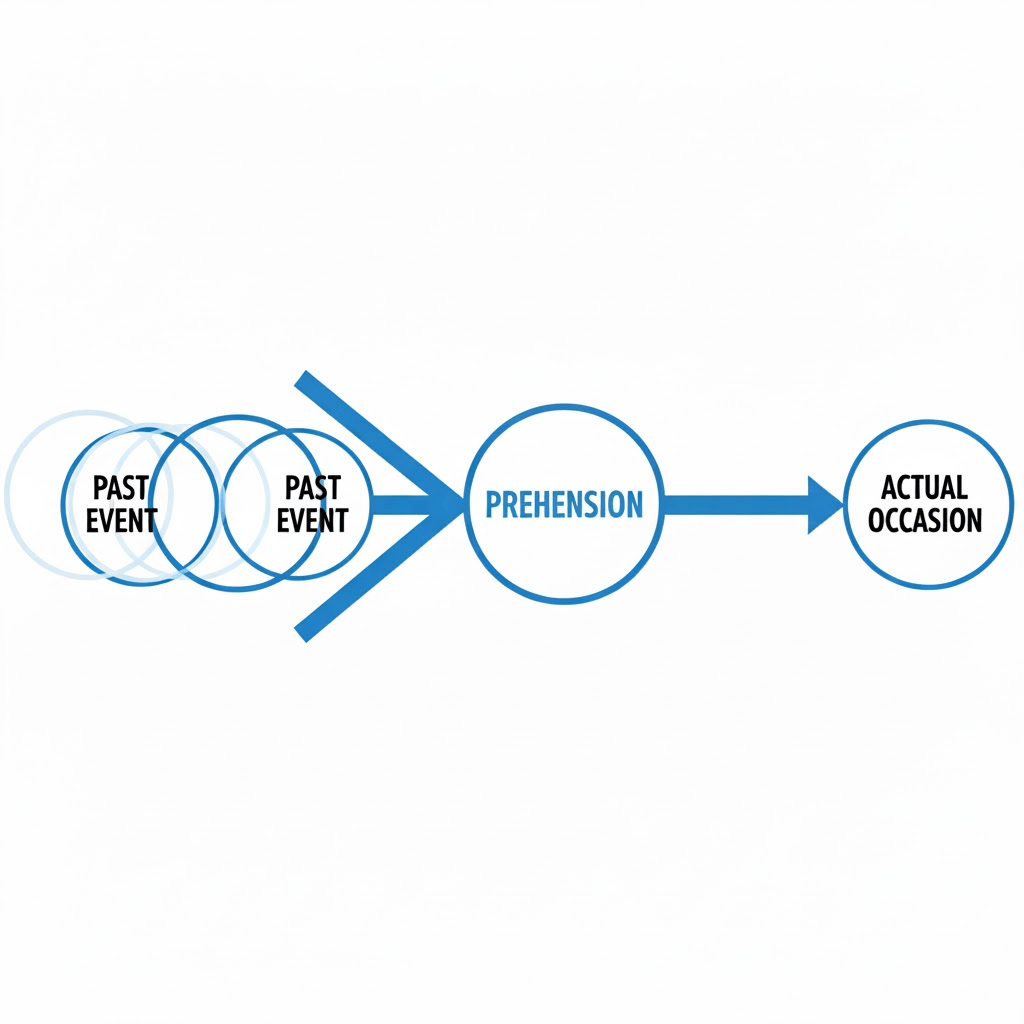
    So…I am going to look at the genus, Homo, and the development of a belief in God(s) from a natural theology perspective. I have written about this idea before based on the writing of David Ray Griffin. Griffin succinctly defined God in the world without the need for supernaturalism as NATURALISMppp. The three “p”s consist of prehension (the importance of time in creativity / novelty), panentheism (ALL are in God), and panexperientialism (all have experience).

    How did Homo start to consider God(s) through Naturalismppp? Was there an increase in a certain number of neurons that caused Homo to start considering Divinity in the world around them? Did axons or dendrites in nerve cells reach a communicative ability in the brain milieau around them to allow subjective ideas about God(s)? Did voltage-gated sodium, potassium, or calcium channels in neurons become efficient enough to allow Homo to consider ideas well past basic human needs?

    image from the Queensland Bain Institute

    I do not know. I do have a strictly metaphysical, theological hypothesis. It is not scientific in any way, but it could be considered an extension of Naturalismppp.

    What if we propose that God yearns or lures for increased creativity in real time eternally? What if at every level of reality, God lures for the good (i.e., creativity) while every level of reality can freely consent to or ignore the lure? What if one of God’s lures is for a species (or genus) to come about which can commune with Deity naturally though senses, through the environment, through the central nervous system, through brain function? What if all species have some type of understanding here that humans will never understand? I don’t know, but the proposal should be expanded theologically.

    This proposal would encompass the elements of Naturalismppp in the setting of both process theology and open & relational theology. Evolution (and not necessarily guided evolution) would require prehension or the effects of time and resultant change. It would require the universe to be in God so that God is in, around, and through every entity in the setting of panentheism. It would require that all entities experience, a la panexperientialism.

    The term “emergence” is used as a term in science when describing phase transitions, molecular properties separate from a molecule’s constituency of atoms, or development of neural networks.

    I wonder if there was an ancient “spiritual emergence” that evolved as the various Homo species evolved and brain structure grew.

    human evolution from Britannica

    Perhaps there was that final neuron which grew in place or a calcium channel that became more efficient that caused one of us or a group of us to look at the stars and wonder if there was THAT which created the world around them. The group of these individuals who buried their dead with bright colors as well as with items to use in the afterlife suggests both a neurologic change from an evolutionary perspective in addition to cultural pressure.

    Thus, belief in God(s) could simply be part of the human experience. This belief in God(s) may wax and wane, but I propose that it will never completely go away — similar to our long-standing ability to covet, to commit warfare, to care for the unrelated person or other species, and to love.

    Lascaux cave art

    Would a Static Universe Change Your Perception of God?

    After publishing my last book (“A Theology of the Microbiome“, SacraSage Press), I have been working on a new idea for publication that will take me a really long time. The long time duration is because I have a full time job as a physician. In fact, I am an academic physician, so administrative time is often spent working on lectures, doing editorial work for a journal, writing new articles in my medical field, writing letters of recommendation, etc. All of these things are on top of patient care which is the main part of my job. The practice of medicine is my job, and I expect nothing less. Meanwhile, my DThM degree really has spurred my thoughts surrounding how theism and the study of science could interact better. So…I work on my new book intermittently at times. The time used for writing can seem ephemeral.

    image from Popular Mechanics

    Time: Time seems to flow. Unlike water, we cannot grasp it as a substance yet we exist in it. Time appears to be a real thing. We are born, we live, and we die. Time moves on. Each human is eventually forgotten. Suns die. The universe continues to expand…in time

    As someone who has studied quite a bit in the field of process theology (the cousin to the more well known “process philosophy“), I am of the belief that time is the essential component of reality. Time, not matter, seems to be the basis of reality. Time seems unidirectional (past to future). As someone who is fairly comfortable discussing process theology and its almost similar twin, open and relational theology, I think God experiences time. I believe opportunity arises (prehension) which then solidifies into an experience (concrescence) which then passes on as a temporary but acutal occasion. God is present in all occasions and in actual time seeing us as we learn and grow; as we deal with love and loss; as we deal with birth and death. God is present in real time at all levels of reality. God, in the setting of open & relational theology, loves all entities in their change through time. God desires (but does not force) change for creativity and for love.

    Unless time is not real.

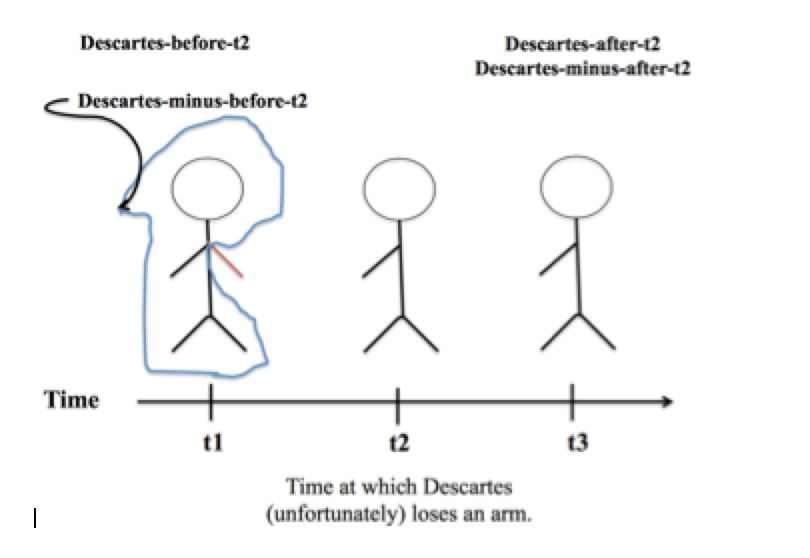
    In my recent reading, I have been thinking about the hypothesis of the “static universe”, also known as “eternalism.” Eternalism from a universe perspective is not Everettianism (the “Many Worlds Interpretation” or MWI) as MWI is generally (not always) thought to involve time.

    J. Ellis McTaggart (1866-1925) was a British philosopher and also an idealist. As an idealist, he felt that we were missing part of the greater reality we lived in. In particular, he questioned if time was even real (i.e., the universe was static). He has written: “It is, therefore, possible that the realities which we perceive as events in a time-series do really form a non-temporal series.”

    an illustration of the block universe, from maths.org

    If this idea sounds unsettling, just keep in mind that even Albert Einstein found similarity with McTaggart’s work. In special relativity, time may not be that important. Since light travels at “light speed” (299,792,458 meters per second) and nothing is faster than light, then all other entities would seem to not be moving much more slowly as seen in time dilation. Thus, if time is inconsistent for all observers, then there would be no universal “now.” If there is no universal “now”, then metaphysically, the universe could be considered to have all past, present, and future existing together. Spacetime becomes a block universe in many ways.

    Such an idea of reality can make us uncomfortable simply because humans experience time or perhaps our brains make us think we are experiencing time.

    I must say that I do not accept eternalism as I don’t experience it via my senses. I sense time. My hair is becoming more gray. My excercise tolerance has decreased. I could be completely wrong of course.

    Where is God here?

    This question is difficult from a theological perspective. If nothing changes eternally like some metaphorical giant crystal then God becomes, in my opinion, weird.

    Perhaps then, eternalism would remove any need for God. If the universe if some type of immense static “thing” then God would not or could not intervene or hope for change. God would not care for or love this type of creation. Perhaps deism could accept this type of God if God created an amorphous unchanging mass as opposed to a structure that was made to run smoothly like a deterministic machine. One could argue the Calvinism could have its deterministic beliefs wrapped up in a universe where all is already determined with no need for time or change.

    The other aspect to consider is in the setting of Platonic forms. In a block universe / eternalism would our universe be simply an Platonic form or the ultimate Platonic form? Would this form be the “changeless and abiding” as described in the Timaeus?

    Here is where I posit the importance of subjectivity in nature. My proposition about subjectivity is metaphysical and theological. I think subjectivity abounds in nature through the possibility of natural randomness and in the experience of love. My theism is showing here. I do not think that God, as described by process theology or open & relational theology has a true determinant nature when it comes to our world. I cannot see how God whether directly involved (which I do not agree with) or not directly involved but luring for evermore creativity (which I do agree with) would love a static, unchanging universe.

    It is hard to describe God’s love from a process theology / open & relational theology perspective. I will provide a human example. I have had the same lamp on my desk for several years. It just turns on and off. I don’t love it. I use it sometimes. If it quit working, I would throw it away and not really worry about it.

    However, I love my wife. I love my children. I interact with them in time and watch then change over the years. I always am invested in them even when they do or do not do what I would perceive as a “better” choice. From a human perspective, my idea of a “better” choice can be wrong.

    My theistic (NOT scientific) argument against eternalism is that a loving (i.e., creative) God would only be a metaphysical reality in a world that changed in time. Time is necessary for the ability to love, for the need of love, for the potential for propitiousness of creativity in reality in time.

    Eternalism versus the real presence of time — This debate will continue to influence how we think about God. Such different ideas are helpful in making theology better.

    image created by Gemini Advanced