I apologize for the delayed post. I recently finished a week of hospital call (always a busy time) followed by a short vacation with no computer access.
My vacation was a three-night camping trip at Goblin Valley State Park near Hanksville, Utah. The lovely thing about Utah is that some of the state parks are as beautiful as the national parks here but far less crowded.
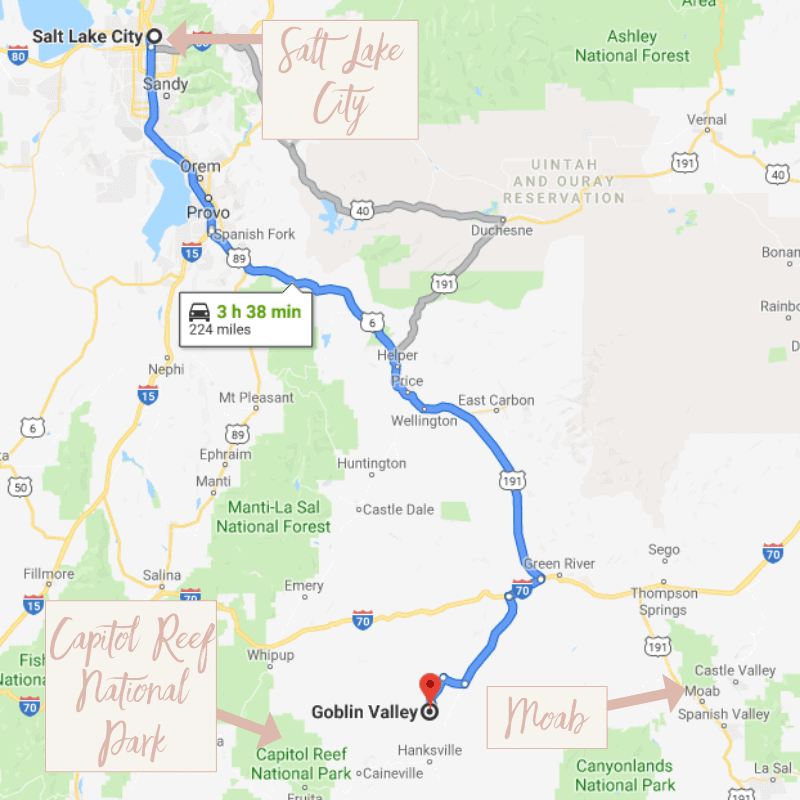
Goblin Valley has two main sections: 1) the hoodoo formations in 3 different yet connecting canyons and 2) the slot canyon area consisting of two separate canyons that connect.
The hoodoo section is a bit more famous. It consists of “hoodoos” which are geological structures consisting of soft rock like sandstone under a harder caprock. Typically, they are only a few feet tall. Millions of years of erosions make these eerie structures that appear alien-like in appearance. Hence, the name “Goblin Valley” is apropos. I guess one could look at these rock structures and assume they look like goblins. There are thousands upon thousands of these hoodoos throughout the park.
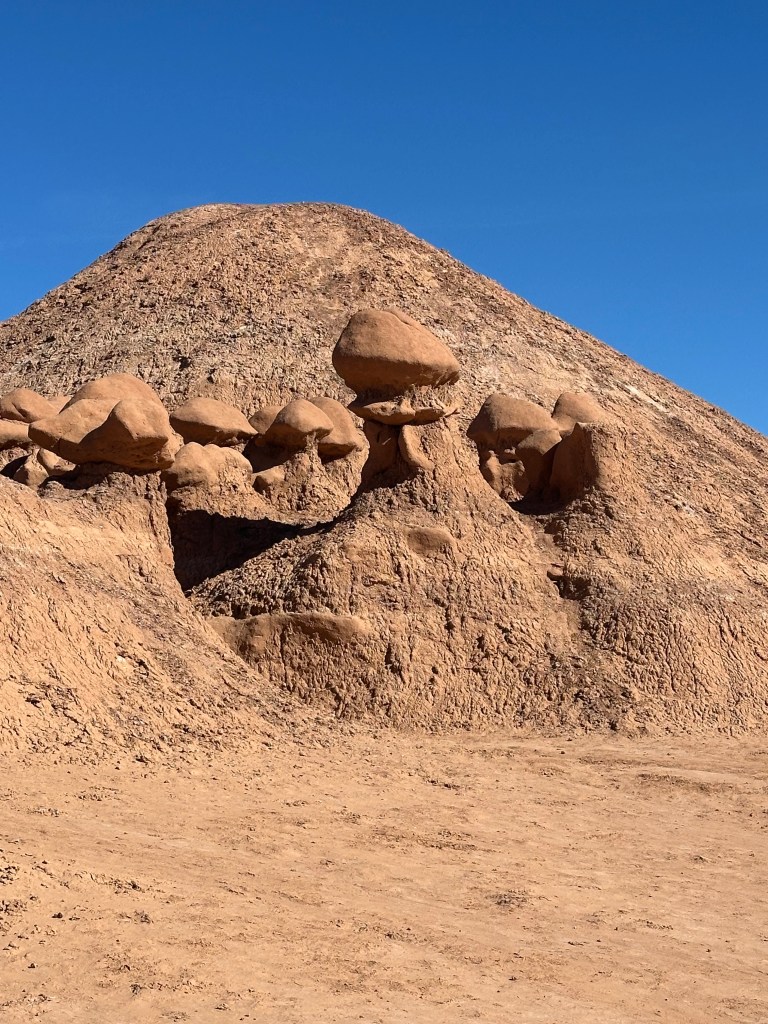
Hoodoos, Goblin Valley State Park
The hoodoo section of Goblin Valley has three canyons. Most people just explore Canyon 1 (see the picture below). My spouse and I searched out the other two canyons (2 and 3) which became much more spectacular since no one was there (it was hot and some climbing was required). The quietness of the other two canyons matched the amazing views.
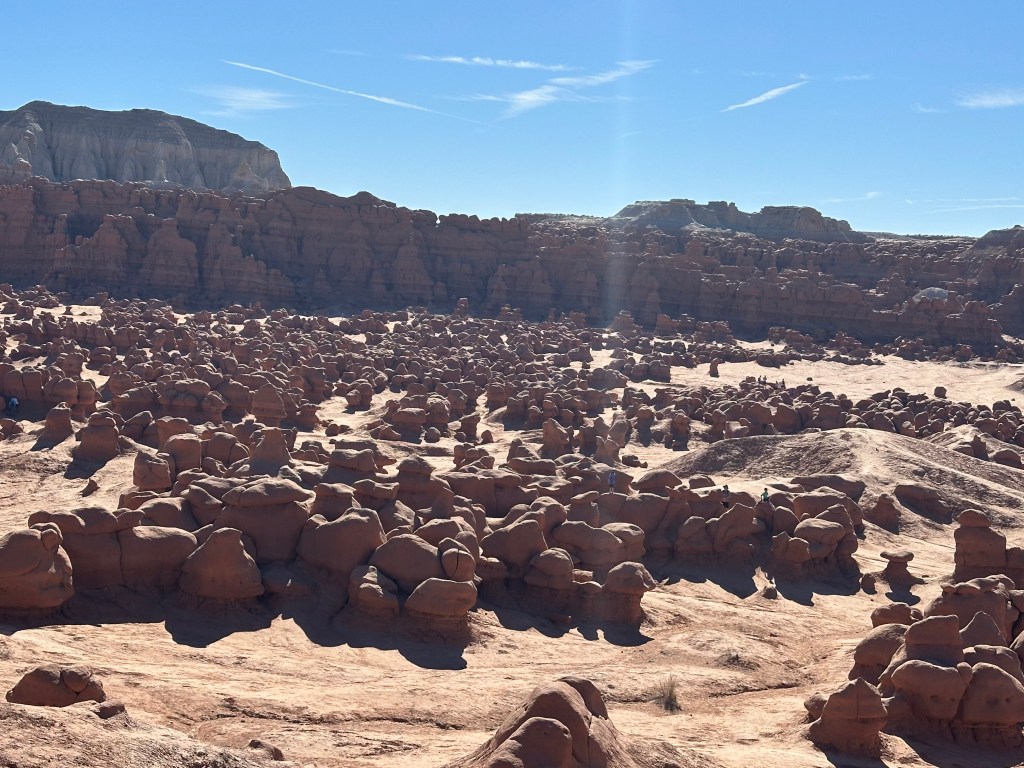
Canyon 1
The next day, we explored the slot canyons of Bell Canyon and Little Wild Horse Canyon. These two canyons connect in an 8-mile loop. It was hot (90 plus degrees Fahrenheit), and we had to pack water and food to make the loop. Most people don’t do the entire loop as the slot canyons require some climbing. The canyons were exquisite.
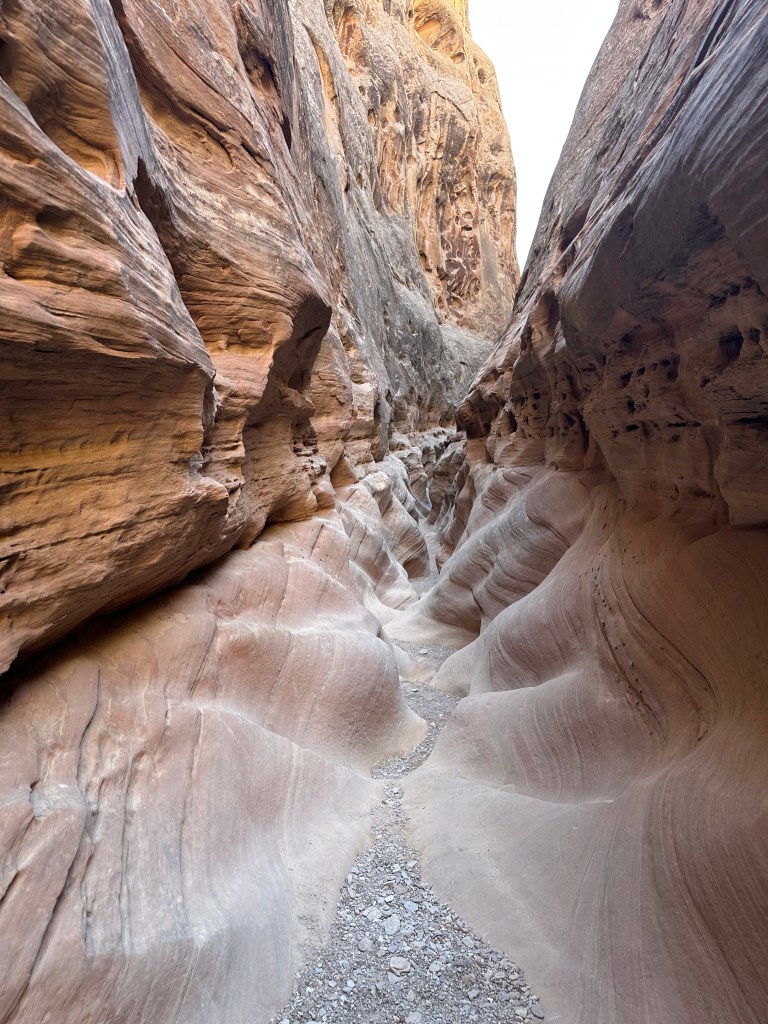
Slot canyon view. You can see how difficult it would be to climb over the terrain. We managed to do it.
What really impressed me was the immensity of the slot canyons. They would get quite wide in some regions and then get narrow at perhaps 2-3 feet across at other regions. One could see how people have died in the narrow sections when flash floods hit the area. Flash floods are not uncommon here. You should always check the weather before hiking in slot canyons.
I have told people that my hike in the slot canyons felt like walking through a Georgia O’Keeffe painting. The colors were outstanding. My spouse and I found this area of alternating black and red where water had come out of the stone likely for thousands of years (below).
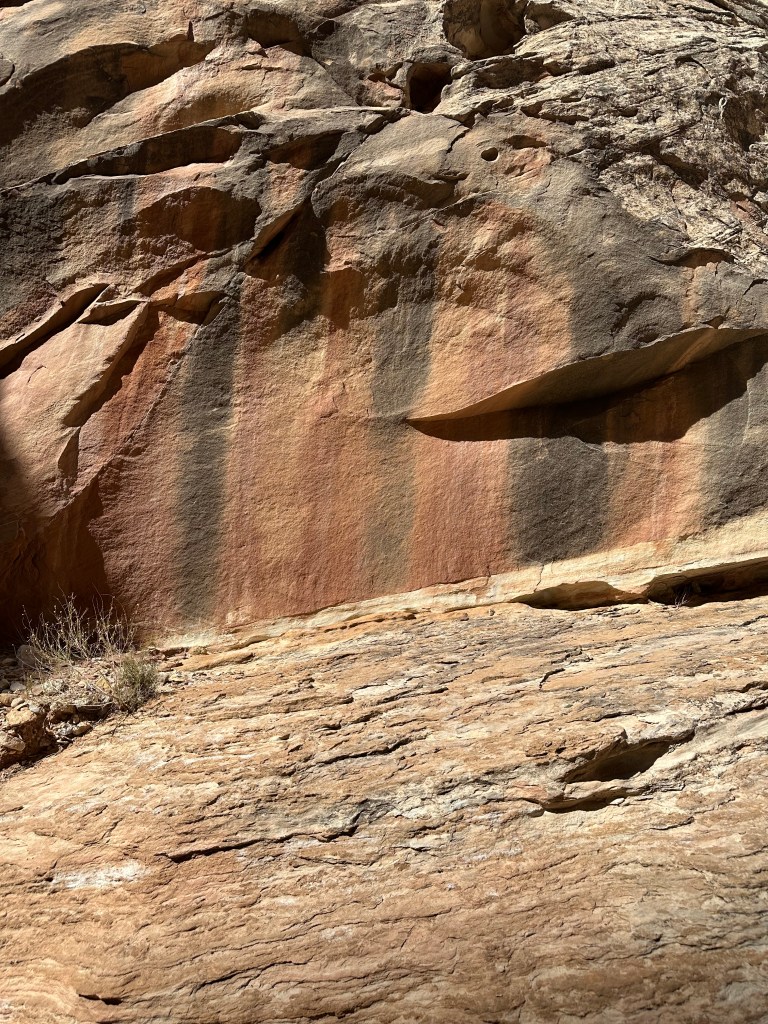
It was just beautiful. The color distribution was so evenly divided that it looked like a light spectrum although it obviously was not.
I found another section near the ground of a slot canyon with blazing red, orange, and brown colors (below). It trailed on for about 80 to 100 feet. It sure seemed to excel in what O’Keeffe was trying to achieve in her paintings.
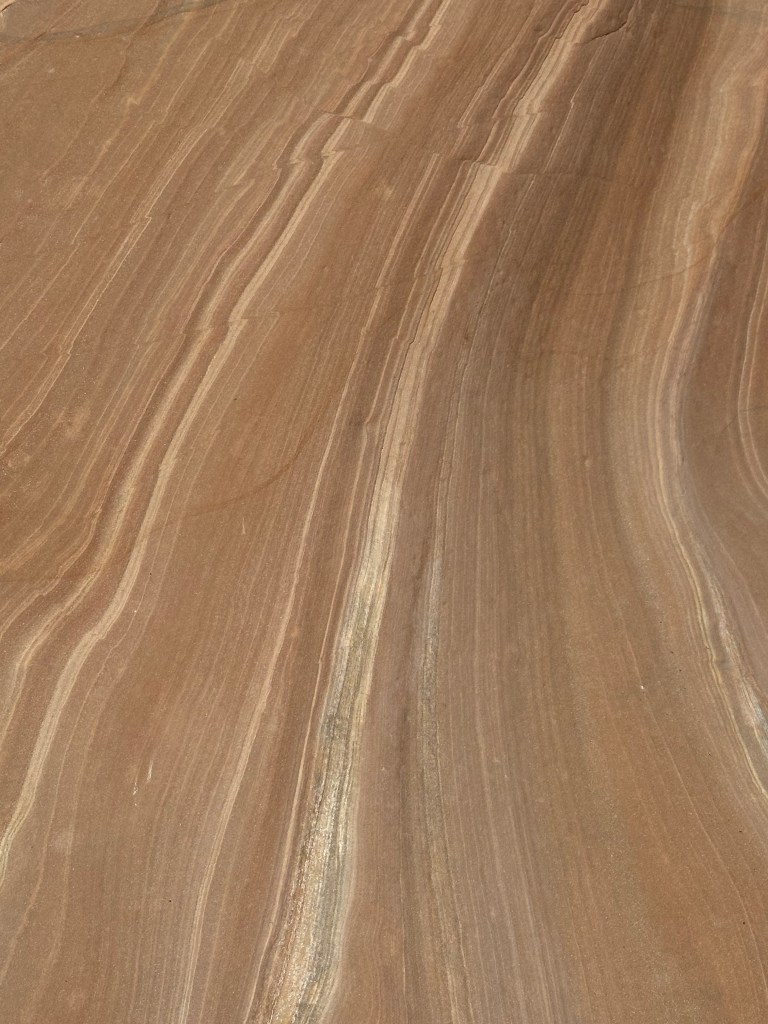
I like to write about theology. I’m not sure what my camping experience says about God, but let me try.
Perhaps God lures for beauty in this world, even in the desert. Such beauty exists even in the setting of extinction (Goblin Valley was probably a muddy area near the Western Interior Seaway during the Jurassic period around 170 to 145 million years ago).
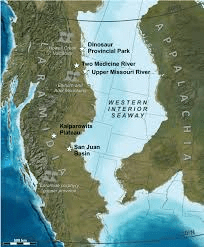
Image from Nature
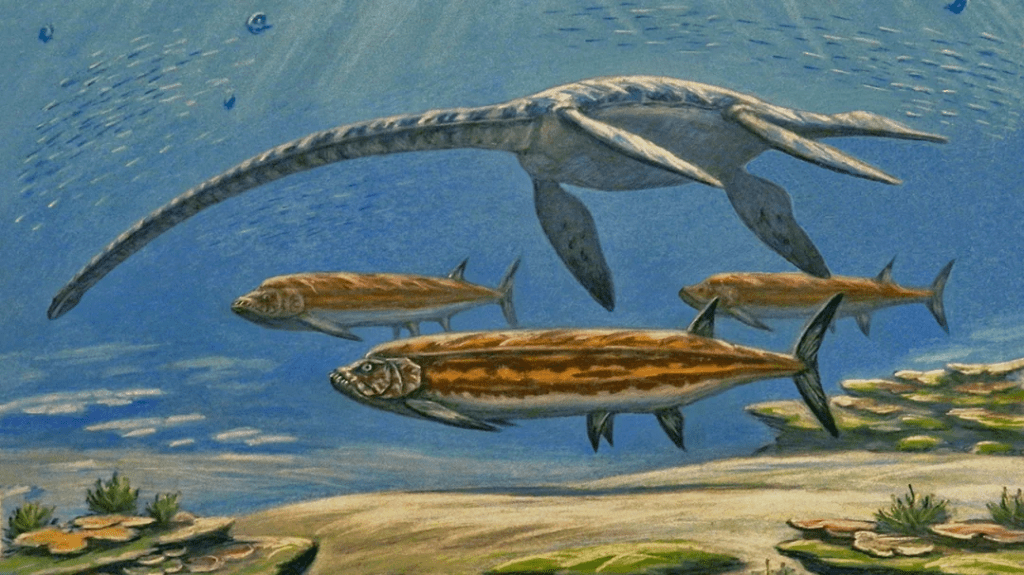
This seaway was filled with life. As tectonic activity and erosion continued, the sea dried out producing today’s desert ecology and resultant hoodoos / slot canyons. It is hard to look at this area and to understand the past presence of abundant dinosaurs and food chains present in the distant past.
Over the millions of years of land elevation, loss of water, wind, and erosion, this area continues to be beautiful. We, as humans, are provided a gift of this beauty.
What does this say about the human condition in that we find areas like Goblin Valley beautiful? What does it say, perhaps, about God?
From a human perspective, we have both objective and subjective thoughts. Objectivity contains the rational. Perhaps you could put the subjects of mathematics and science as contained in human objective thought. Science has improved the world in so many ways. I’m a big fan of it. Heck, we would know pretty much nothing about the ancient history of Goblin Valley State Park without scientific knowledge.
However, humans also are subjective animals. This part of our brain contains the arts, literature, theater, and our emotional feelings about beauty found in nature. Why are we subjective when it comes to looking at nature? Some people think that we get profound emotions in the setting of nature as an evolutionary way for us to relax. Humans have leftover evolutionary responses to stress. Instead of looking for predators and for food sources, we are dealing with stress at work and with the stress living in urban environments. Getting out into a beautiful natural setting helps us reset from the fatigue of chronic attention and resultant stress. This idea is called “Attention Restoration Theory.”
Some people think that our human reaction to beauty in nature may be transcendental in nature. Yes, it is a natural, chemical reaction to love beauty, but there still may be a transcendental aspect to this feeling. This connection could be to the Divine. Perhaps science will help here. Perhaps emotional connection will help here. Perhaps our combined objective AND subjective mental aspects will help here. In other words, the beauty we see over millions of years of geological change and evolutionary pathways may be a way for us to see God IN nature without the chains of human-centered “woo” of pseudo-science or the non-science aspects of wooden, literal readings of our holy scriptures.
What does this mean about God? I feel strongly that the Imago Dei is divine love perceived by humans both objectively and subjectively. Perhaps a good reference article is here.
Readers of my blog know that I believe strongly that God lures for creativity at all levels of nature. God lures of “the good.” The good, in my opinion, is to have nature proceed with beauty and with spontaneity through time even in the setting of death and destruction. Creativity continues. Love continues. Natural laws may lead to the Second Law of Thermodynamics with all of its benefits and destruction. Natural laws lead to death. Yet, God is always there…breathing potential into our universe and into each of us. This is not a forced potential yet is a lure or a call for something new.
An ancient dried up ocean that was once filled with life is still beautiful millions of years later as a state park with amazing colors, majestic geology, and even life today. Insects, lizards, and birds are there today. And we humans are blessed to have the capability to visit.
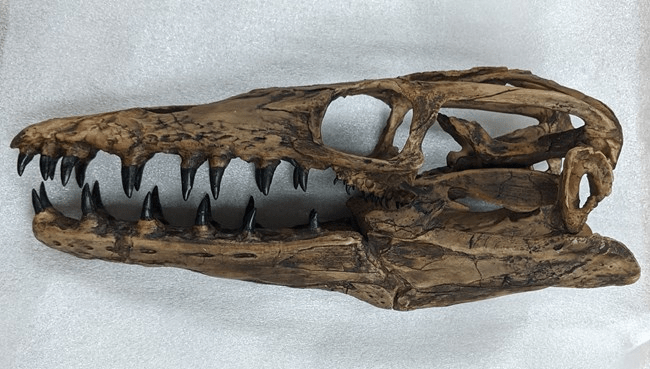
Mosasaur from the Western Interior Seaway (U.S. National Park Service)
 Phi-The-Sci: Equilateral Musings