I have been reading about the Axial Age which is defined as an approximately 200 year period (500 – 300 BCE) in which the main religious traditions of Eurasian society began. Of note, some people extend the Axial Age a bit farther out on either end of the time spectrum. The term, “Axial Age” was coined by Karl Jaspers (1883-1969). Jaspers was a philosopher who started off as a psychiatrist. He came up with this term although many others had considered similar ideas previously.
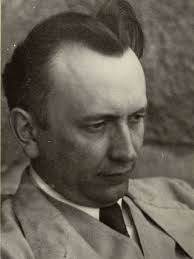
Karl Jaspers
Like any axis providing a turn of the wheel, the idea of the Axial Age is that human thought changed or pivoted around a certain period.
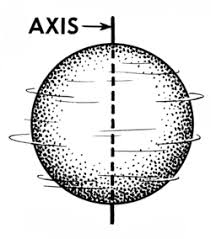
Specific thought leaders during this time period include Socrates, Pythagoras, Buddha, Mahavira, Confucius, Lao Tse, and the various Hebrew prophets. In some ways, this list makes sense when one considers that philosophical and theological paradigms that arose from these individuals.
It is unclear why this time period had the association of the Axial Age. Some have attributed it to a change in Homo sapiens cognitive ability. Some have attributed it to the formation of urban structures allowing population density and the exchange of ideas. Some have attributed it to a change from short-term material needs to long-term spiritual desires. Perhaps the rise of early city states with the association of agriculture for food and city walls to protect populations provided people time to think, to cognitively change, to philosophize.
It is a fascinating idea.
However, there are issues here:
- Certain cultures are left out of the Axial Age such as ancient Egypt. I have a hard time considering that the beaming systems, column formations, and art / political art painted on their structures were not an influential component of architecture going forward in time. I feel the same way about cave art. One can’t help to see such ancient art heralding the future of the great painters of history.

The Egyptian Pyramids
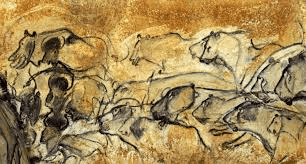
Chauvet Cave, southern France
2. The Axial Age may not be such a compressed time period. Two hundred years (or so) seems long, but in the setting of the first H. sapiens bone fragments going back 300,000 years, 200 years is quite small. This would be 0.07% of the time of the known existence of our species. Newer research suggests that there, in fact, may be no Axial Age as “axial” shifts may have been occurring as early as 3000 B.C.E. in areas such as Cambodia or Japan. Thus, the development of proto-modern human culture may have occurred over millennia, not centuries. As always, more research is needed here.
3. I have a hard time explaining why Jesus (as the founder of Christianity) or Muhammad (as the founder of Islam) would not be considered in the context of the definition of the Axial Age above. Jesus lived approximately 300 years after the Axial Age; Muhammad lived 900 years after the Axial Age. Although one can point to the influences of important Axial figures and cultures on the teachings of Jesus and of Muhammad, it also be remembered that all past cultures influence present cultures, religious or not…Axial or not. I would argue that the rise of both Christianity and Islam have caused profound changes in the world, far more than many of the figures listed as belonging to the Axial Age.
4. Finally, I am going to make an argument from process philosophy as to why the Axial Age idea may be problematic. If one looks at the Axial Age as a directional evidence occurring in history, one might fall into Georg Wilhelm Friedrich Hegel’s camp in stating that “teleology is a structure of reciprocal interaction.” In other words, history is directional. It has a purpose. I don’t know if history is directional.
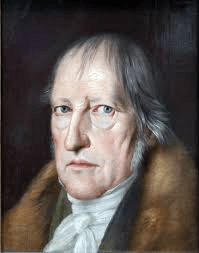
Hegel
I recall my father who was a military historian telling me that war provided evidence that there was no direction in the human experience.. There was to be no final war (outside of a potential nuclear holocaust). Wars would just continue. Kingdoms and countries would rise and fall. I find truth in that.

5. However and in contrast, I like the ideas as expressed by Alfred North Whitehead in his famous book, Process and Reality. In the book, he states, “Neither God, nor the World, reaches static completion. Both are in the grip of the ultimate metaphysical ground, the creative advance into novelty. Either of them, God and the World, is the instrument of novelty for the other.” In other words, things change as time moves on. Things in history may repeat themselves somewhat (as in convergent evolution), but change is in the air. Change is all we have as our ground. The only “purpose” in world history may be change itself without direction.
Now as someone who is a proponent of process theology / open & relational theology, I think it makes sense that God is the “still small voice” to give nature the opportunity to have directionality for the good or for the creative. All of nature (including our species) has free choice here. Original sin or not, we generally seem to demur to the Divine Lure. Thus, the Axial Age doesn’t seem to make sense to me.
6. One final thought…it appears that the world is quickly becoming less religious. How would this not be a new Axial Age in line with Jaspers’s definition? Is this directional? Is this just novelty in time? Is this simply change itself? More philophical and theological work is needed here.

Image generate by Gemini Advanced
 Phi-The-Sci: Equilateral Musings