I have been reading Juan V. Mayoral’s excellent new biography of Thomas Kuhn titled Thomas Kuhn: From Physics to Philosophy of Science. I imagine I will be using this book as a reference for future posts. I highly recommend it.
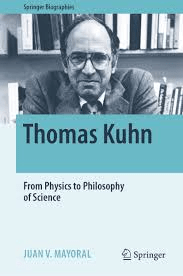
Thomas Kuhn (1922-1996) was one of the more important philosophers of science in the 20th century. Besides his concept of the “paradigm shift“, he came up with many other concepts about science that are still influential today. Here is short biography from the on-line Stanford Encyclopedia of Philosophy.
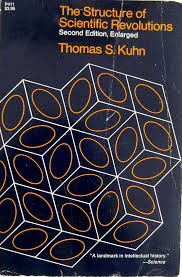
Kuhn’s The Structure of Scientific Revolutions. It is a good read. The idea of the “paradigm shift” is an important aspect of this book.
Kuhn came from a family of pacifists. Yet, he joined the military in World War II, and in fact, he was a member of the Radio Research Lab which was a secret military facility.
Raised a pacifist; joined the military. This change was fairly upsetting to Kuhn. He wrote an essay titled “The War and My Crisis.” It is a hard essay to find because he wrote it very early in his life before he became famous. Some publications have discussed this essay in detail.
Mayoral (and others) have suggested that his subjective turn from pacifism to joining the U.S. military may have been a nidus, of sorts, for his eventual publication of The Structure of Scientific Revolutions in which the whole idea of the paradigm shift became fully mature. In short, he recognized the capacity for change.
Kuhn changed. We all change. I would argue that all entities change. Change involves the concept of “prehension”, especially in the fields of process philosophy and process theology.
Prehension is when an entity is presented the panoply of possibilities before an event occurs. This panoply is based on all past events…from the very small to the very large. The entity “chooses” a reaction to these past events. This choice comes together concretely (called a “concrescence” and is the act “of becoming”). The choice becomes a unique “actual occasion” in real time which then passes on to become a fixed occurrence from the past while also being a possible influence in future prehensions. The process of past events influencing actual occasions with actual occasions becoming past events is an eternal process that is accomplished in real time.
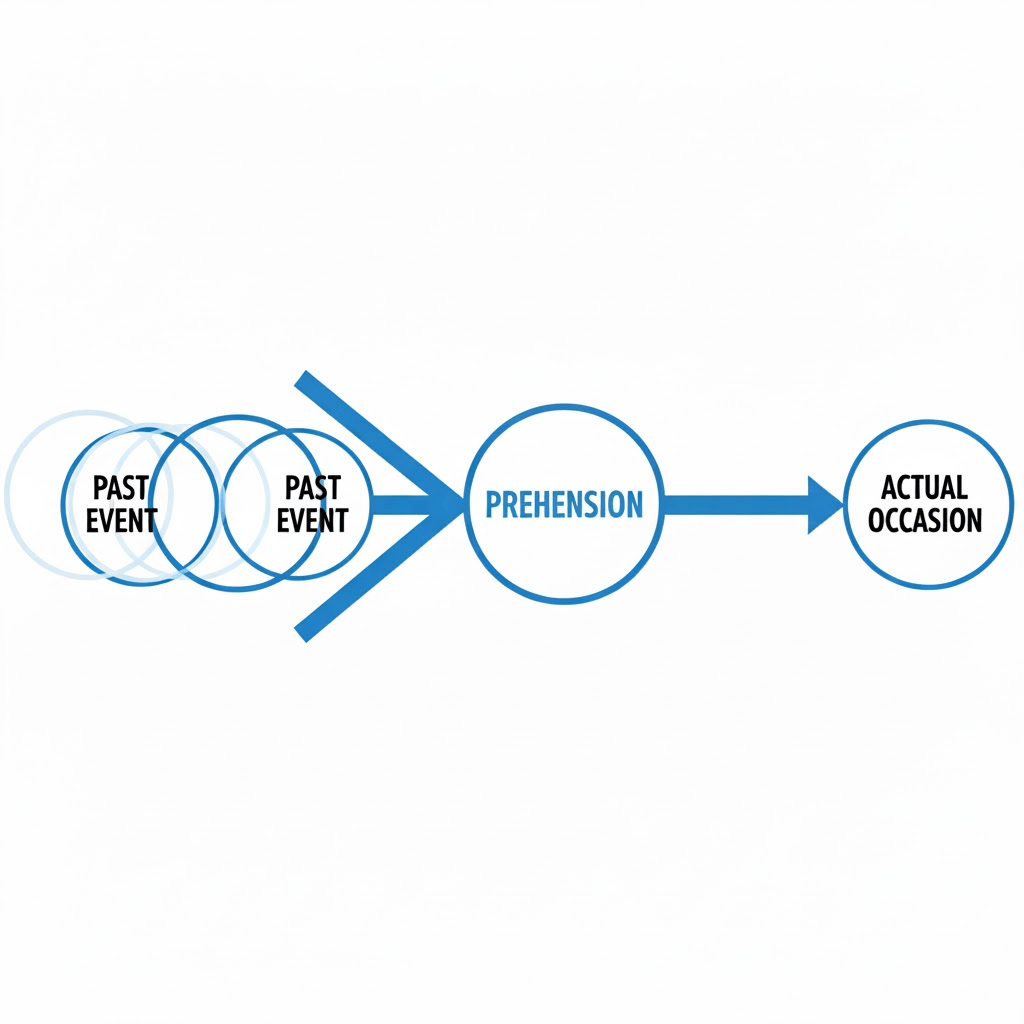
I made this image in Google Gemini Advanced. I hope it makes sense.
Let’s look at Kuhn’s example from his personal life. He had many, many past events that changed his mind about participating in World War II.
Think about every event that you have been involved in. Some are significant; some are mostly insignificant. Now think about the sheer mass of past events leading to how you chose to be in a specific moment. You can consider your past relationships with family, friends, and strangers as you decide to act at a current moment in time. However, what about your genetic history, your ancestors’ prior genetic mutations, your serotonin levels, your altitude, your longitude on Earth, the effect of gravity on your actions, and on and on and on?
In fact, there is the potential for an infinite number of events in the past to affect how you ultimately make a decision (at least from a metaphysical perspective). If the universe is infinitely large, then perhaps a quantum wave effect thousands of light years away (thus, a very ancient event) would have some incredibly small effect on how you might make a decision. Conversely, having an important conversation with a significant other one hour before you might make a decision would be exponentially more important.
Thus, we change, and this change is influenced yet not necessarily determined by all that has happened to us in the past. A helpful reference is here. In a way, this idea matches the “Ship of Theseus Paradox.” If Theseus’s ship is around long enough, eventually all parts of the ship will need to be replaced. In the end, is it the same ship? In the end and as time passes, are we the same person that we have always been?
A few years ago, I was asked to give a lecture at a memorial lecture series for one of my mentors in the field of medicine. In retrospect, I probably did the wrong thing and talked about the microbiome and the philosophy of causation / change. I say “the wrong thing” as I think the conference organizers really wanted a lecture on hard science, not philosophy. My mentor’s daughter liked my talk which is really all that mattered in the end.
As part of my lecture, I discussed the difference between “endurantism” and “perdurantism.” Perdurantists believe that ordinary things like animals, boats, and planets only have temporal parts (things persist by “perduring”). Endurantists believe that ordinary things do not have temporal parts; instead, things are wholly present whenever they exist (things persist by “enduring”).
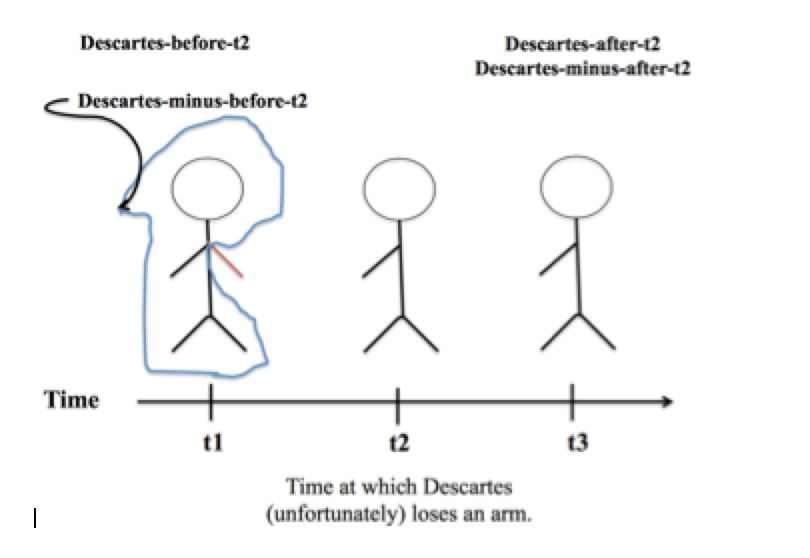
Perdurantism (from https://medium.com/@lukeschrager/persistence-of-concrete-particulars-through-time-endurantism-vs-perdurantism-3442e044b376)
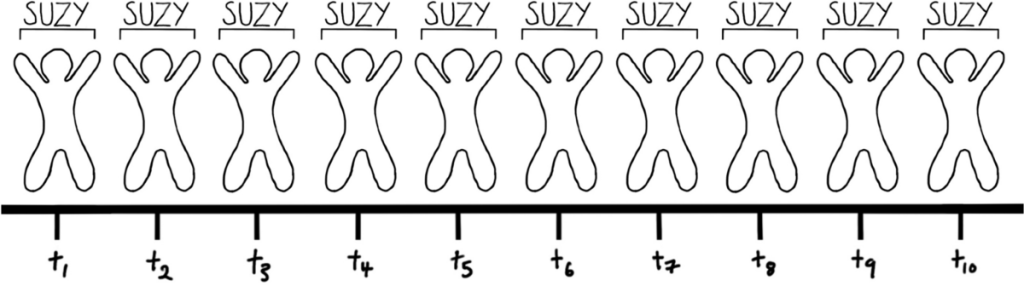
Endurantism (from https://link.springer.com/article/10.1007/s11098-024-02194-8)
In my opinion, the human body is very much an example of perdurantism, and thus, the human body is an example of prehension –> concrescence –> actual occasion –> repeat.
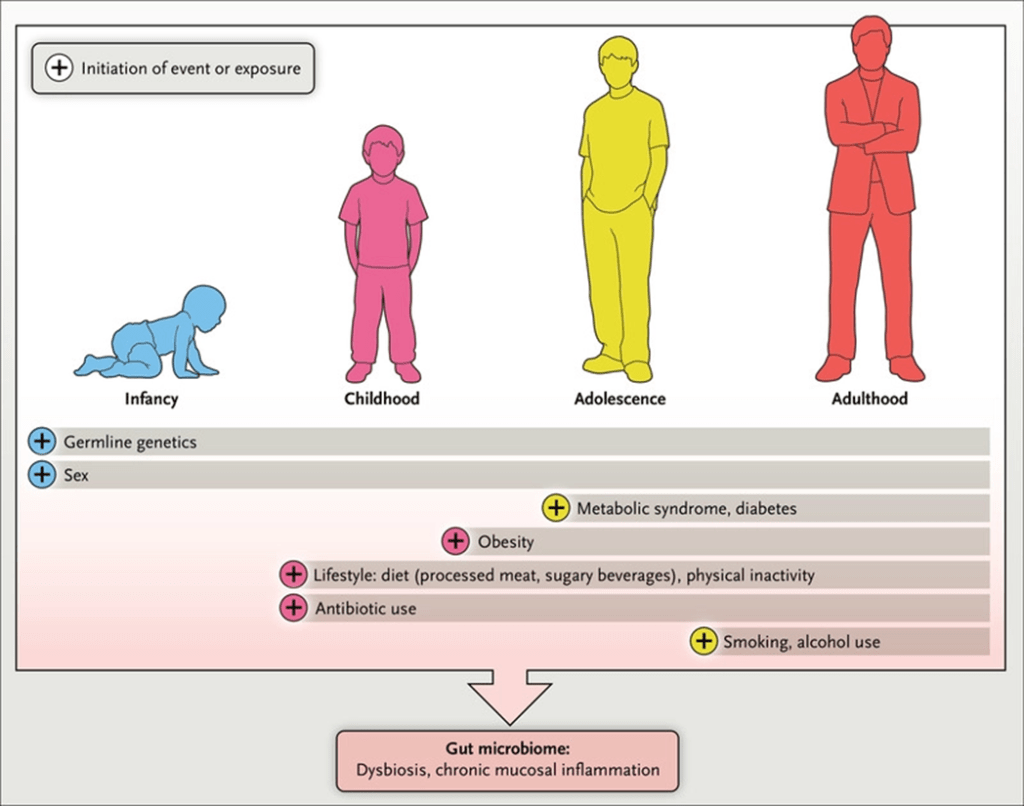
Image from: Sinicrope FA. Increasing Incidence of Early-Onset Colorectal Cancer. N Engl J Med. 2022 Apr 21;386(16):1547-1558.
In my lecture, I discussed the myriad of events that cause a human to change over time. These events are a complex web of past history that affect our physical health, mental health, and our decisions through time.
So, atoms change. People change. Galaxies change. Even our universe is changing. All of this change is based on past events in which there is a spectrum of decisions or reactions to such past events.
My blog posts are typically theological in nature. Where does God fit in here? Many of you who read my blog (or who know me personally) are aware that I believe in the concept of Naturalismppp. This term means that God fits neatly into the natural world via the 3 concepts of 1) prehension, 2) panentheism (the universe is in God), and 3) panexperientialism (all entities experience — even God).
Thus, if we all have a current state at each moment in time and if our current change or decision status is based on prior events, then we can state that nature exists in change itself. Reality, in many ways, is change itself.
Consider: If change if paramount for the physical world (prehension) and if this change is in God (panentheism) and if God experiences all of the experiences of nature (panexperientialism), then God at a minimum experiences change. God is present in the change.
We individually change. Nature changes. God changes. All change is based on the influence of past events. If God is love (which I very much believe), then God’s change over time is to desire creativity and to want love throughout God’s creation. This is a universal love luring for the best outcome for all entities. However, this love does not force change. It is simply a desire for the most loving outcome. God tries to relate to me. Thus, I can try to be loving aim for the best outcomes in events close to me and even events far away from me. I can try to be a loving husband and father. I can spend time learning the medical literature better for when I take care of patients. I can try to send money or other resources to strangers in need both locally and far away. I can pray for my enemies.
Thomas Kuhn has helped the world in many ways by exploring the world of science. His life experiences are a good reminder of how we each decide to live our lives through time. We have influences, and we have a choice in how we utilize these influences.
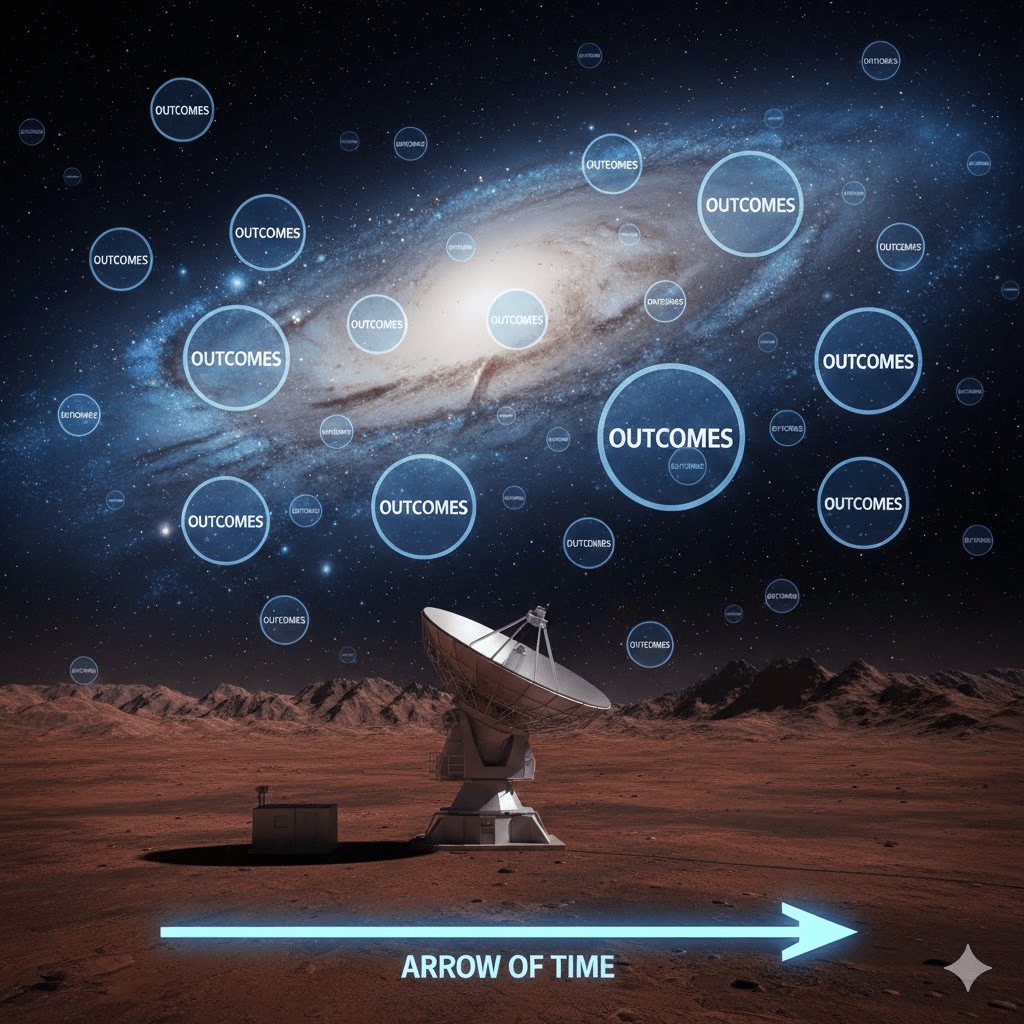
Image made by Gemini Advanced
 Phi-The-Sci: Equilateral Musings