First of all, biological evolution is a real thing. The effect of organisms changing through time can be seen in the fossil record as well as in the science of genetics. Inherent mutation rates at the DNA level exist. Human diseases and human adaptations occur in the setting of genetic change. Epigenetics is real. Biological evolution is real simply because change itself is real. Time encompasses change.
Irenaeus (125 – 202 CE) was an interesting church father. I think he differed in some ways from how Augustine (354-430 CE) conceived of sin. For example, in Irenaeus’s The Demonstration of the Apostolic Preaching, he states the following:
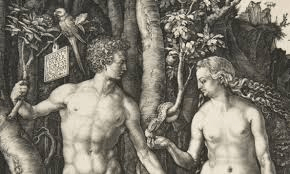
“And Adam and Eve—for that is the name of the woman— were naked, and were not ashamed; for there was in them an innocent and childlike mind, and it was not possible for them to conceive and understand anything of that which by wickedness through lusts and shameful desires is born in the soul. For they were at that time entire, preserving their own nature; since they had the breath of life which was breathed on their creation: and, while this breath remains in its place and power, it has no comprehension and understanding of things that are base. And therefore they were not ashamed, kissing and embracing each other in purity after the manner of children.”
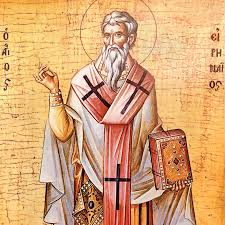
Irenaeus
The paragraph is certainly interesting to consider theologically. Animals eat animals (and plants). Plants compete for niche space. Bacteria compete for resources. One might point to such ideas as “natural evil” which certainly could be a true. However, the actions of the majority of living organisms on our planet occur due to nutrient needs, daily survival, and reproductive potential. They do not eliminate each other out of thoughts of cruelty. I say “the majority” because there appears to be the one exception of Homo sapiens.
Our species has a long history of injuring the other, destroying the environment of the other, and killing the other. This “other” consists of life on our planet, including the life of others of our own species.
Biological evolution causes new species to appear, and it causes older species to go extinct. This is change in the setting of time. It is a natural occurrence which can be tragic for the species that dies but beneficial for the species that survive. In a way, the process is no different than stars exploding at the end of their lifetimes, galaxies losing star-making ability, or our universe eventually (as far as we can tell) using up all useful energy. This is change, and the death associated with this change is not due to malicious intent.
In other words, these are natural occurrences.
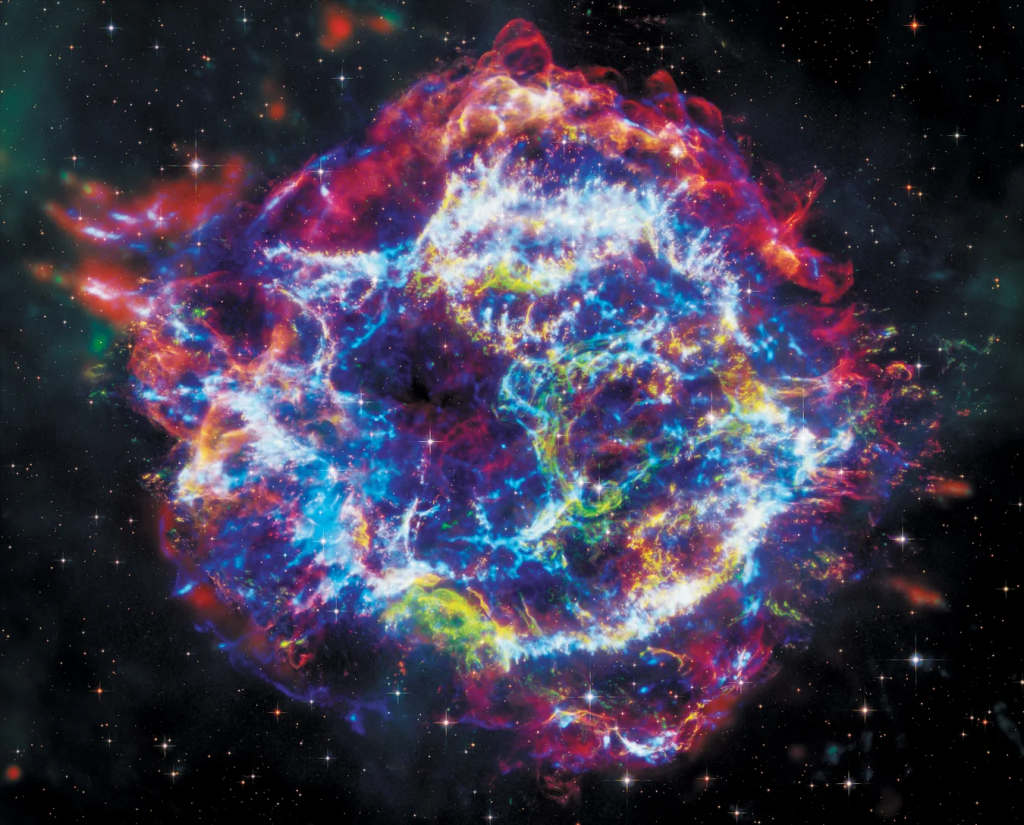
The Cassiopeia A Supernova from Scientific American
Humans, unfortunately, have the unique ability to make such changes even drastic, especially in the setting of biological change / evolution. By consciously ending the life of an individual or species, we also are making a conscious decision to end the evolutionary potential of that individual or species. We are consciously deciding to limit change and the potential of biological creativity.
If we kill a fellow human out of anger, we prevent that person’s ability to affect future generations either through genetics (reproduction) or societally (their emotional or material consequences on others). If nations create war on other nations, we affect entire populations in their ability to make new generations of people as well as destroying or modifying the general emotions, finances, food supplies, and leadership options of all nations involved.
If we destroy a species or group of species of other animals or plants, we are preventing their ability to continue on as a species.
Perhaps extinguishing a species or group of animals is beneficial at times. I am not sure. I very much despise mosquitoes as they bite and can carry diseases such as malaria. However, these insects can be beneficial.
Almost completely extinguishing a species can be harmful. An example is the American bison (Bison bison) extermination in the 19th century. Besides almost completely destroying a species simply to rid the United States of a food source for native communities (thus causing human starvation and an inability to reproduce), the destruction of the bison affected some Native American cultures permanently.
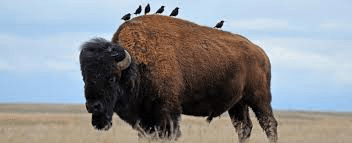
American Bison
Humans make these conscious decisions. We are not ants just trying to find resources to keep their colony alive. We are not trees sending out pollen to hopefully fertilize or be fertilized. We are not lions looking for limited resources on the Serengeti with feelings of satiety after eating a gazelle and not needing more.
Humans typically make conscious decisions to hurt of kill the “other.” As we hurt or kill, we are limiting the evolutionary potential of an individual or a species. If an individual is killed in the setting of murder or drunk driving, they have lost any potential ability to pass on their genetics, have lost subsequent ability of their genetics to undergo potential beneficial mutations, and have lost their genetic life be passed on to other generations. Their genes are gone as is their individual’s influence on their family, culture, and society. If we kill a whole group of humans (as in war), this effect is horribly magnified. We prevent the potential for that group to undergo potential passage of genetics to future generations and thus prevent their evolutionary potential. The same idea goes with other individuals, groups, and species throughout our planet.
Image from Nelson University
I would propose that a definition of “sin” would be our wanting to remove the evolutionary capacity or potential of others in a pointless manner.
Humans can consciously make a real decision to remove the evolutionary potential of other creatures. Humans can consciously make a real decision to remove the evolutionary potential of a people group. Humans can consciously make a real decision to make a species go extinct. We make these decisions often full well of the tragic consequences.
In my opinion, humans are a very violent species. Perhaps it is part of our phenotype to be destructive.
Where is God here?
Readers of my blog know that I think the model of process theology and especially the model of open & relational theology make sense when understanding the world around us. In my belief system, God lures for us to be creative and not destructive, to be novel and not monotonous, to consider life’s existence as a manifestation of love and not as life’s existence manifesting as hate of the other. God desires us to choose to do better. God does not interfere here. God is not a control freak, and if we are truly made in the image of God, then we should not be control freaks either.
We can choose to prevent spoilage of the environment. We can choose to conserve and to limit death of other species in meaningful ways. I think we are probably the only species on the planet that has evolved the cerebellar volume and conscious ability to choose in such a manner. Perhaps Chimpanzees come closest here when considering Jane Goodall’s work on the Gombe preserve in Africa. These animals apparently had war-like behavior on each other with the resultant unnecessary death of individuals. On the other hand, human interruption of their environment (again, humans choosing to destroy an ecosystem) may have been the primary cause of such activity.
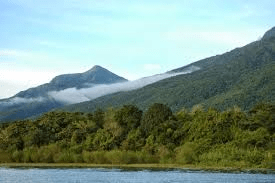
Gombe National Park
There appears to be something specific in human behavior in which we can actively decide to destroy a species, an evironment, or a people group voluntarily and without regard of consequences. In other words, when we deliberately decide to destroy the potential of a species or an environment or a people group, we destroy the evolutionary capacity of such entities. We destroy their inherent creativity. We destroy the “grandeur in this view of life” per Darwin.
I think Irenaeus stating that metaphorical Adam and Eve’s “no comprehension and understanding of things that are base” points to a very concrete reality. H. sapiens eventually reached a point evolutionarily that we understood we could kill or maim for personal benefit. We could interrupt continuing creativity in the world God created simply for individual gain or nation building. No other life form on our planet can be this dangerous. There are alternatives, however.
We can do agriculture in sustainable ways. We can eat meat products in sustainable ways. We can take antibiotics or use vaccines to prevent infections from interfering with human evolutionary potential from a species perspective.
Perhaps our evolutionary potential will allow us to better recognize the importance of the world around us. It is a potential that, I believe, is freely given by God. We get to make the choice.
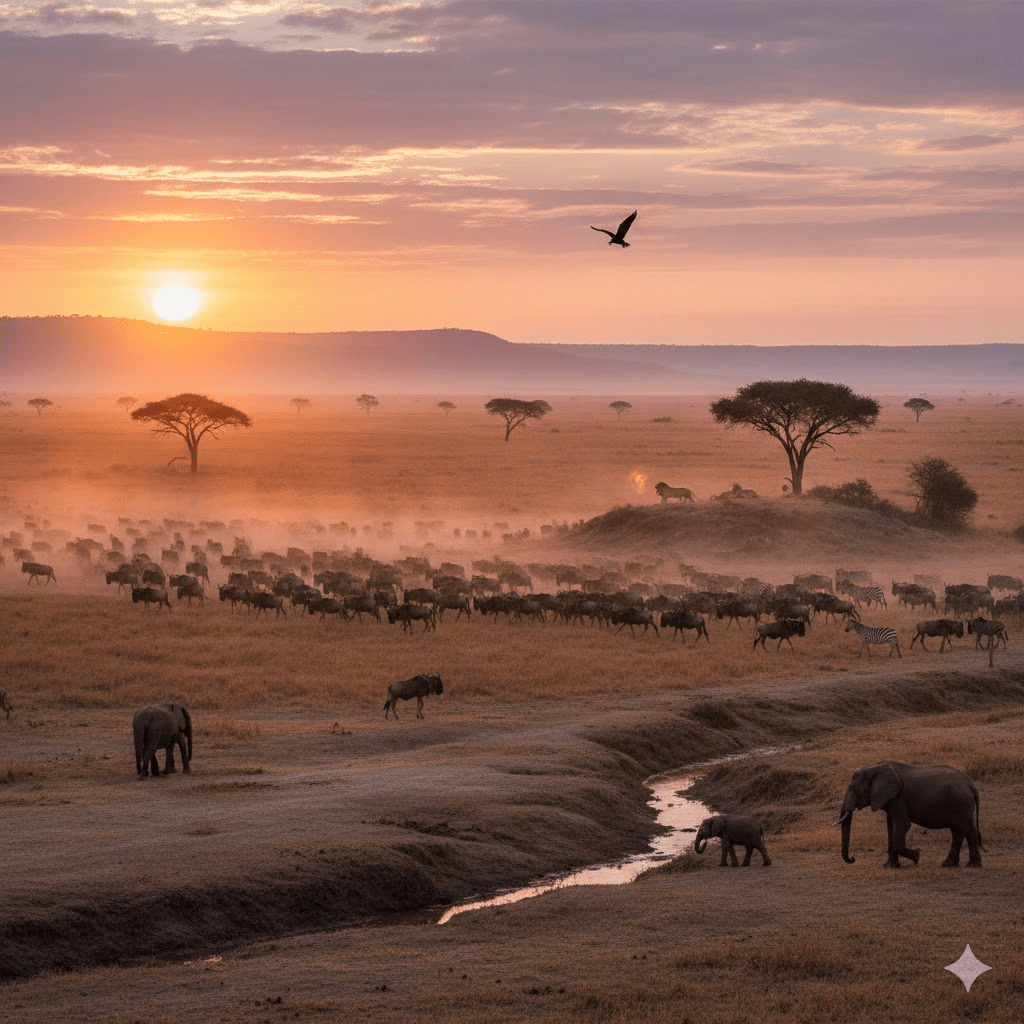
Image created by Gemini Advanced
 Phi-The-Sci: Equilateral Musings