As I get ready for Christmas Day, I have contemplated what it really meant for God to come as an infant to our planet and perhaps to our reality. I realize that December 25 is not the day of Christ’s birth, but it is the day when most of the world celebrates the birth of Jesus. Through many years of attending church services, I recognize the idea that Christ was born so that sin would eventually be defeated. However, it is pretty clear that we don’t know exactly what was going on in God’s infinite mind in regard to this singular occasion.
As W.W. Bartley has stated in The Retreat to Commitment, “All theological statements are forever conjectures about the Word of God. We can never know whether or not our statements do in fact express the truth about the Word of God or whether they are mixed with error stemming from our misinterpretations, or from our conscious or unconscious imposition of our own presuppositions on the historical event.”

The Christ event, whether historical, theological, metaphysical, or sociological, is a mystery. It cannot be solved. There is a point where one’s mind reaches a boundary about this event that cannot be crossed.
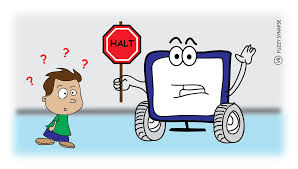
In many ways, the Christ event and the idea of God in general is a metaphorical “halting problem.”
Exploring God is a halting problem.
The halting problem is a computer science idea. Essentially, the problem shows that “…it is impossible to write a program which can examine any other program and tell, in every case, if it will terminate or get into a closed loop when it is run.” This helpful quote comes from the open access article here.

Let’s look at an example, from cs.wellesley.edu.
Suppose you have a program function called Halt(P, x). P is a program; x is some type of datum input.
The input of P and x leads to a binary output of “true” (program stops) and “false” (program loops infinitely). In this conjecture, the program function must give an answer.
Now suppose you have another program function called Sly. Sly does the opposite of what Halt predicts.
Thus, if Halt states “true” (program stops), then Sly states “false” (program loops infinitely). If Halt states “false” (program loops infinitely), then Sly states “true” (program stops).
Sounds good, right?
But what is Sly runs a program of Sly? In other words if Sly(Sly) is programmed, then:
Halt(Sly, Sly) means the following:
If Halt (Sly,Sly) is “true” (program halts) then Sly(Sly) will be “false” (program loops infinitely).
But if Halt (Sly,Sly) is “false” (program loops infinitely), then Sly(Sly) will be “true” (program halts).
There is just no answer here. If I am honest, I can use the halting problem with how we can think about God. I’m going to use a very simple example that really is just subjective.
Suppose you have a theological belief defined as God(P,x) where P is a program and x is some type of datum / data that you perceive in the world around you.
The input of P and x leads to a binary output of “true” (God exists) and “false” (God does not exist). Again, this program function must give an answer. By the way, you know already that the function will not give an answer, but let’s proceed anyway.
Now suppose you have another program function called No God. No God does the opposite of what God predicts.
Thus, if God states “true” (God exists), then No God states “false” (God does not exist). If God states “false” (God does not exist), then No God states “true” (God does exist).
Now you run a program No God (No God).
God(No God, No God) means:
If God (No God, No God) is “true” (God exists) then No God(No God) will be “false” (God does not exist).
But if God (No God, No God) is “false” (God does not exist), then No God (No God) will be “true” (God exists).
Again, I am taking a subjective consideration of the halting problem when considering God. I did run my “program” through my AI (Google Gemini), and the results were interesting.
Google Gemini states that my results suggested that my proposal was a theological paradox similar to Godel’s theorems although I was considering metaphysical entities (“God” as well as “No God”) and not mathematics. Google Gemini also stated that my proposal demonstrated a “self-refuting system.” In other words, a person can have a metaphysical belief (God or No God) that is so strong that they will always identify with that belief even if given evidence to potentially demonstrate the opposite of their belief system. Honestly, tenets of both Young Earth Creationism and New Atheism seem to fit in here.
I look at the Halting Problem in the setting of God this way… When we are given objective evidence about the world, we can make a decision as to if the evidence demonstrates that there is possibly God or conversely that the evidence demonstrates that there is possibly No God. The objective informs the subjective.
This idea reminds me of part of Corinthians 13:12 (“For now we see only a reflection as in a mirror…). We hold our metaphysical beliefs based on how we see the world and our place in it.
And that is fine.

If God exists, then perhaps Karl Barth is correct in pointing out that God is utterly separated from the world. “The two are totally unlike and exclusive. At no point does God touch the external world with its corrupted nature and evil matter. No part of the world is, therefore, a manifestation or revelation of the infinite, majestic Deity.” By the way, this quote comes from a very famous author who is not Karl Barth.
The ultimate mystery here can be considered the ultimate beauty of everything.

image from Gemini Advanced
 Phi-The-Sci: Equilateral Musings