I will be away over the next week and want to write a quick post.
I have been reading through Nicholas Spencer’s book titled, Magisteria, which is a wonderful book discussing the history of science and religion. I recently read through Chapter 13 titled “Peace and War.” In this chapter, a quote from James Clerk Maxwell appeared.

“I think men of science as well as other men need to learn from Christ, and I think Christians whose minds are scientific are bound to study science [so] that their view of the glory of God may be as extensive as [possible].”
Now Maxwell wrote this response when he was invited to join the Victoria Institute which had been set up to reconcile science and faith. The Victoria Institute has an interesting history, and I would recommend reading the linked article. So far, his statement sounds good to theists, like me.
However, Maxwell continues as follows: “I think that the results which each man arrives at [in] his attempts to harmonize his science with his Christianity ought not to be regarded as having any significance except to the man himself, and to him only for a time, and should not receive the stamp of society.”
As a result, he did not join the Victoria Institute.
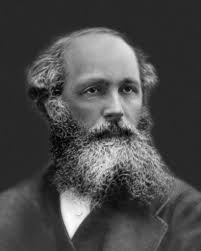
James Clerk Maxwell
These are well written words which I relate to well. I have several thoughts here:
First, I think Christians absolutely should learn from science. Time is an essential aspect here. Our species has learned more and more about the natural world over the centuries. A wooden, literal reading of Holy Scripture makes no sense when comparing when these texts were written to events surrounding today’s modern society. Language has changed. Culture has changed. Geographical areas not known about in the ancient world have been found (North America, South America, and Australia). Humanity’s place in the universe has become more fully known. Human knowledge has increased exponentially. It is impossible to read the Bible or any other holy book without being influenced by the world around us. I can think of no literalist argument here proving that I am wrong. We are influenced greatly by the time in which we are living and in the knowledge of our species during this time. Heck, even the ability to read is a relatively modern invention.
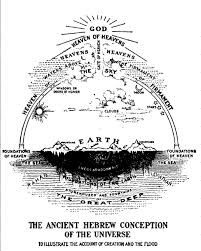
The Hebrew interpretation of the universe, from BioLogos
Second, I echo Maxwell’s belief that science infused into faith (in this case, Christianity) should probably make the most sense to an individual as opposed to a society. I am a physician, and I see God as influencing the world around me when I look at the improvement of human life spans over the decades. Better hygiene, the discovery of antibiotics, better cancer care, better surgical techniques…all have contributed to the improved life span and lifestyle of our species. Improved life spans lead to improved lifestyles which include improved and expanded learning.

From Our World in Data
As readers of my blog know, I very much believe that the models provided by process theology as well as open & relational theology are helpful here. I believe God lures for the good, the creative, the novel. God lures our species (individually and societally) to make the world a better place. We can accept this lure or ignore this lure. My experience of patients being cured from diseases presently that were extremely deadly in the past has been a quasi-religious experience for me in that it causes joy and wonder as I consider such healings almost a type of miracle due to the advance of science over time.
However, I see this science – faith interaction as a physician, and my sight is limited here. A mathematician might see this interaction differently or not at all. A physicist might see this interaction differently or not at all. I surmise that most of us see the interaction of faith and science in a panoply of ways. These vast differences are good and make up the human experience.

Image from Scientific American
Third, the harmonization of science and faith indeed “should not receive the stamp of society.” I may be religious, but I am most happy when religion is kept out of government. I do not want and do not need any government at any level telling me what I should believe from a religious standpoint even if such a government might agree with how I perceive the relationship between faith and science. The current populist push in my country (the United States) by many people to add a religious agenda into our national educational curriculum is bad for science as it seems to push weird anti-science agendas, such as the anti-vaccine movement and anti-evolution beliefs. This populist push also is incredibly bad for religion, including Christianity. Populist forms of religion risk being superficial and miss the greater spiritual aspect of God’s presence which can be seen by observing the world which includes using science.
I am going to have to agree with all of Maxwell’s quote here.

Image from The Scientist
 Phi-The-Sci: Equilateral Musings