*One can’t deduce No God either.
I enjoy reading Theology and Science which is a quarterly peer-reviewed journal with writings that evaluate the intersection of theology and science.
The most recent issue of TAS had an intriguing article titled “On the Methodology of Science and the Current Crisis of Religious Belief” by Andrew Ter Ern Loke at Hong Kong Baptist University. Dr. Loke has a distinguished career writing about logic and theology. As an example example, he has written much on the Kalam Cosmological Argument.
Dr. Loke’s abstract for this most recent article states the following:
“The current crisis of religious belief is plausibly correlated with widespread scientific education and a related agnostic way of thinking. I show how this crisis can in principle be addressed, by first asking what are the methodological requirements of the scientific constructive agnostic process (SCAP) itself. I demonstrate that these requirements include deductive reasoning and phenomenological experience, and they can in principle be used to formulate a cosmological argument for the existence of God.”

Let me first say that I don’t think that the decline in religiosity worldwide is specifically correlated with scientific education. I believe there are many other causes including the intermixing of cultures (which is a good thing), politics, social media, and the failure of large religious structures to reflect the religious ideals of their founders such as Jesus, Mohammed, and the Buddha.
Additionally, there are numerous professional societies working to improve the interaction of faith and science not just with scientists and religious leader but with the public as well. The American Scientific Affiliation, the Canadian Scientific and Christian Affiliation, BioLogos, the International Society for Science & Religion, the Center for Open & Relational Theology, and the Institute on Religion in an Age of Science are just a few of such organizations.
It is not even clear if religion is on a continuing decline in younger generations (although, I admit, the data are not clear).
Let me proceed as to how I look at the intersection of science and religion from a surface level perspective. In other words, can I learn about God from science?
Well, we can certainly learn about the world scientifically using induction. I think of induction as a way of studying the world by observing it. Astronomy and paleontology have inductive, sound techniques as fields of study.
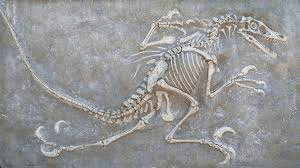
image from Frontiers
From a religious perspective, I can see something and decide if it reflects God’s nature or God’s personality (or not). I can look at a Hubble deep field image and perhaps have such a feeling.

image from NASA
I can look at complex cristae in mitochondria and perhaps have that same feeling.

image from BMC Biology
Of course, these are just my feelings. Perhaps my feelings constitute a draw towards the Holy Spirit. In the end, they are just feelings.
An atheist or someone from another religion might look at these images and have completely different feelings. In fact, I would hope that they would have different feelings. The spectrum of subjectivity in thought is the beauty of the human species.
Deduction is a bit different. From a logic perspective, one can consider deduction as a way to move from a general theory to a specific conclusion with the caveat that the initial premises are true. Here is a classic example of deductive logic:
Premise 1 (General): All men are mortal.
Premise 2 (Specific): Socrates is a man.
Conclusion (Specific): Therefore, Socrates is mortal.
A comprehensive review of deductive logic is here.
The following is Loke’s deductive logic argument proving that God exists. See what you think. His argument is rather long.
_______________
- There exists a series of causes-and-effects and changes (“changes” are understood to be equivalent to events, such as the event of the Big Bang).
- The series either has an infinite regress that avoids a First Cause and a first change, or the series has a finite regress and its members are either joined together like a closed loop that avoids a First Cause and a first change, or its members are not so joined together and the series has a First Cause and a first change.
- It is not the case that the series has an infinite regress.
- It is not the case that its members are joined together like a closed loop.
- Therefore, the series has a First Cause and a first change. (From 1 to 4).
- Since the First Cause is the first, it is uncaused.
- Since whatever begins to exist has a cause (Causal Principle), the First Cause is beginningless.
- Since every change is an event which has a beginning as something/part of a thing gains or loses a property, and since the first change (=first event) does not begin uncaused (given the Causal Principle), the first change (=first event) is caused by a beginningless First Cause which is initially changeless. (From 5 and 7; here, “initial” refers to the first in the series of states ordered causally, not first in the series of changes/events nor first in a temporal series).
- In order to cause the first event (regardless of whether it is the Big Bang or whatever else) from an initially changeless state, the First Cause must have:
- 9.1. The capacity to be the originator of the event in a way that is un-determined by prior event, since the First Cause is the first.
- 9.2. The capacity to prevent itself from changing, for otherwise the First Cause would not have been initially changeless and existing beginninglessly without the event/change.
- 9.1 and 9.2 imply that the First Cause has libertarian freedom.
- A First Cause of the universe that is uncaused, beginningless, initially changeless and has libertarian freedom is a Creator of the Universe.
- Therefore, a Creator of the universe exists.
___________
I find this logic perplexing. Granted, Loke spent time working on this idea, but I worry about 3 aspects.
First, Loke states that it is “not the case that the series has an infinite regress” when discussing the creation of everything, presumably starting with the Big Bang. I don’t think we have any evidence that the Big Bang was the beginning of everything. We do have excellent proof that it is the beginning of our own universe. However, Loke’s proposal does not consider such ideas as the multiverse, Everettian mechanics (the many-worlds hypothesis), or cylic cosmology. These theoretical yet scientific theories (and perhaps philosophical theories) suggest an eternal aspect to the universe(s) / universe making. You don’t necessarily need God or even anything at all for our universe to have had a Big Bang (see L. Krauss’s book A Universe from Nothing). On the other hand, you can consider either God or no God making something out of nothing (Creatio ex nihilo). You can consider God or no God when considering any of the ideas of potential eternalism involving our universe (Creatio continua). Process theology and Open & Relational Theology exist quite well in a framework of eternalism.
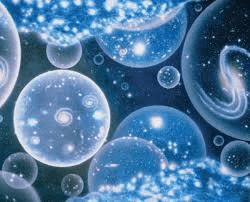
image from Nature
Second, Loke states that the “the First Cause has libertarian freedom.” I assume he means such wording in a free will versus determinism aspect If this First Cause is God. How do we know that God has absolute libertarian freedom? How do we know that God even desires absolute libertarian freedom? I have posted many times about process theology, open & relational theology, and my own theological concept of the lim Δ which indicates that God freely loves, yet God also may allow nature to place limits on what casually happens. Thus, God could indeed have libertarian freedom inherent to God, but nature seems to not have a similar type freedom based on what we see from the inductive and deductive sciences. The Second Law of Thermodynamics, Newtonian Laws (not quantum mechanics…so far), and the tendency for H. sapiens to be terrible with each other does not suggest libertarian freedom emanating from the Divine extends to nature.

Third (and later on in the article), Loke states the following:
“The reason why we should believe that dead people usually stay dead should be obvious: even though often people get things wrong, make mistakes, exaggerate, and even lie, nevertheless it is improbable under certain conditions that multiple groups of people falsely testified that those dead people stayed dead. In other words, even though often people get things wrong, etc., there are nevertheless conditions under which it is improbable that they testified falsely.”
I am a Christian, and I do believe in the resurrection of Christ.
However, I see two issues with Loke’s argument here. Many people often see things that probably are not occurring. Consider the Fatima miracle. Perhaps it happened. I don’t know. I would think that a dancing sun would have caused graviational tidal changes that would have ripped our planet apart. Additionally, there has been good evidence showing that the social circumstances at the time may have influenced what people saw in regard to this specific miracle. Another example is to consider how witness statements in legal proceedings can be problematic.
Also, how would we know that numerous witnesses were telling the truth versus an exaggerated claim based on minimal historical evidence? Large groups of people can make things up when they are in great need.
I’m not sure what to say here. I guess my conclusions would be that 1) I don’t think science is destroying religious beliefs; 2) one can’t prove or disprove God using induction; 3) one can’t prove or disprove God using deduction when what we know about the universe is still likely primitive; and 4) it is impossible to determine what people were actually thinking when they saw Christ resurrected based on very limited sources (i.e. 1 Corinthians).
The presence of God. The absence of God. We can’t prove it either way. We can’t do experiments either way. It takes a faith statment either way which is another wonderful perpective of humanity.
By the way, here is a great video in which physicists discuss causality. It is helpful.
 Phi-The-Sci: Equilateral Musings