In my last post, I discussed the metaphysical possibilities of panexperientialism existing between the gut microbiome, small intestine, and skeletal muscle in the perspective of maintaining a healthy microbiome. I think that all experience in general has two perspectives: objective and subjective.
In the setting of the microbiome, human immune factors such as IL-6 are involved in the interplay of the microbiome-small-intestine-skeletal muscle axis. This interaction is an objective fact. Can we see something subjective here? Does the microbiome or small intestine or skeletal muscle want to maintain health, homeostasis, or decrease in entropy? This “want” is highly subjective. I can’t really define it from a human consciousness perspective. In fact, I am not sure this subjective want is even materially or scientifically explainable. Perhaps the idea of reducing entropy to preserve creativity or novelty falls into the realms of process philosophy, process theology, and open & relational theology which I have written about quite a bit in the past. The lure for continuing creativity is prominent factor in these 3 types of philosophical / theological thought.
Objective and Subjective: Can these two words participate in some type of beautiful dance in the world around us?

For example, when I think about the water cycle, I see a real objective reality as to how water and the planet interact in order to help biological systems exist. That is, all biological systems on our planet need water. The water cycle is essential for life.
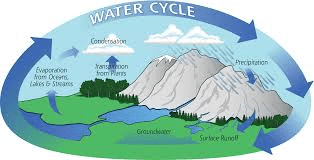
image from NASA
The water cycle is a beautiful system, if you think about it. By “beautiful”, I mean that it is creative and complex yet based on a relatively simple process (evaporation –> condensation –> precipitation). The objective reality of the water cycle is very, very real. The subjective possiblity of seeing the water cycle as a “beautiful” effect (whether God-based or not) also exists. I think the water cycle is just an important and beautiful effect of our planet.
Death is another example. Death worries most of us, I think. It is incredibly sad to lose a relative or friend. Most of us worry about our mortality. However, there is goodness in death. Decomposition of biological entities enriches the soil to bring forth new life. In fact, decompostion of animals, plants, fungi, and bacteria enrich the soil biome to make it an effective trigger for the potential of new life. A link to an interesting article is here.
Death, decomposition, and recycling of biological materials is an objective, interesting concept. The idea that even death can bring about glorious new life could be subjectively beautiful. For example, I am a religious person (in my case, Christian). Although I have become a bit more accepting of death as I have become older, I find it subjectively amazing that the carbon in my body might be helpful to some other life form in the future. I may subjectively believe in some type of “afterlife” that I cannot explain, but I can reflect on the glory of material creativity continuing from my molecules after I die.
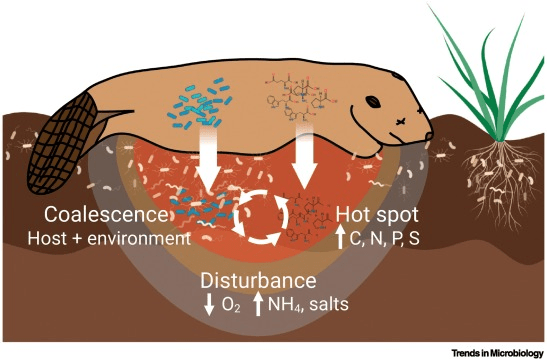
image from Trends in Microbiology
Here is something that I have recently considered in such a setting. My spouse and I have contributed to Compassion International for many years. It has been deemed a very good charity by charitywatch.org. We have sponsored young children from developing countries through their young childhood and until they (typically) have some type of higher education and a skill set to move out of poverty.
I get quite a bit out of this charity psychologically because I have exchanged many letters with these children through the years. I hear about their families. I hear about their grades. I sometimes even hear about their concerns which, honestly, can be unsettling considering these children often come from war torn parts of the world.
As I exchange letters with them, the children and I experience objectivity. The letters that we exchange are actual paper. The money that I send is an objective financial vehicle. The child eats and can go to school because of the money that I send. This donation makes the child healthier which is objective.

I think there is a subjective part here also. I don’t know everything about the child. The child knows some, but not everything, about me. I do believe thatwe are subjectively learning about each other. This subjective learning, I think, leads to compassion and a “philos” type love. I love this kiddo as a friend or perhaps as a fellow traveler in my same time frame in this great, ancient universe.
I would extend this subjective love for when I donate to Compassion International to possibly affect other individuals around me not associated with this charity. This subjective love also possibly affects the individuals around the children who we sponsor. How would I explain this interaction?
Here is my idea or perhaps my metaphysical model. I send my monthly payment that goes to this child and their family. It pays for food and school. I subjectively get a good feeling about donating to that child. I also subjectively feel love when I get a letter from the child. I believe strongly that this feeling of love then allows me to contribute even more love to the neighbors around me. The community around me. The society around me. It seems to be a multiplicative or even exponential effect although I cannot define it objectively. It is a subjective feeling.
Likewise, I often have wondered if the child who receives my family’s monthly donation as well as my personal letters feels likewise. The child has food to eat and is receiving an education. Do these effects cause the child to have enough nutrition and understanding about the world that they then can exhibit kindness to their neighbor, community, and society?
Objectively, there is evidence to suggest that monetary support of poor children (if used well) leads to better social structure and to potentially long-term better adult outcomes. Subjectively, whether mediated by neurotransmitters or by God or by both (I think both), participating in such charities can promote a love of neighbor that has the ability to make the world better.

Readers of my blog know that I ascribe to a belief in the divine in which God yearns or lures for greater objective and subjective creativity. God does not force, but God does love without exception. God is with us at all time points. We can co-participate with God’s ongoing creation by helping others even in small ways. Helping other humans, other creatures, the environment, and the planet is goodness. All of us only go around the sun a few times before our lives come to an end. Co-participation as love has long-term positive effects for the generations that will follow us.

image from Gemini Advanced
 Phi-The-Sci: Equilateral Musings