This post may irritate some people, but I have felt impressed to get these words out.

Recently, I have heard several Youtube lectures / podcasts in the world of progressive Christianity that concern me greatly. I consider myself a progressive Christian. What does this mean? Here is my personal definition: I accept Jesus Christ as my savior; I accept that other world religions have good points about God that my faith stream does not have; I recognize myth in the Bible (and the importance of myth) as a way to promote human flourishing; I am against religious nationalism; and I accept that racism and anti-LGBTQ+ issues are often problematic in my society but should never be a problem in the church.
I have another aspect in my definition. Progressive Christians should accept science. Progressive Christians do not have to understand science fully, but they do need to comprehend the basics. Many of our Christian fundamentalist friends have weird unscientific belief systems such as young earth creationism (a 20th century phenomenon), disbelief in evolution, and harmful anti-vaccination views. Such belief systems can lead to ignorance and can increase the risk of dying from preventable disease. As an example, one can think about these current effects on U.S. public school education. One can think about the unneccessary deaths caused in the U.S. caused by anti-vaccine nonsense associated with religion.
Do you think pseudoscience is just a fundamentalist issue?
If your answer is “yes”, you would be very wrong.
Let’s go through various items that many progressive Christians believe in which are pseudoscience. These ideas are already prevalent in modern society, but my interactions with other progressive Christians has shown me that our group needs to get rid of some silly ideas.
Spiral Dynamics: In this system, there is a belief that humans (individual or societal) pass through evolving, advancing sociological stages. These stages are given colors to identify them. I know it sounds great, but it doesn’t work. The “science” behind spiral dynamics isn’t there (see the original research done on this theory by Clare Graves). It is generally NOT accepted by experts in human development. It risks significant cultural bias. If one thinks that an individual or a society has a higher color consistent with their increased sophistication (say, “yellow”), then considering someone or a society perceived to have a lower color or lesser cultural advancement (say “purple”) risks leading to all of the bigotry, -isms, and -phobias so prevalent already in our society. A good resource is here.

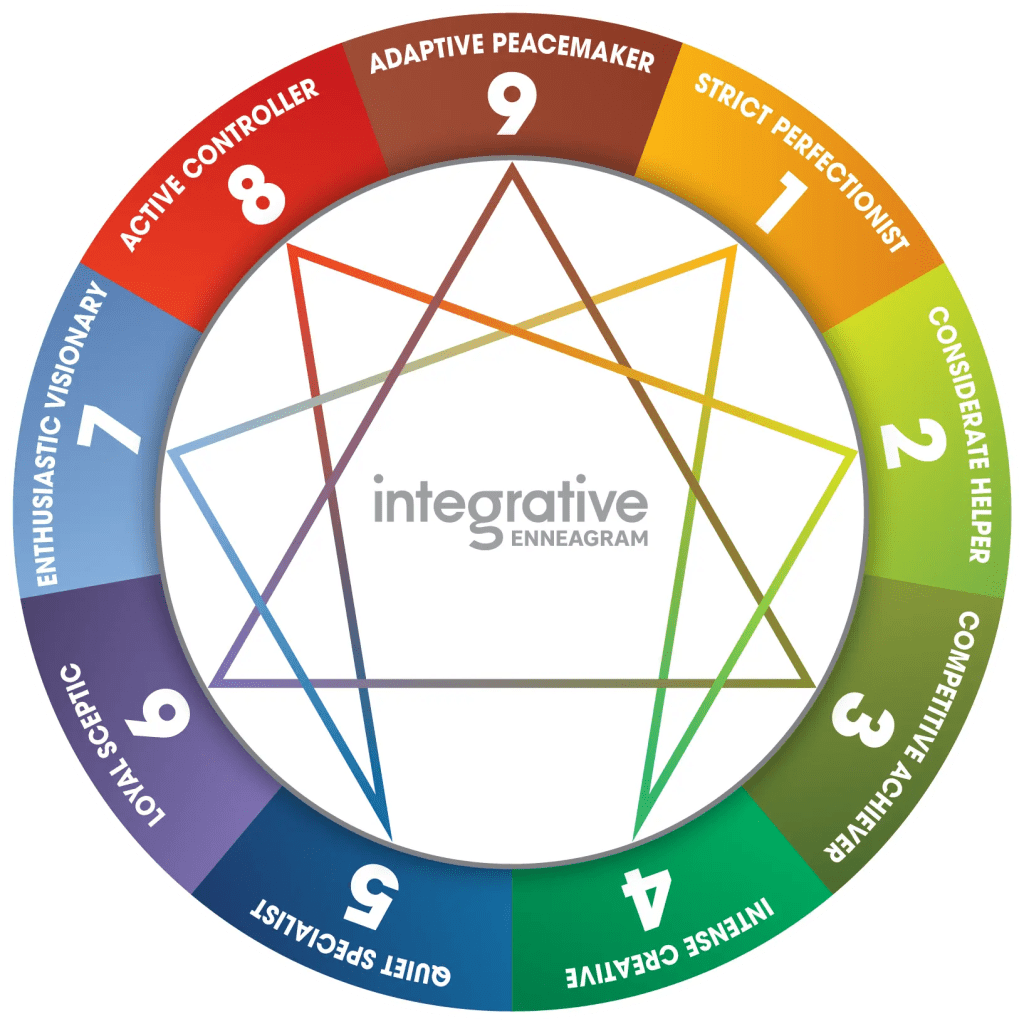
The Enneagram: In this system, there are so-called nine personality types that are fundamental to our species. The rumor persists that the Enneagram system is ancient and primordial. No. The system was invented by George Gurdjieff (1866-1877). Gurdjieff invented a hieroglyph of a circle divided into 9 parts; hence, the introduction of the nine personality types. This hieroglyph is said to be very ancient, but I think the sources to back this idea up are spurious at best. The Enneagram is basically the Myers-Briggs test which, in itself, is extremely problematic. For example, I tell you how great you are one day, and you will have one personality type. I step on your toe and break it on the same day that you lock your keys in the car, and you will have another personality type. I promise.
The quantum pandemic: “Quantum” means “discrete unit” such as a proton, neutron, electron, or photon. It does not mean magic. It does not mean communicating with God. It is a helpful term in the science of particle physics and in the philosophy of physics. It could be useful when considering God as not being deterministic from a theological perspective in the setting of quantum mechnics. We need to quit using this word (“quantum”) incorrectly.
The vagus nerve and the microbiome: In my recent book, I discused the association between the brain, vagus nerve (cranial nerve X), and the intestinal microbiome. It is a theological book, and it is not a science book. I do provide some explanation about the research behind the microbiome (Chapters 2 & 3). However, my ideas behind the microbiome and the brain are theological and philosophical. Yes, there does seem to be some interplay between the microbiome and the human brain via the vagus nerve in some animal models and in some human correlation studies, but MUCH MORE research is needed. I cannot emphasize that fact enough. More research is needed. So…The vagus nerve is not a “mood ring.” You don’t need to cram tons of probiotics into your GI tract to fix various maladies that often have easier solutions. In order to understand how much scientists still don’t understand about the microbiome, I offer you this open-access article from the top tier journal, Gastroenterology. This article is excellent. Our understanding of the relationship between the microbiome and the brain is still very limited.
Humans cannot exchange “energy” with each other. We cannot exchange “healing energy” with each other. When resting (i.e., sleeping, meditating, being still, etc.), the human body has a net electrical charge of zero. I would accept that we can exchange holy feelings of love and kindness with the stranger as some type of theological, subjective wave. However, we are not passing different voltages between each other. “Shocking”, I know.

Theology is weird. I get it. At times, I am very steeped in it. Good theology is based on history, science, languages, philosophy, prayer, and the love of the other. It is not based on mood rings, horoscopes, or monthly energy sessions with healers.
Progressive Christians should not fall into the same trap as have many fundamentalist Christian believers.
Progressive Christians can, have, and will probably continue moving in this dangerous current leading to pseudoscience. We really need to get our own progressive room in order before we criticize more conservative religious groups.

image created by Gemini Advanced
 Phi-The-Sci: Equilateral Musings