I have been thinking about my post from last week and wondered if it might be fun to expand on my thoughts.
Do “aliens” exist? If we have an infinitely sized universe with a limited number of molecular structure possibilities, then the answer is “yes.”
If we have a very, very big universe (current estimate of the diameter of the observable universe is 93 billion light years across) with a limited number of molecular structure possibilities, then the answer is “probably but still could be no.”
If we are talking about space aliens landing on our planet, then “absolutely not.” The stories of sightings / encounters often seem silly or full of potential error. Plus, the number of “alien crashes” on our planet makes it seem that these visitors need to overhaul their Federal Aviation Administration. You mean then travel across our galaxy but then crash in the last few miles? Check their blood alcohol level please.
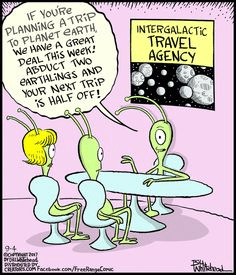
So, aliens: Maybe in other solar systems and other galaxies. Locally: No.
In the same way, the idea of “God of the gaps” makes no sense locally on our planet. My last post went over why this idea has failed in its interpretation of bacterial flagella or the human eye. I don’t think “God of the gaps” will ever make sense when we have simple human observation combined with curiosity to search further in all realms of science. “God of the gaps” is not science. Perhaps it is a type of theology or poorly-worded philosophy. In the United States, “God of the gaps” seems to mainly align with fundamentalist Christian ideas.
What about situations that are a larger part of our reality such as the formation of our universe / our galaxy / our sun, evolution, natural / moral evil (theodicy), our birth, and our death?

Image from the Webb telescope
From my last post, I proposed in a way to perceive ultimate causes of reality as a type of mathematic subjective thought experiment. I admit it is haphazard and needs refinement which I am working on.
Per my last post:
“A difficult area of evolution to explain, determining what exists behind the cosmic microwave background, the weather, and the singular events or joy or sorrow in life could be explained via the ‘God of the gaps’ as simply ‘God did it.’ Using these examples above, simply saying that one explanation is that God just did it (with no further questioning) implies that ‘God’ as a cause is just as equal to a natural phenomenon of which there are hundreds or thousands of potential causes. Even ‘no God’ could be considered an equally valid cause as ‘God did it.’ I would be consistent and insist on observational or experimental data instead of just saying ‘no God’ or ‘God did it.’ Regardless, the denominator gets quite large; the numerator of God as the sole cause becomes very, very small. ‘Intelligent design’ is not science, and ‘God of the gaps’ is terrible theology.”
I then provided this subjective equation:

However, if I think about the bigger issues, the denominator simply becomes the number “2” when thinking about ultimate metaphysical questions. Let me explain. What is the ultimate cause of all reality? Answer: It is God or it is not God. What is the cause of the universe whether we live in a singular universe or are a pocket universe in a multiverse? It is God or it is not God. What is the ultimate cause of evolution? It is God or it is not God. What is the ultimate reason for theodicy? It is God or it is not God. I have coined this term as the “No-God God” or the “NGG.”
The NGG question will never be answered scientifically as there is always a level of human subjectivity and experience involved in the answer. The NGG question can never be conclusively answered via philosophy or theology as science will always bring forth new data as long as our species exists.

The NGG never allows science, philosophy, or theology to ultimately lean either way in a final answer. The NGG can irritate the fundamentalist religious person or the outspoken atheist. The fact that the NGG could get under their skin seems to prove the point that certain metaphysical ideas are infinite in possibility.

Here is my metaphor: Imagine a sphere with an infinite volume and, hence, an infinite circumference and infinite radius. “Science” or “objectivity” can study the area of the sphere but cannot discover all of the area and will discover none of the radius. “Theology“, “Philosophy“, “the Arts“, or “subjectivity” can study the radius of the sphere but cannot discover the entire radius and will discover none of the area. Perhaps objectivity and subjectivity, working together through time, can help humans explore a bit more of ultimate reality compared to just using one way of thinking.
When we divide by “2” in this setting, we can subjectively think of “God” or “No God” as a more likely cause. Our subjective metaphysical thoughts here are based on objectivity for which science provides a first-rate way to gain objective knowledge. The tangle and change occurring with these ideas could suggest types of “weighted means” as seen in statistics. See here and here for information. We can stick to our guns about a belief in God or No God throughout our lifetime or our ideas about God or No God can change over time. Changing ideas about the ultimate cause of reality is a very important part of the human species.
I am currently working on a project to discuss potential considerations of the NGG. In other words, are there parts of reality intermixed with the human experience in which God existing or God not existing still comes together as a “source” of all existence? Is the NGG able to be determined subjectively and objectively as valid hypotheses? Some ideas could include:
- Dark energy
- An infinite multiverse
- The second law of thermodynamics
- Cyclic cosmology
- Evolution at all levels of reality (molecular assembly number, biological evolution, star formation, memes / societies / religion)
- Nothing (no God — simply nothing): See ideas of Lawrence Krauss.
- Platonic forms (defined broadly)
- Pantheism (God is the universe itself). See the autodidactic universe by Smolin.
- Determinism is its purest form (Everettian quantum mechanics, the Many Worlds Interpretation, a deterministic God, Deism)
- Free will or freedom of creativity in its purest form (libertarianism, perhaps the Copenhagen interpretation)
- A little bit of both determinism and free will (compatibilism or limits to divine will imposed by nature — lim Δ). My recent book has quite a bit of information about lim Δ in biological systems, mainly in the setting of the human microbiome.
The list can go on for a while. I think the NGG idea has a rich vein of potential exploration. The final product in book form of the NGG will take a long time for me to write, especially since I am a full-time working academic physician who was lucky enough to get a theology degree. I can see the final product, but I am constrained by the ultimate reality of time, health, and age.

image generated by Gemini Advanced
 Phi-The-Sci: Equilateral Musings