I read a disappointing article in Theology and Science titled “Systematic Evaluation of Recent Research on the Shroud of Turin” (written by Tristan Casabianca). Mr. Casabianca is considered a “Shroud of Turin” expert (whatever that means) with no current academic affiliation. He reports that he was once an atheist but became a Christian once he studied the Shroud of Turin.
I’m sorry, but so many of us have psychologically burned by the stories of people who were reportedly atheists when younger but then converted due to some “definite” evidence of God. Later, we find out that their whole story was mostly made up. Casabianca’s life events could be true; however, his story tends to match those of Lee Strobel in Evangelical circles or Austin Fife in LDS circles. In other words, I worry that his conversion is a “just so” story that may be used as a form of self promotion. I know this theory sounds very pessimistic. However, if you grew up in the Bible Belt like I did, your early life likely was exposed multiple times to people who claimed to have “converted to Christianity” due to some amazing or miraculous event while simultaneously using their story to promote themselves and to make money.
Honestly, I love the journal, Theology and Science. It has many great articles in its issues. I have written an article for the journal which has been accepted for publication. I have no idea how Casabianca’s article was accepted for publication.
For example, the Casabianca asserts that radiocarbon 14 (14C) dating of the shroud was a significant problem and not accurate. He states the following: “This diminished confidence in the reliability of the 1989 conclusion aligns well with the contamination problems occurring in the dating of ancient linen textiles using the Accelerator Mass Spectrometry method in the 1980s.” Ummm, no. The reference that Casabianca uses does not make that conclusion. The study he references, on the other hand, makes it very clear that different labs in different locations using blinded specimens of ancient textiles were very reliable (“a coherent series of results”) although some outliers were noted. Yes, this statement makes complete sense. Any testing regimen will have outliers or errors — even if the errors are incredibly rare. This low error rate can be seen in the signal-to-noise ratio. Rarely, the “noise” or the “outlier” is accurate. Such an event is very, very, very rare.
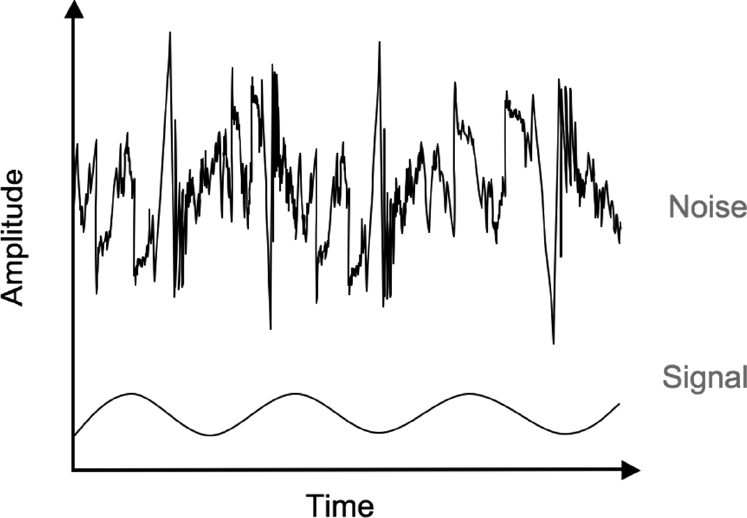
An example of signal to noise ratio, from Cambridge University Press
14C is extremely accurate for dating objects less than 50,000 years old. Younger specimens can have even more improved accuracy within decades of time. References are here and here. So, if the Shroud of Turin was found to have been made around 1200 ACE, then that finding is likely correct. I know there has been an issue about where the fibers from shroud were utilized in the 14C study (new repair fiber versus older original fiber), but this test can be run again.
The author then states that wide-angle x-ray scattering (WAXS) was performed later on the shroud which matches a date of 100 ACE. Fine. However, I did some reading and found out that WAXS is used to identify atomic structure only (see here). It really isn’t a validated way to determine the age of textiles. Sorry. Even the authors of one of the papers using WAXS to dispute the 14C age of the Shroud of Turin are clear:
“WAXS results of the “TS linen implies that it would be less than 2000 years old only if, for some centuries, before the last seven centuries in Europe, it was kept in a geographical region of the world characterized by a higher average secular temperature than about 23 °C. The other possibility—Tr <22 °C—would be compatible with Christian tradition, leading to a TS age of more than 20 centuries.” Keep in mind that as these new results were posted, on-line sites that are not very reputable stated that the WAXS results MUST be true. Shocking, I know…
In other words, using Occam’s Razor, the WAXS results mean that either 1) the shroud was carefully stored as a religious relic while still being made around 1200 ACE or 2) God miraculously caused and preserved the shroud effect with Christ’s image. I’m a religious person, but I think the God explanation by Casabianca is very problematic.
A couple of other problematic issues in the article are as follows…
The author states that the pollen grain, Helichrysum, found intermixed with shroud fibers indicates a Jewish location as (I suppose) the pollen was specifically found only in the area of ancient Judea. This conclusion is simply not true. Due to weather events such as wind as well as human trade routes, this pollen has been found throughout a large amount of the Earth’s landmass.
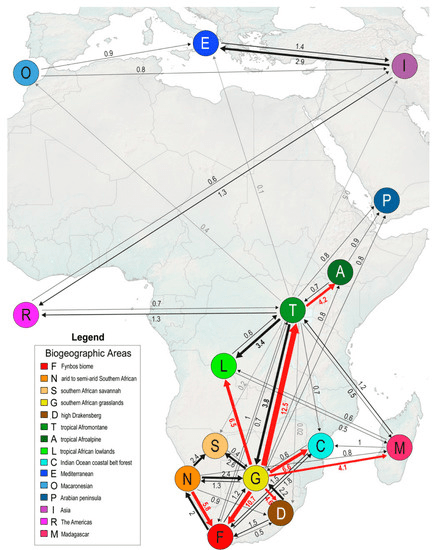
Map showing Helichrysum dispersal just in Africa, the Mediterranean region, and the Middle East. It has been found in other parts of the world as well.
Finally, Casabianca uses Bayesian statistics with the WAXS “new” data to pretty much “prove” the Shroud of Turin covered Jesus’s body. He states “Under the assumption that the antique and medieval hypotheses hold equal likelihood, the probability that the Shroud of Turin is the burial cloth of Jesus of Nazareth emerges as remarkably high, reaching 99%.” His statement demonstrates a real problem with Bayesian statistics. If I keep finding “data” (very poorly defined) that the Loch Ness monster is real, then I would become more likely to believe it is real. For example, if I read more stories about the Loch Ness monster that I believe are true, I am more likely to believe over time that the Loch Ness monster is true. Bayesian statistics is super cool, but there can be a subjective element to it. See here and here as references. One has to be careful with Bayesian statistics.

Bayes Theorem
Finally, at least for me, the Shroud of Turin looks like a drawing or some other type of art. It really does not look an anatomically correct human. Perhaps a bigger mystery is how the shroud was actually made. It could have been a fraud. It could have been a pious fraud. I don’t know.

There is a bigger issue here. W.W. Bartley has been clear about one of the problems of liberal Protestantism: “Confronted with a historical Jesus whose person and message were, at least in any straightforward sense, both illiberal and irrational, the Protestant liberals had to face squarely a new and formidable question: Was Jesus himself one of those nonessential historical shells one could in principle discard during the search for the essence of the Christian message?“
I am a liberal Protestant. I get his point. I think liberal Catholics deal with the same issue as do liberal members of all major religions. By “liberal”, I think Bartley means Protestants trying to incorporate accurate science into their religious beliefs. The emphasis in on “accurate.”
I carry his quote further as follows: Can you accept the Christian basics of theology (i.e., love God; love neighbor) while still accepting there has been a lot of nonsense in Christian history?
Well, yes.
Casabianca seems to be determined to prove the actual existence of God. The problem is that his science and his statistics seem to be filled with the potential for error. I am a theist and specifically a Christian. I accept Christianity’s goodness while realizing it has tons of baggage — typically human-caused. As I have stated in many of my prior posts, one cannot prove or disprove God. There is no objective theorem or test to make any real progress about God’s reality/ non-reality using the skills of science or of history. Casabianca has failed very much here.
I believe in God subjectively. It is no different than an atheist not believing in God subjectively.
We can’t use objective measures such as carbon dating, wide-angle x-ray scattering, or an unclear use of statistical measurements to prove or to not prove God.
Odds and Ends:
I very much recommend the post “Science and the Sorry State of Christian Apologetics” on Medium (by Samuel McKee).

image produced by Gemini Advanced
 Phi-The-Sci: Equilateral Musings