Graduates of my seminary (Northwind Theological Seminary) have been doing an on line book club for a while. It has had a few incarnations during its existence, and as we start revving it up again, we are reading journal articles instead of books.
This past week we reviewed “Is a Process Form of Ecstatic Naturalism Possible? A Reading of Donald Crosby.” It is a 2016 article in the American Journal of Theology and Philosophy. Here is the link. Unfortunately, it it behind a paywall so I hope you are able to get access to it. The author is Demian Wheeler who is a theologian at United Theological Seminary of the Twin Cities. His article is about the writings of Donald Crosby who is both a theologian and philosopher at Colorado State University. I am aware of Dr. Crosby as I have read some of his writings. Also, one of my kiddos goes to CSU, and they have talked to me about Dr. Crosby.
My friend, Michael Brennan, is in my book club, and he has already written about this article. His writing is quite good. I would recommend reading his Substack.
The entirety of Wheeler’s article discusses ideas surrounding “ecstatic naturalism.” This term basically means a “wonder of nature without the requirement of the supernatural.” I consider myself someone steeped in the writings of process theology and open & relational theology (both ideas are very similar). Wheeler discusses the potential critical weaknesses surrounding process philosophy / process theology. Specifically, some critics state that there is no identifiable way for those who follow process ideas to accept wonder or awe without some need for an associated deity. For example, process thought is founded on the ideas of panentheism (all of nature is in God). This term is different from pantheism although there is some overlap. Simply put, pantheism states that the universe / nature is God. Panentheism states that the universe / nature is in God.
I would like to talk about one critique of process thought…the influence of time.

Per the article: “Crosby’s nature is, in a word, indeterminate, dynamic, and thoroughly processive. The future remains (to some degree) open, and ‘the tenacious gnawings of time ensure that all things come to an end.”
Does time end or does it continue eternally? Is time a voracious beast that eventually consumes all creativity or novelty? Based on the second law of thermodynamics, one would readily agree that time definitely seems to end all things. In an eternally expanding universe, all particles would lose their potential energy and would finally distribute evenly throughout all space. There would be essentially no creativity — divine or otherwise.
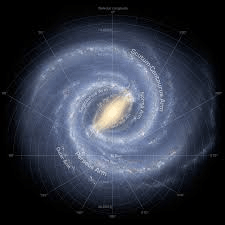
image from NASA
I have several thoughts here. As science evolves, and we learn more about nature then perhaps we may learn more about such laws. I am pretty doubtful that we will overturn the certainly of the second low of thermodynamics but who knows… Regardless, in the deep future and in the setting of infinite time and infinite space, there is the mathematical possibility for a quantum fluctuation (or a random change of energy at one point in space) to form structures. A metaphor for such a structure is a “Boltzmann brain” in which a background of innumerable particles in infinite space / time could briefly form extremely complex structures — even a brain. A good review article about Boltzmann brains is here. A good counterargument against Boltzmann brains is here.
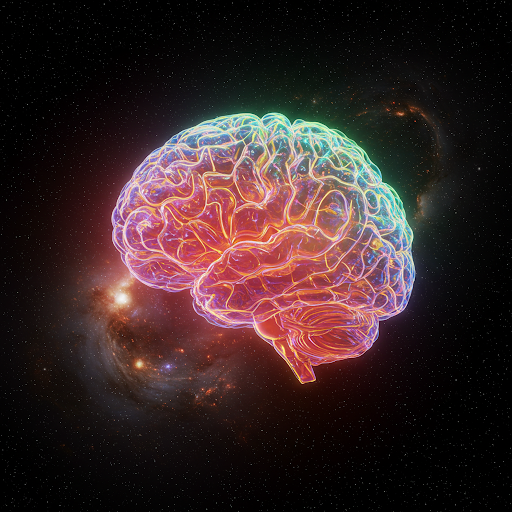
Another idea arises from conformal cyclic cosmology in which the universe expands, collapses, then expands again eternally in time. This idea would go against the terror of time as creativity would simply occur in the new universes.
Finally, the ideas surrounding a multiverse would suggest eternal creativity in infinite time and infinite space. There could be an infinity of universes out there with different laws of physics and different life spans. Creativity would end in our universe but would simply carry on in others.
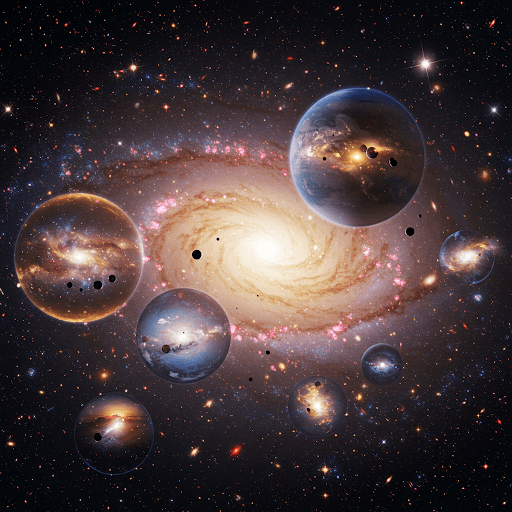
So, the ideas of Boltzmann brains, conformal cyclic cosmology, and the multiverse would suggest no end to creativity — divine or not — and regardless of time. Eternal creativity in itself would be a definition of something — whether God or an eternal primal law. It would be up to each human to decide on the need to worship this creativity or not.
By the way, it should be pointed out that the second law of thermodynamics has been shown to exist time and time again experimentally and by simple observation. Boltzmann brains, conformal cyclic cosmology, and the multiverse are, at this time, not provable (and I don’t think will ever be provable by our species).
I would choose to put God as the ground for natural creativity and for my ecstatic naturalism. Indeed, the weakness of my position is the influence of my cultural background, my interests, and familial influences. There is a way out of this weakness in the philosophical realm. In the setting of process philosophy, all prior events in time influence the present. I do believe that I could have and still can walk away from my belief in deity at any time point, but my past influences have run deep.

image from https://blog.uvm.edu/aivakhiv/2020/04/11/process-relational-ecologies-querying-some-terms/
In the setting of the inevitable progression of time and entropy, I have a hard time visualizing the heat death of the universe. I cannot think in such time scales in which even black holes could evaporate (greater than 10^100 years from now!). Perhaps all that is becomes dark and cold, and all information, including all human experience) eventually consists of random particles rarely interacting with each other.

black hole
On the other hand, theories such as Boltzmann brains, conformal cyclic cosmology, and the multiverse suggest that physicists are looking for objective ways to consider the continuation of creativity as time moves forward. At this time, such ideas are not provable.
The theological suggestion of the universe and all its creativity being contained in God (panentheism) also is not provable but matches with the scientific ideas discussed above. Here is a theological model (panentheism) with a subjective theory surrounding creativity. Boltzmann brains, conformal cyclic cosmology, and idea of the multiverse are objective theories (through mathematics, astronomy, and theoretical physics) with objective ideas surrounding creativity.
Here is where subjectivity and objectivity touch.
It seems to me that the eternal progression of time allows for creativity or novelty well beyond the human brain’s ability to fully conceptualize or imagine.
This continuous creativity means something. It may be an essence of God. It may be God. It may be an underlying priority of nature that does not require God but still is present in all of space and all of time. Creativity, whether divine or not, should make our species have awe or wonderment at the infinity of it all. Ecstatic naturalism can be associated with a belief in God just as much as it can be associated with no belief in God. It all evens out.
Dialectically, we need science, philosophy, and theology to consider what CREATIVITY means.
Odds and Ends:
- Match Day in the U.S. just ended. On “match day”, all graduating medical students find out where they are going for residency. Unfortunately, primary care is suffering here as students want to enter specialties with higher incomes (also, they have tons of debt).
- My friend Tim Miller also has a great Substack account. Here is a smart person. I highly recommend you follow him.
- The “Not Even Wrong” blog notes an interesting ArXiv article on consensus of physicists on the big ideas in their field.

image generated by Gemini
 Phi-The-Sci: Equilateral Musings