In light of the recent measles outbreak in this country, I once again am so glad that vaccines exist. I am a pediatrician, specifically a pediatric gastroenterologist, and I deal with many terrible illnesses, including many preventable illnesses. Vaccines are a medical miracle. Not much more can be said.
I do get occassional comments on my blog. By the way, my blog here is also on Medium and Substack. I recently received the typical “feedback” that vaccines are poison and that I am not Christian. Interestingly, from the inverse perspective, I do get some atheists who complain that my posts demonstrate that I believe in a “sky god.” These comments are not helpful. I just block and ignore. Perhaps they come from junior high kids trying to get me mad. Perhaps they come from someone with profound anxiety or some other type of mental illness. Perhaps they come from someone who is uninformed. I have no clue.
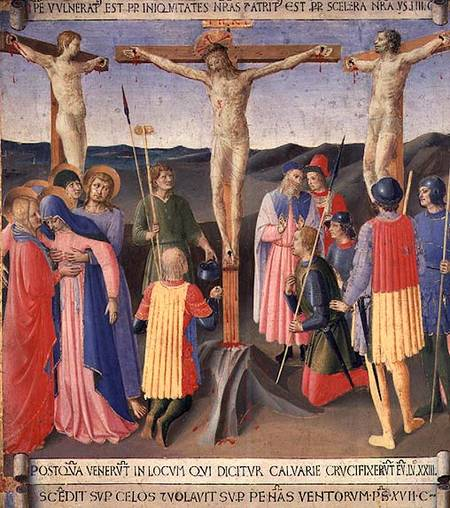
What can I say? I am a born-again Christian. I have been baptized twice because denominations often believe other church baptisms are “wrong” — I swear we Christians are our own worst enemies. I believe in original sin but more from an evolutionary perspective. I believe evolutionary pressure has made us a very violent species, and our individual goal should be to avoid that anger and violence. I believe in Jesus and the Resurrection. I do believe that God is exponentially smarter than us, so I think God understands salvation far better than I ever will. In other words, I’m not into conversion, and I think modern understandings of Christian conversion can be wrought with American nationalism. I stand by Luke 23: 39-43.
People who are against vaccinations are not inherently evil people. I have to repeat this statment to myself often because I really, really, really, really want to judge them. They are the product of poor science education in school. By the way, we are all responsible, as Americans, for causing poor science education in both pubic and private schools. They are the product of ill-informed religious leaders (not just Christian) demanding that they align with non-scientific ideas regarding material matters — no different than telling them to believe in Bigfoot, UFOs, or the Loch Ness Monster. The history of this movement is over 200 years old and is essentially unchanged in its arguments. A lack of change is always worrisome.
There is more here to consider. I think fear of vaccines, fear of monsters, and fear of the “other” is simply an evolutionary leftover in our genes and, subsequently, in our brains.
Think about fish and reptiles. They have relatively primitive brains compared to mammals. If they are about to be attacked or eaten, they will have brain circuitry that pushes for them to escape at all costs. Such escaping involves an increased heart rate, increased blood pressure, heightened senses, and increased muscle activity. Mammals appear to have a greater capacity to learn from the experiences of others. If a gazelle sees a member of the herd attacked by a lion, the gazelle will always be on the look out for a lion on the serengeti. The gazelle will be in a state of increased alertness similar to anxiety. A good review article is HERE.

Of course, then we come to humans. When we lived in small hunter-gatherer communities, any outside sound or sight would cause of to be wary, to stay in the group, and to not leave. Those that went to explore the sound or sight risked being eaten and their genetic material destroyed.
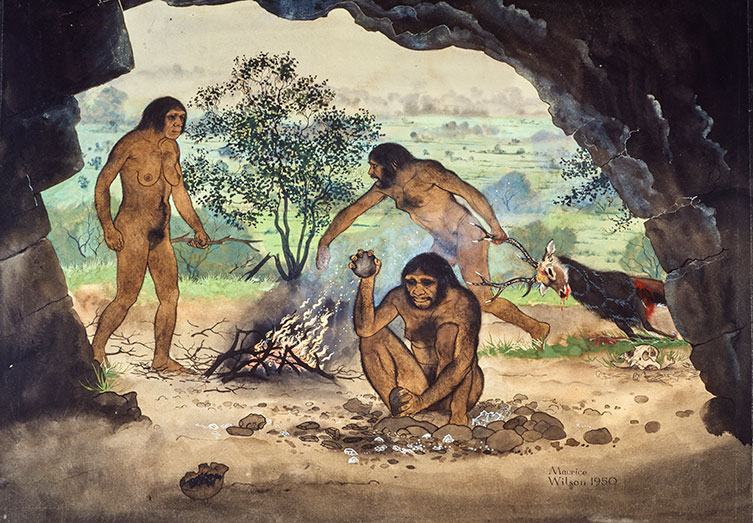
People complain so much about the current situation of the world. It is human tradition, apparently, to think that we live in the worst part of human history. We should have concerns — climate change, fascism, and nuclear war come to mind. However, we are living longer. We are healthier. We have more food. We are getting more educated. That old human brain of ours has not kept up with the fact that we are not getting eaten by cheetahs, bears, lions, or tigers. Our old anxieties of being eaten are being replaced by worries that typically do not exist — as seen in the anxiety surrounding many conspiracy theories. As long as we have that unseen “other” potentially existing outside “our cave”, we can take comfort that we are avoiding some will-o’-the-wisp fantasy that comprises nothing but simple outbursts of our ancient anxiety. Even the ancient Greeks and Romans saw these effects and described them.
Religion has done good things and bad things in the history of the world. From a “good” perspective, reilgion forms community. When does well, it supports those in need in the community. When done exceptionally well, it supports those in need outside of the community. One of the best ways to consider such aspects is to think about the founders of various faith streams. When I consider the Gospels, I think Christ is quite clear about how we should treat each other.
Matthew 5: 43-46: “You have heard that it was said, ‘Love your neighbor and hate your enemy.’ But I tell you, love your enemies and pray for those who persecute you, that you may be children of your Father in heaven. He causes his sun to rise on the evil and the good, and sends rain on the righteous and the unrighteous. If you love those who love you, what reward will you get? Are not even the tax collectors doing that?”
In other words, love others — no exceptions.
Matthew 22: 36-40: “Jesus replied: ‘Love the Lord your God with all your heart and with all your soul and with all your mind.’ This is the first and greatest commandment. And the second is like it: ‘Love your neighbor as yourself.’ All the Law and the Prophets hang on these two commandments.”
In other words, if you love God, you must love your neighbor. This connection of love between God / neighbor is more powerful than the strong force in physics.
Matthew 25: 37-40: “Then the righteous will answer him, ‘Lord, when did we see you hungry and feed you, or thirsty and give you something to drink? When did we see you a stranger and invite you in, or needing clothes and clothe you? When did we see you sick or in prison and go to visit you?’ The King will reply, ‘Truly I tell you, whatever you did for one of the least of these brothers and sisters of mine, you did for me.’”
In other words, if you are anti-science in areas where lack of science leads to death (i.e., messing up public health), then you are really doing life wrong.
Luke 5: 31-32: “Jesus answered them, ‘It is not the healthy who need a doctor, but the sick. I have not come to call the righteous, but sinners to repentance.'”
In other words, if you are anti-science, you need to think about what you are doing to others now and in the long term.
When I say, “anti-science”, I am not saying I am against peer review, grant review, meta analyses, or debating scientific findings objectively. Ethics should absolutely be involved in scientific discovery. I AM saying that I am against pseudo-science. Proponents of pseudo-science hurt others, often unintentionally.
God is in time and in nature at all moments. God calls on us to love others, especially those in need. We have complete freedom to respond to this call. Our evolutionary history is filled with innumerable events in which our species and the environment around us have given choices as to how we should proceed — violently or non-violently. As humans developed cultures and societies, we developed epigenetic pressure to love or to conquer, to help or to destroy, to advance or to retreat in knowledge.
God gives us the freedom to live in fear or to learn about nature and to love others. So many conspiracy theories are based on old cultural-religious narratives. God desires us to move beyond old falsehood. We should not be burning witches. We should not be persecuring minorities in times of economic stress. We should not be calling each other anti-Christ over provable scientific theories.
What we should be doing is to accept God’s lure for the good in order to improve humanity’s lot in the world. God gives us an infinite chances in real time to make our species better and our world better. What we can improve culturally through good use of science and technology will improve our epigenetics. What epigenetics can do to improve genetics in the setting of having our species continue to exist has the potential to make our species more loving and caring, especially for the other.

image produced by Gemini Advanced
 Phi-The-Sci: Equilateral Musings