Human burial has been occurring for millennia. For example, the Qafzeh Cave in Israel contains buried Homo sapiens remains that are 100,000 years old. This time period fits into the Paleolithic period. The buried remains appear to show signs of love, care, and compassion as antlers, shells, and red ochre were placed with the bodies. One wonders if this practice was an appeal to the afterlife.
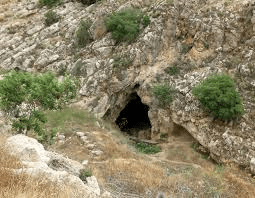
Qafzeh Cave
Remains of Homo neanderthalensis (our extinct relative) have been found in Shanidar Cave in Iraq. These remains of the bodies buried there are approximately 70,000 years old. Flower grains have been found with the bodies suggesting that flowers were placed with the deceased. Again, such findings suggest caring burial practices and thoughts about the afterlife.

Shanidar Cave
It is incredibly difficult to determine why these burial practices occurred. It is impossible to know what these two different species of Homo were considering at the time of burial. Was there sadness? Was there an expectation of life after death? Was there some early concept of God here?
Interestingly, modern male chimpanzees have been seen doing possible ritual stone throwing to build cairn-like structures.
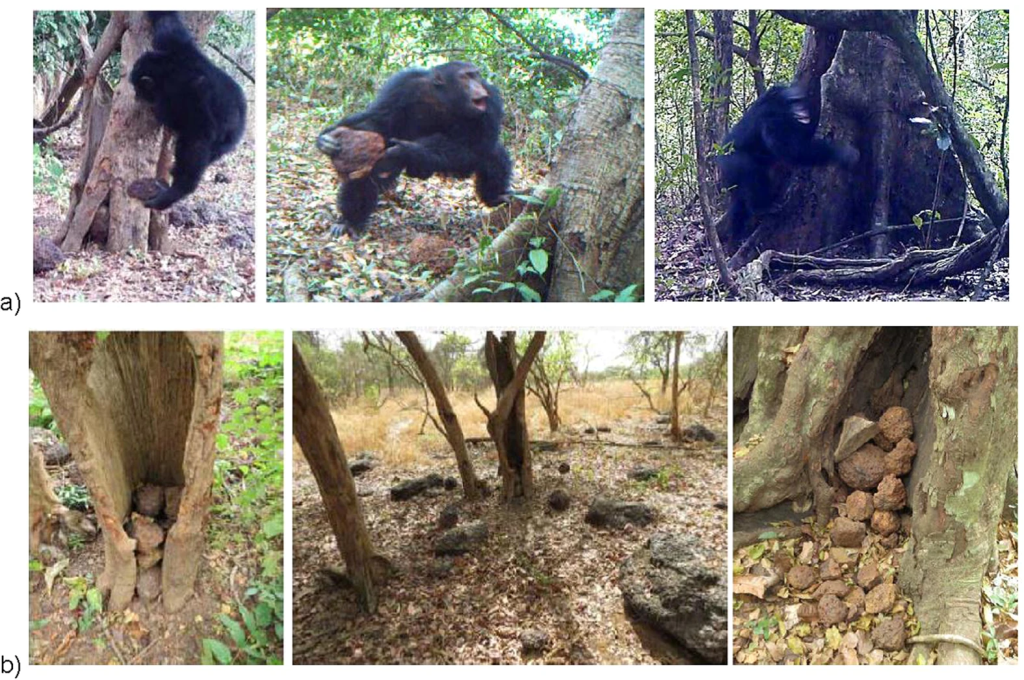
Ritualized chimpanzee stone throwing producing simple cairns (above), from Nature
What are these primates doing? This behavior seems learned and possibly passed on from generation to generation. I see nothing to suggest there is an evolutionary advantage of building these structures in regards to passing reproductive capacity although more work is needed here. Is this a semblance of primitive and perhaps ancient religious practice?
It is quite clear that brain size increases and becomes more complex when one compares the brains of chimpanzees and humans. This change suggests that there has been evolutionary pressure to produce large brains in primates over time.
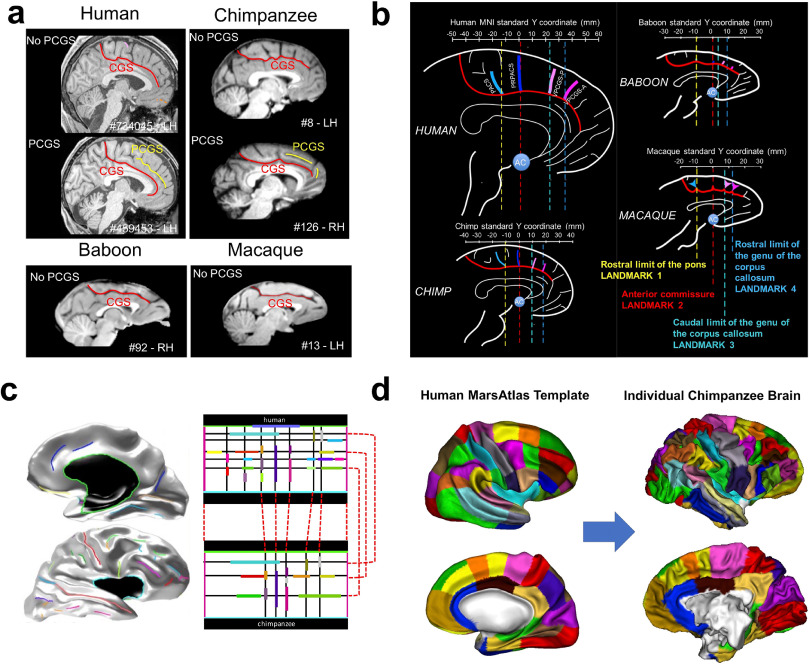
Human versus Chimpanzee brain comparison, from NeuroImage
Auguste Comte (1798-1857) proposed that all human social structures pass through 3 stages.
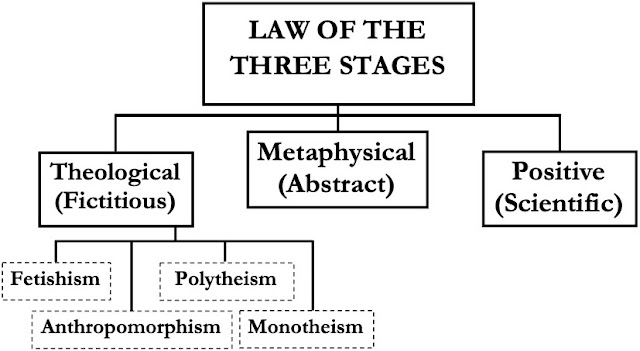
Now, Comte’s ideas are almost 200 years old, and ideas in sociology and in theology have changed as our species has learned more science and produced more literature. However, his work still is interesting. He believed that all societies pass through a theological / fictitious stage (fetishism moving to eventual monotheism) then through a metaphysical / abstract stage, and finally through to a positive / scientific stage.
When one considers different Homo species doing sophisticated burial practices up to 100,000 years ago, it makes me think that religion or theology will always be an inherent part of our species. Is it a genetic component. No. But it is an epigenetic component wound up in human emotion, culture, and society.
Let’s consider a bit of mathematics. If the Industrial revolution started in the 1760s, then we have had “modernity” for 265 years (1760 – 2025). Let’s make 265 years the numerator. If we make 100,000 years the denominator, then humanity has been modern or scientific for only 0.256% of the time since sophisticated burials have occurred with H. sapiens. “Modernity” is a poorly defined concept in some ways. H. sapiens have always made tools. Is that activity modern? Perhaps in a manner similar to always having produced tools, we also have had simultaneous thoughts about concepts of God. The physical and metaphysical — hand in hand.
Process theology suggests that change is the basis of all reality. God can lure for change (passive) but cannot make direct, active change. In the setting of process theology, God perhaps has lured for evolutionary change so that nature (and specifically, human biology) has the chance or the ability to expand brain size. Perhaps, this lure allows creatures to consider their place in the universe or to consider what all of this is all about. Chimpanzees building cairns; H. neanderthalensis burying their dead with flowers; H. sapiens burying our relatives (even today) with mementos. Biological entities may be grasping for something greater and something mysterious.
Instead of “We Have Never Been Modern“, perhaps “We Have Always Wondered.”
Odds and Ends:
- I recently was on the (Re)Thinking Faith podcast with Josh Patterson. It was a fun, approximately 90-minute interview about my new book(“A Theology of the Microbiome”). Here is the linnk: https://podcasts.apple.com/us/podcast/a-theology-of-the-microbiome-with-john-f-pohl/id1438696524?i=1000697848247
- Great article about the potential risk of increased death (suicide) with psychedelic use. So many people think this drug class is a “cure all” for all sorts of mental illness. This article proves my point that we need good research before recommending medication or supplements.

image generated by Gemini Advanced
 Phi-The-Sci: Equilateral Musings