An interesting article was recently published in Perspectives on Science and Christian Faith (December 2024 edition). It is titled “Models in Christianity and Chemistry: Truth or Utility” written by William Wood PhD.
Articles in PSCF typically become open access through the American Scientific Affiliation (ASA) website one year after they are published. So, you will need to wait a bit before you see the article in its entirety (unless you are an ASA member like me).
Wood states that a good model is “both useful and true.” There are caveats of course. Objective models in science can become outdated as new data emerges. Bohr’s model of the atom is an example of a model that is outdated.
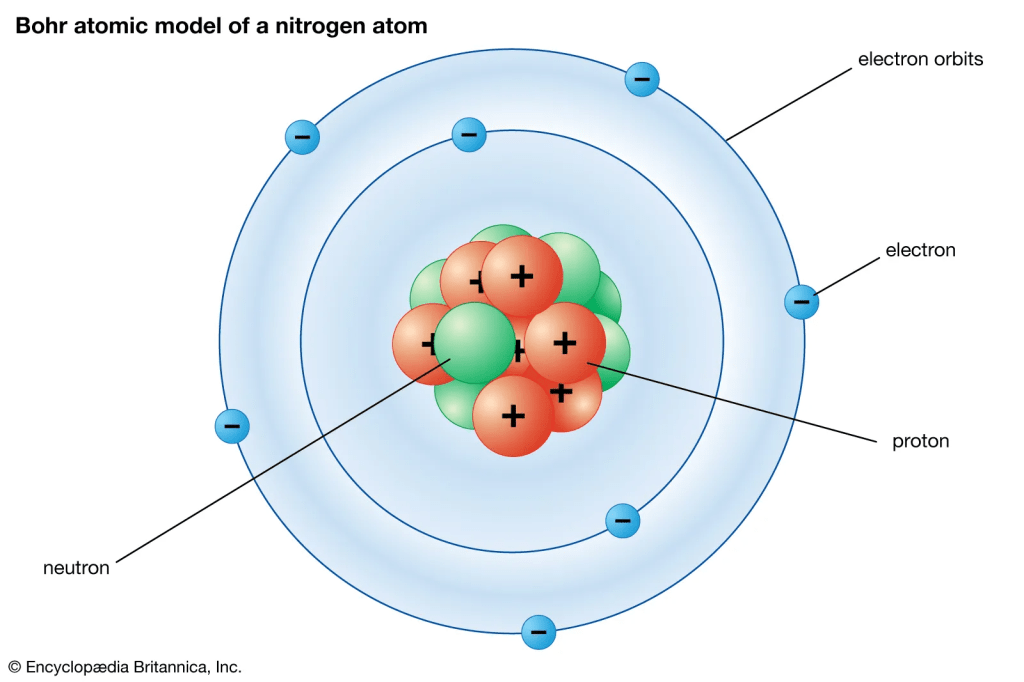
Wood also states that when theology attempts modeling in a manner similar to science, there are two main criticisms:
1) God is indescribable so the “God data” is never accurate.
2) Theology models risk not being representative of every individual’s relationship with God.
He also states that people who attempt theological modeling through the realm of science are often accused of scientism. Wood is making a good point here. This idea is ridiculous as the last thing those who are scientism-friendly want is theology’s input. I think it is quite obvious that the New Atheist movement and the U.S. Evangelical movement both refuse to accept contributions of religion or science, respectively. I can’t imagine why these two extremes in metaphysics would want to throw out additional ways to observe the world — yet they do.
We already have models in Christianity: the Trinity, the Wesleyan Quadrilateral, the Bridge-to-Life model, Sola Gratia, Sola Scriptura — these are all models. Models exist in other religious traditions as well.

Where do we go from here? I propose two ideas that need further study:
First, the objectivity of nature can provide a subjective bridge to our relationship with God. As an example, the proton is made up of 3 quarks. They are connected by the incredibly powerful strong nuclear force. How is this finding in nature not a metaphor for the Trinity? As another example, Simon Conway Morris (an internationally known evolutionary biologist) has proposed that evolutionary change has limits in creativity. How is this idea not a potential metaphor for purpose in our universe?

Proton made up of 2 up and 1 down quarks
Second, science necessarily advances. If science advances, this means that our objective and subjective ideas about the world must necessarily advance. As observations about the world necessarily advance, theology MUST change as humans gain more objective knowledge. Psalm 8 makes this point when it states, “When I consider your heavens, the work of your fingers, the moon and the stars, which you have set in place, what is mankind that you are mindful of them, human beings that you care for them?” The writer of this Psalm is making an observation (looking at the stars of the Milky Way) and then proposes a theory (God still cares for inconsequential humans). This idea is inductive reasoning. Yes, it is a religious statement, but it is still inductive reasoning often used in science.

The Pleiades
There is an opportuity in which we can use natural observation and human subjective thought to make a real difference in the lives of many people of the Christian faith. We can use this same “real difference” to care for the poor, the sick, and even our enemies.
For example, we can combine such ideas when considering better ideas for the theological concept of atonement theory. Many Christians consider that Jesus’s death on the cross occurred only as a result of “penal substitutionary atonement.” In other words, God took God’s vengeance for all of humanity’s sins out on Jesus Christ. This description of God sounds maleficent. This description of God sounds like God eternally will never comprehend why humans even exist which gets complicated if God desired our species to exist in the first place.
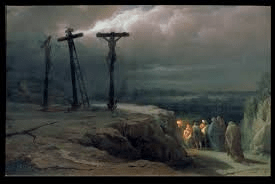
“Night at Golgotha” by Vasili Vasilievich Vereshchagin (1869)
However, as we obtain more scientific data about nature and can propose hypotheses about nature in light of known science. We can think about how God’s relationship to our species exists for God “that you are mindful of them.” Perhaps God is always luring for the good. Perhaps Christ died for our sins not because of God’s vengeance but because humans are inherently a violent species. We would kill our God in Christ simply because that is what we do. Perhaps God, even in the crucifixion, still loved us, cared for us, and still lured for the good without forcing us to be good. This divine love is infinite in time and eternal in setting.
Perhaps our observations through science will give us a better understanding of how God loves every entity in the universe.
Odds and Ends:
Please read this editorial titled, “Will They Come for PubMed Next?” I worry greatly about the future of medical science in our country. This article exacerbates my fears.
Also, my book (“A Theology of the Microbiome“) now has an audio version! This is exciting!

image created by Gemini Advanced
 Phi-The-Sci: Equilateral Musings