Today is Sunday, February 9, 2025. Although I live in the states, I will not be watching the Super Bowel today. I actually like sports, but I hate long infomercials. The Super Bowl is definitely the penultimate form of infomercial. So, I went to a bar and danced with my spouse last night, went to church today, played some Pickleball this afternoon, and now am sitting and writing.
I really have enjoyed writing on this blog. I’m not sure it makes an impact, but as I have become older, I have found writing to be more and more relaxing.
Anway, let’s talk about telemores.
Telomores are an immensely important part of DNA that many people are not aware of. They are repetiitive pieces of DNA that exist at the ends of chromosomes. They serve a protective function.

Image of telomeres from UCSF. The telomeres are red. The chromosomes are blue.
You could metaphorically consider a telomere as the equivalent of a hard hat on a person’s head. If some big piece of equipment falls and hits the hard hat, the person’s head is protected.

The mechanism involving telomeres is similar. As cells divide, the ends of chromosomes get frayed and are at risk of not functioning. The telomere really is not involved with eventual protein formation — although there are some exceptions. If the chromosomes get frayed at the end during the process of DNA replication, the subsequent fraying or injury at the end of the chromosome just affects the telomere with no real effect on the purpose of the chromosome. Once the telomere is shortened to the point of not being protective , a cell can die or can quit dividing.
For example, human cells in a culture medium only divide by mitosis for 40 to 60 cylces before they stop reproducing. This braking effect is due to the telomeres being slowly worn away.
Telomeres are associated with controlling cell division and may have some effect on aging. It makes sense in the setting of aging. Telomeres are slowly removed –> cells quit functioning well –> organs start having issues –> humans age.
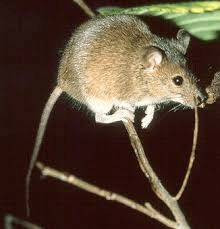
Different organisms have very different telomere length. A kilobase (Kb) is 1000 DNA base pairs. The typical little house mouse has telomere length of 150 kb. Protozoans can have 18 kb telomere length. Humans have a telomere length of 10 to 15 kb. It is weird that mice have such long telomeres. They are eaten by everything, so the longer length probably has to do with keeping their health in prime condition in order to have maintenance of muscle strength and organ function as a way to avoid predation. Healthy mice are less likely to be eaten than sick mice.
A great review article on telomeres is here.
Now on to theology and philosophy. In my recent book (“A Theology of the Microbiome“), I posit that reality is both objective and subjective. Seeing red affects the cones of the human retina to allow us to see the color. This effect is objective. The way we perceive red emotionally or psychologically is subjective. I would bet that my feelings about red are different than those of the neighbors on my street.

Mark Rothko, “Untitled”
Telomeres shorten with cell division and DNA mitosis. This cellular event is natural and expected. This shortening is objective in observation. However, telomeres also can shorten with subjective change via the effect of epigenetics. Epigenetics cause inherited change in a manner that eventually affects DNA inheritance.
There is fascinating research in this area.
Chronic stress in a human likely shortens telomere length due to psychological stress leading to oxidation and downstream telomere damage.
Adults who suffered maltreatment / abuse as children appear to have shortened telomere length compared to controls.
Depression may shorten telomere length with more problematic depression shortening telomere length even more.
Many, many research articles exist in this arena.
As someone who has studied in the fields of process theology and open & relational theology (see my prior posts), I will make some observations that warrant further theological study:
- Telomeres are affected by direct genetic factors (objective) but also by environmental or psychological stress (subjective). This knowledge provides a theological and perhaps philosophical insight into how reality actually works.
- I may not be able to objectively keep my / my neighbor’s telomeres from shortening, but I can indeed subjectively help. My neighbor may need food. My neighbor may need shelter. My neighbor definitely needs kindness. My country (and our whole world) currently seems to discount kindness. However, I can be kind to the neighbor or stranger. I am helping their life immeasurably (and measurably when considering telomere length).
- Being kind to your neighbor, is probably healthy for you as well.
- If I support the concept of panexperientialism in which all of nature has experience. If all of nature at every level of reality has experience, then I can further contend that God is involved in the experience of everything — from quark to quail, goat to galaxy, unicellular organism to universe. God is there in the midst of nature and in the midst of humanity with all of its joys and tragedies. In such a theological model, God realizes when we are being kind to the neighbor or stranger, and the effects of kindness and love go up and down the ladder of experience in nature. A kind act to one individual scales up to culture and society. It also scales down to our telomeres.
From a Christian perspective, the Parable of the Good Samaritan (Luke 10) subjectively aligns with our daily, objective, real-world experience.
My summary: Let’s all try to be a bit more kind. Your neighbor and your neighbor’s chromosomes will thank you.

image created by Meta AI
 Phi-The-Sci: Equilateral Musings