I get particularly angry when fraudsters cheat people out of money, especially when the victim is older or has a mental processing disorder (dementia, for example). Fraudsters are everywhere — at work, in our neighborhoods, and in our religious or social groups.
Fraudsters are great at convincing people to excessively worry about issues related to death. Their behavior is very devastating as none of us want to shuffle off the old mortal coil too early, and some anxious people are willing to pay large amounts of money for unproven or unethical therapies to prevent death.
I found this great editorial in Gastroenterology which is the biggest gastroenterology journals in the world. I receive the journal because I am a gastroenterologist and belong to the American Gastroenterological Association. The editorial was interesting because this article has nothing to do with my field.
The article, “Hacking Death in Dublin” was written by Seamus O’Mahoney who does research in the field of end-of-life care. The article discusses his experience attending the Longevity Conference sponsored by the Longevity Escape Velocity Foundation. I had not heard of this conference or this foundation.
When reading the article, one quickly gets the impression that O’Mahoney was amazed at the potential for fraud as well as a lack of the conference attendees’ understanding of death. I would agree with him.
Here are some quotes:
“The longevity biotech industry has a significant intersection with artificial
intelligence (AI) and cryptocurrency. Blockchain was frequently mentioned,
as was the ‘tokenization’ of longevity research funding, or ‘tokenomics.’ (I witnessed much mangling of the English language at this summit.) I was struck by how many of the biotech entrepreneurs lacked any medical or bioscience background.”
Ugh. You can pretty much bet that fraud will be involved when cryptocurrency and blockchain are mentioned as a positive. Also, why would one invest in a product when the entrepreneurs have no real science background?
“Aubrey de Grey, who majored in computer science, remarked that ‘the medical profession is at the trailing end of most conversations.’”
Ugh. Mr. de Grey is expressing a repetitive, tiresome statement. I am amazed how people who do not work in medicine have no understanding about the progress of medical science. Sure, the field progresses slowly at times (like all of science!!!!), but the advances in my time of being in medicine (since 1991) have been amazing! Such comments seem similar to statements made by the anti-vaccine movement in their belief that all healthcare should not be trusted. We do have those physicians who do shady work, but they are few and far between (just like lawyers, engineers, or teachers who do shady stuff).
“A recurring theme of the summit was the industry’s hatred of regulatory
bodies such as the Food and Drug Administration (FDA) and the European Medicines Agency (EMA).”
Ugh. I am shocked, SHOCKED, that so-called entrepreneurs hate safety mechanisms. Please note my sarcasm.
“The radical accelerationist wing sees death as an affront, and its defeat as a moral imperative. One young member of this militant group told the summit: ‘We really need to get our shit together! We are dying! Why don’t we go Moonshot or Los Alamos?!’ He argued that all longevity research—its funding, execution, and publishing—should be ‘permissionless.’ ‘Who are they to tell us what to do with our bodies?’ he asked indignantly.“
Ugh. Comments like this from the young man in the article feel like someone who has financial privilege. This young man should go work in a developing country to see what “We are dying” really means. I have worked in Africa. I have worked in pediatric ICUs. I have seen real suffering. Also, this young man seems to not understand the second law of thermodynamics. Yes, we are dying. We are all dying. Everyone will die. Death is natural but perhaps preventable, at times, with good available hygeine, safe food, a clean environment, and prevention of deadly diseases.
“Doubt and uncertainty are at the heart of science, but doubt and uncertainty were not much in evidence at this summit, where the atmosphere was more akin to a cult, a gathering of true believers.”
Ugh. And “yes”, I have friends and family members who take some pseudo-science ideas as serious as religious dogma. It does seem, at times, cult-like.
You may be reading through this post and getting more and more depressed. I get it. I’m a practicing physician, and I am exposed to such crazy ideas on a regular basis. We can think about solutions. Some solutions may be global; others may simply consist of convincing a friend of family member about the realities of life and the objective nature of science.
And the emphasis should be on “reality.” The sad experiences of life (disease, injury, trauma, anxiety, death) are simply reality — nothing less, nothing more. We all may have many experiences during our lifetimes, but we all will die. The religious person, the atheist person, the agnostic person, the person who has no understanding of what death means — we will all die. We may have a belief in an afterlife. We may have no belief in an afterlife. We may state we do not know. In reality, NONE OF US know what happens after death. However, we all should recognize death will occur and be kind to others around us.
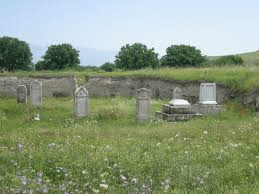
Photo of an ancient Roman cemetery (Wikipedia)
Interestingly, research has found risk factors do exist for people who have an extreme fear of death. Being an older female decreases the risk; believing in cryonics increases the risk.

Death anxiety is a real thing. It may lead to hypochondriasis. I worry that individuals with severe anxiety about dying may fall for foolishness as described in the article above.
One thing that probably helps ameliorate a severe fear of dying is cognitive based therapy. No need to invest money in a longevity scam. No need to scream into the void about how unfair life is. Cognitive based therapy, when does well, can be extremely helpful. Finding meaning in life, regardless of one’s metaphysics, also has been shown to be helpful.
Another thing to consider is to learn the second law of thermodynamics. Entropy will progress no matter what you try to do to prevent it. Take comfort that everything will reach a thermodynamic equilibrium. Everything that is material will end. The final end may not be the case spiritually or metaphysically, but all useful energy in our universe will end.
Some people have told me that theology is a pointless endeavor. There are many reasons to disagree with such a statement. Theology, when done well, can be preventative when one is exposed to the next “great idea” hypothesizing about living forever (materially at least).

Theologians (or people with good theological training) can talk and should talk about fraud — financial, religious, and metaphysicial. Theologians can talk about a better way to exist in a world in which we all die. Theologicans can talk about a better way to understand that birth, life, and death are natural.
Human society needs to recognize that we will all reach our natural limits.

image created by Meta AI
 Phi-The-Sci: Equilateral Musings