I’m going to link to my recent book again (“A Theology of the Microbiome“, SacraSage Press). I do this 1) because I write about these issues in detail in the book and 2) I need to market the book (right?).
In my book, I go into detail about process theology which is a theological model that I very much find matching to the natural world around us and in us. One of the better things about process theology is that science is good. All science helps us understand God in real time since God contains nature, and nature’s actions are not controlled by God.
As such, God is involved in the world prehensively (present in all occasions in real time), panentheistically (encompasses the universe and all entities through time), and panexperientially (experiencing all).
In many ways, a cousin / derivation of process theology known as Open and Relational Theology (ORT) probably appeals to me more since (in this theory of theology) God can lure for creativity while never actively demand or forcing change. This lure for creativity is a “divine lure” or an ever-present lure by God for creativity. I define such a lure for creativity as a “lure for the good” or “lure of God’s love.” See the amazing work from Thomas J. Oord about ORT.
Also and in my book, I use Stephen Wolfram’s ideas of cellular automata and hypergraphs to explain change throug time. Wolfram is a great writer who I respect very much from a philosophical and perhaps metaphysical perspective. Wolfram’s ideas are mathematical and have theoretical physics implications. They definitely are not theological, but Wolfram’s emphasis of time flow in reality has always been striking for me when considering process theology and ORT.
I am going to comment on his recent essay, “On the Nature of Time.”
One issue that Wolfram points out is that we describe space and time as “spacetime” (per Einstein). Space and time are necessarily together. This is true as far as we know now. A good review of spacetime described by the journal, Nature, is here.
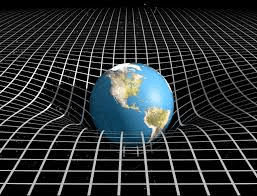
Curvature caused by the Earth in space time (image from freeastroscience.com)
However, we feel time. Time seems to flow.
Per Wolfram’s recent essay: But ultimately the progress of time is always associated with some choice of successive events that “computationally build on each other”. And, yes, it’s more complicated because of the possibilities of different choices. But the basic idea of the progress of time as “the doing of computation” is very much the same. (In a sense time represents “computational progress” in the universe, while space represents the “layout of its data structure”.)
What does this mean metaphysically? The actual “doing of computation” requires time. There is never instant computation. Thus, I take it to mean that time is real but not static (as in a static geometric universe). If our universe is block, static universe, I do not understand why we would FEEL time from a sensory perspective. There does not seem to be a brain anatomic structure, microstructure, or defined neurologic mechanism that would help us to perceive time in a static world structure.
So, although spacetime is real, perhaps space and time are open and closed like a two strands wound around each other. Spacetime means that we know space and time are essentially and eternally linked. Space and time also being considered as separate allows us to appreciate space and time as two essential but separate structures. Spacetime would be ojective; perhaps separting space and time would be subjective. Being open and closed could be concurrent. A mathematical example would be a clopen set (a cool name BTW).

Image created by Meta AI
Wolfram states further in his essay: And at some rough level we might imagine that we’re sensing time passing by the rate at which we add to those internal perceptions. If we’re not adding to the perceptions, then in effect time will stop for us—as happens if we’re asleep, anesthetized or dead.
I have had deep anesthesia for a serious surgery in the past. Indeed, time did seem to stop or disappear. This suggests consciousness is important for time.
Where do we go with such ideas theologically? In the setting of Naturalismppp (prehension, panentheism, panexperientialism), we assume assume a priori (really, theologically deduction a priori) that God is in the time flow. God experiences time just like every entity, including every human. Thus, God would experience both the geometric structure of spacetime as well as the separation of space and time at each moment — objective and subjective together similar to a type of monad. Since space is curved and time is slowed by massive objects, God would experience all of these different times from the past and into the future. Time is relative; God is sensitive to the relativeness of time.
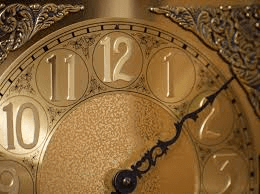
God experiences what we experience in time. This is panexperientialism in an ultimate form.
As God experiences time from past to present, God is aware of the possible although God does not make the possible. This concept is basic to the idea of prehension and concretion as seen in process philosophy as well as in process theology. God may have a lure for creativity that is a passive influence, and such a “divine lure” has been discussed in this blog and other resources. I find the divine lure an important concept in my theology work.
Finally, if all of reality (nature, universe, multi-verse (if a mult-verse exists)) is in God, and if reality experiences time, then God experiences all of time, including all of spacetime with its weirdness in the physics equations. This is panentheism.
So, let’s do a bit a of mathematical symbols which will represent a subjective, theological idea although space, time, and relativity have definine mathematical objective structures. Again, the subjective and objective working toegher…
Naturalismppp =
God experiencing prehension in nature without interference in real time =
God experiencing panenthism in nature without interference in real time =
God experiencing panexperientialism in nature without interference in real time =
Naturalismppp =
Time is essential for all reality, including God’s reality.
God is caught up in time just like every entitity from every electron to every human to every galaxy. If God is love (which I strongly believe), then God experiences love for each entitity in real time and throughout eternity regardless of the universe’s future.
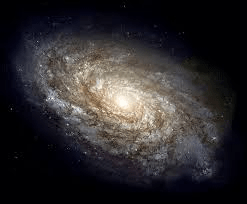
The prophet Isaiah may have wrapped up my random thoughts into a much nicer bow: Though the mountains be shaken and the hills be removed, yet my unfailing love for you will not be shaken nor my covenant of peace be removed.
The sun will expand and absorb the Earth (5 billion years from now). The universe will expand so that we won’t see other galaxies around us (“us” will be long gone — 150 billion years from now). The universe will progress into total entropy (trillions of years from now). God’s love will be still there.
This is simply a fascinating embrace of science (time) and theology (Divine Love).

Image created by Meta AI
 Phi-The-Sci: Equilateral Musings