My little blog is linked to Medium and Substack. I’m gaining some followers. I don’t have many, but a small number is fine as 1) I am using these platforms to practice my theology writing after my DThM degree (which is becoming a fine hobby for me) and 2) I appreciate the concept of time. In the future, my work may stop, diminish, or expand. Regardless, I am happy with my work here at this moment.
I received a comment on one of my social media sites (I refuse to use the bird site) in which the commenter was amazed that some Christian theologians now consider God as not necessarily omnipotent. He wasn’t angry. He was just confused. Well, I think that an idea of God solely being love while not being deterministic works quite well in the setting of current scientific understanding and in discussions regarding theodicy. Theodicy, in particular, is a tough topic.
One thing to consider is that ideas of God do change over time. A simple review of the history of religion in our species shows that there has been much change. The change will continue to occur until the Sun absorbs our planet unless we become an interplanetary species. Who knows? Change in theology and religion is hard for many people who would prefer it to be static and fundamentalist in nature.
Cases in point:
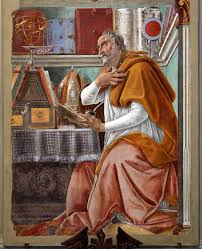
Neoplatonism (300-600 CE and perhaps existing later): Here, we see a Christian belief system in which God matches Platonic philosophical versions of the Divine. God is separate from nature but pure. God only can be appreciate from a meditative standpoint. The theory of creatio ex nihilo is accepted. There are many more aspects here to consider. I have just listed a few neoplatonic ideas.
Deism (1700s -1800s): In many ways, this idea is the penultimate “clock maker” God theory. God starts the ball rolling (think of Newton’s deterministic laws) and is not involved with any aspect of reality afterwards. Thus, God is the first cause, and no real relationship to God is needed or profitable after that. A belief in deism was quite prevalent among the United States’ founding fathers. It matches well with the Enlightenment.
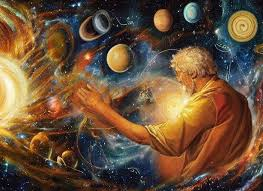
However, time changes. Culture changes. People migrate. Science develops. Art and literature enter new eras. Change is an ultimate reality. Entropy (at least in our local universe) is increasing.
Theology changes as well and not just in Christianity.
Medicine (my field) is using genetics and immunology to completely re-shape how we care for patients. Physics and astronomy are completely changing how we see ourselves in the universe. The understanding of biological evolution has had a huge impact on science and society. Ptolemaic ideas are as extinct as the dinosaurs…and, yes, I know, birds are dinosaurs so the metaphor fails a bit.
In the face of a potentially infinite universe (s?) and apparent randomness at the quantum level, why not consider God as non-omnipotent?
As a Christian, I do consider God’s sole aspect as love. Love should never be deterministic, and in the theological and philosophical setting of ideas such as panentheism and panexperientialism (see prior posts), an non-omniscient yet loving God makes sense. Perhaps in 100 years or 1000 years, our understanding of the world will change, and our theology will change further.
If science is the discovery of more facts and more objective truth, then religion will subjectively follow to give us a more clear understanding of God.
image created by Meta AI
 Phi-The-Sci: Equilateral Musings