I have been working my way through Michael Abril’s Evolutionary Theology which is a great book. I’m “working my way through” only in the sense that I often have a limited free reading time outside of work.
In his book, he talks a bit about Pierre Louis Moreau de Maupertuis (1698-1759) who was a very influential scientist. His most famous work was on the “principle of least action” which is important when considering potential and kinetic energy.
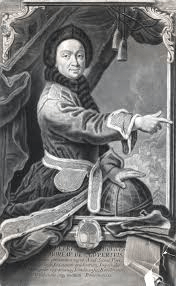
image from Smithsonian
As part of his work, he began to experiment with early ideas of inheritance. It is fascinating as to how close he was to discovering the science behind genetics as well as how much he got wrong. He just didn’t have the technology.
The most important thing to consider in this post is that he did believe in strict determinism from a heritability standpoint. He posited that there existed “psychobiological determinism” in which each person’s body and mental characteristics were completely determined by inheritance with no chance of outside possibilities. de Maupertuis was, in fact, very influenced by the work on Newton which presents a determinist version of physics.
In other words, work by Newton and others caused a pulse of impression affecting other aspects of life and culture — inheritance ideas or even religion. The rise of Deism could be an example here as determinism did influence 18th century religion. The scourge of slavery was influenced by racist, deterministic metaphysical ideas.
Today, Newton’s principles of mathematics from a deterministic perspective are extremely important and make sense whether building a house or launching a rocket.
However, determinism is not clear. Think about ideas surrounding epigenetics. Think about ideas surrounding wave-particle duality in quantum physics. Both of these ideas suggest 1) limits to determinism / no determinism and 2) the importance of chance or randomness. From a process theology perspective, this is “creativity.” Freewill becomes a reality. Love of other makes sense.
Religion will catch up to the scientific ideas of today. It will take time as the metaphysics of science can be blocked at the church leadership level (due to terrible metaphysics or just superstition) while, at the same time, not being understood by church laity.
Freewill in the setting of a loving God who wants creativity today: Are we starting to see this in theology? Yes. Consider ideas surrounding process theology and open & relational theology. They are based on new ideas surrounding both faith and science. Both concepts have been discussed in prior post, and I think both have the potential to keep many of the world’s religion’s inspired to consider new aspects of the Divine, previously unknown.

image generated by Meta AI
 Phi-The-Sci: Equilateral Musings