A little about me (see my blog home page)… As soon as I entered medical school, I learned that medicine could have an academic track. I was a first-generation physician so the field was very opaque to me. In fact, I had NO IDEA what a fellow was. For the audience, a fellow is a subspecialist trainee position after residency. I loved the idea of combining teaching, clinical care, and research. I was and am still idealistic about the concepts of professors of medicine having the same impact of knowledge as professors of physics or literature or biology or theology.
Thus, let us assume that academic medicine is a “three legged stool” of 1) medical education, 2) clinical care, and 3) research.
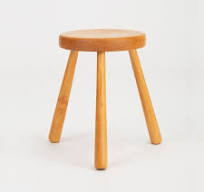
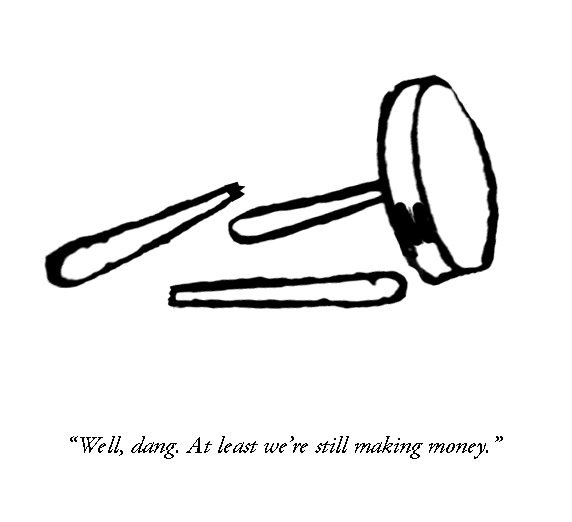
Here is the tragedy of medical education over the years in my opinion. Two of the legs have been broken, and I fear the legs will never be repaired. Thus, academic medicine is very broken.
Medical Education: Due to the expense and time of medical training and especially considering that academic physicians could be spending that time seeing patients (i.e., billing), less and less valuable time is spent teaching medical students. I see this effect mostly at the level of medical student education, but it is beginning to affect post-graduate education at the resident and fellow level. I base this finding on my experience in 23 years of teaching. However, the rising cost of medical education, the loss of protected time to teach (this will destroy the medical education track of scholarly academic advancement), wellness issues, and the emphasis on clinical care over teaching stressed by academic medical systems are reducing the quality of medical education in the United States.
Medical Research: There is so much to say here. However and briefly, there is no doubt that individuals with terminal MD degrees are not pursuing research careers compared to those with terminal PhD degrees in the biological sciences. This graph says it all:

image from the NIH
Now, one may say that you would prefer your physician to just take care of your clinical issues. Fine. However, how would you feel knowing that most graduating medical students and residents have minimal training on statistics, on how to read a journal article correctly, on how consider a clinical research project to improve patient care long term? How would you feel knowing that your physician really has no clue how to do quality improvement which our medical societies like to emphasize but do not follow through with? This is a very real aspect at every medical school and academic health system. I would recommend the #openaccess section titled “Notes from the Association of Medical School Pediatric Department Chairs, Inc.” in every monthly issues of The Journal of Pediatrics to get a sense of this problem. There are lots and lots of good ideas mentioned in the journal, but funding mechanisms are typically unclear.
Clinical Care: Ah, yes, the golden goose. Funding to teach is typically zero. Getting a grant is hard, and indirect grant costs by institutions are high. Seeing patients will generate revenue — always. So, if one is an MD faculty at an academic medical center, it is common for such faculty to see patients at the expense of medical education or research. I get it. It is expensive to run a clinic or a hospital or a medical system. Many academic medical systems are branching out to higher income areas in cities to get more private insurance payers. The pipeline from seeing a patient to generating revenue for the academic health system is relatively easy and based soley on volume. Great articles about this issue are here and here.
By the way, the importance of tenure is big issue currently in the United States. In academic clinical medicine, tenure is simply disappearing and probably will never return. Academic clinicians are considered “career line” academics, and our employment is typically based on revenue production.
The 3-legged stool is broken.
A Solution? To help others (our patients) and to help other ideas (our community):
Academics in general have a long history of “siloing”. I think this issue is becoming extremely common in academic medicine. If we, as academic physicians, are not able to do research or to teach to any effective degree, I suggest we break down our clinical silo to reach another community.
Are you a good writer? Compose a poem or write an essay for a literature journal. Your aspects of medical science and humanism will be needed in the literature community.
Do you enjoy history? Write an essay about the history of medical device or medical test or disease diagnosis or well-known physician. Submit it to a history journal or historical society. You will have ideas that probably have not been considered which will make a difference.
The possibilities are pretty much endless.
In my particular situation, I have had a long interest in science-religion overlap (probably deserves a long post in itself). I decided to pursue a DThM degree at a seminary which took about 3 years. Thus, although I was pretty busy as a clinician at work, I could write or produce some theology that I thought would help religious people understand the importance of science. For example, I wanted such people to understand the importance of vaccinations, especially in the setting of COVID-19.
The seminary that I received my degree from is big about “church futuring” which is a term that basically means more and more lay people probably need theology education as (guess what) full time academic theology is running into some of the similar aspect of higher education as medicine. These parallels are not complete of course.
OK…that is my rant for today. I hope the links provided are helpful. Thank you for reading my blog.

image created by Meta AI
 Phi-The-Sci: Equilateral Musings